
In the realm of personal health, household maintenance, and even scientific experimentation, the quality of water is paramount. While many consumers view all bottled or processed water as essentially the same, the reality is defined by a complex spectrum of filtration and purification processes. When choosing between distilled and purified water, the decision often comes down to how these processes alter the water’s chemical profile and what specific utility the user requires. Understanding these distinctions is a vital component of informed consumer decision-making and household resource management.
Defining the Purification Process
To understand the difference, one must first look at how each type of water is created. Purification and distillation are both methods of decontamination, yet they operate on entirely different mechanical and chemical principles.
The Mechanism of Purification
Purified water is a broad designation that refers to water that has been mechanically or chemically processed to remove impurities. The term “purified” does not dictate a single specific method; rather, it indicates that the water meets specific standards—such as those set by the U.S. Pharmacopeia—that limit the concentration of chemical pollutants, bacteria, fungi, and parasites. Common techniques used to achieve this status include reverse osmosis, deionization, and carbon filtration.
The Mechanism of Distillation
Distillation is a specific, time-tested process that mimics the natural hydrologic cycle. The process begins by boiling water until it turns into steam. This vapor is then collected and condensed back into a liquid state in a clean container. Because the boiling point of water is lower than the boiling point of many contaminants, heavy metals, minerals, and various organic compounds are left behind in the original boiling vessel. The resulting condensate is, by definition, distilled water.
Comparing Contaminant Removal and Purity Standards
While both processes aim to elevate the quality of drinking water, they prioritize the removal of different types of substances. The efficacy of each process dictates whether the water is suitable for biological consumption or industrial equipment maintenance.
Mineral Content and Total Dissolved Solids
The primary differentiator between these two is the presence of Total Dissolved Solids (TDS). Purified water, depending on the filtration method used, may still contain trace amounts of healthy minerals like calcium and magnesium. It is designed primarily to remove “harmful” additives such as chlorine, lead, and volatile organic compounds while keeping the water palatable.
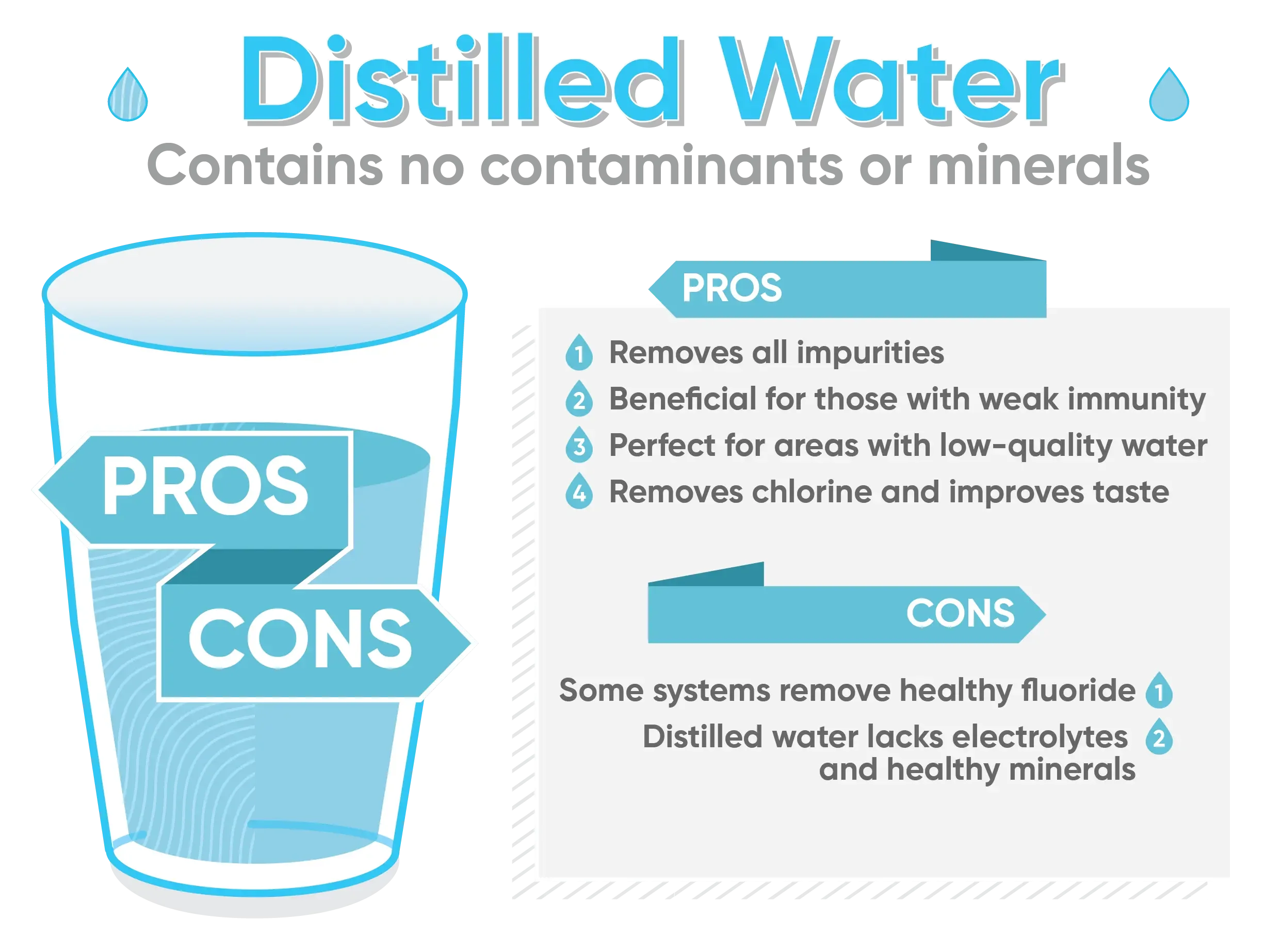
Conversely, distilled water is characterized by its near-total lack of mineral content. Because the minerals are left behind during the evaporation phase, the resulting water is essentially “empty” of solutes. This lack of conductivity and mineral load makes distilled water a sterile medium, which is why it is the standard for laboratory use, CPAP machines, and steam irons, where mineral buildup (scale) is a primary concern for equipment longevity.
Biological and Chemical Safety
Both methods are highly effective at neutralizing biological threats. Purification processes, particularly those involving reverse osmosis and UV light, are exceptionally efficient at capturing microbes. Distillation is perhaps the most absolute method for eliminating biological pathogens, as the heat required to boil the water kills or denatures virtually all known bacteria and viruses. When it comes to chemical contaminants, distilled water often holds a slight edge in purity, as it is removed from the original source liquid entirely, rather than simply having contaminants filtered out.

Practical Applications: Choosing the Right Water for Your Needs
Selecting between these two is rarely a matter of “better vs. worse,” but rather “right vs. wrong for the application.” Each has specific use cases where it excels, and using the wrong type can have unintended consequences for your home or health.
Household and Industrial Utility
If your primary concern is the longevity of your home appliances, distilled water is the superior choice. Because it lacks minerals, it will not leave behind white, chalky calcium deposits when evaporated. This makes it essential for:
- Steam Irons and Steamers: Prevents internal clogging and prevents mineral “spitting” on clothing.
- Humidifiers: Prevents the dispersal of mineral dust into the air and minimizes calcification of internal components.
- CPAP Machines: Protects delicate pressure sensors and reservoirs from corrosion and buildup.
- Lead-acid Batteries: Prevents electrolyte contamination and keeps cells functional for longer periods.
Hydration and Consumption
For drinking purposes, the debate becomes more subjective. Purified water is generally considered the “gold standard” for bottled water because it retains a flavor profile that most people find agreeable. It strikes a balance between removing contaminants and keeping the water crisp and refreshing.
Distilled water, on the other hand, is often described as “flat” or “bland.” Because it lacks minerals, the mouthfeel can be somewhat unappealing to those accustomed to mineral-rich spring water. Furthermore, some nutritionists argue against long-term exclusive consumption of distilled water, suggesting that the body benefits from the trace minerals found in tap or purified water. While the impact of distilled water on human mineral intake is often overstated—given that we receive the vast majority of our minerals from food—the lack of electrolytes in distilled water means it does not serve the same quenching function as mineral-adjusted water after intense physical exertion.
The Financial and Environmental Considerations
Beyond the physical properties, there is a distinct difference in the resource intensity of producing these two types of water. Understanding these factors can help you make a decision that aligns with your financial priorities and your environmental values.
Cost and Availability
Purified water is widely available and typically more affordable to produce at scale. Reverse osmosis systems, which are common in residential purified water setups, are energy-efficient and provide a continuous supply of water at the tap.
Distillation is a energy-intensive process. It requires significant heat to boil water and then a secondary cooling process to condense that steam. Consequently, distilled water is usually more expensive to purchase per gallon at retail locations. If a household decides to distill their own water, they should be prepared for a noticeable increase in energy utility bills compared to a standard carbon-filter or reverse osmosis system.

Sustainability and Waste
The environmental footprint of these processes also varies. Reverse osmosis systems, while efficient, do produce “brine” or wastewater—the portion of the input water that contains the rejected contaminants. Distillation systems are often viewed as more wasteful due to the sheer amount of electricity required to undergo the phase change from liquid to gas and back to liquid.
When choosing between the two, consider your long-term usage. If you only need water for a humidifier once a week, buying distilled water is a sensible, low-investment choice. If you require gallons of clean water for daily drinking and cooking, investing in a high-quality purification system (like a multi-stage reverse osmosis unit) offers a much more sustainable and cost-effective long-term solution.
By analyzing the chemical integrity, the end-use requirements, and the long-term maintenance costs, one can easily discern that while distilled and purified water share the goal of safety, they inhabit different spheres of utility. Distilled water is a surgical tool for maintenance and purity; purified water is a versatile solution for hydration and daily living.
aViewFromTheCave is a participant in the Amazon Services LLC Associates Program, an affiliate advertising program designed to provide a means for sites to earn advertising fees by advertising and linking to Amazon.com. Amazon, the Amazon logo, AmazonSupply, and the AmazonSupply logo are trademarks of Amazon.com, Inc. or its affiliates. As an Amazon Associate we earn affiliate commissions from qualifying purchases.