
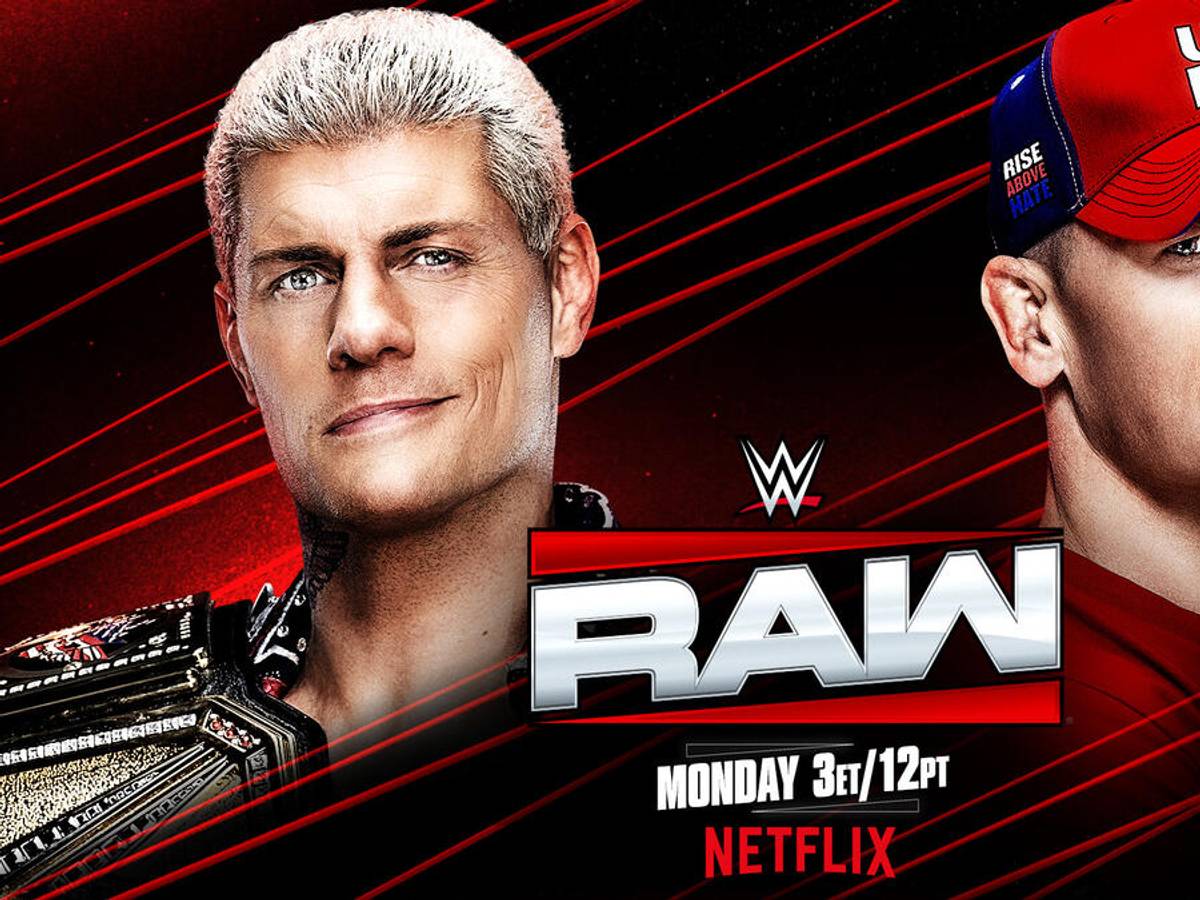
The landscape of digital entertainment is undergoing a seismic shift as Netflix, the pioneer of the video-on-demand (VOD) model, integrates live sports entertainment into its global ecosystem. The announcement that WWE Raw will officially move to Netflix in January 2025 marks a significant milestone in technology trends, signaling the convergence of linear broadcasting and cloud-based streaming. For tech enthusiasts and viewers alike, the question isn’t just “what time does Raw start,” but how Netflix’s technological infrastructure will handle the massive concurrent load of a global live audience.
The Evolution of Live Sports Architecture on Netflix
For years, Netflix dominated the “binge-watch” era by perfecting the delivery of static files. However, transitioning to a live-broadcast model for a flagship program like WWE Raw—which airs 52 weeks a year—requires a complete overhaul of its server-side architecture. Unlike pre-recorded series, live streaming demands real-time encoding and zero-tolerance for latency.
Transitioning from Linear TV to OTT
The shift from cable (linear) to Over-The-Top (OTT) platforms involves more than just a change in channel. In traditional cable broadcasting, the signal is pushed through a dedicated physical infrastructure. On Netflix, the show must be converted into digital packets, encrypted, and distributed across thousands of Internet Service Providers (ISPs). This transition represents a major technology trend where software-defined networking replaces hardware-heavy broadcast centers. Netflix has had to refine its “Maestro” workflow orchestrator to ensure that when the clock strikes 8:00 PM ET, millions of users receive the stream simultaneously without the dreaded “spinning wheel” of buffering.
The Infrastructure Behind Global Synchronization
To maintain a consistent start time across various time zones and regions, Netflix utilizes a sophisticated Content Delivery Network (CDN) known as Open Connect. By placing “OC” appliances directly within the data centers of local ISPs, Netflix minimizes the physical distance the data must travel. For a live event like Raw, the technical challenge is “concurrency”—the phenomenon where millions of users hit the “play” button at the exact same millisecond. Netflix’s tech stack uses predictive scaling, where cloud resources are spun up hours in advance based on historical login data to prevent a system-wide crash.
Streaming Logistics: Global Start Times and Technical Access
In North America, WWE Raw has traditionally maintained a flagship start time of 8:00 PM Eastern Time (ET). As it migrates to Netflix, this “start time” becomes a variable defined by digital metadata rather than a fixed television signal. For users in London, Tokyo, or Sydney, the “live” aspect of the show creates a unique technical hurdle: global synchronization.
Real-Time Latency and Buffer Management
One of the biggest hurdles in live streaming technology is latency—the delay between the action happening in the ring and the image appearing on your screen. While cable television typically has a delay of 5–10 seconds, streaming can often lag by 30–60 seconds. Netflix is currently deploying low-latency HLS (HTTP Live Streaming) and DASH (Dynamic Adaptive Streaming over HTTP) protocols to bridge this gap. This technology allows for “chunked” transfer encoding, where the video is broken into tiny segments and delivered to the user’s app before the entire segment is even finished being recorded. This is crucial for fans who follow live social media feeds while watching, as it prevents “spoiler lag.”
Regional Servers and CDN Distribution
The “start time” on Netflix is also managed via Geo-blocking and regional metadata. Even though Raw is a global brand, Netflix’s software must handle varying regional regulations and advertising inserts. The platform uses a “Control Plane” that identifies the user’s IP address and directs them to the nearest edge server. This ensures that a user in New York starts the stream at the exact same microsecond as a user in Los Angeles, despite the 3,000-mile distance. The software architecture must account for varying “last-mile” internet speeds, automatically adjusting the bitrate—from 480p to 4K—without interrupting the live broadcast.
Technical Requirements for the Best Viewing Experience
To enjoy WWE Raw on Netflix without interruption, the technical requirements go beyond a simple internet connection. As Netflix pushes the boundaries of live 4K HDR streaming, the hardware and software on the consumer’s end must be equally capable.
Bandwidth Optimization for Live 4K Content
Streaming live content in High Definition (HD) typically requires a stable download speed of at least 5-10 Mbps. However, for those looking to experience Raw in 4K Ultra HD, the requirement jumps to 25 Mbps or higher. Netflix utilizes the AV1 codec and HEVC (High-Efficiency Video Coding) to compress these massive files. From a tech perspective, this is a marvel of software engineering: the ability to compress a live, high-motion sporting event into a streamable format that doesn’t lose clarity during fast-paced sequences. Users should ensure their routers support Wi-Fi 6 or use an Ethernet connection to minimize “jitter,” which is the variation in packet arrival time that causes stuttering in live video.
Supported Devices and App Updates
Not every device in the Netflix ecosystem is built for live streaming. Older smart TVs and legacy streaming sticks often struggle with the “Live” metadata required to navigate a real-time broadcast. As January 2025 approaches, Netflix is expected to roll out significant app updates across iOS, Android, and TVOS. These updates will include a “Live” UI component—a dedicated tab that allows users to “Join Live,” “Watch from Beginning,” or “Resume” during the broadcast. This functionality relies on an “instant-archive” technology, where the live stream is simultaneously written to a cloud-based DVR server as it broadcasts.
Interactive Features and the Future of Live Streaming Tech
The move of Raw to Netflix isn’t just about watching a show; it’s about the integration of interactive software features that linear TV could never offer. This represents the next phase of “Social TV” and “App Interaction.”
Real-Time Metadata and VOD Availability
One of the most impressive technical features of Netflix’s live engine is the generation of real-time metadata. This allows the app to display live stats, performer bios, or “key moments” during the broadcast. From a software development standpoint, this requires a side-car data stream that runs parallel to the video stream. Additionally, the transition from “Live” to “VOD” (Video on Demand) happens almost instantly. As soon as the show ends, the stream is re-indexed and made available for replay. This involves massive automated video processing that clips the broadcast, generates thumbnails, and updates the global database within minutes.
AI-Driven Recommendation Engines for Live Events
Netflix’s famous recommendation algorithm is being retooled for live events. Traditionally, the AI suggests content based on viewing history. For live events, the tech must become “temporal.” The algorithm will prioritize the Raw live stream on the home screen only during its active hours, shifting it to a “catch-up” category afterward. This requires a dynamic UI (User Interface) that changes based on the time of day and the user’s geographic location. Furthermore, AI is being used to monitor stream quality in real-time. If the system detects a localized outage or a drop in frame rates in a specific city, it can automatically reroute traffic to a backup server before the user even notices a dip in quality.
Conclusion
When WWE Raw moves to Netflix, the answer to “what time does it start” is only the beginning of the story. From a tech perspective, this transition represents the most rigorous test of Netflix’s streaming software to date. By leveraging advanced CDNs, low-latency protocols, and AI-driven traffic management, Netflix is redefining how we consume live entertainment. For the user, the experience should be seamless—a testament to the complex layers of software and hardware working in unison behind the screen. As we move toward 2025, the technology behind the stream will be just as impressive as the action in the ring, marking a new chapter in the digital transformation of global media.
aViewFromTheCave is a participant in the Amazon Services LLC Associates Program, an affiliate advertising program designed to provide a means for sites to earn advertising fees by advertising and linking to Amazon.com. Amazon, the Amazon logo, AmazonSupply, and the AmazonSupply logo are trademarks of Amazon.com, Inc. or its affiliates. As an Amazon Associate we earn affiliate commissions from qualifying purchases.