
When most drivers consider the question, “What should the PSI of my tires be?” they view it through the lens of basic vehicle maintenance or immediate road safety. However, in the world of personal finance and strategic asset management, tire pressure—measured in Pounds per Square Inch (PSI)—is a vital economic variable. Maintaining the correct PSI is not merely a mechanical chore; it is a high-yield habit that directly influences fuel efficiency, asset longevity, and risk mitigation.
For the modern consumer looking to optimize their budget, understanding the financial implications of those small numbers on a pressure gauge is essential. This article explores the economic architecture of tire maintenance and why managing your PSI is one of the simplest ways to improve your bottom line.
The Direct Correlation Between PSI and Fuel Economy
The most immediate financial impact of tire pressure is felt at the gas pump. In an era of fluctuating energy prices, fuel efficiency is a cornerstone of a healthy personal budget. Tire pressure dictates the “rolling resistance” of your vehicle, which is the energy your engine must expend to keep the tires moving.
The Physics of Rolling Resistance and Your Wallet
When a tire is under-inflated, its footprint on the road increases. This creates more friction and requires the engine to work harder to overcome that resistance. According to the U.S. Department of Energy, for every 1 PSI drop in pressure of all four tires, fuel economy can decrease by roughly 0.2%. While this may seem negligible in isolation, consider a vehicle that is 5 to 10 PSI under-inflated—a common occurrence due to temperature changes and natural seepage. This can result in a 2% to 3% decrease in fuel efficiency.
Calculating Yearly Savings through Maintenance
For a commuter driving 15,000 miles a year in a vehicle that averages 25 miles per gallon, a 3% loss in efficiency equates to an extra 18 gallons of fuel per year. At an average price of $3.50 per gallon, that is over $60 lost annually to nothing but thin air. When scaled across a decade of vehicle ownership, the failure to maintain proper PSI becomes a multi-hundred-dollar “tax” on negligence. In the context of personal finance, checking your PSI is a task that takes five minutes and offers a guaranteed return on investment (ROI) that outperforms many traditional savings accounts.
Maximizing Asset Longevity: Tires as a Capital Investment
Tires are one of the most significant recurring expenses in vehicle ownership. A set of quality tires for a modern sedan or SUV can cost anywhere from $600 to $1,500. Therefore, treating tires as a long-term capital asset rather than a disposable commodity is essential for sound financial planning.
Avoiding Premature Wear and Tear
Under-inflation causes the edges of the tire (the shoulders) to wear down prematurely, while over-inflation causes the center of the tread to wear out. Both scenarios lead to a shortened lifespan for the tire. If a set of tires is rated for 60,000 miles but fails at 40,000 miles due to poor pressure management, the owner is essentially losing 33% of their initial investment. From a “cost-per-mile” perspective, maintaining the manufacturer-recommended PSI ensures that you extract every cent of value from the rubber.
The Hidden Costs of Blowouts and Emergency Repairs
Beyond the steady erosion of tread, incorrect PSI significantly increases the risk of a catastrophic tire failure. Under-inflated tires generate excessive heat, which can lead to tread separation or a blowout. The financial fallout of a blowout is rarely limited to the cost of a new tire. It often involves towing fees, emergency roadside assistance charges, and potentially expensive damage to the vehicle’s rim or suspension. By adhering to the correct PSI, you are effectively self-insuring against these high-variance expenses that can disrupt a monthly budget.

Professional Fleet Management and Side-Hustle Efficiency
For individuals involved in the “gig economy”—such as rideshare drivers, delivery couriers, or independent contractors—the vehicle is not just a mode of transport; it is a primary business asset. In this context, PSI becomes a matter of business finance and profit margin optimization.
Scaling Maintenance for Small Businesses
If you operate as a sole proprietor using your vehicle for income, every overhead cost reduces your take-home pay. Professional fleet managers at companies like UPS or FedEx obsess over tire pressure because, at scale, the savings are astronomical. Small business owners should adopt this “fleet mindset.” If you are driving 30,000 or 40,000 miles a year for work, the fuel and tire-wear savings of proper PSI can mean the difference between a profitable quarter and a stagnant one.
Telematics and Financial Oversight
Modern tech tools and apps allow gig workers to track their “cost per mile” with high precision. Integrating tire pressure checks into a weekly financial audit allows for more accurate tax deductions and better cash flow forecasting. By knowing your PSI, you can predict when your next $1,000 tire expense will occur, allowing you to set aside “sinking funds” rather than being blindsided by a failed inspection or a flat tire during a high-earning shift.
Risk Management and Insurance Considerations
Personal finance is as much about protecting wealth as it is about creating it. Maintaining the correct tire pressure is a fundamental component of financial risk management and liability protection.
Liability and Maintenance Records
In the unfortunate event of an accident, insurance companies and legal entities often scrutinize the maintenance state of the vehicles involved. Driving on significantly under-inflated or bald tires can, in some jurisdictions or policy structures, be cited as a contributory factor in an accident. This can lead to increased insurance premiums, denied claims, or even legal liability. Maintaining a log of regular PSI checks (often included in professional oil change receipts) serves as a paper trail of “due diligence,” protecting your financial standing in the face of litigation or insurance adjustments.
Protecting Resale Value
When it comes time to sell or trade in a vehicle, the condition of the tires is one of the first things a professional appraiser or private buyer will inspect. Even wear patterns indicate a well-maintained vehicle, signaling to the buyer that the mechanical systems have been cared for. Conversely, uneven wear caused by poor PSI management suggests neglect, which can be used as a bargaining chip to lower the vehicle’s valuation. Maintaining the correct PSI ensures that when you choose to liquidate the asset, you receive the maximum possible market value.

Conclusion: The ROI of the Pressure Gauge
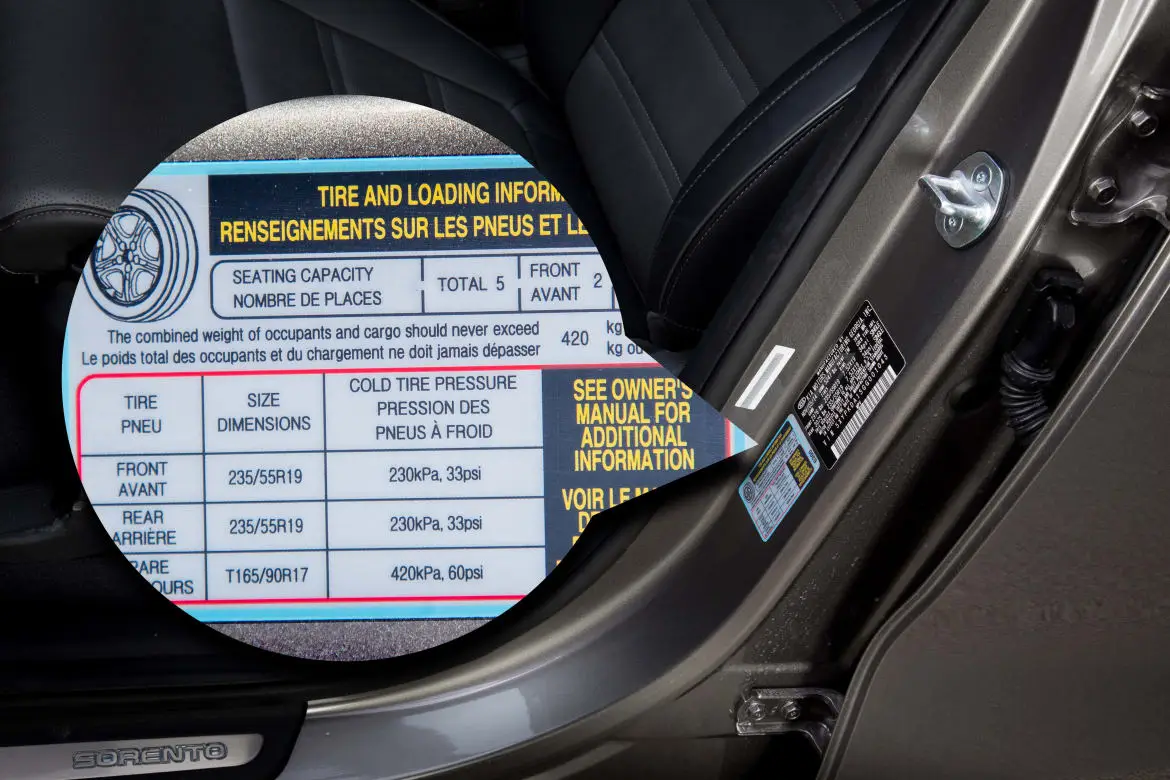
So, what should the PSI of your tires be? The answer is found on the placard inside your driver’s side door or in your owner’s manual—but the value of that answer is found in your bank account.
In the discipline of money management, we are often told to look for “small wins” that compound over time. Checking your tire pressure once a month is the ultimate small win. It requires almost zero capital investment (a quality digital gauge costs less than $15), yet it pays dividends in fuel savings, extends the life of a thousand-dollar asset, reduces the likelihood of emergency expenses, and protects your long-term financial liability.
In the grand scheme of a financial portfolio, tire pressure might seem like a minor detail. But for the savvy individual who understands that wealth is built through the accumulation of efficient habits, the PSI of your tires is a metric that deserves as much attention as your interest rates or your investment dividends. Don’t leave money on the road—keep your tires inflated, and your budget will follow suit.
aViewFromTheCave is a participant in the Amazon Services LLC Associates Program, an affiliate advertising program designed to provide a means for sites to earn advertising fees by advertising and linking to Amazon.com. Amazon, the Amazon logo, AmazonSupply, and the AmazonSupply logo are trademarks of Amazon.com, Inc. or its affiliates. As an Amazon Associate we earn affiliate commissions from qualifying purchases.