
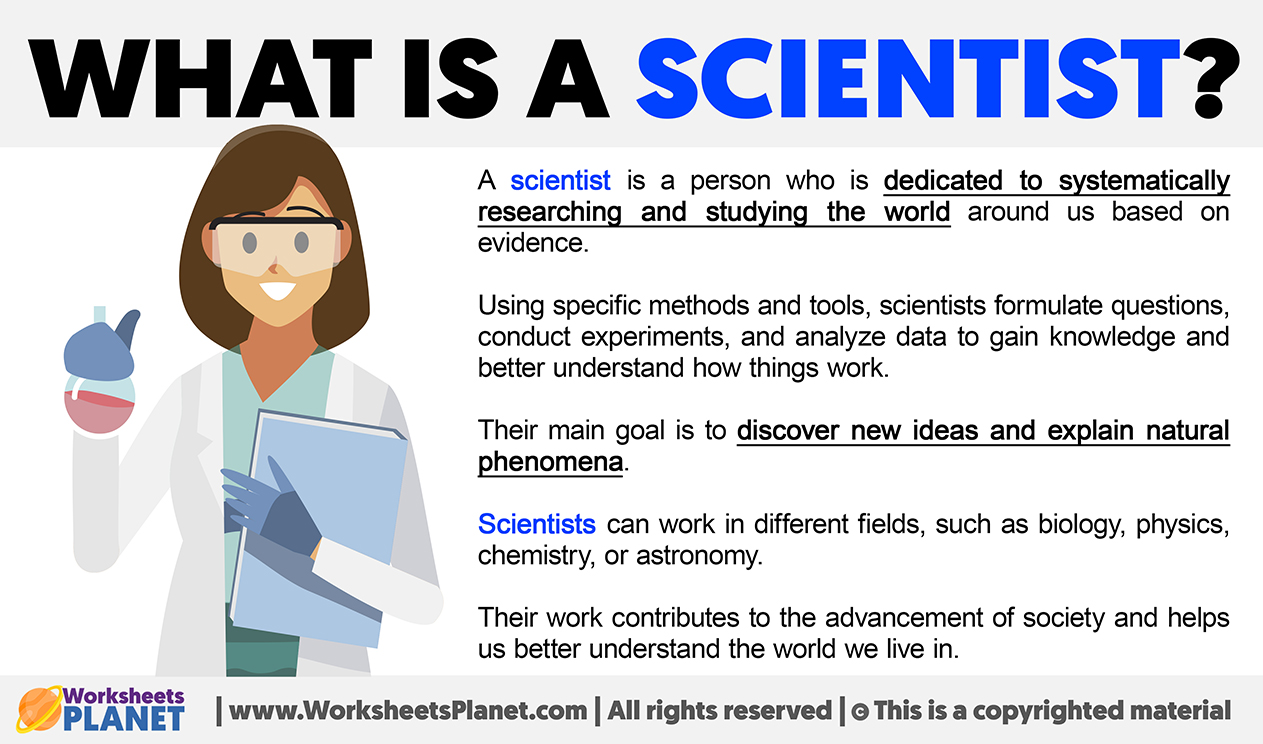
In the contemporary digital landscape, the term “scientist” has migrated from the laboratory to the server room. While traditional scientific inquiry remains vital, the emergence of the “Data Scientist” has redefined what it means to conduct research in the 21st century. Today, a scientist in the tech sector is a hybrid professional—part mathematician, part computer programmer, and part strategist. They are the architects of the algorithms that power our daily lives, from the recommendation engines on streaming platforms to the sophisticated neural networks driving autonomous vehicles. This article explores the intricate roles, technical methodologies, and ethical responsibilities that define what a scientist does within the modern technology ecosystem.

The Core Methodology: The Anatomy of Modern Data Science
At its heart, what a scientist does in the tech world is solve complex problems using the scientific method, adapted for digital environments. Instead of test tubes, they use datasets; instead of microscopes, they use high-performance computing clusters. The process is cyclical and rigorous, ensuring that data-driven decisions are backed by statistical significance rather than intuition.
Data Engineering and Preparation
Before any analysis can occur, a scientist must act as an architect. Data is rarely clean or structured when first collected. A significant portion of a scientist’s time is spent on “data wrangling”—the process of cleaning, transforming, and mapping raw data into a usable format. This involves building robust pipelines that can handle massive throughput, ensuring that the data used for modeling is accurate, timely, and relevant.
Exploratory Data Analysis (EDA)
Once the data is prepared, the scientist performs Exploratory Data Analysis. This is the “detective work” phase. By using statistical tools and visualization software, the scientist identifies patterns, detects anomalies, and tests hypotheses. This stage is crucial because it informs the direction of the entire project. It is here that a scientist determines whether the data contains the necessary signals to build a predictive model or if the initial assumptions were flawed.
Predictive Modeling and Algorithm Selection
The pinnacle of the technical workflow is the creation of models. Whether it is a simple linear regression or a complex deep learning architecture, the scientist must select the right tool for the job. They experiment with various algorithms, tuning hyperparameters and validating results against “test” data to ensure the model generalizes well to new, unseen information. This is where the “science” meets the “tech,” as professionals balance computational efficiency with predictive accuracy.
The Technological Arsenal: Leveraging AI and Machine Learning Tools
A modern scientist is only as effective as their toolkit. The rapid evolution of software and hardware has expanded the boundaries of what is possible, allowing scientists to process trillions of data points in real-time.
Integrated Development Environments and Programming Languages
Python and R remain the foundational languages of the scientific tech community. Python, in particular, has become the industry standard due to its versatility and the vast ecosystem of libraries such as Pandas for data manipulation, Scikit-Learn for machine learning, and Matplotlib for visualization. Scientists use these languages within Integrated Development Environments (IDEs) like Jupyter Notebooks or VS Code, which allow for a literate programming approach where code, results, and documentation coexist.
Deep Learning Frameworks and Neural Networks
For more advanced tasks like image recognition or natural language processing, scientists utilize frameworks like PyTorch or TensorFlow. These tools allow them to build complex neural networks that mimic human cognitive functions. By leveraging these frameworks, scientists can automate features that were previously thought to be uniquely human, such as understanding the sentiment of a text or identifying a specific object within a high-speed video feed.
Cloud Ecosystems and Scalable Infrastructure
The sheer scale of modern tech requires scientists to move beyond local machines. Cloud platforms such as Amazon Web Services (AWS), Google Cloud Platform (GCP), and Microsoft Azure provide the “heavy lifting” capabilities required for big data. Scientists use these platforms to deploy models into production, utilize distributed computing clusters, and access specialized hardware like Graphics Processing Units (GPUs) and Tensor Processing Units (TPUs) to accelerate training times for large-scale AI models.
The Ethical Sentinel: Security, Privacy, and Algorithmic Bias
What a scientist does extends beyond technical execution; they are increasingly the moral gatekeepers of the technology industry. As algorithms begin to influence hiring, lending, and law enforcement, the scientist’s role in ensuring fairness and security becomes paramount.
Mitigating Algorithmic Bias
Algorithms are not inherently neutral; they reflect the biases present in their training data. A scientist’s duty is to audit these systems for fairness. This involves testing models across different demographics to ensure that the output does not unfairly disadvantage specific groups. In tech research, “Explainable AI” (XAI) has become a major focus, where scientists work to make the “black box” of machine learning transparent, allowing human oversight into how decisions are made.
Data Privacy and Digital Security
In an era of frequent data breaches, the scientist must be an expert in digital security. This includes implementing techniques like differential privacy—a system for sharing information about a dataset by describing the patterns of groups within the dataset while withholding information about individuals. By integrating security into the research phase, scientists ensure that the products they build comply with global regulations like GDPR and CCPA, protecting user identity while still deriving valuable insights.
The Integrity of the Scientific Process in Tech
The pressure to deliver results in a fast-paced corporate environment can sometimes clash with scientific rigor. A true scientist in the tech space maintains the integrity of their work by adhering to peer-review processes, documenting their methodologies, and being transparent about the limitations of their findings. They resist “p-hacking” (manipulating data until it becomes statistically significant) and ensure that their conclusions are reproducible and robust.
From Theory to Application: High-Impact Industry Use Cases
The work of a scientist is best understood through its applications. In the tech sector, these applications are transforming how society functions, creating efficiencies that were unimaginable a decade ago.
Natural Language Processing (NLP) and Large Language Models
Perhaps the most visible output of modern data science is the rise of Large Language Models (LLMs). Scientists in this niche work on Natural Language Processing, teaching machines to understand, interpret, and generate human language. This involves massive-scale training on diverse datasets, enabling tools that can summarize documents, write code, and assist in creative endeavors, effectively bridging the gap between human intent and machine execution.
Computer Vision in Healthcare and Safety
In the field of computer vision, scientists develop algorithms that allow machines to “see.” In the medical tech field, this means AI that can detect early-stage cancers in radiological scans with higher accuracy than the human eye. In the realm of public safety, it powers the collision-avoidance systems in modern vehicles. These scientists translate raw pixels into life-saving actions through sophisticated pattern recognition.
Predictive Maintenance and Industrial IoT
In the industrial tech sector, scientists use the Internet of Things (IoT) to monitor hardware health. By analyzing sensor data from jet engines or factory floor machinery, they can predict when a part is likely to fail before it actually does. This “predictive maintenance” saves billions of dollars in downtime and prevents accidents, showcasing the scientist’s ability to turn abstract data streams into tangible operational value.
The Future Evolution: What the Next Generation of Scientists Will Do
As technology continues to accelerate, the role of the scientist will evolve once again. We are entering an era where the boundary between the digital and physical worlds is blurring, requiring scientists to adapt to new paradigms of computing.
The Rise of Quantum Computing
While still in its infancy, quantum computing represents the next frontier for tech scientists. Unlike classical computers that use bits (0s and 1s), quantum computers use qubits, which can exist in multiple states simultaneously. Scientists in this field are currently developing quantum algorithms that could solve optimization problems—such as drug discovery or complex logistics—that would take classical supercomputers thousands of years to calculate.
The Era of “Citizen” Data Science and Collaborative AI
As AI tools become more user-friendly, the “scientist” role is becoming more collaborative. We are seeing the rise of the “citizen data scientist”—non-technical professionals who use low-code/no-code AI tools to perform analysis. The professional scientist’s role will shift toward designing the high-level architectures and governance frameworks that allow these non-experts to work safely and effectively, acting more as a mentor and system designer.

Sustainable Tech and Green Algorithms
Finally, the scientists of tomorrow will be tasked with solving the environmental impact of technology itself. Training massive AI models requires immense electrical power. Future scientists will focus on “Green AI”—the development of more efficient algorithms that require less computational power and the optimization of data centers to reduce the carbon footprint of the digital economy. In this context, what a scientist does is not just about advancing technology, but ensuring that technology is sustainable for the planet.
In conclusion, what a scientist does in the tech world is a multifaceted endeavor that combines rigorous mathematics with creative problem-solving and ethical stewardship. They are the engine of modern innovation, turning the “oil” of the digital age—data—into the “fuel” of intelligence and progress. As they navigate the complexities of AI, security, and future computing, their work remains the bedrock upon which the next generation of technological breakthroughs will be built.
aViewFromTheCave is a participant in the Amazon Services LLC Associates Program, an affiliate advertising program designed to provide a means for sites to earn advertising fees by advertising and linking to Amazon.com. Amazon, the Amazon logo, AmazonSupply, and the AmazonSupply logo are trademarks of Amazon.com, Inc. or its affiliates. As an Amazon Associate we earn affiliate commissions from qualifying purchases.