
In the rapidly evolving landscape of technology, we often focus on the abstract: the speed of a processor, the complexity of a neural network, or the bandwidth of a fiber-optic connection. However, every piece of hardware, from the smartphone in your pocket to the industrial robots assembling electric vehicles, is governed by the immutable laws of classical mechanics. At the heart of these laws lies the “Newton”—the standard unit of force. While it may seem like a relic of high school physics, the Newton is the fundamental metric that allows engineers to design haptic interfaces, calibrate robotic limbs, and ensure the structural integrity of the gadgets we rely on daily.
To understand the unit of a Newton is to understand the language of physical interaction in the tech sector. It is the bridge between software commands and physical execution. This article explores the technical definition of the Newton and its critical role in the development of modern hardware, robotics, and immersive digital experiences.
The Physics of Hardware: Why the Newton Matters in Tech
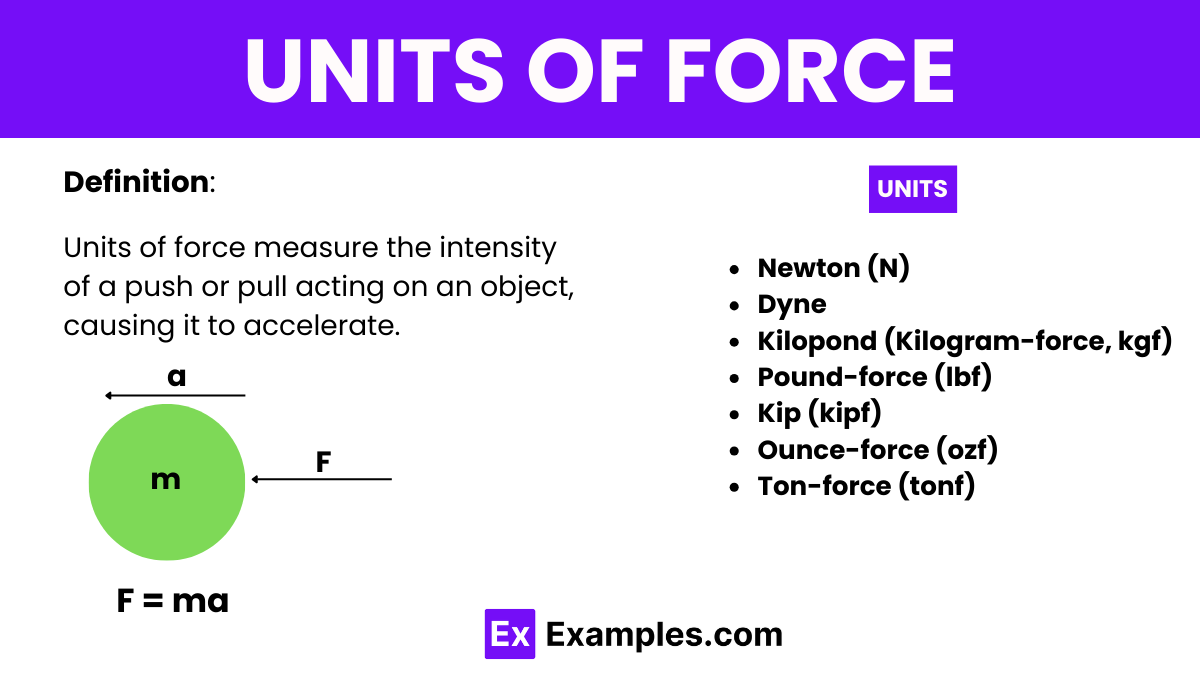
In technical terms, the Newton (symbol: N) is the International System of Units (SI) derived unit of force. It is defined as the amount of force necessary to accelerate one kilogram of mass at the rate of one meter per second squared ($1 kg cdot m/s^2$). In the context of technology manufacturing, this unit is the baseline for every mechanical specification.
Defining the Unit: From Classical Mechanics to Silicon Valley
Named after Sir Isaac Newton, the unit encapsulates his Second Law of Motion ($F=ma$). For tech developers working in hardware, this formula is not just theoretical; it is a design constraint. When a tech company like Apple or Samsung designs a foldable hinge for a smartphone, they are calculating the Newtons of force required to open the device versus the force that would cause the material to fatigue or snap. Precision at this level ensures that the “feel” of a device—its tactile resistance—is consistent across millions of units produced in a cleanroom.
The SI Standard and Precision Engineering
The transition from legacy units (like pound-force) to the Newton has allowed for globalized tech production. Because the Newton is an SI unit based on absolute physical constants, a robotic arm calibrated in Newtons in a laboratory in Germany will apply the exact same pressure as one in a factory in Shenzhen. This standardization is what allows for the high-tolerance manufacturing required for modern microelectronics, where even a few millinewtons of excess pressure could crush a delicate sensor or a silicon wafer.
Robotics and Automation: Calculating Force for Precision
The robotics industry is perhaps the most visible beneficiary of the Newton as a standard unit. As we move from “dumb” automation to AI-driven robotics, the ability to measure and respond to force in real-time is what separates a primitive machine from an advanced autonomous system.
Actuators and Torque: Translating Newtons into Movement
In robotics, the “output” of a motor is often measured in Newton-meters (Nm), a unit of torque. Torque is the rotational equivalent of linear force. When a tech firm develops an autonomous delivery drone or a bipedal robot, they must calculate the exact Newtons of thrust or lift required to counteract gravity. If the actuators cannot provide enough Newtons of force to move the mass of the robot’s chassis, the software—no matter how advanced—becomes useless. Engineering teams use “Force-Torque” sensors to give robots a sense of touch, allowing them to handle fragile items like eggs or glass by maintaining a specific Newton threshold.
Safety Protocols: Limiting Force in Collaborative Robots (Cobots)
A major trend in industrial tech is the rise of “Cobots”—robots designed to work alongside humans. Unlike traditional industrial robots that operate behind cages, Cobots are programmed with strict Newton-based force limits. If a Cobot detects an unexpected resistance (a human arm, for example) exceeding a pre-set number of Newtons, it instantly shuts down or reverses its motion. This software-hardware integration relies entirely on the Newton as the universal metric for safety and human-machine interaction.

Haptic Technology: Simulating Force in the Virtual World
As we move toward the “Metaverse” and more immersive digital environments, the Newton has moved from the physical factory floor into our sensory experiences. Haptic technology is the science of applying force, vibrations, or motions to the user to simulate the sense of touch.
Force Feedback in Gaming and VR
High-end racing simulators and VR controllers use “Force Feedback” to mimic the resistance of a steering wheel or the tension of a bowstring. These devices use internal motors to exert a specific amount of Newtons against the user’s hand. Tech reviewers often evaluate the quality of a gaming peripheral based on its “peak force” output. A steering wheel that can produce 10 Newtons of torque provides a much more realistic simulation of a high-speed turn than a cheaper model that only produces 2 Newtons. This is a direct application of physics to enhance digital immersion.
The Taptic Engine: How Newtons Define the User Experience
Modern smartphones have largely replaced mechanical buttons with haptic actuators. When you “click” a virtual button on a screen and feel a physical response, you are experiencing a carefully timed pulse of force measured in Newtons. Engineers at companies like Apple spend thousands of hours tuning their “Taptic Engines” to ensure that the force delivered is sufficient to trick the human nervous system into feeling a click, without being so strong that it vibrates the entire device unpleasantly. This subtle application of force is a masterclass in how classical physics informs modern UI/UX design.
Material Science and Structural Integrity in Gadget Design
The tech industry is constantly pushing the boundaries of material science, seeking to make devices thinner, lighter, and stronger. The Newton is the primary unit used to test the limits of these new materials, from aerospace-grade titanium to chemically strengthened glass.
Stress Tests and Newton Thresholds in Smartphone Durability
Before a new laptop or phone reaches the consumer, it undergoes rigorous “load testing.” This involves applying a specific number of Newtons to different points of the chassis to check for bending or breaking. For example, the “bendgate” controversies of the past were essentially failures of the device to withstand a certain Newton-threshold of pressure applied in a pocket. Today, tech labs use pneumatic presses calibrated in Newtons to ensure that a screen can withstand the force of a drop or the weight of a user sitting on it, translating physical force into data points that drive material innovation.
The Future of Wearables: Measuring Biological Force
The next frontier of wearable tech involves monitoring the forces the human body exerts. Smart insoles for athletes measure the Newtons of force during a footstrike to analyze running form and prevent injury. Similarly, smartwatches are beginning to explore blood pressure monitoring through force-sensing technology. By measuring the minute Newtons of pressure exerted by blood flow against a sensor on the wrist, these devices are turning the human body into a data stream. This integration of biological force and digital analysis represents the future of preventative healthcare technology.

Conclusion: The Invisible Code of the Physical World
While the “Newton” may seem like a simple concept from the era of the Enlightenment, it remains the invisible code that governs the physical manifestation of our digital dreams. In a world increasingly obsessed with software and AI, the unit of the Newton serves as a constant reminder that technology must eventually interact with the physical realm.
Whether it is the torque in a Tesla’s motor, the subtle haptic buzz of a notification, or the safety limits of a robotic surgeon, the Newton is the fundamental unit of measurement that ensures our technology is powerful, precise, and safe. As we continue to bridge the gap between the digital and the physical, the humble Newton will remain at the center of innovation, providing the framework for every force we feel and every motion we automate.
aViewFromTheCave is a participant in the Amazon Services LLC Associates Program, an affiliate advertising program designed to provide a means for sites to earn advertising fees by advertising and linking to Amazon.com. Amazon, the Amazon logo, AmazonSupply, and the AmazonSupply logo are trademarks of Amazon.com, Inc. or its affiliates. As an Amazon Associate we earn affiliate commissions from qualifying purchases.