
In the realms of digital design, software engineering, and computational geometry, the concept of symmetry is far more than an aesthetic preference; it is a mathematical necessity. Whether you are a UI/UX designer aligning elements on a high-resolution display or a software engineer developing complex algorithms for computer vision, understanding the fundamental math behind balance is crucial. At the heart of this balance lies a specific geometric property: the axis of symmetry.
In this technical guide, we will explore the equation of the axis of symmetry, its derivation in coordinate geometry, and its profound applications in modern technology—from responsive web design to the intricate calculations performed by artificial intelligence.

Understanding the Mathematical Foundation: The Parabolic Core
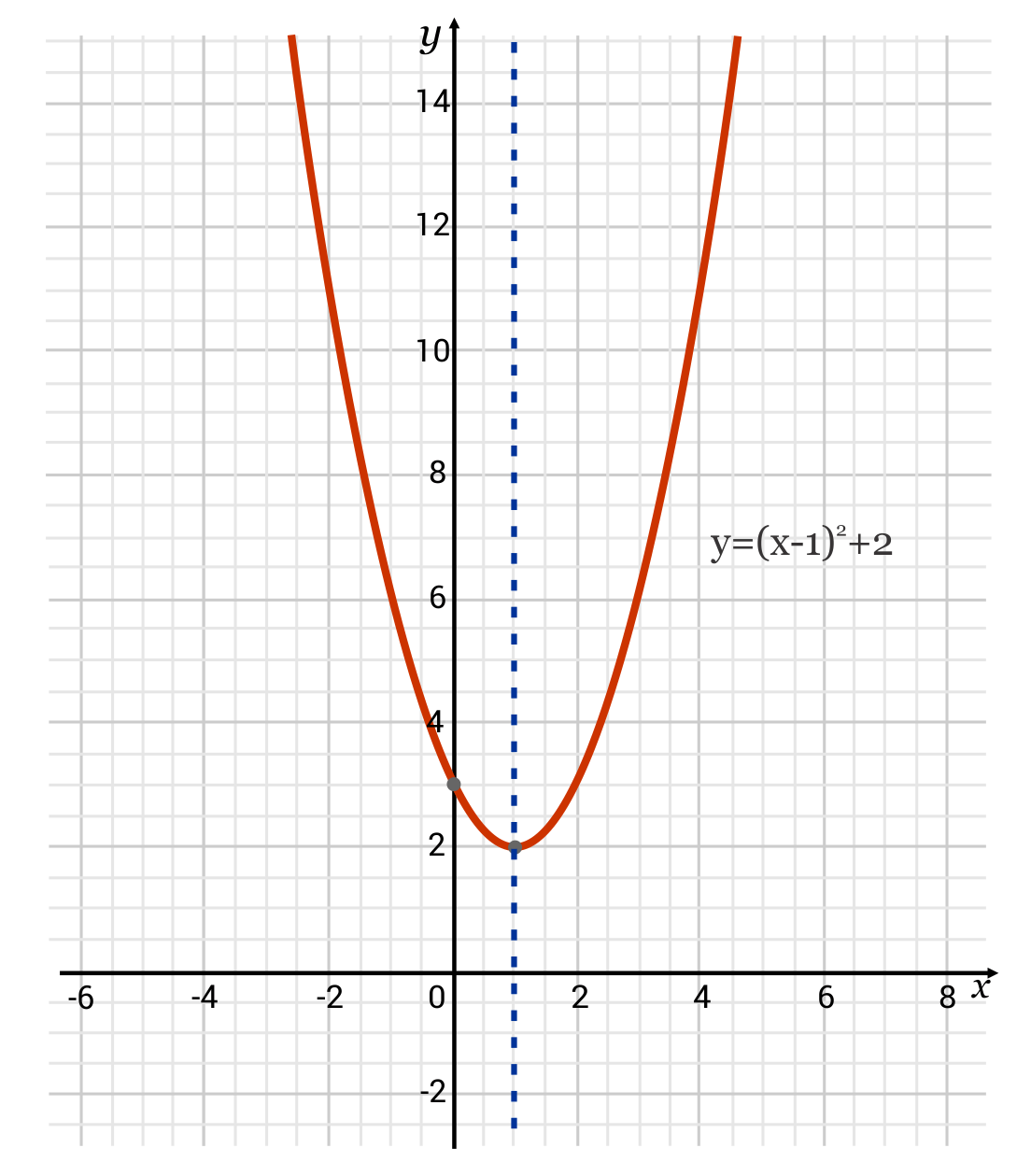
To understand how software interprets symmetry, we must first look at the mathematical definition. In algebra, the axis of symmetry is a vertical line that divides a parabola into two congruent halves. These halves are mirror images of each other, meaning every point on one side of the line has a corresponding point on the other side at the same distance.
The Standard Quadratic Equation
Most tech applications involving curves—such as pathfinding in game engines or vector rendering in graphic software—rely on quadratic functions. The standard form of a quadratic equation is:
y = ax² + bx + c
In this equation:
-
a determines the width and direction (upward or downward) of the curve.
-
b affects the horizontal position of the vertex.
-
c is the y-intercept.
Deriving the Equation of the Axis of Symmetry
The axis of symmetry always passes through the vertex (the highest or lowest point) of the parabola. For any vertical parabola defined by a quadratic function, the equation for the axis of symmetry is:
x = -b / 2a
In a software environment, this equation allows a system to calculate the exact horizontal midpoint of a curved trajectory or a visual element. If a developer is coding a physics engine for a mobile game, this calculation determines the peak and the lateral balance of a projectile’s path.
Symmetry in UI/UX Design and Front-End Development
In the tech world, the “axis of symmetry” is often translated into digital layouts. Professional UI/UX design relies on the human brain’s natural inclination toward balance. When a layout feels “right,” it is usually because the designer has respected the mathematical axis of the screen.
Grid Systems and Flexbox Logic
Modern front-end frameworks like Bootstrap or CSS Grid utilize the concept of the axis of symmetry to manage responsiveness. When you use the property justify-content: center; in CSS, you are essentially instructing the browser to find the axis of symmetry of the parent container and align the child elements equidistantly from that line.
Visual Weight and Golden Ratios
While the mathematical axis of symmetry is a hard line at $x = -b/2a$, designers often work with “perceived symmetry.” Tech tools like Adobe XD and Figma allow designers to snap elements to a center axis. This ensures that the visual weight of an application’s interface is distributed evenly. Without a firm grasp of where this axis lies, digital interfaces can become “heavy” on one side, leading to a poor user experience and higher bounce rates.
Mirroring in Vector Graphics
Graphic software such as Adobe Illustrator or Affinity Designer uses the equation of the axis of symmetry to perform “Mirror” operations. When a user draws one half of a complex logo and hits the “Reflect” tool, the software calculates the axis based on the user’s selection and uses coordinate geometry to duplicate every vector point across that line.
Computational Geometry and Software Engineering
Beyond simple layouts, the equation of the axis of symmetry plays a vital role in software engineering, particularly in fields like Computer-Aided Design (CAD) and 3D modeling.
Implementation in CAD Algorithms
In CAD software used for engineering and architecture, symmetry is a fundamental constraint. When a mechanical engineer designs a symmetrical part, the software doesn’t store two separate sets of data. Instead, it stores the data for one half and a mathematical transform representing the axis of symmetry. This reduces the memory footprint of the file and ensures that any change made to one side is perfectly reflected on the other.
Symmetry in Game Physics
Game developers use quadratic equations to model everything from the arc of a jumping character to the trajectory of a grenade. The axis of symmetry helps the engine predict where an object will land. By calculating $x = -b/2a$, the engine can pre-calculate the landing zone even before the object reaches its peak height (the vertex). This is essential for AI “bots” to react realistically to player movements.
Data Structures for Symmetric Matrices
In the backend of tech stacks involving heavy data processing, developers often use symmetric matrices. A matrix is symmetric if it is equal to its transpose. While this is a linear algebra concept rather than a parabolic one, the logic remains the same: the system optimizes performance by recognizing that the data on one side of a “diagonal axis” is a mirror of the other, allowing for 50% faster processing in specific algorithmic operations.
The Role of Symmetry in Computer Vision and AI
Perhaps the most cutting-edge application of the axis of symmetry is in the field of Computer Vision (CV) and Artificial Intelligence. AI tools are now trained to recognize and analyze objects based on their geometric properties.
Facial Recognition and Biometrics
Facial recognition software begins by identifying the central axis of a human face. Humans are bilaterally symmetrical, meaning our axis of symmetry runs vertically down the center of our nose. AI algorithms, such as those used in Apple’s FaceID or security software, use this axis to measure the distance between eyes, the width of the jawline, and the positioning of the ears. If the software cannot establish a clear axis of symmetry, the authentication process fails.
Pattern Recognition in Machine Learning
In industrial tech, AI-powered cameras scan manufacturing lines for defects. By applying the equation of the axis of symmetry to images of products (like a smartphone screen or a car part), the AI can detect deviations. If the software calculates that the left side of a product does not match the right side across the calculated axis, it flags the item as defective.
Generative AI and Image Synthesis
AI tools like Midjourney and DALL-E use symmetry to create realistic images. When a user prompts the AI to generate a “portrait,” the neural network uses its training data to ensure the eyes and features are balanced around a central axis. Early iterations of generative AI often struggled with this, leading to “uncanny valley” results where faces appeared lopsided. Modern updates have refined the mathematical weighting of the axis of symmetry to produce near-perfect human likenesses.
Digital Security and Cryptography: Symmetry in Logic
While we have focused on the visual and geometric aspects, the concept of symmetry—and the “balance” it implies—is also a cornerstone of digital security.
Symmetric vs. Asymmetric Encryption
In the world of cybersecurity, “symmetry” refers to the relationship between keys. In symmetric-key cryptography, the same “axis” (key) is used for both encryption and decryption. This is highly efficient and fast, much like the mathematical equation $x = -b/2a$ is a direct and fast way to find a center point.
However, technology has evolved toward asymmetric encryption (public-key cryptography) to solve the problem of key distribution. Understanding the “balance” of these keys is essential for developers building secure apps, digital wallets, and encrypted communication tools like Signal or WhatsApp.

Conclusion: The Mathematical Axis of Modern Tech
The equation of the axis of symmetry, $x = -b/2a$, is far more than a relic of high school algebra. It is a fundamental building block of the digital world. It informs how our software looks, how our games play, how our engineers design, and how our AI perceives the world.
For tech professionals, recognizing the ubiquity of this equation allows for better coding practices, more intuitive design, and more efficient algorithms. Whether you are centering a button on a webpage or programming the flight path of a drone, you are relying on the timeless logic of the axis of symmetry to bring balance and functionality to your digital creations. By mastering this simple equation, you gain a deeper understanding of the geometric harmony that governs the modern technological landscape.
aViewFromTheCave is a participant in the Amazon Services LLC Associates Program, an affiliate advertising program designed to provide a means for sites to earn advertising fees by advertising and linking to Amazon.com. Amazon, the Amazon logo, AmazonSupply, and the AmazonSupply logo are trademarks of Amazon.com, Inc. or its affiliates. As an Amazon Associate we earn affiliate commissions from qualifying purchases.