
In the modern business landscape, uncertainty is the only constant. From fluctuating market prices and geopolitical shifts to internal operational failures, the threats to a company’s financial health are multifaceted and ever-evolving. Historically, businesses managed these threats in silos—the finance department handled credit risk, the IT department handled data breaches, and the legal team handled compliance. However, as organizations grew more complex, this fragmented approach proved insufficient. Enter Enterprise Risk Management (ERM).
ERM is a holistic, top-down strategy that aims to identify, assess, and prepare for any potential dangers, hazards, and other opportunities for disaster that may interfere with an organization’s operations and objectives. In the realm of business finance, ERM is not merely a defensive tactic; it is a sophisticated tool used to enhance decision-making, optimize capital allocation, and ensure long-term value creation. This article explores the depths of ERM, its core frameworks, and its critical role in the financial sustainability of a modern enterprise.
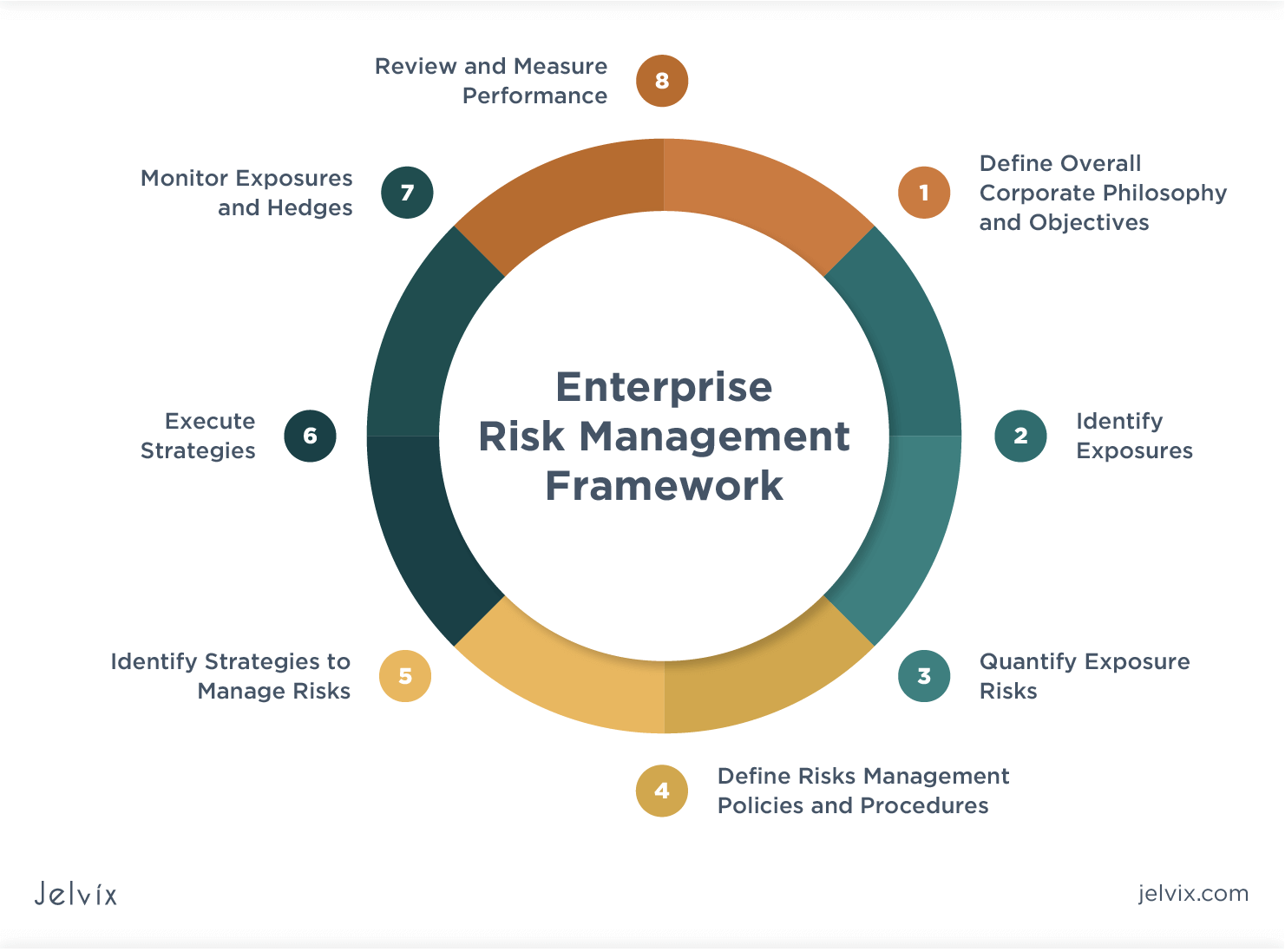
The Foundational Components of an ERM Framework
To understand what ERM is, one must first understand its structure. Unlike traditional risk management, which often focuses on “insurable” losses, ERM looks at the entire spectrum of risks—strategic, operational, financial, and reputational. A robust ERM framework is built on several foundational pillars that allow a company to view risk through a unified lens.
Risk Culture and Governance
The success of ERM starts at the top. Governance refers to the board of directors’ oversight and the management’s commitment to a culture of risk awareness. This involves establishing a “risk appetite”—the amount of risk an organization is willing to accept in pursuit of its financial goals. Without a strong culture where employees at all levels feel empowered to report potential issues, even the most sophisticated financial models will fail.
Objective Setting
ERM does not exist in a vacuum; it is inextricably linked to a company’s strategic objectives. For a financial officer, this means aligning risk management with the firm’s growth targets and ROI expectations. By setting clear objectives, a company can identify “upside risks” (opportunities) and “downside risks” (threats). This ensures that the organization isn’t just playing defense but is also taking calculated risks that could lead to significant financial gain.
Internal Environment
The internal environment is the tone of an organization. it influences the risk consciousness of its people. It includes the organization’s risk management philosophy, integrity, ethical values, and the environment in which they operate. For a business focused on money and finance, this involves rigorous internal controls and a clear hierarchy of accountability to prevent fraud and financial mismanagement.
Methodologies for Identifying and Assessing Financial Risk
Once the framework is in place, the organization must move into the active phase of risk management. This involves a systematic process of identifying what could go wrong and quantifying the potential impact on the balance sheet.
Identification of Risk Events
Risk identification involves scanning the internal and external environments for events that could affect the execution of strategy. In the financial niche, this includes monitoring interest rate volatility, currency exchange fluctuations, and credit defaults. Advanced organizations use “horizon scanning” to look for emerging risks, such as changes in international tax laws or shifts in consumer spending habits that could impact future revenue streams.
Qualitative and Quantitative Assessment
Once identified, risks must be assessed based on their likelihood and their potential impact.
-
Qualitative Assessment: This involves expert judgment and “risk heat maps” to categorize risks as high, medium, or low. This is often used for risks that are hard to quantify, such as reputational damage.
-
Quantitative Assessment: This is the bread and butter of financial ERM. It involves tools like Value at Risk (VaR), Stress Testing, and Monte Carlo simulations. These mathematical models allow CFOs to understand the “worst-case scenario” in dollar terms, helping them decide how much capital must be held in reserve to weather a potential storm.
Risk Response and Mitigation Strategies
After assessment, management must decide how to respond. There are generally four paths:
-
Avoidance: Exiting the activity that gives rise to the risk (e.g., deciding not to enter a highly volatile foreign market).
-
Reduction: Implementing controls to lessen the impact or likelihood (e.g., diversifying a portfolio to reduce concentration risk).
-
Sharing/Transfer: Moving a portion of the risk to a third party (e.g., purchasing insurance or using financial derivatives like hedges).
-
Acceptance: Doing nothing because the risk falls within the established risk appetite and the cost of mitigation outweighs the benefit.

The Impact of ERM on Corporate Finance and Valuation
For investors and stakeholders, ERM is a signal of institutional maturity. A well-executed ERM program has a direct correlation with a company’s financial performance and its attractiveness to the capital markets.
Lowering the Cost of Capital
Lenders and credit rating agencies look favorably upon companies with integrated ERM programs. By demonstrating a proactive approach to risk, a company can lower its perceived risk profile, which often results in better credit ratings and lower interest rates on debt. In the world of business finance, saving even half a percentage point on a multi-million dollar loan can result in significant bottom-line growth.
Enhancing Capital Allocation
One of the most profound benefits of ERM is its ability to inform capital allocation. When a company understands the risk-adjusted return on its various projects, it can deploy capital more efficiently. Rather than funding the project with the highest potential revenue, management can fund the project with the best “risk-to-reward” ratio. This scientific approach to spending ensures that the company’s money is working as hard as possible while remaining protected from catastrophic loss.
Protecting Shareholder Value and Transparency
In an era of high regulatory scrutiny (such as Sarbanes-Oxley requirements), ERM provides a framework for transparent reporting. When a company can clearly articulate its risks and how it manages them in annual reports, it builds trust with shareholders. This transparency reduces stock price volatility. Investors are generally willing to pay a premium for a company that can demonstrate it has a handle on its future uncertainties.
Implementing ERM: Best Practices for Financial Leaders
Transitioning from traditional risk management to an ERM model is a significant undertaking. It requires a shift in mindset from “checking boxes” to “strategic thinking.”
Integrating Data and Technology
While this is a finance-focused discussion, the role of data cannot be ignored. Financial leaders must leverage integrated software systems that provide real-time data. ERM requires a “single version of the truth” regarding the company’s financial position. Utilizing centralized dashboards allows the finance team to see how a risk in the supply chain might ripple through to affect quarterly cash flow projections.
Establishing the Chief Risk Officer (CRO) Role
The rise of ERM has seen the emergence of the Chief Risk Officer. The CRO acts as the bridge between the board, the CEO, and the various department heads. In a financial context, the CRO ensures that the pursuit of profit does not lead the company off a cliff. This role is essential for maintaining an objective view of risk, independent of the pressures of hitting monthly sales targets.
Continuous Monitoring and Feedback Loops
ERM is not a “set it and forget it” system. The global economy is dynamic, and a risk that was negligible last year could be a major threat today. Effective ERM requires continuous monitoring and regular “risk audits.” These feedback loops allow the organization to learn from past mistakes and refine their assessment models, ensuring the financial safety net remains strong as the business scales.
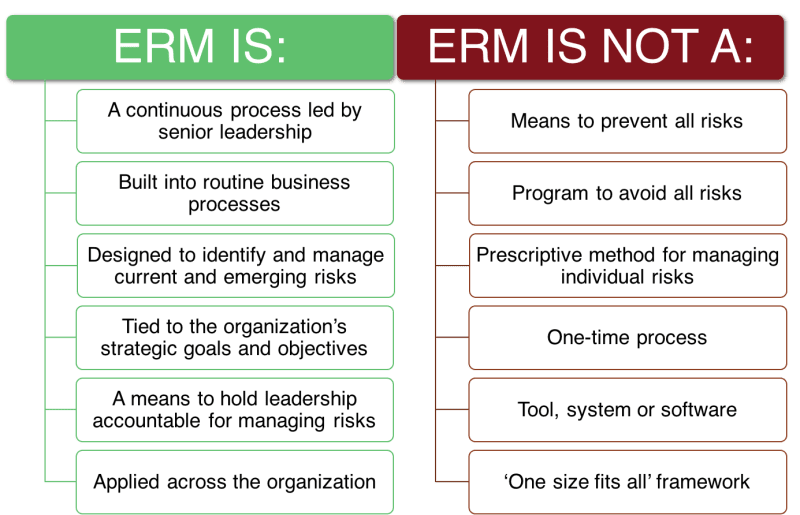
Conclusion: ERM as a Competitive Advantage
In summary, Enterprise Risk Management is far more than a compliance exercise or a bureaucratic hurdle. It is a fundamental discipline of modern business finance that allows organizations to navigate the complexities of the global market with confidence. By integrating risk management into the very fabric of strategic planning, companies can protect their assets, optimize their earnings, and create a resilient foundation for future growth.
For the savvy financial professional or business owner, understanding “what is ERM” is the first step toward moving from a state of reaction to a state of strategic proactivity. In a world where financial shocks are frequent and severe, the ability to manage risk across the entire enterprise is not just a best practice—it is a prerequisite for survival and the ultimate key to sustainable wealth creation.
aViewFromTheCave is a participant in the Amazon Services LLC Associates Program, an affiliate advertising program designed to provide a means for sites to earn advertising fees by advertising and linking to Amazon.com. Amazon, the Amazon logo, AmazonSupply, and the AmazonSupply logo are trademarks of Amazon.com, Inc. or its affiliates. As an Amazon Associate we earn affiliate commissions from qualifying purchases.