
In the dynamic world of culinary technology, few innovations have reshaped home and professional kitchens quite as significantly as convection cooking. For decades, the standard oven, relying primarily on radiant heat, was the undisputed king of baking and roasting. However, with the advent of convection technology, a new era of faster, more efficient, and often superior cooking results emerged, transforming how we approach everything from a perfectly browned roast chicken to delicate pastries.
At its core, convection cooking is about intelligent heat distribution. Unlike conventional ovens that heat air from a stationary source and rely on natural circulation, a convection oven introduces a fan and an exhaust system to actively circulate hot air throughout the cooking chamber. This forced air movement creates a more uniform temperature, eliminates hot spots, and accelerates the cooking process. But understanding “what is convection cooking” goes beyond merely identifying a fan; it delves into the science of heat transfer, the ingenious engineering that brought this technology to life, and the profound impact it has had on our culinary capabilities. This article will explore the fundamental principles, myriad benefits, practical application tips, and evolving landscape of convection technology, positioning it as an indispensable gadget in the modern kitchen.
The Science Behind Convection: How It Works
To truly appreciate convection cooking, one must first grasp the basic principles of heat transfer and how this technology ingeniously manipulates them for culinary benefit. The magic of a convection oven lies in its active rather than passive approach to heat distribution, a fundamental shift from traditional oven designs.
Understanding Heat Transfer: Conduction, Convection, and Radiation
Heat transfer in cooking primarily occurs through three mechanisms:
-
Conduction: This is the direct transfer of heat through contact. When a baking sheet touches a hot oven rack, or food sits directly on a hot pan, heat is transferred by conduction.
-
Radiation: This involves heat transfer through electromagnetic waves. The glowing heating elements in a conventional oven radiate heat directly onto the food and the oven walls.
-
Convection: This is the transfer of heat through the movement of fluids (liquids or gases). In a conventional oven, hot air naturally rises, cools, and then sinks, creating a gentle, slow circulation. This is natural convection. Convection ovens, however, harness forced convection.
The breakthrough of convection technology was to take this natural phenomenon and accelerate it. By actively moving hot air, a convection oven significantly enhances the efficiency of heat transfer by convection, making it the dominant heat transfer mechanism inside the cooking cavity.
The Role of the Fan and Exhaust System
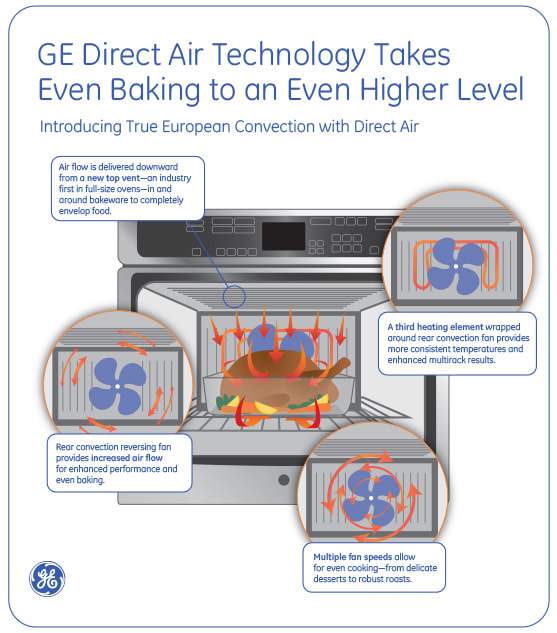
The central component of any convection oven is its fan, strategically placed at the back of the oven cavity. This fan does two critical jobs:
-
Circulates Hot Air: As heating elements generate heat, the fan pulls air from the oven cavity, pushes it over the heating elements (or, in some advanced models, an additional heating element specifically for the fan), and then blows it back into the cavity. This continuous circulation ensures that every part of the oven interior is bathed in evenly heated air. This eliminates the dreaded “hot spots” and “cold spots” often found in conventional ovens, where one side of a cookie sheet might burn while the other remains undercooked.
-
Manages Humidity: Coupled with the fan is an exhaust system, often a small vent that allows some moist air to escape the oven. When food cooks, it releases moisture. In a conventional oven, this moisture can accumulate, creating a humid environment that hinders browning and crisping. By venting this humid air, a convection oven maintains a drier environment, which is crucial for achieving crispy textures and excellent browning, like on roasted vegetables or poultry skin.
From Conventional to Convection: A Technological Leap
The evolution from conventional to convection ovens represents a significant technological leap in kitchen appliances. Early ovens were simple boxes with heating elements. The addition of a fan and exhaust system, powered by precise motor technology and controlled by sophisticated thermostats, transformed these simple heat boxes into dynamic cooking environments. This shift moved ovens from being passive heat chambers to active, air-management systems, offering unparalleled control over the cooking process and delivering consistently superior results. It’s an exemplary case of how integrating mechanical engineering with controlled thermodynamics can revolutionize an everyday gadget.
Advantages of Convection Technology in the Kitchen
The technological advancements embedded in convection ovens translate directly into a host of tangible benefits for anyone passionate about cooking. These advantages extend beyond mere convenience, impacting the quality of food, efficiency of operation, and versatility in the kitchen.
Faster and More Even Cooking
One of the most immediate and appreciated benefits of convection cooking is its ability to cook food faster and more evenly. Because hot air is constantly circulating, it envelops food from all sides, transferring heat more efficiently than still air. This intensified heat transfer means that food cooks more quickly, often requiring a reduction in cooking time by 25% or more compared to conventional methods. The elimination of hot and cold spots also ensures that all items on a baking sheet, or different parts of a large roast, cook at the same rate, leading to perfectly consistent results every time. This is particularly beneficial for batch baking or roasting multiple dishes simultaneously.
Enhanced Browning and Crisping
The active circulation of hot, dry air is a game-changer for achieving desirable textures. The continuous airflow strips away the thin layer of cool air that often insulates food in a conventional oven, accelerating the Maillard reaction – the chemical process responsible for browning and flavor development. The exhaust system’s ability to vent moisture further contributes to a drier cooking environment. This combination results in beautifully caramelized roasted vegetables, consistently crispy chicken skin, perfectly seared meats, and golden-brown baked goods with delightful crusts, textures often difficult to achieve with conventional methods.
Energy Efficiency and Cost Savings
From an environmental and economic perspective, convection ovens offer compelling advantages. Their faster cooking times inherently mean less time the oven needs to be on, translating directly into reduced energy consumption. Furthermore, because the circulating hot air is so efficient at transferring heat, convection ovens often require a lower cooking temperature (typically 25-50°F or 15-25°C less than conventional recipes) to achieve the same results. This dual benefit—lower temperature and shorter cooking time—significantly reduces the overall energy footprint and operational costs of using the oven, making them a more sustainable choice for modern homes.
Versatility Across Various Cuisines
The precise control over heat and moisture offered by convection technology makes it incredibly versatile. While it excels at roasting and baking, its benefits extend to a wide range of culinary applications:
-
Baking: Flaky pie crusts, evenly risen cakes, and perfectly browned cookies.
-
Roasting: Tender, juicy meats with crispy exteriors, uniformly cooked vegetables.
-
Dehydrating: The low, even heat and air circulation are ideal for making fruit leathers or jerky.
-
Reheating: Convection can often reheat leftovers more effectively than a microwave, crisping them up rather than making them soggy.
-
Broiling/Grilling: Many convection ovens also integrate broil functions, with the fan helping to distribute heat for more even results.
This adaptability positions convection ovens as a central, multi-functional gadget in a tech-savvy kitchen, capable of handling complex recipes from diverse culinary traditions.
Navigating Convection: Tips for Optimal Use
While convection technology offers clear advantages, mastering its use requires a slight adjustment from conventional cooking habits. Understanding these nuances ensures you unlock the full potential of your convection oven.
Temperature Adjustments: The Golden Rule
The most critical adjustment when switching to convection is often temperature. Due to the enhanced heat transfer, most recipes will require a temperature reduction. A common rule of thumb is to decrease the suggested temperature by 25°F (15°C) from what a conventional recipe calls for. For instance, if a recipe suggests baking at 375°F in a conventional oven, you would set your convection oven to 350°F. Some modern ovens offer an “auto-convert” feature, which automatically adjusts the temperature for you. Always monitor your food closely, especially during the first few uses, as precise adjustments can vary slightly between oven models and food types.
Choosing the Right Cookware

The type of cookware used can also influence convection cooking results. While most cookware is suitable, some materials interact better with circulating air:
-
Low-sided pans: For items like cookies or roasted vegetables, using baking sheets or roasting pans with low sides allows maximum exposure to the circulating air, promoting even cooking and browning.
-
Avoid covering: Resist the urge to cover food with foil unless the recipe specifically calls for steaming or slow cooking, as covering can impede the browning and crisping benefits of convection.
-
Dark vs. Light: Dark, nonstick pans absorb more radiant heat, which, when combined with convection, can lead to over-browning. You might need to reduce temperature further or shorten cooking times when using dark bakeware. Light-colored, reflective pans are often ideal for evenly baked goods in a convection oven.
Avoiding Overcrowding: Maximizing Airflow
The efficiency of a convection oven hinges on the unimpeded circulation of hot air. Overcrowding the oven cavity, either by placing too many trays or by using pans that are too large, can block this crucial airflow. This creates dead zones where air cannot circulate effectively, negating the primary benefit of convection and leading to uneven cooking. Always ensure there is ample space around your food and between trays to allow hot air to move freely. Using only one or two racks at a time, especially for larger items, is often recommended.
Best Practices for Different Food Types
-
Roasting Meats and Vegetables: Convection is excellent for roasts, poultry, and vegetables, providing beautiful browning and crispy textures. No need to turn items as frequently.
-
Baked Goods (Cookies, Pastries): Ideal for achieving even browning and crisp exteriors. Keep an eye on doneness as they cook faster. For delicate items like soufflés or custards, some chefs prefer not to use convection as the fan can sometimes disrupt their delicate structure, though many modern ovens have gentler convection settings.
-
Cakes and Breads: Convection can lead to a firmer crust on bread and cakes. For very delicate cakes, some prefer standard baking, but most everyday cakes benefit from convection’s even heat. Reduce temperature and check frequently.
-
Multiple Dishes: Convection’s even heat distribution makes it perfect for cooking multiple dishes simultaneously without flavor transfer or varying doneness.
Types of Convection Ovens and Advanced Features
The technology behind convection has not stood still; it continues to evolve, offering consumers a range of options and increasingly sophisticated features that integrate with the smart home ecosystem. Understanding these variations helps in selecting the right gadget for one’s culinary and technological needs.
True Convection vs. Standard Convection
Not all convection ovens are created equal. The primary distinction lies between “standard convection” and “true convection” (also known as “European convection” or “third-element convection”):
-
Standard Convection: These ovens feature a fan at the back of the oven to circulate hot air, but they rely on the existing heating elements (top and bottom) of a conventional oven to generate the heat. The fan simply redistributes this heat more effectively.
-
True Convection: This is the more advanced system. In addition to the fan, true convection ovens include a third heating element specifically positioned around or behind the fan. This dedicated heating element preheats the air before it’s blown into the cavity, ensuring the circulated air is already at the desired temperature. This results in even more precise temperature control, faster preheating, and superior cooking uniformity, especially when cooking on multiple racks. This is the pinnacle of convection technology for the home kitchen.
Convection Microwave Combos: Space-Saving Innovation
For kitchens where space is at a premium, convection microwave combination ovens offer a versatile 2-in-1 solution. These appliances integrate both microwave functionality and a convection fan system. This means you can rapidly reheat or defrost with microwave power, then switch to convection mode to roast a small chicken or bake a casserole, achieving browning and crisping that a standalone microwave cannot. While often smaller than full-sized ovens, they represent a significant technological advancement in compact kitchen gadgetry, providing powerful cooking options in a single footprint.
Smart Convection Ovens: The Future of Cooking Tech
As with many home appliances, convection ovens are increasingly integrating smart technology. Modern smart convection ovens can connect to Wi-Fi, allowing users to:
-
Remote Control: Preheat the oven, adjust settings, or check cooking progress from a smartphone app.
-
Voice Assistant Integration: Control the oven using voice commands via smart home assistants like Amazon Alexa or Google Assistant.
-
Recipe Assistance: Access thousands of recipes with pre-programmed settings that automatically adjust temperature and time for convection cooking.
-
Self-Diagnostics: Receive notifications about maintenance needs or potential issues.
-
Software Updates: Benefit from over-the-air updates that introduce new features or improve performance.
These smart features transform the oven from a mere cooking tool into an interconnected, intelligent kitchen hub, making cooking more convenient, efficient, and accessible. It’s a testament to how traditional gadgets are being reimagined through digital integration.
Maintenance and Longevity of Convection Appliances
Like any sophisticated gadget, convection ovens benefit from proper care. Regular cleaning, especially of the fan area (following manufacturer instructions), ensures optimal airflow and prevents grease buildup that could impact performance. Many modern convection ovens feature self-cleaning cycles, which utilize high heat to incinerate food residue. With proper maintenance, a quality convection oven can be a durable and reliable cornerstone of your kitchen technology for many years, offering consistent performance and superior culinary results.
Is Convection Cooking Right for You? Evaluating the Investment
Deciding whether to invest in a convection oven or utilize its features if you already have one involves considering your cooking style, priorities, and willingness to adapt to new technology.
Assessing Your Culinary Needs and Habits
Convection technology is not a one-size-fits-all solution, but its benefits cater to a wide range of culinary pursuits:
-
Frequent Bakers & Roasters: If you regularly bake cookies, bread, cakes, or roast meats and vegetables, the even cooking, browning, and faster times offered by convection will be a significant advantage.
-
Entertainers: For those who frequently host, the ability to cook multiple dishes simultaneously and consistently achieve professional-quality results makes convection an invaluable tool.
-
Health-Conscious Cooks: Convection can help reduce the need for excessive oils, as the dry heat crisps food effectively.
-
Beginners vs. Experts: While there’s a slight learning curve, the benefits often outweigh the initial adjustment for both novice and experienced cooks looking to elevate their kitchen gadgetry.
If your cooking is primarily limited to simple microwave meals or occasional oven use for frozen pizzas, the advanced features of convection might be underutilized. However, for anyone looking to expand their culinary horizons and achieve superior results, it’s a compelling upgrade.
The Learning Curve and Adaptation
Transitioning from a conventional oven to convection involves a period of adaptation. The primary adjustments — temperature reduction and time management — require conscious effort initially. Recipes might need tweaking, and visual cues (like browning levels) will become more important than strict timers. However, this learning curve is generally short, and the rewards in terms of food quality and efficiency are well worth the effort. Think of it like learning a new operating system; initially unfamiliar, but ultimately more powerful and intuitive.
Environmental Impact and Sustainability Considerations
As consumers become more aware of their environmental footprint, the energy efficiency of convection ovens stands out. Their ability to cook faster and at lower temperatures directly translates to reduced energy consumption, contributing to lower household emissions and utility bills. Investing in a durable, energy-efficient appliance like a convection oven aligns with sustainable living practices, reducing the need for frequent replacements and minimizing waste. Furthermore, the ability to perfectly cook a wide range of foods might reduce food waste by delivering more appealing and better-tasting meals.

Conclusion
Convection cooking is far more than just an oven with a fan; it’s a testament to how applied technology can fundamentally enhance an everyday task. By harnessing the principles of forced air circulation and efficient heat transfer, convection ovens offer faster cooking, superior browning and crisping, greater energy efficiency, and unparalleled versatility. From the basic standard convection model to the advanced true convection systems and smart-connected appliances, this technology continues to evolve, making it an increasingly indispensable gadget in the modern kitchen.
Understanding “what is convection cooking” is to grasp not just a feature, but a transformative approach to preparing food. While it demands a minor adjustment in cooking habits, the benefits—from perfectly roasted vegetables to evenly baked cookies—are profound, making the convection oven a wise investment for anyone seeking to elevate their culinary skills through intelligent, efficient kitchen technology. As home kitchens continue to integrate more sophisticated gadgets, the convection oven stands as a shining example of how innovative engineering can make cooking both simpler and more exceptional.
aViewFromTheCave is a participant in the Amazon Services LLC Associates Program, an affiliate advertising program designed to provide a means for sites to earn advertising fees by advertising and linking to Amazon.com. Amazon, the Amazon logo, AmazonSupply, and the AmazonSupply logo are trademarks of Amazon.com, Inc. or its affiliates. As an Amazon Associate we earn affiliate commissions from qualifying purchases.