
Argentina possesses one of the most complex and volatile monetary systems in the modern world. For investors, travelers, and financial analysts, the Argentine Peso (ARS) represents more than just a medium of exchange; it is a case study in macroeconomic theory, inflation dynamics, and the resilience of a population navigating perpetual fiscal shifts. To understand Argentine currency is to understand a history of radical shifts from immense wealth to recurring debt crises, and the unique financial instruments that have emerged as a result.
The Evolution and History of the Argentine Peso
The history of currency in Argentina is a narrative of transformation and, frequently, a battle against loss of value. The current version of the currency, the Peso (symbol: $; ISO code: ARS), was established in 1992 following a period of hyperinflation that rendered its predecessor, the Austral, virtually worthless.
From the Gold Standard to the Austral
In the early 20th century, Argentina was among the ten wealthiest nations in the world per capita. During this era, the “Peso Moneda Nacional” was a respected international currency backed by significant gold reserves. However, the mid-20th century brought political instability and a shift toward protectionist economic policies, leading to the first of many cycles of devaluation. Between 1970 and 1992, Argentina changed its currency four times, dropping a total of thirteen zeros from its face value as the country struggled with unsustainable fiscal deficits.
The Convertibility Plan and the 2001 Crisis
In 1991, the government introduced the Convertibility Law, which pegged the Argentine Peso to the United States Dollar at a 1:1 ratio. This “Currency Board” system was designed to kill hyperinflation by legally preventing the Central Bank from printing money not backed by foreign reserves. While it initially brought price stability and a surge in foreign investment, the rigid peg eventually made Argentine exports too expensive and left the country unable to respond to external shocks. The system collapsed in 2001, leading to a massive default and a violent devaluation that saw the peso lose 75% of its value in weeks. This trauma continues to define the financial psyche of Argentina today.
Current Denominations and Security Features
In a high-inflation environment, the physical reality of currency changes rapidly. The Argentine Central Bank (BCRA) has had to frequently issue higher denomination notes to keep pace with the decreasing purchasing power of the peso.
Banknotes and Coins in Circulation
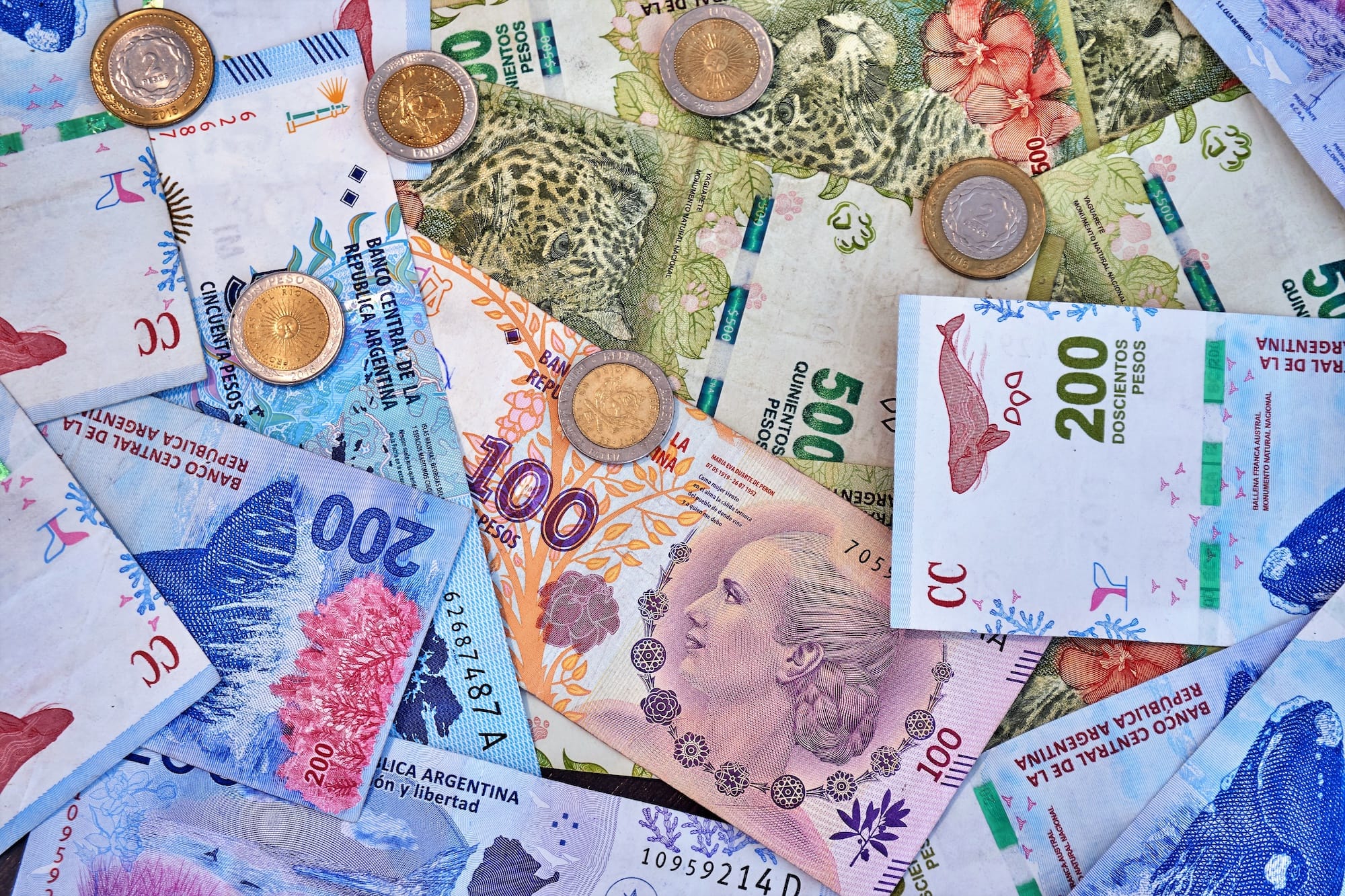
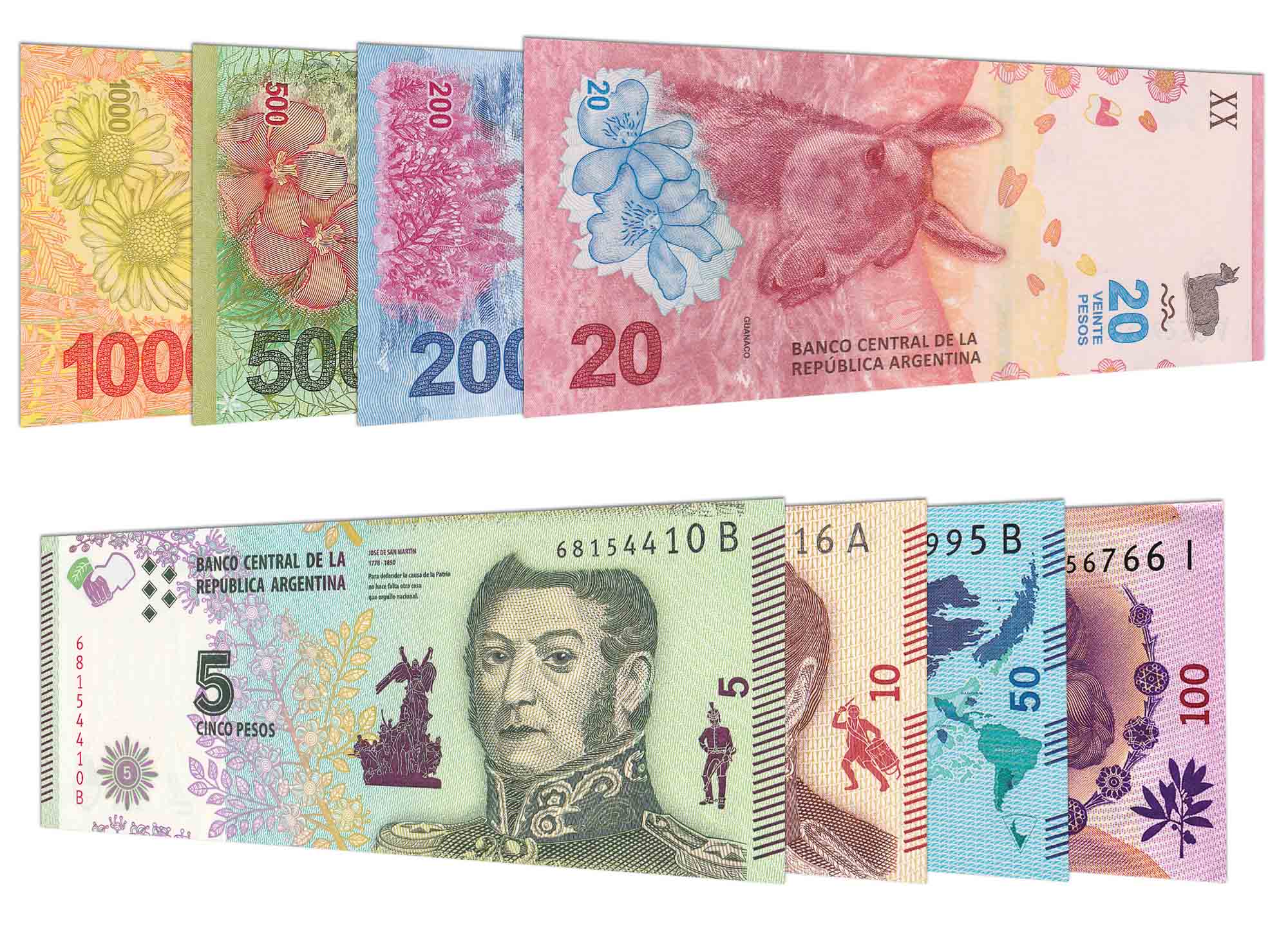
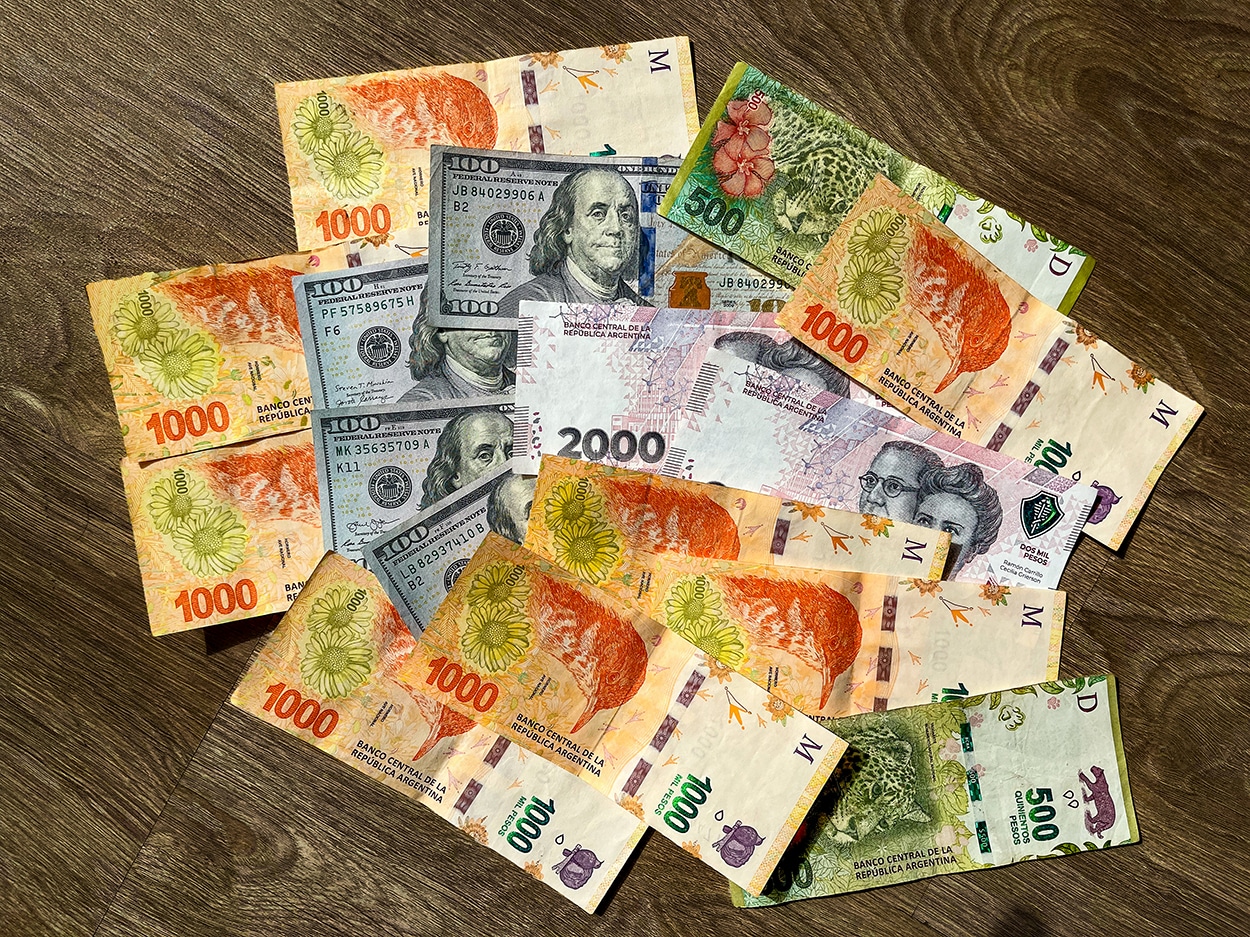
As of 2024, the most common banknotes in circulation include the 100, 200, 500, 1,000, and 2,000 peso notes. In response to skyrocketing inflation, the government recently introduced a 10,000 peso note, with plans for a 20,000 peso note to follow. The designs have shifted over the years from featuring historical figures (such as Juan and Eva Perón or Domingo Sarmiento) to indigenous fauna (like the Hornero bird or the Southern Right Whale), and recently back to “Heroes and Heroines of the Fatherland.”
Coins exist in denominations of 1, 2, 5, and 10 pesos, but due to their negligible value, they have largely disappeared from daily commerce. In many cases, the metal content of the coin is worth more than the face value, leading to coins being melted down or simply discarded.
Identifying Counterfeit Currency
Due to the economic climate, counterfeit banknotes are a significant concern in Argentina. High-denomination notes like the 1,000 and 2,000 peso bills include sophisticated security features. These include color-shifting ink (SPARK Live), which changes from green to blue when tilted, security threads with microtext, and watermarks visible against the light. Financial professionals recommend checking the “feel” of the paper, as genuine Argentine notes are printed on 100% cotton fiber, giving them a distinct texture compared to common paper.
The Dual Exchange Rate System: Official vs. “Dólar Blue”
One of the most distinctive aspects of Argentine finance is the existence of multiple exchange rates. Because the government often imposes “cepos” (currency controls) to prevent capital flight and protect dwindling central bank reserves, a thriving parallel market has emerged.
Why Multiple Exchange Rates Exist
The “Official Rate” is the price set by the Central Bank, which is used for international trade and large-scale corporate transactions. However, because the government restricts how many dollars individuals and small businesses can buy at this rate, a “black market” or “informal market” known as the Dólar Blue has become the de facto benchmark for the street economy.
Beyond these two, there are several other rates, such as the Dólar MEP (Electronic Payment Market), which involves buying and selling bonds to acquire dollars legally, and the Dólar CCL (Contado con Liqui), used for moving funds abroad. This fragmented system creates significant arbitrage opportunities and complicates financial planning for businesses operating in the country.
Impact on Tourists and Local Businesses
For a visitor or an investor, the difference between the Official and Blue rates can be nearly 100%. If a traveler uses a foreign credit card, they are now often given a preferential “MEP” rate, which is close to the Blue rate, to discourage them from using the informal street market. Local businesses, meanwhile, must constantly adjust their prices. In a “dual-rate” economy, the cost of imported goods is often tied to the parallel dollar, leading to a phenomenon where prices rise instantly the moment the Blue dollar ticks upward.
Managing Money in Argentina: Practical Tips for Investors
Navigating the Argentine financial landscape requires a departure from traditional Western banking habits. In an environment where inflation can exceed 200% annually, “holding cash” in local currency is considered a significant financial error.
Cash vs. Digital Payments (The Rise of Fintech)
Argentina has one of the highest rates of fintech adoption in Latin America. While the country was historically “cash-heavy,” the inconvenience of carrying thick stacks of devaluing pesos has pushed the population toward digital wallets like Mercado Pago and Ualá. These platforms allow users to keep their money in “remunerated accounts” that pay daily interest, helping to slightly offset the erosive effects of inflation. For the sophisticated investor, these digital tools offer a window into the velocity of money in a high-inflation economy.
Strategies for Hedging Against Inflation
The average Argentine “thinks in dollars.” Savings are rarely kept in pesos; instead, they are converted into physical USD (often kept “under the mattress”) or moved into stablecoins like USDT or USDC. Argentina has become a global leader in cryptocurrency adoption precisely because digital assets offer a more stable store of value than the national currency. For businesses, “stockpiling” is a common hedge—buying raw materials or inventory today because they will inevitably be more expensive tomorrow.
The Future of Argentine Currency: Dollarization and Economic Reform
The Argentine Peso currently stands at a crossroads. With the election of Javier Milei in late 2023, the discourse surrounding the national currency has shifted toward the most radical solution possible: total abandonment of the peso.
The Debate Over Abandoning the Peso
The concept of “Dollarization”—replacing the Peso with the US Dollar—is a central pillar of the current economic debate. Proponents argue that the Central Bank has proven itself incapable of managing the money supply responsibly and that only by removing the ability to print money can Argentina finally break the cycle of hyperinflation. Critics, however, warn that dollarization would strip the country of its monetary policy tools and leave it vulnerable to the economic cycles of the United States, without the productivity levels to match.
Monetary Policy and Global Market Integration
The medium-term outlook for the Argentine Peso depends heavily on the government’s ability to achieve a fiscal surplus and rebuild foreign exchange reserves. If the administration can stabilize the macroeconomy, the Peso may survive as a “floating” currency with a unified exchange rate. However, if inflation remains untamed, the Peso risks becoming a relic of history, replaced by a more stable international standard.
For the global finance community, the Argentine Peso remains a high-risk, high-reward indicator of emerging market health. Its story is a reminder that currency is not just paper and ink, but a reflection of a nation’s social contract and its commitment to fiscal discipline. Whether through reform or replacement, the coming years will determine if the Argentine Peso can once again become a symbol of prosperity or if it will serve as a final cautionary tale of the 21st century.
aViewFromTheCave is a participant in the Amazon Services LLC Associates Program, an affiliate advertising program designed to provide a means for sites to earn advertising fees by advertising and linking to Amazon.com. Amazon, the Amazon logo, AmazonSupply, and the AmazonSupply logo are trademarks of Amazon.com, Inc. or its affiliates. As an Amazon Associate we earn affiliate commissions from qualifying purchases.