
In the complex landscape of business and finance, clarity and categorization are paramount. Every entity, from a budding startup to a multinational corporation, needs a defined identity that communicates its core operations to various stakeholders. This is where the Standard Industrial Classification (SIC) code comes into play—a seemingly simple four-digit number that holds profound implications for how businesses are perceived, funded, regulated, and analyzed within the financial ecosystem.
Originating from a need for standardized economic data collection, the SIC code acts as a universal identifier for a company’s primary business activity. While largely superseded by the North American Industry Classification System (NAICS) for statistical purposes, SIC codes retain a significant, often critical, relevance in specific financial contexts, regulatory filings, and historical data analysis. Understanding what a SIC number is, why it exists, and how it impacts financial decisions is not just an administrative formality but a strategic imperative for business owners, investors, and financial professionals alike. This article delves into the enduring importance of SIC codes, particularly from a financial perspective, offering insights into their structure, applications, and how they continue to shape the financial journeys of businesses.

The Foundation of Business Classification: Understanding SIC Codes
At its core, a SIC number is a system designed to classify establishments by their primary type of economic activity. Developed by the U.S. government, its initial purpose was to facilitate the collection, tabulation, presentation, and analysis of data relating to establishments, for statistical purposes. However, its utility quickly expanded far beyond mere statistics, becoming a fundamental tool in various financial and regulatory processes.
A Historical Overview and Purpose
The Standard Industrial Classification system was first introduced in 1937 by the United States government. Its inception was a response to the growing complexity of the American economy and the subsequent need for a uniform system to classify businesses. Prior to SIC, different government agencies, industry associations, and private organizations often used their own unique classification methods, leading to inconsistencies and difficulties in comparing economic data.
The primary goal of the SIC system was to provide a standardized framework for the categorization of all economic activities. This standardization enabled government agencies, researchers, and policymakers to accurately track economic trends, analyze industrial structures, and develop targeted policies. For businesses, it offered a common language to identify their industry, which, as we will explore, has pervasive financial implications. Although the U.S. government officially replaced SIC with NAICS in 1997, many private organizations, state agencies, and some federal applications continue to use SIC codes, particularly for legacy systems, historical data, and specific financial assessments.
Structure and Logic
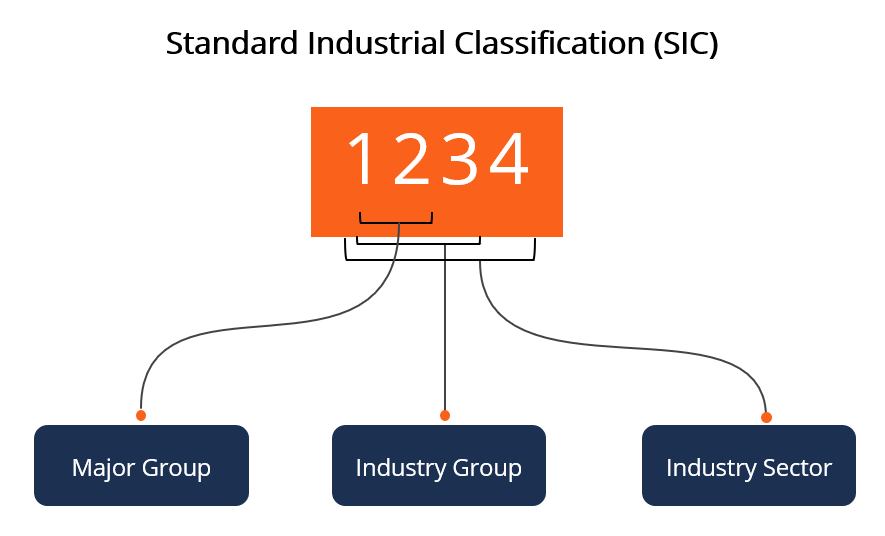
The SIC system employs a hierarchical, four-digit coding scheme to classify industries. Each digit in the code adds a layer of specificity, moving from broad economic sectors down to highly detailed industry groups.
-
The first two digits identify the major industry group. For example, 01-09 covers Agriculture, Forestry, and Fishing; 10-14 covers Mining; 15-17 covers Construction; 20-39 covers Manufacturing; 40-49 covers Transportation, Communications, Electric, Gas, and Sanitary Services; 50-51 covers Wholesale Trade; 52-59 covers Retail Trade; 60-67 covers Finance, Insurance, and Real Estate; 70-89 covers Services; and 91-97 covers Public Administration.
-
The third digit refines the major group into more specific industry subgroups. For instance, within Manufacturing (20-39), 20 might be Food and Kindred Products.
-
The fourth digit provides the most detailed classification, identifying a particular industry. So, 2011 could specifically denote Meat Packing Plants.
This logical structure allows for precise categorization, ensuring that businesses with similar primary activities are grouped together. This level of granularity is crucial for financial analysis, as it allows for direct comparisons between companies operating in very similar market conditions and facing similar financial risks and opportunities. Without such a standardized structure, benchmarking financial performance or assessing industry-specific risks would be far more challenging and prone to error.
Distinguishing SIC from NAICS
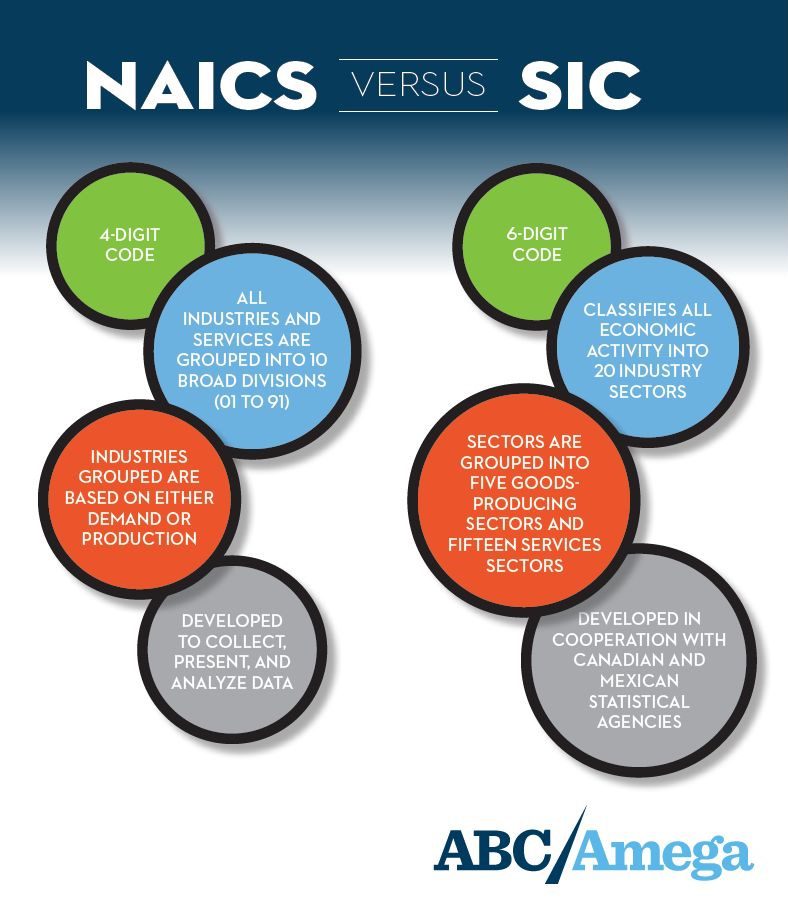
It is impossible to discuss SIC codes without addressing their successor: the North American Industry Classification System (NAICS). Developed collaboratively by the United States, Canada, and Mexico, NAICS was introduced in 1997 to replace SIC for statistical purposes, reflecting the changing nature of the global economy and the rise of new industries, particularly in technology and services, that the older SIC system struggled to categorize accurately.
NAICS codes are typically six digits, offering a greater level of detail and a more updated structure that accounts for modern economic activities. While NAICS is the current standard for many federal statistical agencies and government contracts, SIC codes have not faded into obsolescence. Their continued relevance stems from several factors:
-
Legacy Systems and Data: Many older databases, financial records, and historical economic data sets are still indexed using SIC codes. For researchers, economists, and businesses conducting historical analysis, understanding SIC is essential for consistency.
-
Regulatory Compliance: Certain state and local government agencies, as well as specific federal regulations (e.g., from the Securities and Exchange Commission for publicly traded companies, or some environmental regulations), may still require or reference SIC codes.
-
Credit Reporting and Insurance: Many financial institutions, credit bureaus, and insurance underwriters continue to utilize SIC codes in their risk assessment models and underwriting processes. This is often due to the long-standing integration of SIC into their internal systems and historical risk profiles.
Therefore, while NAICS offers a more contemporary and detailed view of industries, SIC remains a critical legacy system with a persistent, tangible impact on financial operations and analysis. Businesses must often be familiar with both systems to navigate the full spectrum of financial and regulatory requirements.
The Financial Imperatives of Knowing Your SIC Code
Far from being a mere administrative detail, a company’s SIC code carries significant weight in the financial world. It acts as a concise descriptor that influences how financial institutions, regulators, and potential partners perceive the business, directly impacting access to capital, insurance rates, and compliance obligations.
Credit, Loans, and Insurance Underwriting
One of the most immediate and tangible financial impacts of your SIC code is its role in credit and loan applications, as well as insurance underwriting. When a business seeks financing—whether a small business loan, a line of credit, or a mortgage—lenders frequently use the SIC code as a primary data point for risk assessment.
Different industries inherently carry different levels of risk. A construction company, for instance, faces distinct operational and financial risks compared to a software development firm or a retail store. Lenders use SIC codes to:
-
Assess Industry-Specific Risk: They analyze historical default rates and economic volatility associated with specific industries to determine the risk profile of an applicant.
-
Benchmark Financial Performance: Your business’s financial health (e.g., debt-to-equity ratio, profit margins) will be compared against industry averages derived from companies with similar SIC codes. If your metrics deviate significantly, it could raise red flags or require further justification.
-
Determine Eligibility and Terms: Certain loan programs or credit lines might be tailored for specific industries, or conversely, exclude high-risk sectors. Your SIC code can dictate eligibility, interest rates, collateral requirements, and repayment terms.
Similarly, insurance companies rely heavily on SIC codes to underwrite policies, including general liability, workers’ compensation, and property insurance. Industries with higher perceived risks (e.g., manufacturing with heavy machinery, construction with on-site hazards) will generally face higher premiums and potentially more stringent policy requirements than lower-risk service industries. An accurate SIC code ensures you’re correctly classified, preventing both overpayment and under-insuring due to misclassification.
Grant Applications and Government Contracts
For businesses seeking to grow through non-dilutive funding or by partnering with governmental entities, the SIC code (or its NAICS counterpart) is often a gatekeeper. Many government grants, subsidies, and contracting opportunities are specifically targeted at certain industries or sectors deemed vital for economic development, national security, or social welfare.
-
Targeted Grant Programs: Government agencies, both federal and state, frequently announce grant programs designed to support specific industries—for example, grants for agricultural innovation (SIC 01xx), advanced manufacturing (SIC 35xx), or renewable energy (SIC 49xx). An accurate SIC code is essential for identifying and applying for these relevant opportunities.
-
Government Contracting: Federal, state, and local governments are significant purchasers of goods and services. Many government contracts are set aside for small businesses within particular industries, or require bidders to possess a specific SIC/NAICS code to demonstrate their expertise and operational alignment. Without the correct classification, a business might miss out on lucrative contracting opportunities that could drive substantial revenue.
Therefore, knowing and correctly representing your SIC code is not just about compliance; it’s about unlocking potential revenue streams and growth pathways that are often restricted by industry classification.
Tax Compliance and Regulatory Reporting
Navigating the labyrinthine world of tax compliance and regulatory reporting often brings businesses face-to-face with SIC codes. While tax forms primarily use NAICS, some older forms, specific state or local tax structures, and certain industry-specific regulatory bodies may still reference SIC codes.
-
Industry-Specific Regulations: Certain industries are subject to unique regulatory frameworks due to their operational impact, public safety concerns, or market dominance. For example, businesses in the financial services sector (SIC 60-67) face stringent regulations from bodies like the SEC or FDIC. An accurate SIC code helps regulators identify which businesses fall under their purview and ensures compliance with relevant laws.
-
Environmental Reporting: Companies in industries with significant environmental footprints (e.g., manufacturing, mining, utilities) may be required to submit specific environmental reports. Their SIC code can be used to determine reporting thresholds and requirements.
-
Licensing and Permits: Obtaining operational licenses or permits, especially at the state or local level, can sometimes involve identifying your SIC code to ensure adherence to industry-specific zoning laws, health and safety standards, or professional licensing boards.
Misclassifying a business’s SIC code could lead to unintended non-compliance, resulting in penalties, fines, or even the revocation of operating licenses. It underscores the financial risk associated with an incorrect or outdated classification.
Investment Analysis and Due Diligence
For investors, from individual stock traders to venture capitalists and private equity firms, SIC codes serve as a crucial initial filter and a fundamental tool for deeper analysis during due diligence.
-
Industry Categorization: Investors use SIC codes to quickly categorize companies and build portfolios with specific industry exposures. This allows them to allocate capital strategically across different sectors of the economy.
-
Benchmarking and Performance Comparison: During due diligence, investors compare a target company’s financial performance (revenue growth, profitability, market share, valuation multiples) against its industry peers, identified by similar SIC codes. This benchmarking helps in assessing the company’s competitive standing and investment attractiveness.
-
Market Analysis and Trends: SIC codes facilitate the analysis of broader industry trends, growth prospects, and competitive landscapes. An investor looking into the “Electronic Computers” industry (SIC 3571) can quickly find all companies classified under that code to understand the sector’s dynamics.
-
Risk Assessment: Different industries carry different systemic risks (e.g., cyclicality, technological disruption, regulatory changes). The SIC code provides a shorthand for understanding these inherent risks and incorporating them into valuation models and investment decisions.
In the fast-paced world of investment, the SIC code provides a standardized and efficient way to categorize, compare, and analyze businesses, making it an indispensable tool for financial decision-making and risk management.
Strategic Financial Applications for Businesses
Beyond compliance and external evaluations, knowing and actively using your SIC code can be a powerful strategic tool for internal financial planning, market positioning, and growth initiatives. It allows businesses to better understand their competitive landscape, identify growth opportunities, and manage financial risks more effectively.
Market Analysis and Financial Benchmarking
For any business aiming for sustainable growth, understanding its market position and financial performance relative to competitors is paramount. The SIC code provides the framework for this essential analysis.
-
Identifying Direct Competitors: By identifying other businesses with the same or closely related SIC codes, a company can pinpoint its direct competitors. This is invaluable for market research, understanding competitive strategies, and identifying market share.
-
Benchmarking Financial Performance: Access to aggregated financial data for specific SIC codes (often available through industry associations, government reports, or financial databases) allows businesses to benchmark their own performance. They can compare their revenue growth, gross margins, operating expenses, asset utilization, and profitability against industry averages. This comparison helps in:
-
Identifying areas for improvement: If your profit margins are significantly lower than your industry peers, it signals a need to investigate cost structures or pricing strategies.
-
Validating strong performance: If your metrics consistently outperform the industry average, it confirms effective strategies and competitive advantages.
-
Setting realistic financial goals: Benchmarking provides data-driven insights for setting achievable revenue targets, expense budgets, and profit goals.
-
This strategic application of SIC codes transforms raw financial data into actionable insights, guiding better financial decisions and fostering competitive advantage.
Identifying Funding Opportunities
A clear understanding of your industry, as defined by your SIC code, can unlock tailored funding opportunities that might otherwise remain hidden. Financial institutions and investors often specialize in particular sectors, and knowing their preferences can streamline the search for capital.
-
Targeted Lenders and Investors: Many banks, credit unions, and venture capital firms develop expertise in specific industries. For example, some VCs exclusively fund tech startups (which might fall under service or manufacturing SIC codes related to software, hardware, or IT services), while others focus on real estate (SIC 65xx) or healthcare (SIC 80xx). Knowing your SIC code helps you identify lenders and investors whose portfolios and risk appetites align with your business.
-
Niche Grants and Subsidies: Beyond broad government programs, there are often highly specific grants or subsidies aimed at businesses within very narrow industry classifications. These can come from government agencies, non-profits, or industry associations. For instance, a grant might be available for manufacturers of specific types of eco-friendly products (a very specific SIC code within manufacturing).
-
Industry-Specific Angel Networks: Some angel investor groups or crowdfunding platforms cater to particular sectors. Presenting your business with a clear SIC classification can make it easier to attract investors who are already familiar with and interested in your market.
By strategically using your SIC code, businesses can efficiently navigate the funding landscape, connecting with financial partners who understand their specific industry challenges and growth potential.
Risk Management and Industry-Specific Challenges
Every industry carries its own set of unique financial risks and operational challenges. A business’s SIC code provides a quick identifier for these inherent characteristics, which is crucial for proactive risk management.
-
Economic Cyclicality: Some industries are highly cyclical (e.g., construction, manufacturing of durable goods), meaning their financial performance is strongly tied to broader economic cycles. Businesses in these SIC categories need robust financial planning for downturns.
-
Regulatory Exposure: As discussed, certain industries face more intense regulatory scrutiny. Businesses in these sectors (e.g., finance, pharmaceuticals, energy) must budget for higher compliance costs and potential legal fees, as well as the risk of regulatory penalties.
-
Labor Market Dynamics: Industries like healthcare (SIC 80xx) or specialized manufacturing (SIC 3xxx) may face unique labor challenges, such as shortages of skilled workers or strong unionization, impacting wage costs and operational efficiency.
-
Technological Disruption: Industries prone to rapid technological change (e.g., media, some manufacturing sectors) face the risk of obsolescence, requiring continuous investment in R&D and capital expenditure to remain competitive.
-
Supply Chain Vulnerabilities: Globalized industries (e.g., many manufacturing sectors) can be exposed to supply chain disruptions, impacting production costs and delivery schedules.
By acknowledging the industry-specific risks implied by their SIC code, businesses can develop targeted financial strategies, such as maintaining larger cash reserves, hedging against currency fluctuations, diversifying revenue streams, or investing in robust insurance coverage. This proactive approach to risk management can significantly enhance long-term financial stability and resilience.
How to Find and Choose Your SIC Code
Identifying the correct SIC code for your business is a crucial step that underpins many financial and strategic decisions. While the system is straightforward, accurately classifying a multifaceted business requires careful consideration.
The Process of Identification
Finding your SIC code typically involves a few key steps:
-
Identify Your Primary Business Activity: The most critical step is to determine the core economic activity that generates the majority of your revenue or consumes the majority of your resources. If you run a restaurant that also offers catering, the restaurant operation (SIC 5812 – Eating Places) would likely be your primary activity.
-
Consult Official SIC Manuals or Databases: The official SIC manual, originally published by the U.S. Office of Management and Budget, details all the codes and their descriptions. While no longer updated, it serves as the definitive source. Various online tools and databases, often provided by government agencies (like OSHA for specific reporting, or the SEC for public companies, though they also use NAICS) or financial data providers, allow you to search for codes by keyword or by browsing the hierarchical structure. Many commercial business listing sites also provide SIC/NAICS search functionalities.
-
Start Broad, Then Refine: Begin by identifying the major industry division (the first two digits). Then, progressively narrow down to the specific group (third digit) and finally the detailed industry (fourth digit) that best describes your primary activity. Read the descriptions carefully to ensure alignment.
-
Consider Legacy Use: If you are specifically needing a SIC code for a legacy financial system, historical data, or an institution known to still use them, confirm their specific requirements or preferred sources.
While many online resources exist, always prioritize authoritative sources or cross-reference with multiple reputable sites to ensure accuracy, given the financial implications of misclassification.
Dealing with Multiple Business Activities
Many businesses are not monocultural; they engage in several distinct economic activities. This presents a common challenge in choosing the “correct” SIC code. The general rule of thumb is to classify the business by its primary activity.
-
Revenue Generation: The most widely accepted criterion for determining primary activity is the activity that generates the largest proportion of the firm’s revenue. If your company manufactures widgets (manufacturing SIC) but also provides installation services (service SIC), and manufacturing accounts for 70% of your income, you would classify under the manufacturing SIC.
-
Resource Allocation: In some cases, if revenue is split evenly or if a particular activity requires disproportionately more capital, labor, or physical assets, that might be considered the primary activity.
-
Holistic View: Consider how outsiders, especially financial institutions, would naturally classify your business. What is the “face” you present to the market?
Misclassification can lead to significant financial drawbacks. For example, if a tech consulting firm (Service SIC) incorrectly classifies itself under software manufacturing (Manufacturing SIC), it might face different loan terms, higher insurance premiums, or be excluded from certain grant programs designed for service-based businesses. It’s crucial to be honest and accurate, potentially seeking advice from a financial advisor or business consultant if your activities are complex.
When to Update or Re-evaluate
A business’s SIC code is not necessarily a permanent fixture. Companies evolve, and their primary activities can shift over time. Regularly re-evaluating your SIC code is a prudent financial practice in several scenarios:
-
Significant Business Model Shift: If your company undergoes a major pivot, such as transitioning from primarily selling physical products to offering subscription-based services, your primary economic activity has changed.
-
Diversification and New Revenue Streams: If new product lines or services grow to represent a substantial portion of your revenue, they might necessitate a re-evaluation of your core business.
-
Mergers and Acquisitions: When companies merge, the combined entity needs to determine its dominant activity, which might result in a new SIC code for the consolidated business.
-
Industry Changes: While the SIC system itself is static, the economic landscape isn’t. Keeping abreast of how your business fits into the contemporary industry definitions, even if still relying on SIC for specific purposes, is important.
Updating your SIC code can have direct financial implications, potentially impacting your credit profile, eligibility for new loans or grants, insurance rates, and how you are benchmarked against industry peers. Failing to update could mean you’re being assessed against the wrong industry standards, leading to suboptimal financial outcomes or missed opportunities. Therefore, periodic review, especially during significant business transformations, is a critical component of financial diligence.
Conclusion
The Standard Industrial Classification (SIC) code, though a product of a bygone era and now largely superseded by NAICS for official statistical purposes, maintains a surprisingly robust and critical role within the financial landscape. Far from being an arcane artifact, this four-digit identifier profoundly influences how businesses interact with lenders, investors, regulators, and insurance providers.
From securing vital capital through loans and grants, where an accurate SIC code can be the key to eligibility and favorable terms, to ensuring compliance with industry-specific tax and regulatory requirements, its financial ramifications are far-reaching. Moreover, for strategic business planning, the SIC code provides a fundamental framework for market analysis, allowing companies to benchmark their financial performance against true industry peers and proactively manage sector-specific risks.
For any entrepreneur, business owner, or financial professional, understanding “what is a SIC number” is not merely an exercise in classification but an acknowledgment of a powerful financial tool. By accurately identifying, strategically leveraging, and periodically re-evaluating their SIC code, businesses can enhance their financial standing, unlock growth opportunities, and navigate the complex world of finance with greater clarity and confidence. In an environment where every financial advantage counts, the enduring relevance of the SIC code remains undeniable.
aViewFromTheCave is a participant in the Amazon Services LLC Associates Program, an affiliate advertising program designed to provide a means for sites to earn advertising fees by advertising and linking to Amazon.com. Amazon, the Amazon logo, AmazonSupply, and the AmazonSupply logo are trademarks of Amazon.com, Inc. or its affiliates. As an Amazon Associate we earn affiliate commissions from qualifying purchases.