
In a world increasingly defined by data, algorithms, and interconnected devices, precision is not just a virtue—it’s a fundamental requirement. From the microscopic transistors powering our smartphones to the vast networks that underpin the internet, every facet of modern technology relies on accurate, consistent, and universally understood measurements. At the heart of this global standardisation lies the International System of Units, universally known as SI units. More than just a collection of metrics, SI units represent the bedrock upon which scientific discovery and technological innovation are built, serving as the common language that enables engineers, developers, and scientists across continents to collaborate, innovate, and ensure the seamless operation of our increasingly complex technological landscape.
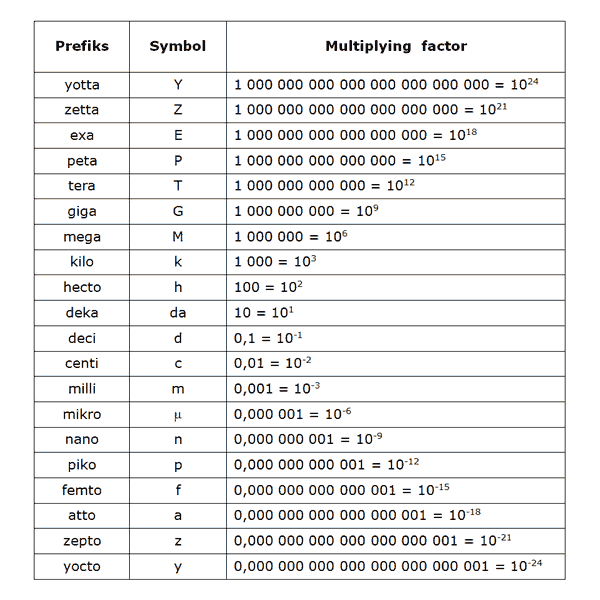
This article delves into the essence of SI units, exploring their origins, their structure, and—most crucially for our focus—their indispensable role in driving the tech industry forward. We will uncover how these standardised measurements underpin everything from the design of a new AI processor to the robust security protocols protecting our digital lives, highlighting why a thorough understanding of SI is not merely academic, but absolutely vital for anyone operating within the expansive realm of technology.
The Foundation of Precision in Technology
The advancement of technology is inextricably linked to our ability to measure the world around us with ever-increasing accuracy. Before SI, measurement systems were fragmented, leading to confusion, errors, and significant barriers to scientific and commercial exchange. The need for a cohesive, rational system became paramount, especially as industrialisation and global trade began to accelerate.
A Universal Language for Innovation
The International System of Units (SI), derived from the French “Système International d’Unités,” was officially established in 1960, building upon the metric system developed during the French Revolution. Its primary goal was to create a single, coherent system of measurement that would be universally accepted and understood, irrespective of national borders or cultural differences. For the tech industry, this universality is a cornerstone of innovation. Imagine a scenario where a software engineer in Silicon Valley, a hardware designer in Taipei, and an AI researcher in Berlin couldn’t agree on basic quantities like mass, length, or time. Product development would halt, global supply chains would collapse, and cross-platform compatibility would be impossible. SI units provide this essential common ground, enabling engineers to design components that fit, software that interoperates, and data that can be exchanged and interpreted consistently worldwide. This shared language facilitates collaborative projects, accelerates research and development, and ultimately democratizes technological progress by ensuring that findings and innovations can be understood and built upon by anyone, anywhere.
From Ancient Measures to Modern Standards
Historically, units of measurement were often arbitrary, based on human body parts (like the foot or cubit) or local environmental factors. While practical for local communities, these systems lacked the precision and consistency required for complex engineering or scientific endeavors. The move towards the metric system in the late 18th century marked a pivotal shift, introducing decimal-based units derived from natural phenomena, like the Earth’s circumference. The evolution to SI took this a step further, grounding its base units not just in physical artifacts but, increasingly, in fundamental physical constants.
The latest redefinition in 2019 saw the base units linked to constants such as the Planck constant, the speed of light, and Avogadro’s number. This shift to “nature’s unchanging laws” ensures that the SI system is stable, precisely reproducible anywhere, and immune to the degradation of physical standards. For technology, this means that measurements taken today will remain consistent for future generations, regardless of where or how the measurement is made, ensuring long-term compatibility and reliability for everything from archival data storage to future quantum computing architectures. This transition reflects technology’s increasing demand for ultra-high precision, moving from human-scale artifacts to atomic-scale constants.
The Seven Base Units: Cornerstones of the Digital Age
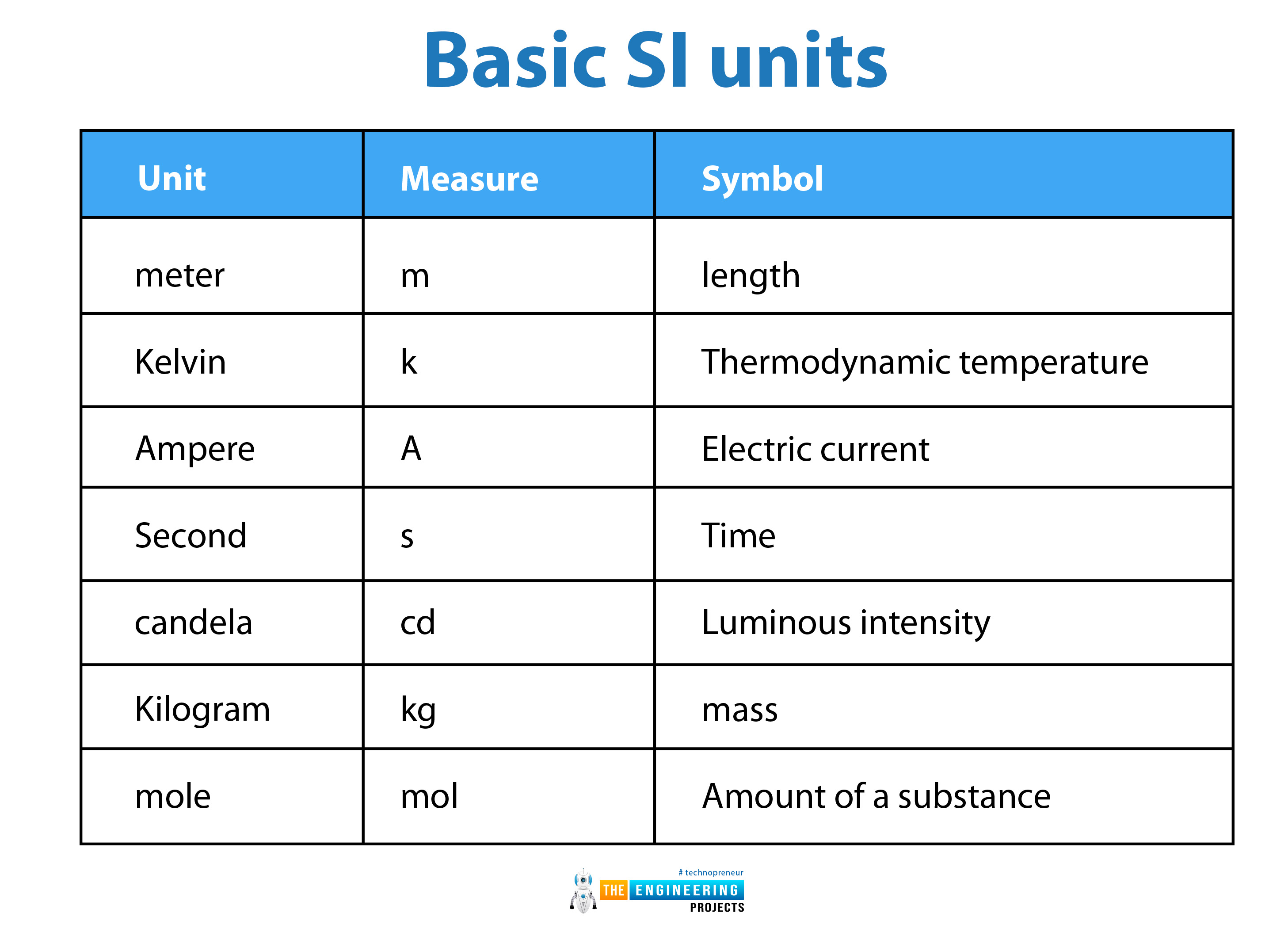
The SI system is built upon seven fundamental base units, from which all other derived units are formed. These are:
-
Metre (m): For length. Crucial in hardware design, robotics, and spatial computing.
-
Kilogram (kg): For mass. Essential for manufacturing, material science, and satellite technology.
-
Second (s): For time. The pulse of all digital systems, from processor clock speeds to network latency.
-
Ampere (A): For electric current. The lifeblood of all electronics and power systems.
-
Kelvin (K): For thermodynamic temperature. Vital for cooling systems, semiconductor performance, and thermal management.
-
Mole (mol): For amount of substance. Important in chemical processes, material science at a molecular level, and nanotechnology.
-
Candela (cd): For luminous intensity. Relevant for display technology, optics, and sensor design.
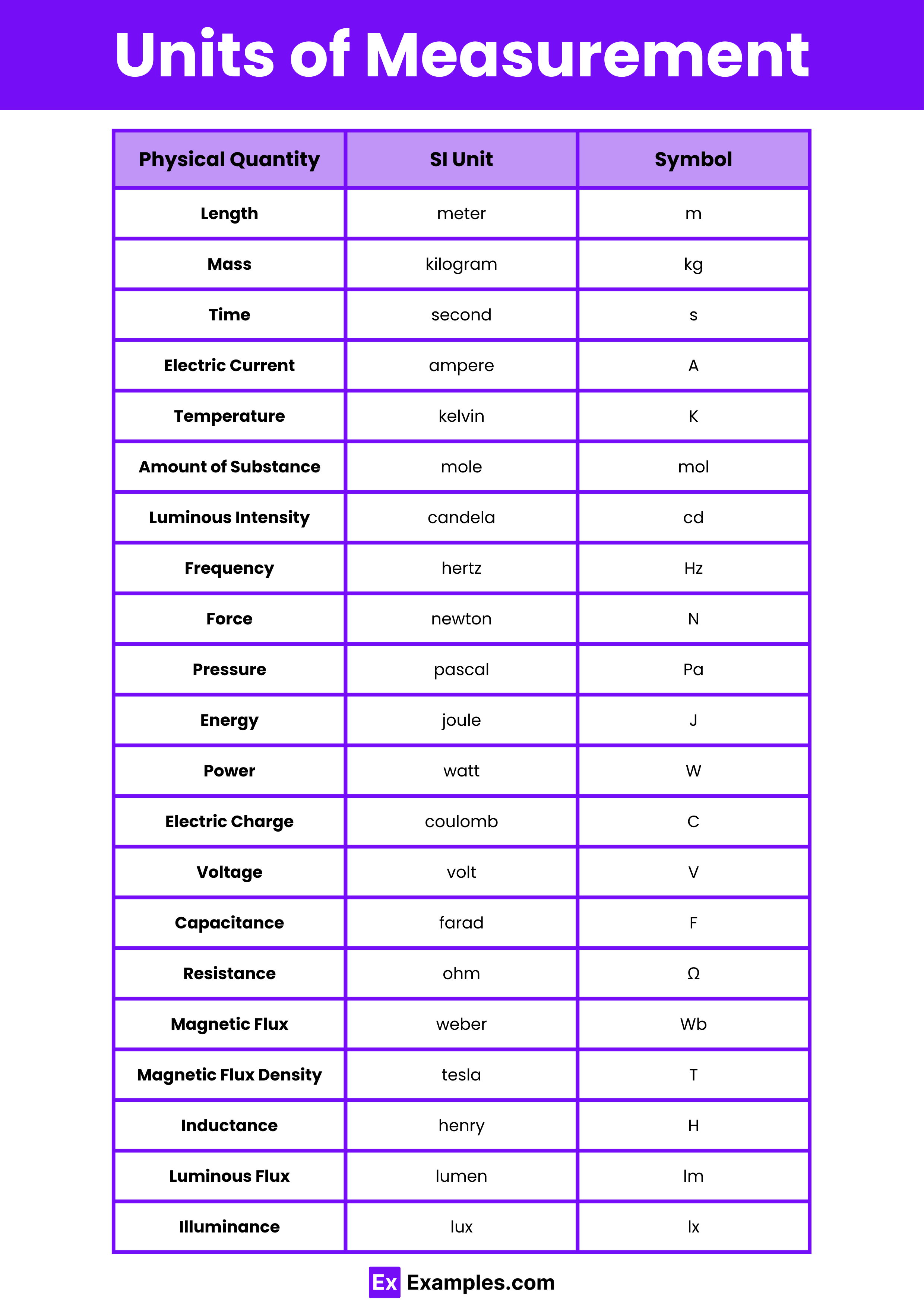
These seven units, though seemingly simple, are the building blocks for every advanced technological concept. For instance, electrical power (Watt) is derived from amperes, volts (which themselves derive from metres, kilograms, and seconds), and other units. Data rates (bits per second) fundamentally rely on the second. Understanding these base units and their interconnections is essential for anyone delving into the intricacies of tech, as they dictate the very language we use to quantify technological performance and innovation.
SI Units in Action: Powering Modern Tech
The theoretical elegance of SI units comes to life in their practical application across diverse technological domains. Without them, the sophisticated devices and intelligent systems we rely on daily simply wouldn’t exist or wouldn’t function reliably.
Engineering & Hardware Design: Building the Physical World
From the microscopic circuits on a silicon wafer to the intricate mechanics of a robot arm or the aerodynamic structure of a drone, hardware engineering is an exacting discipline. Every component must be precisely measured and manufactured to fit perfectly and perform as intended. SI units ensure this precision. Dimensions are measured in metres (or millimetres, nanometres), material properties like mass are in kilograms, and operational temperatures are in Kelvin. The integrity of an antenna’s signal depends on its exact length, measured in metres. The performance of a processor is directly tied to the nanometre scale of its transistors. Even the power consumption of a device, measured in watts (derived from amperes and volts), needs to be accurately quantified for efficient design and battery life optimisation. Without a universal agreement on these measurements, global manufacturing chains, where components are sourced from multiple countries, would be impossible due to inconsistencies in parts and specifications.
Software & Data Science: Quantifying the Virtual Realm
While often perceived as abstract, the digital world of software and data science is deeply intertwined with physical measurements. Software performance is measured in terms of processing speed (operations per second), network latency (seconds), and storage capacity (bytes, which derive from bits and are often discussed in terms of memory ‘size’ related to physical capacity). Algorithms that process real-world data—from sensor inputs in autonomous vehicles to environmental monitoring systems—rely on these inputs being accurate SI measurements. A self-driving car’s navigation system, for example, processes distances in metres, speeds in metres per second, and acceleration in metres per second squared. Errors in these underlying units could lead to catastrophic failures. In data science, understanding the units of measurement for any given dataset is critical for correct analysis and interpretation, preventing misleading conclusions and ensuring that machine learning models learn from accurate, consistent inputs.
AI, IoT, and Automation: The Need for Unambiguous Data
The burgeoning fields of Artificial Intelligence (AI), the Internet of Things (IoT), and automation are particularly reliant on SI units for their functionality and interoperability. IoT devices—sensors, smart appliances, industrial machinery—are constantly collecting vast amounts of data about their environment: temperature, pressure, humidity, motion, and more. For this data to be meaningful and actionable, it must be collected, transmitted, and interpreted using consistent SI units. An AI system designed to optimize energy consumption in a smart building needs to understand power usage in watts, temperature in Kelvin (or Celsius), and time in seconds.
In robotics and automation, the precision of movement, the force exerted by actuators, and the speed of operations are all meticulously controlled using SI units. A robotic arm picking up a delicate component must apply a specific force (Newtons, derived from kg, m, s) and move with precise spatial coordinates (metres) to avoid damage. The ambiguity of non-standard units could lead to erroneous data, faulty decision-making by AI, and inefficient or even dangerous automated processes.
Digital Security and Cryptography: Time, Data, and Integrity
Even in the realm of digital security, SI units play an often-unseen but critical role. The strength of cryptographic algorithms, for instance, often relies on computational complexity and the time required to break them. These times are measured in seconds, and the efficiency of the underlying hardware is measured in clock cycles per second. The size of encryption keys is measured in bits, and the rate at which data can be encrypted or decrypted is measured in bits per second or bytes per second. Precise time synchronization across networks, enabled by accurate timekeeping mechanisms (ultimately tied to the SI second), is fundamental for secure communication protocols and preventing replay attacks. Ensuring the integrity and confidentiality of data hinges on underlying systems that consistently quantify information and temporal parameters, all enabled by the SI system.
The Imperative of Accuracy and Interoperability
Beyond enabling specific technological applications, SI units address two overarching challenges critical for the global tech ecosystem: preventing errors and fostering seamless collaboration.
Preventing Costly Errors and Failures
The history of technology is dotted with cautionary tales of catastrophic failures attributed to measurement errors or confusion between different unit systems. Perhaps the most famous is the 1999 Mars Climate Orbiter, which disintegrated in Mars’ atmosphere because one team used imperial units (pounds-force) while another used metric units (Newtons) for propulsion calculations. This single, preventable error cost NASA $125 million. Such incidents underscore the absolute necessity of a single, unambiguous system like SI. In high-stakes tech fields like aerospace, medical devices, or critical infrastructure, even minor discrepancies in measurement can lead to product recalls, financial ruin, loss of life, or widespread service disruption. SI units dramatically reduce the risk of such errors by standardizing the language of measurement, thereby enhancing safety and reliability across the board.
Global Collaboration and Market Expansion
The tech industry is inherently global. Research teams are often distributed across continents, supply chains span multiple countries, and products are designed for worldwide markets. SI units provide the indispensable common denominator for this intricate global network. Without them, collaborative development would be plagued by conversion errors, design inconsistencies, and compatibility issues. With SI, an engineering drawing produced in Germany can be understood and manufactured accurately in South Korea. Software developed in India can seamlessly integrate with hardware designed in the USA. This global consensus on measurement greatly streamlines international collaboration, accelerates product development cycles, and facilitates market expansion by ensuring that technological products and services meet consistent standards worldwide.
Ensuring Compatibility Across Devices and Platforms
In the age of interconnected devices—from smart homes to industrial IoT—interoperability is paramount. For various devices and platforms to communicate and work together effectively, they must share a common understanding of physical quantities. A smart thermometer needs to report temperature in a unit that a smart thermostat can understand. A fitness tracker’s distance measurements need to be consistent with a mapping application. SI units provide this foundation of compatibility. By adhering to SI, device manufacturers and software developers ensure that their products can seamlessly exchange data and function within a larger ecosystem, enhancing user experience and driving the adoption of new technologies. This standardization prevents vendor lock-in due to incompatible measurement systems and fosters a more open and innovative technological landscape.
The Evolution of SI: Adapting to New Tech Frontiers
The SI system is not static; it continually evolves to meet the increasingly stringent demands of modern science and technology. As our ability to measure at extreme scales (quantum, cosmological) and with unprecedented precision grows, so too does the need for a measurement system capable of supporting these advancements.
Redefining Units for Quantum-Level Precision
The most recent major redefinition of the SI units in 2019 was a direct response to the needs of cutting-edge technology and quantum science. By basing the seven base units on fundamental physical constants, rather than physical artifacts or natural phenomena with inherent variability, the SI system has achieved a new level of stability and universality. This “new SI” is crucial for fields like quantum computing, where even minute variations in physical quantities can alter computational states. For nanotechnology, where devices are engineered at the atomic scale, the ability to define a metre based on the speed of light provides an unchanging reference point for unprecedented precision. This shift ensures that as technology ventures into the quantum realm, the underlying measurement system remains robust and reliable, capable of supporting discoveries and innovations we can only begin to imagine.
The Role of Metrology in Future Tech Development
Metrology, the science of measurement, is the unseen hero behind the accuracy of SI units. National metrology institutes around the world constantly work to realize these units with increasing accuracy and develop new measurement techniques. This ongoing research directly impacts future tech. For example, advancements in atomic clocks, which define the SI second, are vital for high-speed data transfer, global positioning systems (GPS), and secure communication. Innovations in gravimeters (measuring gravity, derived from SI units) are critical for geological surveys and understanding Earth’s internal processes, which can inform seismic monitoring for infrastructure safety. As technology pushes the boundaries of what’s possible, the field of metrology ensures that we have the tools and standards to measure, verify, and validate these advancements.
Educating the Next Generation of Technologists
For the tech industry to continue its trajectory of rapid innovation, it is paramount that the next generation of engineers, developers, and scientists fully grasp the importance and application of SI units. Education in STEM fields must emphasize not just the theoretical understanding of these units but also their practical implications in designing, building, and troubleshooting technological systems. Equipping future technologists with a deep understanding of metrology and SI principles ensures they can contribute to global projects, prevent costly errors, and drive innovation that relies on precise, verifiable data. From coding bootcamps to advanced engineering degrees, the integration of SI unit training is essential for fostering a workforce capable of tackling the complex challenges of tomorrow’s technological landscape.
Conclusion
The International System of Units is far more than a dry collection of scientific definitions; it is the universal operating system for measurement, without which the intricate, interconnected world of modern technology could not function. From facilitating global hardware manufacturing and ensuring the accuracy of AI algorithms to underpinning digital security and driving quantum innovation, SI units provide the indispensable framework for precision, interoperability, and progress. As technology continues its relentless march forward, pushing the boundaries of what is measurable and achievable, the relevance and critical importance of SI units will only grow, serving as the constant, reliable pulse guiding humanity’s technological evolution. For anyone building, developing, or innovating in the tech sphere, understanding and rigorously applying SI units is not merely good practice – it is fundamental to success and crucial for shaping a precise, reliable, and interconnected future.
aViewFromTheCave is a participant in the Amazon Services LLC Associates Program, an affiliate advertising program designed to provide a means for sites to earn advertising fees by advertising and linking to Amazon.com. Amazon, the Amazon logo, AmazonSupply, and the AmazonSupply logo are trademarks of Amazon.com, Inc. or its affiliates. As an Amazon Associate we earn affiliate commissions from qualifying purchases.