
In an increasingly digital world where financial transactions occur at the speed of light, understanding the intricate security mechanisms protecting your money is paramount. Among the myriad acronyms and features associated with credit cards, the Card Verification Value (CVV) stands out as a critical, yet often misunderstood, guardian of your financial security. For anyone managing personal finances, engaging in online shopping, or simply using a credit card, grasping the fundamental role of the CVV is not just beneficial—it’s essential for preventing fraud and ensuring peace of mind.
This comprehensive guide delves deep into what a CVV is, why it’s indispensable for safeguarding your transactions, and best practices for protecting this vital piece of information. As we navigate the complexities of modern finance, empowering ourselves with knowledge about tools like the CVV becomes our strongest defense against financial vulnerabilities.
Unpacking the CVV: The Guardian of Your Financial Transactions
At its core, the CVV is a security feature designed to protect consumers and merchants from credit card fraud, particularly in “card-not-present” scenarios such as online purchases or telephone orders. It’s a testament to the continuous innovation in payment security, adapting to the evolving landscape of commerce.
Defining the CVV: More Than Just Three Digits
The Card Verification Value (CVV) is a three- or four-digit security code printed on your credit or debit card. Unlike the card number or expiration date, the CVV is not embossed, meaning it’s not raised and therefore not stored in the magnetic stripe or EMV chip. This deliberate design choice makes it impossible for card skimmers or fraudsters who copy your card’s magnetic stripe data to capture the CVV. Its primary function is to verify that the person attempting to make a purchase physically possesses the card. When you make an online purchase, you’re typically asked to enter this code, adding an extra layer of authentication that assures the merchant you are the legitimate cardholder.
The Different Names: CVV, CVC, CID, and More
While “CVV” is the most commonly recognized term, different card networks use slightly varied nomenclature for essentially the same security feature:
-
CVV (Card Verification Value): Used by Visa. This is perhaps the most generic and widely understood term.
-
CVC (Card Validation Code): Used by Mastercard.
-
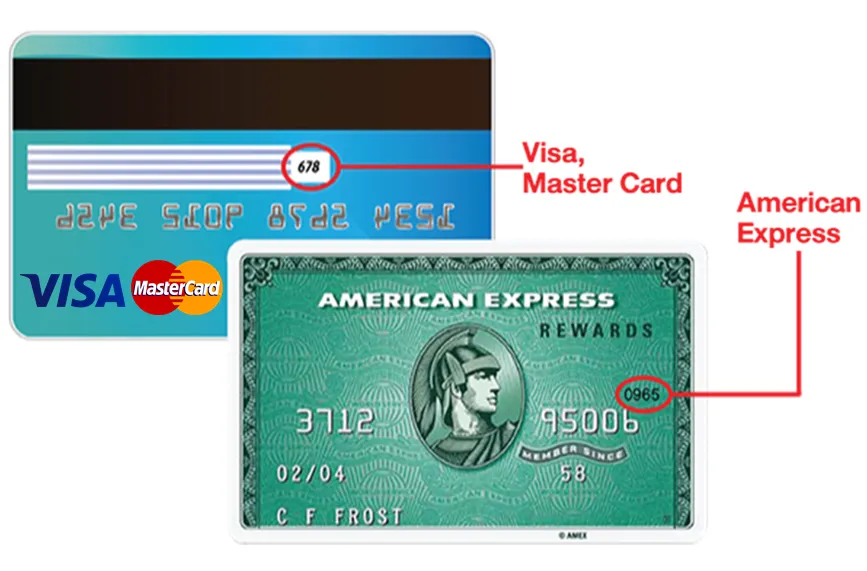
CID (Card Identification Number): Used by American Express. Uniquely, American Express typically uses a four-digit code, often found on the front of the card, above the account number.
-
CSC (Card Security Code): A general term sometimes used.
-
CVN (Card Verification Number): Occasionally used, particularly in less formal contexts.
Despite the different names, their purpose remains identical: to provide an extra layer of security for transactions where the physical card isn’t swiped or inserted. Understanding these variations helps prevent confusion when encountering different payment interfaces.
Where to Find Your CVV: Front vs. Back
Knowing where to locate your CVV is fundamental for quick and secure transactions.
-
Most Cards (Visa, Mastercard, Discover): The CVV is typically a three-digit code found on the back of the card, usually in or near the signature strip. It often appears after the last four digits of your credit card number, though sometimes it might stand alone.
-
American Express Cards: As mentioned, the CID for American Express cards is a four-digit code usually located on the front of the card, often printed above the main credit card number on the right-hand side.
This distinction is crucial to remember, especially when quickly trying to complete an online purchase, as incorrectly entering the code can lead to transaction declines and potential account locks if too many attempts are made.
Why the CVV is Crucial for Your Financial Security
The CVV isn’t merely an arbitrary set of numbers; it’s a linchpin in the architecture of secure financial transactions. Its existence addresses a significant vulnerability in the payment ecosystem, particularly concerning remote purchases.
Preventing Card-Not-Present Fraud
The primary driver behind the CVV’s creation was to combat “card-not-present” (CNP) fraud. CNP fraud occurs when a credit card is used without the physical card being present, such as in online or telephone transactions. Without the CVV, a fraudster who obtains your card number and expiration date (e.g., through a data breach or by simply seeing your card) could easily make purchases online. The CVV acts as a dynamic authentication factor, confirming that the individual making the purchase actually possesses the physical card. Since merchants are explicitly prohibited from storing CVV data after a transaction, even if their systems are breached, the CVV itself should not be compromised. This makes it far more difficult for stolen card data to be used nefariously in future CNP transactions.
The Authentication Process: How It Works
When you enter your CVV during an online transaction, this information is securely transmitted to your card issuer (your bank) for verification. The issuer then checks if the entered CVV matches the one associated with your card.
-
Input: You enter your card number, expiration date, and CVV on a merchant’s secure payment page.
-
Encryption: This data is encrypted and sent to the payment gateway.
-
Transmission: The payment gateway forwards the encrypted data to the card network (e.g., Visa, Mastercard).
-
Verification: The card network sends the CVV to your issuing bank. The bank verifies if the CVV matches its records.
-
Authorization: If the CVV matches (along with other details like card number and funds availability), the transaction is authorized. If it doesn’t match, the transaction is declined.
This real-time verification process is a powerful deterrent against unauthorized use, serving as a critical checkpoint in the digital payment journey.
Layering Security: CVV in the Broader Context
The CVV is not a standalone security measure but rather one layer in a multi-layered security framework designed to protect your financial assets. It complements other security features such as:
-
EMV Chip Technology: For in-person transactions, EMV (Europay, Mastercard, Visa) chips generate unique, single-use cryptograms for each transaction, making it incredibly difficult to clone cards.
-
PCI DSS Compliance: The Payment Card Industry Data Security Standard mandates strict security requirements for any organization that stores, processes, or transmits credit card information, including prohibiting the storage of CVVs.
-
Fraud Monitoring Systems: Banks employ sophisticated AI and machine learning algorithms to detect unusual spending patterns and flag potentially fraudulent activity.
-
Encryption and Tokenization: Data encryption protects card details during transmission, while tokenization replaces sensitive card data with a unique, meaningless “token” for transactions, further minimizing the risk of data breaches.
Together, these layers form a robust defense, with the CVV playing a specialized role in securing card-not-present transactions.
Protecting Your CVV: Best Practices for Secure Money Management

Understanding what a CVV is and why it’s important is only half the battle. Actively protecting this information through diligent practices is crucial for responsible personal finance management and preventing potential fraud.
Online Shopping: When and How to Enter Your CVV
When shopping online, always ensure you are on a secure website. Look for “https://” in the URL (the “s” stands for secure) and a padlock icon in your browser’s address bar. Only enter your CVV on trusted merchant sites during the final checkout process. Be wary of any website that requests your CVV outside of a direct payment gateway or for verification purposes that seem unusual. Legitimate companies will never ask for your CVV via email, text message, or an unsolicited phone call. Treat your CVV like a password: only enter it when you are actively making a purchase on a secure, reputable site.
Avoiding Scams: Phishing and CVV Requests
Scammers frequently attempt to trick individuals into divulging sensitive financial information, including their CVV, through sophisticated phishing attacks. These often take the form of emails, texts, or phone calls impersonating banks, payment processors, or well-known retailers.
-
Phishing Emails/Texts: These often contain urgent warnings about account issues or irresistible offers, prompting you to click a link that leads to a fake website designed to harvest your credentials.
-
Vishing (Voice Phishing): Scammers call pretending to be from your bank or a fraud department, claiming there’s suspicious activity on your account and asking for your CVV to “verify” your identity.
Remember: Your bank or credit card company already has your CVV on file (implicitly, for verification) and will never ask you to verbally provide it or enter it into an unsecure form. If in doubt, always contact your financial institution directly using a verified phone number from their official website, not one provided in a suspicious communication.
Physical Card Security: Protecting Against Skimming
While the CVV isn’t stored on the magnetic stripe, physically protecting your card is still vital. Skimming devices, often placed on ATMs, gas pumps, or POS terminals, can capture your card number and expiration date. Though they can’t get your CVV directly from the swipe, vigilance is key. Always inspect card readers for tampering before using them. Cover your hand when entering your PIN to prevent shoulder surfing. Furthermore, treat your physical card with care; do not leave it unattended or lend it to others. If your card is lost or stolen, report it immediately to your financial institution.
CVV and the Future of Secure Payments
The evolution of payment technology is constant, and while the CVV remains a crucial component today, newer innovations are continuously being integrated to enhance security further. Understanding these developments helps us anticipate the future of secure money management.
EMV Chips and Contactless Payments: Evolving Security
EMV chip technology, now standard on most cards, dramatically reduces fraud for in-person transactions by generating a unique cryptogram for each purchase. Similarly, contactless payments (tap-to-pay) leverage similar tokenization and encryption methods. While these technologies primarily address in-person fraud, they underscore a broader trend towards dynamic, single-use authentication data rather than static codes. In essence, they replicate the security benefit of the CVV (proving physical card presence) but in a more sophisticated, cryptographic manner for point-of-sale transactions.
Tokenization and Encryption: Beyond the Static CVV
For online transactions, advanced security measures like tokenization are becoming more prevalent. When you save your card details with a merchant, your actual card number and CVV are often replaced with a unique “token.” This token is meaningless outside of that specific merchant’s system and cannot be used by fraudsters even if intercepted. Encryption further secures data in transit. These technologies aim to render the static CVV less exposed by creating dynamic, temporary substitutes for sensitive card data, thereby enhancing overall security posture in the digital realm.
Biometrics and Multi-Factor Authentication: The Next Frontier
The future of payment security is increasingly moving towards biometrics (fingerprint, facial recognition) and robust multi-factor authentication (MFA). Imagine approving an online purchase with a fingerprint scan on your phone, or a one-time code sent to your registered device. These methods go beyond “something you have” (the card and CVV) to “something you are” or “something you know” that is harder to replicate. While the CVV will likely remain a fallback or supplementary security feature for some time, the trend is towards more seamless, yet more secure, authentication methods that integrate directly with our personal devices and identities.
Empowering Yourself: Knowledge as Your Best Financial Defense
In the realm of personal finance, knowledge truly is power. Understanding the CVV is not just about memorizing where to find a three-digit code; it’s about appreciating its role in a complex security ecosystem and knowing how to act responsibly to protect your financial well-being.
Regular Monitoring of Financial Statements
One of the most effective ways to detect and mitigate fraud is to regularly review your credit card statements and bank accounts. Look for any unfamiliar transactions, no matter how small. Fraudsters often test small transactions first to see if an account is active before making larger purchases. Many financial institutions offer alerts for unusual activity or large transactions, which you should enable. Prompt detection is key to limiting your liability and recovering any lost funds.
Reporting Suspicious Activity Promptly
If you notice any suspicious activity on your account, or if you believe your CVV or other card details have been compromised, act immediately. Contact your credit card issuer or bank directly using the phone number on the back of your card or their official website. Most institutions have 24/7 fraud departments ready to assist. The faster you report an issue, the better the chances of preventing further damage and recovering your funds. Under federal law, your liability for unauthorized credit card use is generally limited, but timely reporting is often required to fully benefit from these protections.

The Lifespan of Your CVV: What Happens When Your Card Expires?
Crucially, your CVV is intrinsically linked to your specific card. When your credit card expires and you receive a new one, it will come with a new card number (sometimes) and always a new expiration date, and most importantly, a new CVV. This means that if an old CVV were somehow compromised, it would become invalid once the old card expired, further limiting the window for potential fraud. Remember to update any saved card information with online merchants when you receive a new card to ensure uninterrupted service.
In conclusion, the CVV is far more than a simple sequence of numbers. It is a critical layer of defense against credit card fraud, especially in the digital landscape. By understanding its purpose, knowing how to protect it, and staying informed about evolving security measures, you empower yourself to navigate the financial world with greater confidence and safeguard your hard-earned money. In the dynamic world of personal finance, vigilance and knowledge are your most valuable assets.
aViewFromTheCave is a participant in the Amazon Services LLC Associates Program, an affiliate advertising program designed to provide a means for sites to earn advertising fees by advertising and linking to Amazon.com. Amazon, the Amazon logo, AmazonSupply, and the AmazonSupply logo are trademarks of Amazon.com, Inc. or its affiliates. As an Amazon Associate we earn affiliate commissions from qualifying purchases.