

Alexander Hamilton is frequently recognized as the most influential figure in American financial history. While his face adorns the ten-dollar bill and his life has been immortalized on Broadway, his true legacy lies in the intricate machinery of the global economy. As the first Secretary of the Treasury, Hamilton did more than just balance books; he designed a comprehensive financial architecture that transformed a bankrupt, agrarian collection of states into a global economic powerhouse. For the modern investor, entrepreneur, or student of personal finance, understanding Hamilton’s contributions is essential to navigating today’s markets, credit systems, and wealth-building strategies.
The Architect of National Credit and the Bond Market
When Alexander Hamilton took office in 1789, the United States was in a state of financial ruin. The nation was burdened by massive debts from the Revolutionary War, and its paper currency was virtually worthless. Hamilton’s first major move—the “Assumption Plan”—was a masterclass in financial engineering that laid the groundwork for the modern bond market.
The Power of Public Credit
Hamilton understood that a nation’s credit is its most valuable asset. He argued that the federal government should assume the debts of the individual states. By consolidating this debt, he ensured that the United States would be viewed as a single, reliable borrower on the international stage. This move established “public credit,” which Hamilton defined as the ability of a government to borrow money at low interest rates because lenders have absolute confidence in being repaid. For today’s individual, this is the historical equivalent of building a perfect credit score; it allows for the leveraging of capital to fund future growth.
From Debt to Capital: The Birth of the Bond Market
Hamilton didn’t just want to pay off the debt; he wanted to “fund” it. He issued new government bonds to replace the old, depreciated revolutionary certificates. This turned the national debt into a liquid asset. These bonds could be traded, used as collateral for loans, and served as a reliable vehicle for investment. This was effectively the birth of the U.S. Treasury market, which remains the “risk-free” benchmark for global finance today. By turning a liability into a liquid investment tool, Hamilton taught us that managed debt, when used strategically, is the engine of economic expansion.
Founding the Central Bank and Stabilizing Currency
Hamilton recognized that a functioning economy required more than just credit; it required a stable mechanism for managing the money supply and facilitating business transactions. This led to the creation of the First Bank of the United States in 1791, a precursor to the modern Federal Reserve.
Stabilizing Currency and Regulation
Before Hamilton, the American economy was a chaotic mess of different state currencies and foreign coins. This made trade incredibly difficult and discouraged long-term investing. The First Bank provided a uniform national currency and acted as a fiscal agent for the government. By regulating the amount of paper money in circulation, Hamilton’s bank prevented the wild inflation that had plagued the colonies. In modern terms, this was the first step toward the “price stability” that allows businesses to plan for the future without fearing that their cash reserves will lose value overnight.
The Blueprint for Modern Federal Banking
The bank also provided a source of credit for private individuals and businesses, jumpstarting the concept of business finance in America. It allowed for the movement of capital across state lines, breaking down regional barriers to wealth. Hamilton’s vision was one of a “centralized” financial hub that could weather economic storms—a concept that remains the cornerstone of modern monetary policy. For the modern side-hustler or entrepreneur, the existence of a stable banking infrastructure is the invisible floor that makes all financial activity possible.
The Vision for a Diversified, Industrial Economy
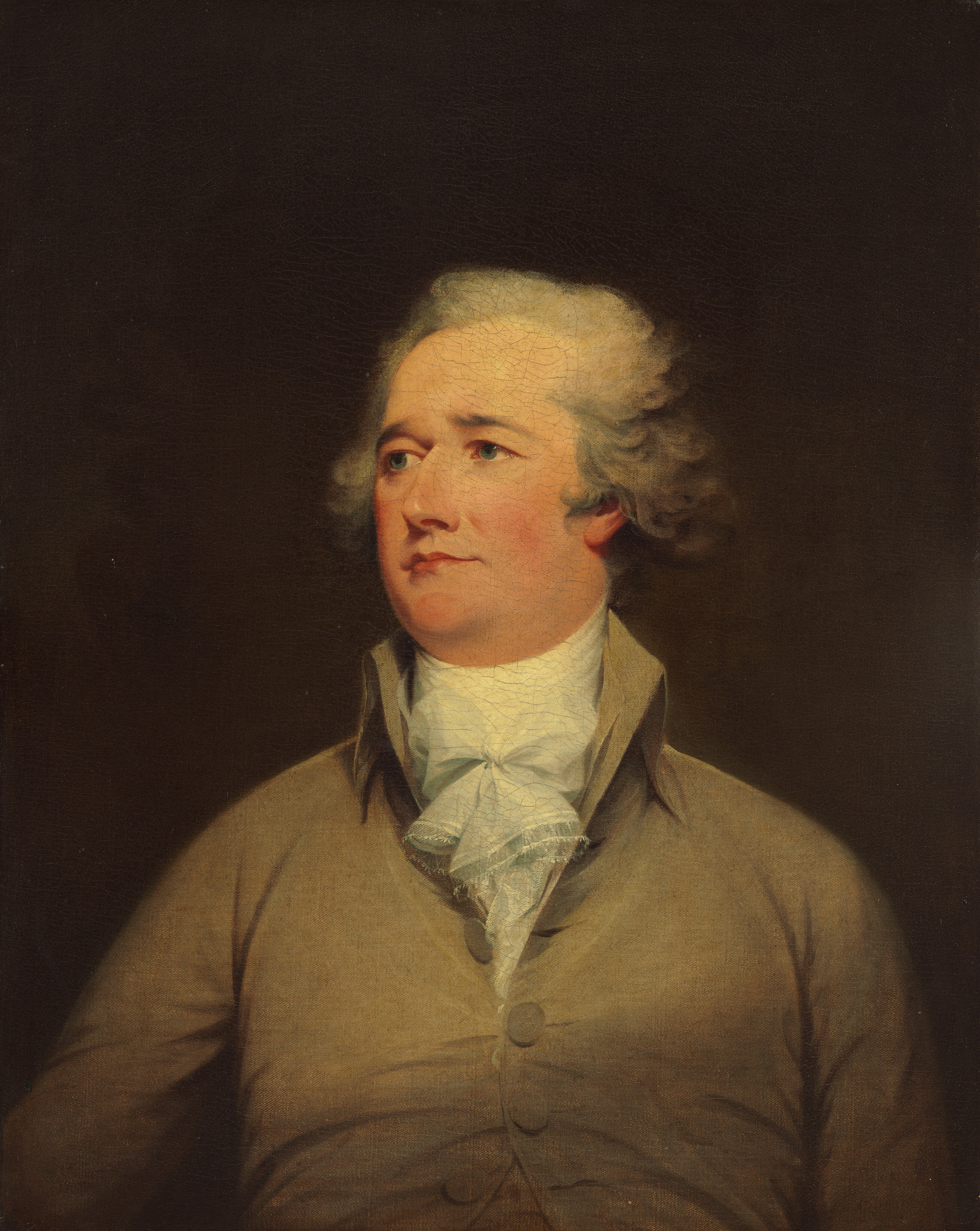
At a time when Thomas Jefferson envisioned a nation of self-sufficient farmers, Hamilton looked toward the future and saw a world driven by commerce, manufacturing, and urban industry. His “Report on Manufactures” (1791) was a revolutionary document that outlined how a nation could achieve financial independence through diversification.
Diversifying the National Economy
Hamilton argued that an economy based solely on agriculture was vulnerable to weather patterns and global price fluctuations. He advocated for a diversified portfolio of industries. This principle of diversification is the most fundamental rule of modern investing. Hamilton knew that by spreading risk across different sectors—shipping, manufacturing, and finance—the national “portfolio” would be more resilient. Today, investors apply this Hamiltonian logic by ensuring their wealth isn’t tied to a single asset class, but spread across stocks, bonds, and real estate.
Subsidies and Protectionism: The Roots of Business Finance
To encourage new businesses, Hamilton proposed government subsidies and tariffs to protect “infant industries.” This was an early form of venture capital and industrial policy. He believed that the government should play an active role in fostering a climate where innovation could thrive. This perspective paved the way for the sophisticated business finance ecosystems we see today, where capital is funneled into high-growth sectors to ensure long-term national prosperity. Hamilton’s work proved that a nation’s wealth is not found in its soil, but in its ability to innovate and produce value.
Infrastructure for Individual Wealth: The Mint and Liquidity
Hamilton understood that for the average citizen to participate in the economy, there needed to be a standardized “unit of account.” His work on the U.S. Mint and the standardization of the dollar was perhaps his most practical contribution to personal finance.
The Creation of the U.S. Mint
The Coinage Act of 1792, heavily influenced by Hamilton’s reports, established the U.S. dollar as the country’s official unit of currency and created the U.S. Mint. By pegging the dollar to both gold and silver (bimetallism), he provided a stable foundation for everyday transactions. This standardization meant that an entrepreneur in New York could trade with a merchant in South Carolina using a mutually understood value. In the context of modern online income and global e-commerce, this standardization is the precursor to the digital payment gateways and global currency exchanges we use every day.
Liquidity and the Modern Investor
Hamilton was obsessed with “liquidity”—the ease with which an asset can be converted into cash without affecting its market price. By creating a national bank and a standardized currency, he ensured that capital could flow quickly to where it was needed most. This focus on liquidity is vital for the modern investor. Hamilton’s systems ensured that wealth wasn’t just “trapped” in land or physical goods but could be moved, invested, and grown. He essentially created the “on-ramp” for the American middle class to eventually participate in the world of investing.
Hamiltonian Lessons for Today’s Financial World
The systems Hamilton built in the 18th century are remarkably similar to the financial tools we use in the 21st century. His philosophy offers timeless lessons for anyone looking to master their personal or business finances.
Leveraging Credit Wisely
The most enduring Hamiltonian lesson is that debt is not inherently bad; rather, it is a tool. Hamilton showed that when a borrower (whether a nation or an individual) is disciplined and transparent, debt becomes “capital”—a way to fund projects that generate more wealth than the cost of the interest. In modern personal finance, this is the difference between “bad debt” (high-interest consumer credit) and “good debt” (low-interest mortgages or business loans that increase net worth).

Understanding Market Interdependence
Hamilton’s “System” was built on the idea that the success of the government, the banks, and the private citizen are all linked. When the national credit is strong, interest rates stay low, and businesses can grow. When businesses grow, they create jobs and tax revenue, which further strengthens the national credit. This cycle of interdependence is why modern investors watch the Federal Reserve and Treasury Department so closely. We are still living in Hamilton’s world, where the health of the macroeconomy directly dictates the opportunities available for personal wealth and side hustles.
By establishing the pillars of credit, banking, diversification, and standardized currency, Alexander Hamilton did more than just “save” the early American economy. He created the very template for modern capitalism. His work reminds us that financial success is built on a foundation of trust, liquidity, and a forward-thinking approach to risk. Whether you are managing a corporate budget or a personal investment portfolio, the principles Hamilton championed over two centuries ago remain the gold standard for financial excellence.
aViewFromTheCave is a participant in the Amazon Services LLC Associates Program, an affiliate advertising program designed to provide a means for sites to earn advertising fees by advertising and linking to Amazon.com. Amazon, the Amazon logo, AmazonSupply, and the AmazonSupply logo are trademarks of Amazon.com, Inc. or its affiliates. As an Amazon Associate we earn affiliate commissions from qualifying purchases.