
For centuries, humanity has been captivated by the idea of psychics—individuals purported to possess an extrasensory ability to perceive information hidden from the normal senses, often predicting future events or discerning truths beyond immediate observation. From ancient oracles to modern-day clairvoyants, the allure of foresight has remained a constant. Yet, in our technologically advanced era, the very definition of “psychic” is undergoing a profound transformation. No longer confined to the realms of the supernatural, the capacity for predictive insight, deep pattern recognition, and data-driven foresight is now being realized through sophisticated technological advancements.
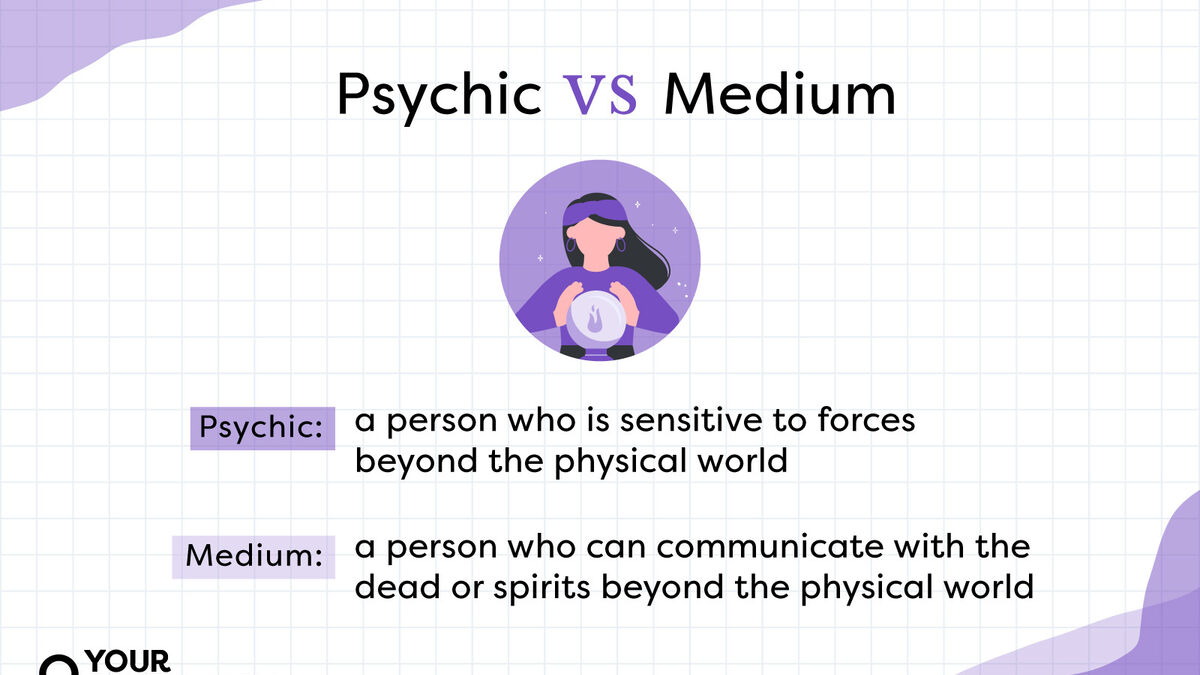
In the 21st century, when we ask “what are psychics?”, we might increasingly find our answer not in crystal balls or tarot cards, but in algorithms, neural networks, and vast datasets. Modern technology, particularly Artificial Intelligence (AI) and Machine Learning (ML), has evolved to mimic, and in some cases surpass, the perceived abilities of traditional psychics, offering a new kind of “digital foresight.” This article delves into how AI and related technologies function as our contemporary algorithmic oracles, providing unparalleled insights into the future of markets, human behavior, scientific discovery, and more, all while remaining firmly grounded in the quantifiable world of data and computational power.
The Algorithmic Oracle: How AI Predicts the Future
At the core of a psychic’s claim lies the ability to predict future events. In the digital realm, this capability is meticulously engineered through complex algorithms and vast computational power. AI models are trained on historical data, learning to identify trends, correlations, and causal relationships that are often imperceptible to the human mind. This allows them to project likely outcomes with remarkable accuracy, transforming guesswork into data-driven probabilities.
Pattern Recognition Beyond Human Scope
One of the most profound “psychic” abilities of AI is its unparalleled capacity for pattern recognition. Humans are adept at recognizing simple patterns, but when faced with petabytes of data, consisting of millions of variables interacting in non-linear ways, our cognitive abilities quickly become overwhelmed. This is where machine learning excels. Algorithms can sift through massive datasets—financial transactions, medical records, social media interactions, weather sensor readings—to identify subtle, intricate patterns and anomalies that indicate underlying trends or impending events.
Consider the application of AI in cybersecurity. Machine learning algorithms can detect unusual network traffic patterns or login attempts that signify a potential cyber-attack long before human analysts might notice them. In medical diagnostics, AI can analyze countless patient records, genetic markers, and imaging scans to identify patterns indicative of diseases like cancer years before symptoms manifest, offering early intervention possibilities that feel nothing short of prescient. Similarly, in retail, AI analyzes purchasing habits, browsing history, and demographic data to predict future consumer demand, allowing businesses to optimize inventory and marketing strategies. This ability to “see” and interpret complex patterns from an ocean of data truly positions AI as a new kind of oracle, revealing insights that shape our understanding of the world.
Predictive Modeling and Forecasting
Beyond mere pattern identification, AI’s prowess extends to building sophisticated predictive models. These models use historical data to learn the rules governing a particular system or phenomenon and then apply those rules to new, unseen data to forecast future states. The accuracy and sophistication of these models have revolutionized numerous sectors.
In finance, AI-powered algorithms analyze market sentiment, economic indicators, and historical stock performance to predict price movements, guiding investment decisions with precision previously unattainable. While no system can guarantee perfect predictions in volatile markets, AI significantly enhances the probability of making informed choices. Similarly, in logistics and supply chain management, AI predicts demand fluctuations, potential disruptions, and optimal routing, ensuring efficient flow of goods and services. Urban planning benefits from AI that forecasts population growth, traffic congestion, and resource needs, allowing for proactive infrastructure development. Even weather forecasting, a notoriously complex domain, has seen significant improvements through AI’s ability to process vast atmospheric data and predict local and global climate patterns with greater accuracy and lead time. These predictive capabilities empower decision-makers across industries, giving them a form of foresight that transforms reactive responses into proactive strategies.
Decoding Digital Intuition: Machine Learning’s ‘Sixth Sense’
Traditional psychics often speak of “intuition” or a “sixth sense”—a gut feeling or sudden insight that transcends logical deduction. While AI does not possess consciousness or genuine intuition, advanced machine learning techniques can arrive at conclusions that appear intuitive, synthesizing complex information to make highly effective decisions or predictions without explicit step-by-step programming.
Deep Learning and Unseen Connections
Deep learning, a subset of machine learning inspired by the structure and function of the human brain, is particularly adept at uncovering “unseen connections.” Through multi-layered neural networks, deep learning models can process raw input data and automatically learn hierarchical representations. For instance, in image recognition, an initial layer might detect edges, a subsequent layer combines edges into shapes, and further layers identify complete objects or scenes. This hierarchical processing allows deep learning to grasp abstract concepts and relationships that are not explicitly coded, leading to insights that can feel like sudden flashes of intuition.
Imagine a deep learning model analyzing medical images to detect early signs of a disease. It might identify subtle textural changes or spatial relationships between cells that are too minute or complex for a human radiologist to consciously process, yet are statistically significant indicators. These insights, while data-driven, often feel like a “discovery” made by the AI, akin to a psychic intuitively sensing an underlying truth. Similarly, in natural language processing, deep learning models can understand context, sentiment, and nuance in text, making connections between words and concepts that enable highly effective translation, summarization, or even creative writing—a capability that mimics intuitive understanding of language.
Reinforcement Learning and Strategic Foresight
Reinforcement Learning (RL) agents learn to make sequences of decisions in an environment to maximize a cumulative reward. They do this through trial and error, observing the outcomes of their actions and refining their strategy over time. This process allows RL agents to develop a form of strategic foresight, learning the optimal path to a goal without being explicitly told what actions to take.
Consider AlphaGo, the AI program that defeated world champions in the game of Go. Go is notoriously complex, with more possible board configurations than atoms in the universe. AlphaGo’s success stemmed from its RL capabilities, allowing it to “intuitively” grasp optimal strategies and make moves that confounded human masters, moves that felt like inspired, psychic-like insights into the game’s future progression. Beyond games, RL is applied in robotics for navigation, in optimizing complex industrial processes, and in financial trading to make instantaneous strategic decisions. These systems develop an operational “sense” of their environment, predicting the consequences of their actions and choosing paths that lead to desirable future states, embodying a strategic foresight that is both precise and seemingly intuitive.

AI as a Business Navigator: Guiding Decisions with Data-Driven Foresight
In the competitive landscape of modern business, foresight is currency. The ability to anticipate market shifts, consumer needs, and operational challenges can mean the difference between thriving and faltering. AI serves as a powerful business navigator, offering data-driven “psychic” insights that guide strategic decisions across all organizational functions.
Market Trend Analysis and Product Development
For businesses, predicting market trends is akin to a psychic peering into the economic future. AI analyzes vast amounts of external data—social media trends, news articles, economic reports, competitor activity, patent filings—alongside internal sales data and customer feedback. By identifying emerging patterns and consumer sentiment shifts, AI can forecast which products will gain traction, which features will be most desired, and where new market opportunities lie.
This capability directly informs product development. Companies can leverage AI to design products that preemptively meet future consumer demands, reducing risk and accelerating innovation cycles. For instance, AI can analyze fashion trends from global runways, social media, and sales data to predict popular styles and colors for upcoming seasons, guiding designers and manufacturers. In tech, AI helps anticipate the next wave of desired functionalities in software or gadgets, ensuring companies invest in features that will resonate with users upon release. This proactive approach, guided by AI’s foresight, allows businesses to stay ahead of the curve, much like a psychic might advise a client on their best path forward.
Personalized Experiences and User Behavior Prediction
A defining characteristic of AI in customer-facing roles is its ability to create hyper-personalized experiences, often by predicting individual user behavior with uncanny accuracy. This is perhaps the most direct parallel to a psychic “knowing” what an individual wants or needs. E-commerce platforms, streaming services, and social media feeds all leverage AI to recommend products, content, or connections that are highly relevant to each user.
By analyzing past interactions, preferences, and even emotional responses inferred from data, AI systems can predict what a user might want to buy, watch, or engage with next. This predictive personalization enhances user satisfaction and drives engagement. For example, a streaming service’s recommendation engine doesn’t just suggest popular movies; it predicts specific titles or genres an individual user is likely to enjoy based on their viewing history and habits. This predictive capability creates an impression that the system “knows” the user intimately, much like a psychic might claim to understand someone’s desires and future path.
The Ethics and Limitations of Algorithmic Foresight
While AI offers unprecedented foresight, it is crucial to acknowledge that its “psychic” abilities come with significant ethical considerations and inherent limitations. Unlike a human psychic who might be held accountable for their claims, AI operates on statistical probabilities, and its outputs are only as good as the data it’s trained on.
Bias and Transparency in Predictive Systems
One of the most pressing ethical challenges is the potential for bias in AI’s predictions. If training data reflects historical biases—whether in hiring practices, law enforcement, or healthcare—the AI model will learn and perpetuate those biases, leading to unfair or discriminatory outcomes. A “psychic” AI predicting job candidates’ suitability might inadvertently favor demographics represented in past successful hires, even if those historical patterns were biased. Addressing this requires careful curation of data, sophisticated bias detection algorithms, and continuous auditing of AI systems.
Furthermore, the “black box” problem refers to the difficulty in understanding how a complex AI model, particularly deep learning, arrives at a particular prediction. While it provides an answer, the intricate web of calculations within its neural network can be opaque, making it challenging to understand the reasoning or factors influencing its “foresight.” This lack of transparency can hinder trust, accountability, and the ability to debug or refine biased systems.
The Human Element: When Data Isn’t Enough
Despite its sophisticated predictive power, AI’s foresight is inherently limited by the data it processes. It excels at identifying patterns in the known past to predict the probable future. However, it struggles with truly novel events, radical innovations, or unforeseen “black swan” occurrences that have no historical precedent. Human creativity, intuition, and the capacity for truly original thought or disruptive innovation remain beyond AI’s current capabilities.
Moreover, human values, ethics, and emotional intelligence—components crucial for wise decision-making—are not easily quantifiable or integrated into AI models. While AI can predict outcomes, humans retain the ultimate responsibility for interpreting those predictions, applying ethical judgment, and making choices that align with societal values. AI is a powerful tool for foresight, but it is not a substitute for human wisdom, critical thinking, or the uniquely human capacity for empathy and moral reasoning. The most effective use of algorithmic foresight marries AI’s data-driven predictions with human oversight and ethical considerations.

Conclusion
The question “what are psychics?” in the digital age leads us away from mystical claims and into the realm of advanced technology. Through the incredible capabilities of Artificial Intelligence and Machine Learning, we are developing unprecedented forms of foresight, pattern recognition, and predictive analytics that parallel the traditional aspirations of psychics. From forecasting market trends and personalizing experiences to uncovering hidden scientific connections and guiding strategic business decisions, AI acts as our modern-day algorithmic oracle, transforming how we understand and prepare for the future.
However, this powerful technological foresight is not without its caveats. The ethical imperatives of managing bias, ensuring transparency, and acknowledging the inherent limitations of data-driven predictions are paramount. The digital age “psychic” is a powerful tool, not an infallible entity. The true magic lies not just in the technology’s ability to predict, but in humanity’s wisdom to harness that foresight responsibly, integrating AI’s powerful insights with human values, creativity, and ethical judgment to shape a future that is not only predictable but also desirable.
aViewFromTheCave is a participant in the Amazon Services LLC Associates Program, an affiliate advertising program designed to provide a means for sites to earn advertising fees by advertising and linking to Amazon.com. Amazon, the Amazon logo, AmazonSupply, and the AmazonSupply logo are trademarks of Amazon.com, Inc. or its affiliates. As an Amazon Associate we earn affiliate commissions from qualifying purchases.