
In the foundational world of chemistry, an ion is defined simply as an atom or molecule that has gained or lost one or more of its valence electrons, giving it a net positive or negative electrical charge. While this might sound like a dry academic concept relegated to high school textbooks, ions are, in fact, the fundamental units of energy and signaling that power the modern technological landscape. From the smartphone in your pocket to the electric vehicle in your garage and the satellites orbiting the Earth, the behavior of ions is the pivot upon which 21st-century innovation turns.

Understanding the “what” of ions is only the beginning. For tech enthusiasts, engineers, and digital architects, the real story lies in how we manipulate these charged particles to store energy, process information, and explore the cosmos.
Understanding the Fundamentals: What are Ions in a Technical Context?
To understand how ions drive technology, we must first look at their chemical nature through the lens of electrical engineering. An atom in its ground state is neutral. However, when it undergoes ionization, it becomes a charge carrier.
Cations vs. Anions: The Positive and Negative Divide
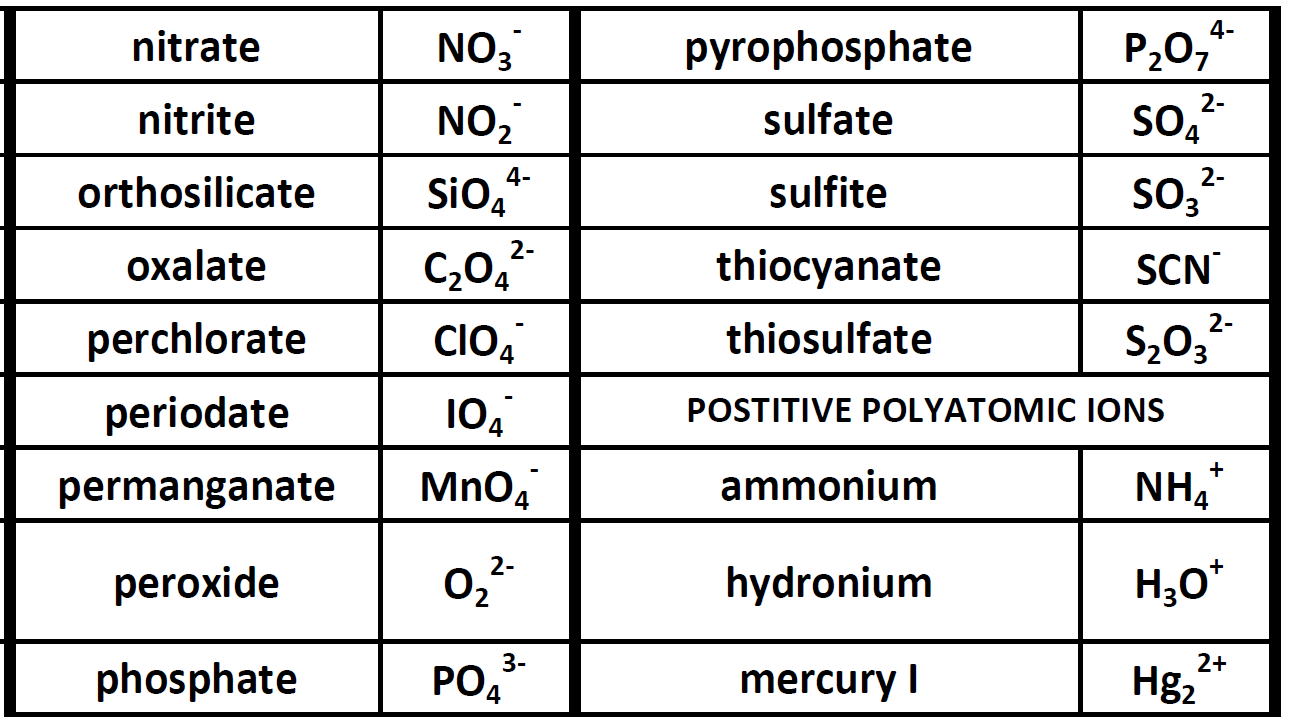
In the tech world, we categorize ions based on their charge. A cation is a positively charged ion, formed when an atom loses electrons. Conversely, an anion is a negatively charged ion, formed when an atom gains electrons. This imbalance creates an electrostatic potential. In hardware design, particularly in energy storage, the movement of these cations and anions between electrodes is what allows a device to “charge” and “discharge.”
Ionization Energy and Its Technological Relevance
Ionization energy—the amount of energy required to remove an electron from an atom—is a critical metric in material science. Tech manufacturers seek materials with specific ionization profiles to create more efficient semiconductors and longer-lasting batteries. For instance, lithium is favored in mobile technology because it has a low ionization energy, making it highly reactive and excellent at moving charge quickly within a compact space.
Powering the Mobile Revolution: Lithium-Ion Battery Technology
Perhaps the most ubiquitous application of ions today is the Lithium-ion (Li-ion) battery. This technology has revolutionized the portable electronics market and is currently the primary catalyst for the global transition to renewable energy.
The Anatomy of a Li-ion Cell
A lithium-ion battery operates on the principle of “intercalation.” During the discharge cycle, lithium ions move from the negative electrode (anode) to the positive electrode (cathode) through an electrolyte. This movement of ions creates a flow of electrons in the external circuit, which powers our apps, screens, and processors. When you plug your phone into a charger, the process is reversed: ions are forced back to the anode, storing the energy for future use.
Advancements in Solid-State Ionics
The next frontier in the “Tech” niche is the development of solid-state batteries. Current Li-ion batteries use liquid electrolytes, which can be volatile and flammable. Tech giants and EV manufacturers are now investing billions into solid-state ionics. By replacing the liquid with a solid ceramic or polymer, researchers aim to create batteries that are not only safer but also have a much higher energy density. This shift relies entirely on our ability to manage ion transport through solid materials—a feat of precision chemistry and nanotechnology.
Semiconductor Fabrication and Ion Implantation
If ions power our devices, they also define the intelligence within them. The microchips that run our AI tools and software applications are created through a process called ion implantation.

Doping: Altering Conductivity at the Atomic Level
Pure silicon is a poor conductor of electricity. To make it functional for computing, engineers must “dope” the silicon with specific impurities. This is where ion technology becomes high-tech manufacturing. By firing a beam of ions (such as boron or phosphorus) at a silicon wafer, engineers can precisely alter the electrical properties of the substrate.
An abundance of “holes” (positive charge carriers) creates a p-type semiconductor, while an abundance of extra electrons (negative charge carriers) creates an n-type semiconductor. The junction between these two is the fundamental building block of the transistor—the “on/off” switch that makes all digital software possible.
Precision Engineering for Next-Gen Microchips
As we push toward 3-nanometer and 2-nanometer chip architectures, the precision of ion implantation becomes even more critical. Software-driven ion beam controllers must ensure that ions are placed with atomic-level accuracy. Without this mastery of ion chemistry, the AI revolution—which requires massive amounts of processing power—would grind to a halt. The “ions in chemistry” are, quite literally, the gatekeepers of our digital intelligence.
Space Exploration and Ion Propulsion Systems
The application of ions extends beyond our terrestrial gadgets and into the vacuum of space. Traditional chemical rockets rely on combustion, but for long-term deep-space missions, NASA and private tech firms like SpaceX utilize ion thrusters.
The Physics of Electrostatic Engines
An ion thruster works by ionizing a gas, typically xenon, by knocking electrons off the atoms to create cations. These ions are then accelerated using an electric field and expelled out of the back of the spacecraft at incredibly high speeds. While the thrust produced is gentle—often compared to the weight of a sheet of paper—it is incredibly efficient and can operate continuously for years.
Deep Space Missions and Fuel Efficiency
The technological advantage of ion propulsion is its “specific impulse,” or fuel efficiency. Compared to traditional chemical propulsion, ion engines can reach much higher speeds over time using a fraction of the propellant. This technology is currently used to keep satellites in their proper orbits and was the driving force behind missions like Dawn, which explored the asteroid belt. As we look toward Mars and beyond, ion-based engines represent the future of interplanetary travel technology.
Ions in Digital Security and Biometric Sensors
In the realm of digital security and the Internet of Things (IoT), ions play a vital role in how our devices “sense” the physical world. This intersection of chemistry and software is creating a new era of secure, responsive tech.
Ion Sensing in Health Wearables
Modern smartwatches and fitness trackers often use ion-selective electrodes (ISEs) to monitor health metrics. These sensors can detect the concentration of specific ions (like sodium, potassium, or calcium) in a user’s sweat. This chemical data is then converted into digital signals, processed by AI algorithms, and presented to the user as insights into hydration, recovery, and heart health. This represents a seamless bridge between molecular chemistry and consumer software.
Chemical Sensors and Environmental Monitoring
Digital security also involves the detection of hazardous materials. Ion Mobility Spectrometry (IMS) is a technology used in airports and high-security installations to detect trace amounts of explosives or narcotics. By ionizing molecules in a sample and measuring the time it takes for them to travel through a drift tube, security software can identify chemical signatures with extreme precision. This application of ion chemistry is a cornerstone of modern digital and physical security infrastructure.
Conclusion: The Molecular Foundation of the Tech Niche
When we ask, “What are ions in chemistry?” we are not just asking about particles and charges; we are asking about the very mechanisms that enable our modern way of life. Ions are the currents flowing through our batteries, the dopants within our CPUs, the propellant for our spacecraft, and the signals within our wearable tech.
As technology continues to evolve toward more efficient energy storage, faster computing, and more sophisticated sensing, our ability to manipulate ions will remain the primary driver of innovation. For the tech-savvy professional, understanding the chemistry of ions is not a prerequisite for the lab, but a necessity for understanding the hardware and software systems that define the future. The next time you charge your laptop or use an AI tool, remember that it is the humble ion—the charged atom—that is doing the heavy lifting in the background of the digital age.
aViewFromTheCave is a participant in the Amazon Services LLC Associates Program, an affiliate advertising program designed to provide a means for sites to earn advertising fees by advertising and linking to Amazon.com. Amazon, the Amazon logo, AmazonSupply, and the AmazonSupply logo are trademarks of Amazon.com, Inc. or its affiliates. As an Amazon Associate we earn affiliate commissions from qualifying purchases.