
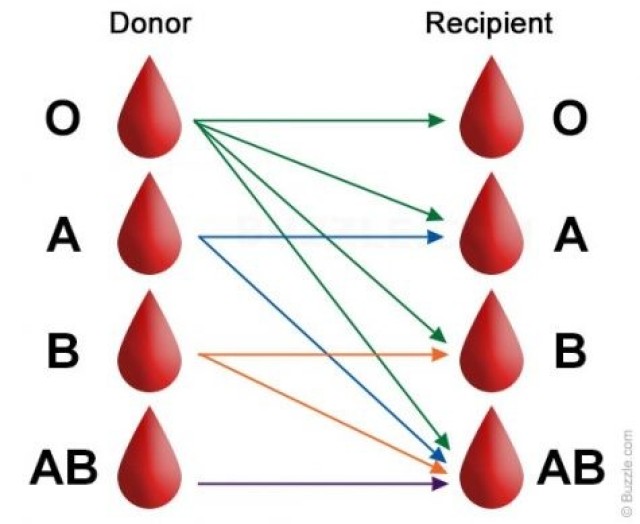
In the traditional medical lexicon, the “universal blood donor” refers to individuals with Type O-negative blood. Because their red blood cells lack A, B, and Rh antigens, their blood can be safely transfused into patients of any blood type during emergencies. However, as we move deeper into the 21st century, the concept of the universal donor is migrating from a biological stroke of luck to a triumph of high-tech engineering.
The intersection of biotechnology, artificial intelligence, and sophisticated data logistics is transforming how we identify, process, and even manufacture the “universal” biological components necessary to sustain human life. This article explores the technological landscape that is moving us beyond a reliance on rare O-negative donors toward a future of digitally optimized and bio-engineered hematology.

1. Bio-Engineering the Universal Donor: The Rise of Enzymatic Conversion
The most significant technological hurdle in hematology has always been the biological “lock and key” mechanism of blood types. If a patient receives blood with the wrong antigens, their immune system attacks the foreign cells, leading to potentially fatal reactions. For decades, the medical community has relied on the scarcity of O-negative donors to fill this gap. Today, biotech firms and research institutions are using genomic tools to change the rules of the game.
CRISPR and Genomic Editing
Clustered Regularly Interspaced Short Palindromic Repeats (CRISPR) technology has opened the door to “editing” blood. Researchers are currently exploring ways to use CRISPR-Cas9 to knock out the genes responsible for expressing A and B antigens on the surface of red blood cells. By essentially “deleting” the identifying markers of Type A or B blood in a lab setting, scientists are working toward creating a steady supply of universal donor cells from any starting point.
Enzymatic “Snipping” of Antigens
Perhaps more immediate than gene editing is the use of high-tech enzymatic conversion. Recent breakthroughs in synthetic biology have identified specific enzymes—often derived from human gut bacteria—that can act as “molecular scissors.” When introduced to Type A or B blood, these enzymes efficiently snip off the sugar molecules (antigens) that define those blood types. The result is the conversion of ordinary blood into a functional equivalent of Type O-negative. This technological “stripping” process represents a paradigm shift: the universal donor is no longer a specific person, but a specific chemical process applied to any blood unit.
2. Digital Logistics and AI-Driven Supply Chain Management
While biotech focuses on the blood itself, information technology is revolutionizing how the “universal” supply is managed. Type O-negative blood is notoriously rare, making up only about 7% of the population. Managing such a scarce resource requires a digital infrastructure that far exceeds traditional inventory management.
Predictive Analytics for Shortage Prevention
Modern blood centers now utilize AI-driven predictive modeling to forecast demand. By analyzing decades of historical data, seasonal trends (such as increased accidents during holiday travel), and real-time hospital usage rates, these algorithms can predict a shortage of universal donor blood weeks before it occurs. This allows for “smart” recruitment—automated systems that target O-negative donors via personalized mobile apps and digital scheduling tools exactly when the supply hits a critical threshold.
Blockchain and the “Vein-to-Vein” Digital Ledger
The integrity of the universal donor supply is paramount. Blockchain technology is being integrated into the blood supply chain to create an immutable, transparent record of every unit of blood. From the moment an O-negative donor checks into a high-tech kiosk to the moment that blood is transfused in a trauma center, every step—refrigeration temperatures, transport duration, and cross-matching results—is recorded on a decentralized ledger. This ensures 100% traceability and drastically reduces the “tech-lag” in traditional blood banking, where paper trails often slowed down the distribution of life-saving universal units.
3. The Synthetic Frontier: Lab-Grown Universal Blood
The ultimate technological goal is to move away from human donors entirely. If technology can create a “synthetic” universal donor, the inherent risks of human-borne pathogens and supply volatility vanish.
ErythroMer and Artificial Oxygen Carriers
Technology has enabled the development of “nanobags” or artificial red blood cells like ErythroMer. These are not blood in the biological sense but are sophisticated pieces of bio-nanotechnology designed to mimic the oxygen-carrying capacity of red blood cells. Because these synthetic cells do not contain human proteins or antigens, they are inherently “universal.” They can be freeze-dried, stored at room temperature, and deployed by tech-equipped medics in combat zones or remote areas where O-negative blood is unavailable.
Bioreactor Scaling and Stem Cell Differentiation
The field of regenerative medicine is leveraging high-tech bioreactors to grow red blood cells from hematopoietic stem cells. By utilizing “immortalized” cell lines that are genetically engineered to be O-negative, labs can theoretically produce an infinite supply of universal blood. The challenge here is the “scaling tech”—the ability to create billions of cells in a controlled, sterile environment at a cost-effective rate. Advances in 3D-fluidic systems and automated nutrient delivery are slowly making the “factory-grown” universal donor a commercial reality.
4. IoT and the Cold Chain: Safeguarding the Universal Resource
Because universal donor blood is so valuable, its preservation is a high-stakes technological endeavor. The “Internet of Things” (IoT) has transformed the blood fridge from a simple cooler into a smart, connected node.
Smart Refrigeration and Real-Time Monitoring
The latest generation of blood storage technology utilizes IoT sensors that monitor more than just temperature. They track vibration, light exposure, and even the “age” of the blood unit. If a batch of O-negative blood is at risk of expiring or has been exposed to suboptimal conditions, the system automatically alerts the logistics hub to reroute the blood to a high-volume trauma center where it can be used immediately. This “Smart Cold Chain” ensures that not a single drop of the universal resource is wasted due to technical failure.
Drone Delivery and the “Last Mile” of Tech
In regions where infrastructure is lacking, technology is bridging the gap through autonomous delivery. Companies like Zipline use GPS-guided drones to deliver Type O-negative blood to remote clinics within minutes of a digital request. This integration of robotics and aerospace technology ensures that the “universal donor” is accessible regardless of geography, effectively using tech to democratize emergency medicine.
5. Ethical Tech and the Security of Donor Data
As we transition to a tech-heavy model of blood donation, the “data” of the universal donor becomes as sensitive as their biological tissue. This has necessitated a new focus on cybersecurity within the healthcare tech sector.
Protecting Genomic Privacy
When a donor provides O-negative blood today, they are often providing their genetic information to large-scale health databases. Technology must now provide the shield for this data. Advanced encryption and “Differential Privacy” algorithms are being used to ensure that while researchers can study the trends of universal donors, the individual’s genomic identity remains anonymous.
Cybersecurity in National Registries
National blood registries are critical pieces of national infrastructure. A cyberattack on a blood bank’s database could halt transfusions across an entire region. Consequently, the tech industry is developing “high-availability” cloud architectures for blood banks, ensuring that even in the event of a digital breach, the systems used to match and distribute universal blood remain functional. This intersection of digital security and public health is the final, vital layer in the modern definition of the universal donor.

Conclusion: The New Definition of “Universal”
The question “what is the universal blood donor?” no longer has a purely biological answer. While Type O-negative remains the gold standard, it is now supported—and in some cases, being replaced—by a suite of advanced technologies. From CRISPR-modified cells and enzymatic conversion to AI-managed supply chains and synthetic oxygen carriers, the “Universal Donor” is becoming a hybrid of biology and engineering.
In this tech-driven era, we are moving toward a world where blood type is no longer a constraint on survival. Through the lens of technological innovation, the universal donor is evolving from a rare individual into a ubiquitous, manufactured, and digitally optimized resource that ensures no patient dies for want of a compatible match. The future of medicine is not just in our veins; it is in the code, the enzymes, and the algorithms that manage the lifeblood of our society.
aViewFromTheCave is a participant in the Amazon Services LLC Associates Program, an affiliate advertising program designed to provide a means for sites to earn advertising fees by advertising and linking to Amazon.com. Amazon, the Amazon logo, AmazonSupply, and the AmazonSupply logo are trademarks of Amazon.com, Inc. or its affiliates. As an Amazon Associate we earn affiliate commissions from qualifying purchases.