
The question “What is the surname of Jesus?” is one of the most frequently searched historical queries in the digital age. From a theological perspective, the answer is straightforward: surnames as we know them today did not exist in first-century Judea. However, from the perspective of Brand Strategy and Corporate Identity, this question opens a fascinating window into how identity is constructed, how legacies are preserved, and how a “brand” can achieve global ubiquity without the standard identifiers we rely on today.
In the modern world, a surname provides a “corporate” anchor—a way to categorize, track, and verify identity. In the ancient world, identity was built through associations, purpose, and regional origin. By examining the naming conventions used for Jesus, we can derive profound insights into the mechanics of personal branding, the power of mononymous recognition, and the evolution of a global identity.

1. Historical Naming Conventions vs. Modern Brand Strategy
In the era of Jesus, individuals were identified by a combination of their given name and a specific identifier that localized or personalized their presence. This is remarkably similar to how modern startups or personal brands use descriptive tags to differentiate themselves in a saturated market.
The Patronymic Identity: Jesus, Son of Joseph
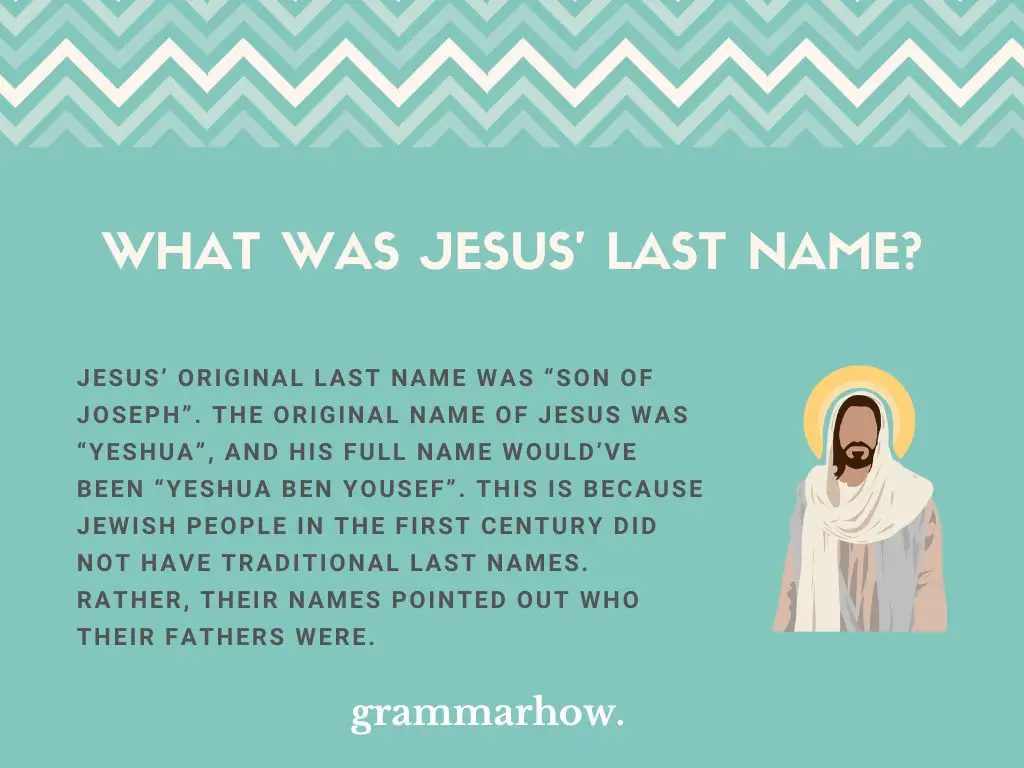
In Hebrew culture, a common identifier was “Bar,” meaning “son of.” Jesus would have been known in his community as Yeshua bar Yehosef (Jesus, son of Joseph). In the world of branding, this is equivalent to “Lineage Branding.” Just as Ford or Disney rely on the founder’s name to establish trust and continuity, the patronymic system established a “brand lineage.” It told the audience exactly where the individual came from and who had vetted their entry into society. For modern brand architects, this highlights the importance of “Origin Stories”—establishing a clear line of descent or a founding narrative that justifies the brand’s existence.
The Locative Identifier: Jesus of Nazareth
When a patronymic wasn’t sufficient, individuals were often identified by their place of origin. “Jesus of Nazareth” served as a geographical brand. In marketing, location-based branding (like “Champagne” or “Silicon Valley”) carries inherent connotations. For Jesus, being associated with Nazareth—a small, somewhat overlooked town—initially created a “brand underdog” narrative. This is a classic strategy used by brands like Apple (starting in a garage) or Ben & Jerry’s (starting in a renovated gas station). The locative identifier creates a sense of place and relatability, grounding the “brand” in a physical reality that the audience can visualize.
2. The Power of Mononymous Branding
One of the most significant achievements in brand strategy is reaching “mononymous” status. Think of brands like Apple, Google, or Nike, or individuals like Prince, Madonna, or Cher. When a name is so powerful that it no longer requires a surname or a descriptor to be recognized, it has reached the pinnacle of brand equity.
Why One Name Often Trumps Two
The name “Jesus” has become the ultimate example of mononymous branding. While he had various identifiers during his life, the singular name now commands immediate global recognition. In brand design, simplicity is the ultimate sophistication. A single, punchy name is easier to remember, easier to scale, and more effective for word-of-mouth marketing. When a brand can shed its “surname” (the descriptive part of its logo or title), it signifies that the brand has become a category unto itself.
Creating a Universal Symbol
The transition from a man with a local identifier to a global icon required the distillation of a “brand promise.” Because there was no surname to act as a tether to a single family or legal entity, the name “Jesus” was able to transcend cultural and linguistic barriers. For a brand to go global, it must often simplify its identity so that it can be “translated” into different cultures without losing its core essence. The lack of a fixed surname allowed the “Jesus brand” to be adopted by diverse populations, each finding a unique but consistent meaning in the name.
3. The Transition from Name to Title: The “Christ” Brand Extension
Many people mistakenly believe “Christ” is the surname of Jesus. In reality, Christos is a Greek translation of the Hebrew Mashiach, meaning “The Anointed One.” From a brand strategy perspective, this is not a surname; it is a Positioning Statement or a Brand Title.
The Role of Functional Titles in Branding
Just as we might say “Elon Musk, CEO of Tesla” or “Oprah, the Media Mogul,” the term “Christ” was a functional title that defined the role and the “value proposition” of the individual. In the world of corporate identity, a brand extension—like “iPhone” or “Pro”—signals to the consumer what the product does or what level of quality to expect. “Jesus Christ” essentially functions as [Brand Name] + [Value Proposition]. This combination is incredibly effective because it tells the audience both who the entity is and what it promises to deliver.
Brand Localization and Linguistic Adaptation
The shift from the Hebrew Yeshua to the Greek Iesous and finally the English Jesus represents one of the most successful examples of brand localization in history. Brand managers today struggle to ensure that their names work in foreign markets (e.g., the famous but debated story of the Chevy Nova in Spanish markets). The “Jesus brand” successfully navigated these transitions by focusing on the core message rather than the phonetic rigidity of the name. By allowing the name and title to adapt to the dominant trade languages of the time (Greek and Latin), the identity remained relevant and accessible across the Roman Empire and beyond.
4. Managing Legacy and Global Recognition Across Eras
The longevity of the “Jesus brand” is unparalleled. Most brands struggle to stay relevant for more than a few decades; very few last centuries. The “brand of Jesus” has maintained its position for two millennia by utilizing specific pillars of identity management that modern corporations still use today.
Consistency of the Core Message
While the “surname” or identifiers might have been fluid (Jesus of Nazareth, Jesus son of David, Jesus Christ), the core message remained remarkably consistent. In brand strategy, “Brand Consistency” is the practice of maintaining the same values and aesthetic across all touchpoints. Whether in a first-century parable or a 21st-century digital sermon, the “brand attributes” associated with the name—compassion, sacrifice, and radical teaching—remain unchanged. This consistency builds deep-seated trust and loyalty (brand advocacy).
Visual Identity and Symbolism
Because there was no “surname” to act as a legal trademark, the identity was reinforced through powerful visual symbols—the cross, the fish (Ichthys), and the shepherd. Modern brands use logos (the Nike Swoosh, the McDonald’s Arches) to perform the same function. These symbols become a shorthand for the brand’s entire philosophy. When a brand lacks a traditional “last name” or corporate suffix, its visual identity must work twice as hard to ensure recognition.
5. Lessons for Modern Brand Architects
The study of how Jesus was named and identified offers several “takeaways” for today’s entrepreneurs, marketers, and personal branding experts.
Clarity Over Complexity
The absence of a surname reminds us that we should not clutter our brand identity with unnecessary details. If your brand needs a three-sentence explanation just to identify itself, it is too complex. The most powerful identities are those that can be distilled into a single name or a clear, functional title. Ask yourself: Is your brand’s “surname” helping you, or is it just noise?
The Role of Storytelling in Identity
Jesus’s identity was built through narrative. People didn’t just know his name; they knew his story—his origin, his mission, and his “brand promise.” In modern marketing, we often focus too much on the “what” (the product) and not enough on the “who” (the brand identity). A brand without a story is just a commodity. By leaning into identifiers like “of Nazareth” or “the Anointed,” the early proponents of the faith were using storytelling to ground a spiritual concept in a human identity.

Building a Brand That Outlives the Founder
Finally, the “surname” of Jesus—or the lack thereof—teaches us about legacy. A truly great brand is one that can eventually move beyond the founder’s physical presence. By shifting the focus from a personal patronymic (Son of Joseph) to a universal title (Christ), the identity was prepared for a future where the founder was no longer physically present. For business owners, this is the ultimate goal of corporate identity: to build a brand so robust and clearly defined that it continues to resonate and grow, generation after generation, without needing a “surname” to hold it in place.
In conclusion, while Jesus did not have a surname in the modern legal sense, his various identifiers functioned as a masterclass in Brand Strategy. From the use of locative and patronymic tags to the adoption of a mononymous global identity and a powerful functional title, the “naming” of Jesus illustrates how identity is the foundation of any enduring legacy. Whether you are building a tech startup, a personal brand, or a global corporation, the principles of clarity, consistency, and purposeful naming remain the keys to universal recognition.
aViewFromTheCave is a participant in the Amazon Services LLC Associates Program, an affiliate advertising program designed to provide a means for sites to earn advertising fees by advertising and linking to Amazon.com. Amazon, the Amazon logo, AmazonSupply, and the AmazonSupply logo are trademarks of Amazon.com, Inc. or its affiliates. As an Amazon Associate we earn affiliate commissions from qualifying purchases.