
In the world of nutrition, “calorie density” refers to the amount of energy provided per unit of weight. A tablespoon of olive oil, for instance, contains far more energy than a pound of celery. When we translate this concept into the language of Money and personal finance, we find a striking parallel. In the financial ecosystem, “calorie density” represents the return on investment (ROI) relative to the capital, time, and effort expended.
Identifying the most “calorie-dense” financial food—those assets and strategies that provide the maximum wealth-building energy for the least amount of “weight” or friction—is the key to achieving financial independence. To build a robust financial physique, one must distinguish between “empty calories” (depreciating assets) and “high-density superfoods” (compounding investments and scalable income streams).

Understanding Financial Calorie Density: Efficiency over Volume
In personal finance, many investors mistake volume for health. They believe that having a large number of mediocre investments or working eighty hours a week at a linear wage is the path to wealth. However, true wealth is built through efficiency. Financial calorie density is the measure of how hard your money works for you, rather than how hard you work for your money.
The Concept of Capital Efficiency
Capital efficiency is the cornerstone of a high-density financial diet. It refers to the ratio between how much a business or individual spends on operations and how much they receive in return as profit or growth. A “low-density” business, such as a traditional brick-and-mortar retail store, requires heavy capital for inventory, rent, and staffing (high weight) to produce a modest profit. Conversely, a “high-density” asset, like a software-as-a-service (SaaS) company or a digital product, requires minimal overhead to serve millions of customers.
Why Low-Density Assets Drain Your Portfolio
Low-density assets are the “celery” of the financial world. They may look substantial, but they provide very little “nutritional” value to your net worth. Common examples include high-interest consumer debt, luxury vehicles that depreciate the moment they leave the lot, and traditional savings accounts where the interest rate fails to keep pace with inflation. These assets require significant maintenance (fuel, insurance, interest payments) while offering negative or negligible energy returns. To achieve financial health, one must pivot toward assets that pack a dense punch.
Compound Interest: The Superfood of Wealth
If we were to name the single most calorie-dense food in the financial universe, it would undoubtedly be compound interest. Albert Einstein famously referred to it as the eighth wonder of the world. Its density lies in its ability to generate energy on top of energy, creating an exponential growth curve that defies linear logic.
The Mathematical Density of Time
The true “fat content” of compound interest—the part that provides the most energy—is time. In a linear world, $1,000 plus a 10% return equals $1,100. In a high-density compounding world, that $100 in growth begins to generate its own growth. Over thirty years, a single “serving” of capital can swell to twenty times its original size without the investor adding a single extra gram of effort. This is the ultimate form of passive energy consumption. The earlier an individual begins “eating” this financial superfood, the more dense their portfolio becomes.
Avoiding the “Sugar Rush” of Short-Term Speculation
Many novice investors are attracted to the “sugar rush” of day trading, meme stocks, or highly volatile cryptocurrencies. While these can provide a quick burst of energy, they are often accompanied by a devastating crash. High-density financial health is not about the speed of the rush but the sustainability of the energy. Compound interest in diversified index funds or total market ETFs provides a slow-release, high-energy burn that builds long-term “muscle” rather than temporary bloating.
High-Margin Digital Products and Scalable Side Hustles
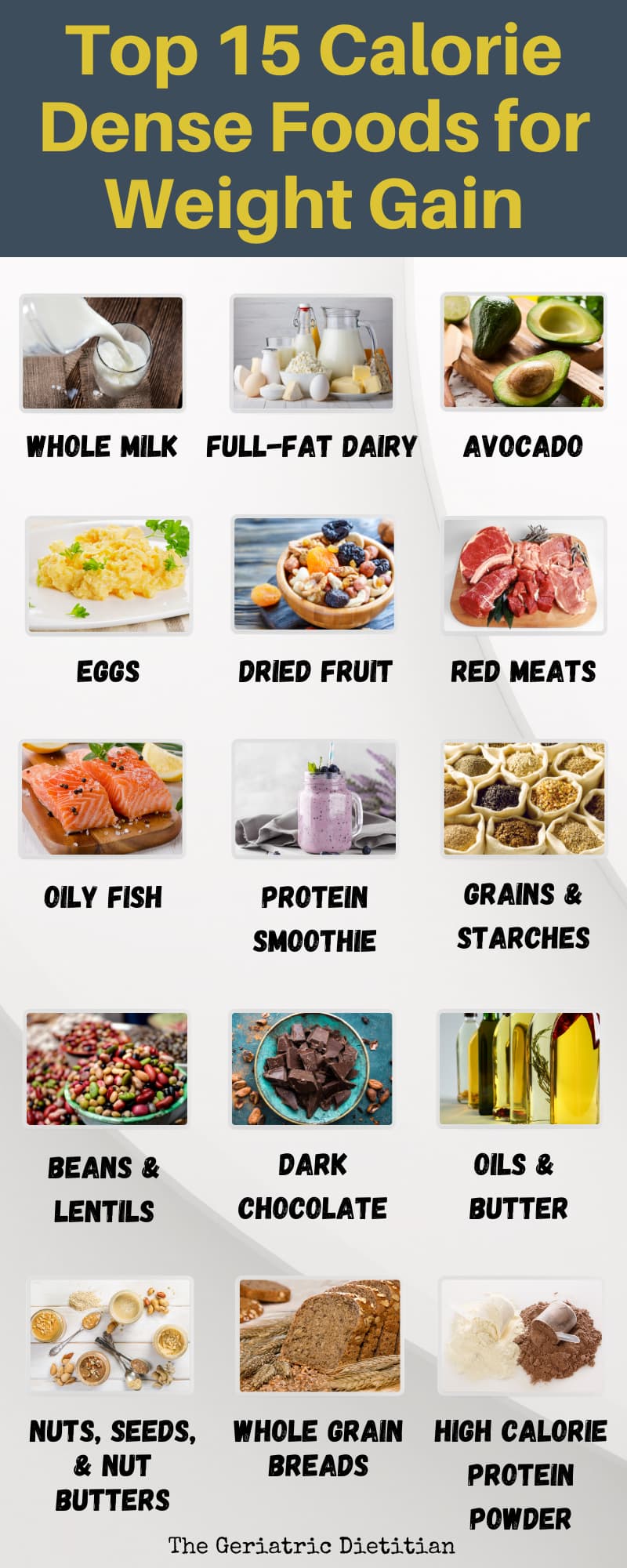
In the modern economy, the most calorie-dense “food” for income generation has shifted from physical labor to intellectual property. This represents a paradigm shift in how we view “side hustles” and online income.
Zero-Marginal-Cost Economics
In traditional manufacturing, producing the 100th unit of a product costs roughly the same as the 1st unit. This is low-density income. However, in the digital realm, the cost of replicating a piece of software, an e-book, or an online course is effectively zero. This is “Zero Marginal Cost” economics. Once the initial energy (time and creative effort) is spent to create the asset, every subsequent sale is pure energy with no additional weight. This makes digital assets some of the most calorie-dense vehicles for wealth creation ever invented.
Intellectual Property as the Ultimate High-Calorie Asset
Unlike a salary, which is a one-to-one exchange of time for money, intellectual property (IP) allows for a one-to-many exchange. A writer can write a book once and receive royalties for decades. A developer can build an app that solves a problem for millions while they sleep. This decoupling of time from income is the hallmark of financial density. By focusing on building assets rather than selling hours, you are consuming the most nutrient-dense financial calories available in the 21st century.
Identifying Your Financial “Superfoods”: Stocks, Real Estate, and Private Equity
Not all investment vehicles are created equal. To build a high-density portfolio, an investor must select “ingredients” that offer the best risk-adjusted returns and tax efficiencies.
Growth Stocks vs. Value Dividends
In the stock market, “density” can be found in two primary forms. Growth stocks represent the “calories” of the future—companies that reinvest all their earnings into expansion, leading to massive capital appreciation. Value dividends, on the other hand, are like a steady meal plan, providing consistent cash flow that can be reinvested to trigger compounding. A balanced financial diet often includes both, focusing on high-energy tech sectors for growth and stable consumer staples for consistency.
Real Estate and the Power of Leverage
Real estate is often considered a “heavy” asset due to the physical nature of property and the need for maintenance. However, it becomes incredibly “dense” when you introduce leverage (using the bank’s money to fund the purchase). If you put 20% down on a property and the property value increases by 5%, your actual return on equity is 25%. This “magnification” of energy is why real estate remains a staple in the diets of the world’s wealthiest individuals. Furthermore, tax advantages like depreciation and 1031 exchanges act as “metabolic boosters,” allowing you to keep more of the energy you generate.
Building a High-Density Financial Diet: Strategy and Discipline
Knowing what the most calorie-dense foods are is only half the battle; the other half is the discipline to consume them consistently while avoiding the “junk food” of the financial world.
Portfolio Diversification with High-Energy Focus
A healthy financial diet requires balance. While you want to maximize density, you cannot survive on “pure fat” (high-risk, high-reward assets) alone. A “Core and Satellite” strategy is often the most effective. The “Core” consists of low-cost, high-density index funds that provide the foundational nutrients for your portfolio. The “Satellite” portion allows for “high-calorie” bets on individual stocks, private equity, or entrepreneurial ventures that could provide outsized returns.

The Discipline of Long-Term Consumption
The greatest enemy of financial calorie density is “leakage”—taxes, high management fees, and emotional trading. Just as a physical diet fails when one indulges in processed sugars, a financial plan fails when an investor pays 2% in annual management fees or panic-sells during a market downturn. High-density investing requires a long-term perspective. It is about understanding that the most “energetic” part of the wealth-building process happens at the end of the timeline, not the beginning.
In conclusion, the “most calorie-dense food” in the realm of money is not a single product, but a strategy characterized by capital efficiency, compounding, and scalability. Whether it is the exponential power of the S&P 500, the zero-marginal-cost nature of digital assets, or the leveraged returns of real estate, the goal remains the same: to maximize the output for every unit of input. By focusing on these high-density assets, you ensure that your financial future is not just “full,” but truly “energized” and sustainable for the long haul.
aViewFromTheCave is a participant in the Amazon Services LLC Associates Program, an affiliate advertising program designed to provide a means for sites to earn advertising fees by advertising and linking to Amazon.com. Amazon, the Amazon logo, AmazonSupply, and the AmazonSupply logo are trademarks of Amazon.com, Inc. or its affiliates. As an Amazon Associate we earn affiliate commissions from qualifying purchases.