
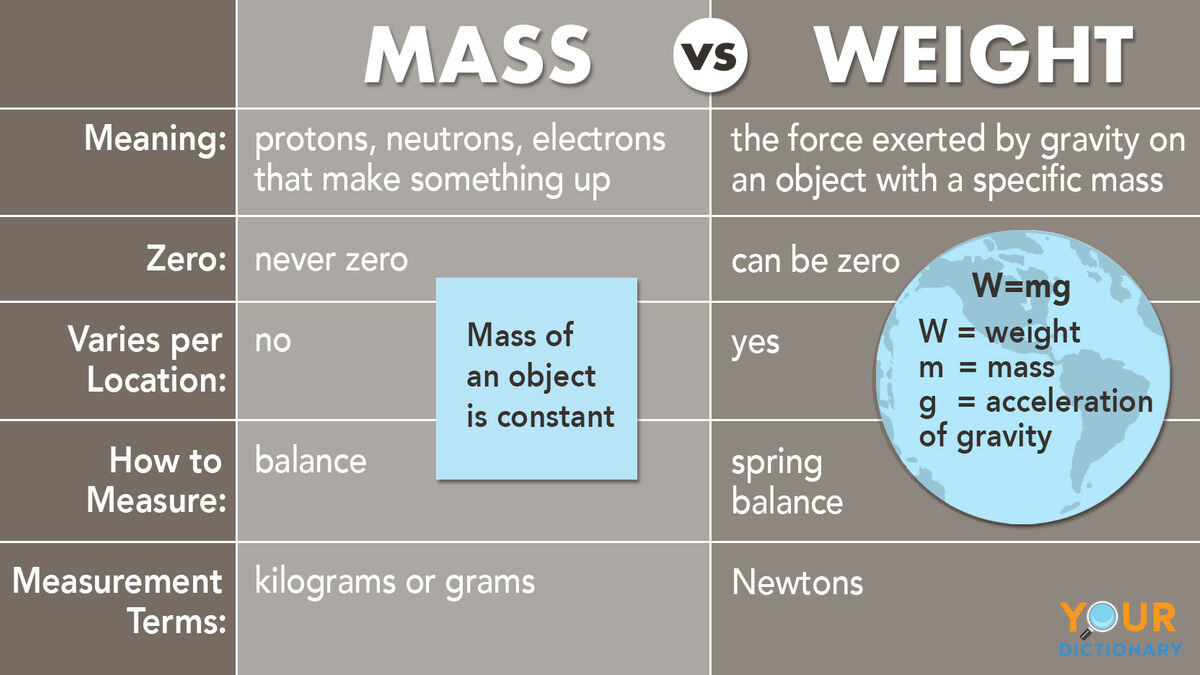
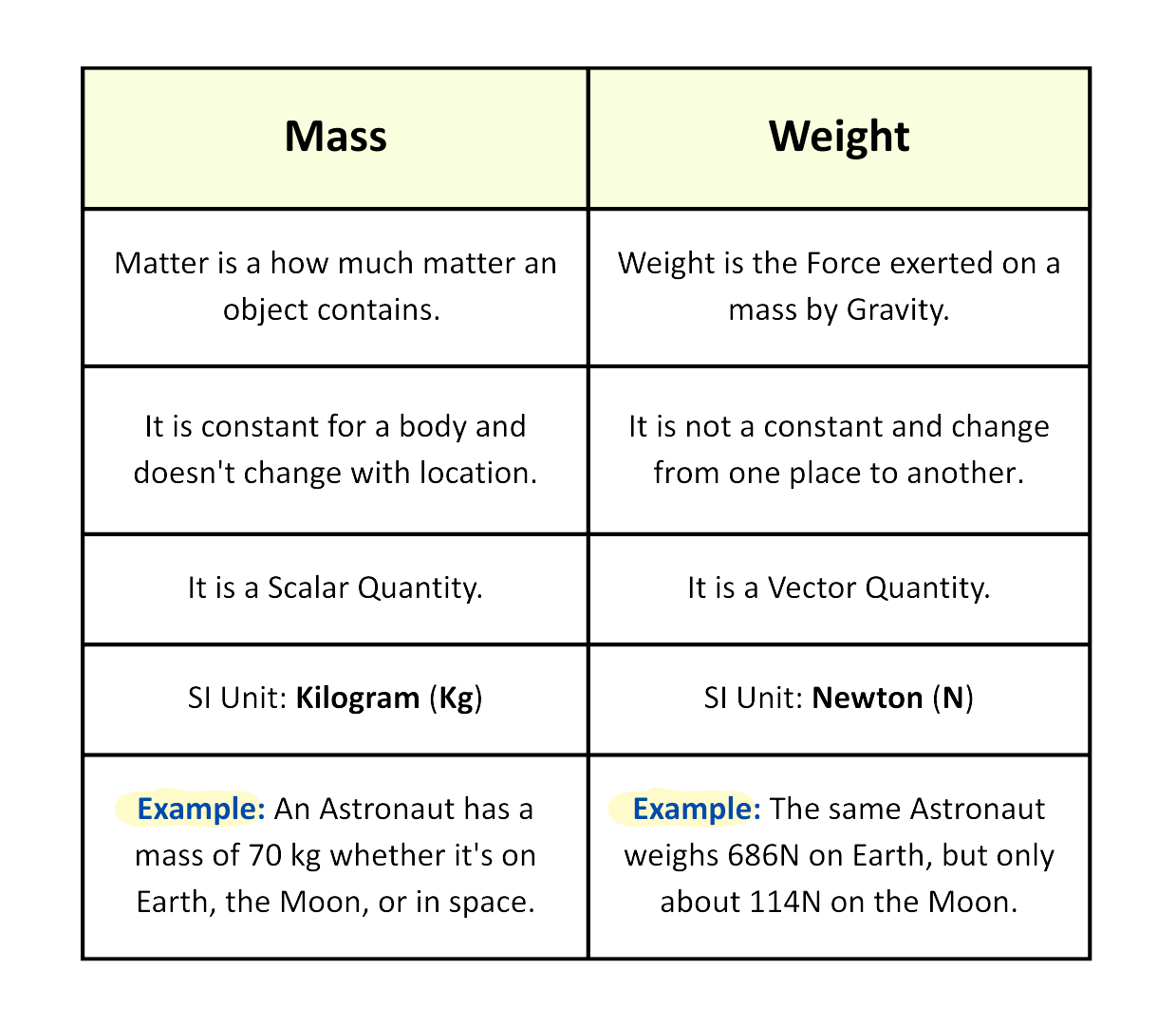
In the physical world, the distinction between mass and weight is a fundamental principle of Newtonian physics. Mass represents the amount of matter in an object, a constant regardless of location, while weight measures the force of gravity acting upon that mass. As we transition deeper into the digital age, these concepts have migrated from the laboratory to the server room and the developer’s workstation. In the context of technology—specifically software engineering, artificial intelligence, and data architecture—the distinction between “digital mass” and “computational weight” has become a critical framework for understanding scalability, performance, and innovation.
For the modern CTO, software architect, or tech enthusiast, distinguishing between what a system is (its mass) and how much it costs to move or run (its weight) is the key to building sustainable, high-performance technology. This article explores the nuances of these concepts within the tech niche, providing a comprehensive guide to managing the gravity of digital systems.
Defining Digital Mass: The Architecture of Scale
Digital mass refers to the inherent volume and complexity of a technological system. It is the sum total of the codebase, the raw datasets, the architectural dependencies, and the historical documentation that constitutes a platform. Unlike physical mass, which is limited by the conservation of matter, digital mass can expand indefinitely, often leading to a phenomenon known as “software bloat” if not managed correctly.
The Volume of Data vs. The Complexity of Code
When we speak of mass in a tech ecosystem, we are often looking at two distinct components: data volume and code complexity. Data volume is the “raw material.” Whether it is petabytes of user logs or terabytes of training data for a LLM (Large Language Model), this represents the static substance of the system.
Code complexity, on the other hand, represents the structural mass. A monolithic architecture often possesses significant mass because every component is tightly coupled. As the lines of code (LOC) increase, the mass grows. While a large mass isn’t inherently negative—it often signifies a feature-rich environment—it requires a proportional amount of energy and infrastructure to maintain. In the realm of enterprise software, high mass without proper organization leads to “technical debt,” where the sheer volume of the system makes it difficult to understand or modify.
Storage Constraints and the “Data Hoarding” Problem
The mass of a digital system directly impacts storage strategies. With the advent of cloud computing, many organizations fell into the trap of “infinite scale,” assuming that since storage is cheap, mass doesn’t matter. However, the mass of accumulated data creates a gravitational pull on an organization’s agility.
Managing digital mass requires rigorous data lifecycle management. Just as an object’s mass determines its inertia, a massive database is harder to migrate, back up, and secure. Tech leaders are now focusing on “data minimization”—reducing the digital mass to only what is essential for operations. By streamlining the mass of their applications, companies can ensure that their core infrastructure remains lean enough to pivot when market trends shift.
The Concept of Weight in Software and AI
If mass is the substance of the technology, weight is the operational pressure that substance exerts on the underlying hardware and network. In tech, “weight” is synonymous with overhead, latency, and resource consumption. A software package might have small mass (few lines of code) but exert immense weight (high CPU and RAM usage) due to inefficient algorithms or resource-heavy processes.
Algorithmic Weight: Processing Power and Latency
The weight of a piece of software is most visible during execution. An unoptimized algorithm acts like an object in a high-gravity environment; it requires an extraordinary amount of force (processing power) to move. For example, a “heavy” web application is one that takes seconds to load because it forces the client’s browser to execute complex JavaScript and render high-resolution assets simultaneously.
In modern web development, the goal is to reduce “payload weight.” This involves techniques like minification, compression, and tree-shaking—processes designed to ensure that the user only feels the weight of the features they are actually using. By reducing the weight, developers improve the user experience (UX) and decrease the “bounce rate” caused by sluggish performance.
Model Weights in Artificial Intelligence and Machine Learning
In the specific field of Artificial Intelligence, the term “weights” takes on a literal, technical meaning. In a neural network, weights are the parameters that the model learns during training. These weights determine the strength of the influence one neuron has on another.

When we discuss the “weight” of an AI model like GPT-4 or Llama 3, we are discussing the billions of parameters that the hardware must process to generate an output. High-parameter models have significant “computational weight,” requiring specialized hardware like GPUs or TPUs to function. The current trend in the AI industry is “quantization”—a process of reducing the precision of these weights to make the model “lighter” so it can run on edge devices like smartphones without sacrificing too much accuracy. This is a perfect example of tech weight management: optimizing the force required to execute the mass of the intelligence.
Optimization: Shedding Weight Without Losing Mass
The ultimate challenge in technology is achieving “high mass functionality” with “low weight execution.” Organizations want the power of a massive, data-rich system without the sluggishness and high costs associated with heavy operations. This requires a strategic approach to optimization.
Microservices vs. Monoliths: Managing Structural Mass
One of the most effective ways to manage digital gravity is through architectural decomposition. By moving from a monolithic architecture to microservices, a company doesn’t necessarily reduce its total mass, but it redistributes it.
In a microservices setup, each service is a small, manageable unit of mass. When one service needs to be updated or scaled, the “weight” of that operation is confined to that specific unit. This prevents the “gravitational collapse” often seen in monoliths, where a small change in one area can cause the entire heavy structure to fail. This modularity allows for “horizontal scaling,” where weight is distributed across multiple servers, ensuring that no single point of failure is crushed under the pressure of high traffic.
Edge Computing: Moving the Weight Closer to the User
Another revolutionary shift in weight management is Edge Computing. In traditional cloud models, the “weight” of data processing is centralized in massive data centers. This creates latency, as the “force” of the data must travel across the globe to reach the user.
Edge computing lightens the load by moving the processing mass closer to the data source—whether it’s an IoT sensor in a factory or a mobile phone in a user’s hand. By processing data locally, the system sheds the weight of network latency. This is particularly vital for time-sensitive technologies like autonomous vehicles or augmented reality, where even a millisecond of “weight” can have real-world consequences.
The Strategic Implications for CTOs and Developers
Understanding the difference between mass and weight isn’t just a technical exercise; it’s a strategic necessity. As digital ecosystems become more complex, the ability to balance these two forces determines the longevity and profitability of a tech product.
Security Mass: The Risk of Over-Extensive Digital Footprints
From a security perspective, every bit of digital mass is a potential “attack surface.” The more code, data, and third-party integrations a system has (its mass), the more opportunities there are for a breach.
“Heavy” security protocols can sometimes hinder productivity, but “massive” unprotected data stores are a liability. The modern approach is to implement “Zero Trust Architecture,” which treats every component of the mass as a potential risk. By reducing the “weight” of access—using automated identity verification and granular permissions—tech teams can secure a massive infrastructure without slowing down the speed of innovation.
Sustainable Tech: Reducing the Energy Weight of Operations
Finally, as the tech industry faces increasing scrutiny over its environmental impact, the “energy weight” of computing has become a top priority. Data centers and AI training sessions consume vast amounts of electricity.
Sustainable tech initiatives focus on reducing the “carbon weight” of digital mass. This involves writing “Green Code”—software optimized to run with minimal CPU cycles—and utilizing serverless architectures that only “weigh” anything when they are actively being used. By viewing software through the lens of physics, developers can create systems that are not only powerful and massive in their capabilities but also light and efficient in their environmental footprint.
In conclusion, while mass and weight are often used interchangeably in casual conversation, in the tech world, they represent two distinct sides of the performance coin. Mass is the substance of your innovation; weight is the cost of its existence. By mastering the balance between the two, technology leaders can build systems that are as robust as they are agile, ensuring they remain relevant in an ever-evolving digital landscape.
aViewFromTheCave is a participant in the Amazon Services LLC Associates Program, an affiliate advertising program designed to provide a means for sites to earn advertising fees by advertising and linking to Amazon.com. Amazon, the Amazon logo, AmazonSupply, and the AmazonSupply logo are trademarks of Amazon.com, Inc. or its affiliates. As an Amazon Associate we earn affiliate commissions from qualifying purchases.