
In the rapidly evolving landscape of digital communication, language moves at the speed of a fiber-optic connection. Terms that once existed in the shadows of subcultures or localized geographic pockets are now thrust into the global spotlight via social media algorithms, memes, and instant messaging. One such term that has persisted through various iterations of the internet—from the early days of IRC chatrooms to the sophisticated ecosystems of TikTok—is “chode.” While its origins are rooted in anatomical slang, its survival and evolution provide a fascinating case study in Natural Language Processing (NLP), digital content moderation, and the technical architecture of modern internet linguistics.

The Linguistic Architecture of Social Media Slang
Understanding what “chode” means in a modern context requires looking beyond a simple dictionary definition. In the digital realm, slang functions as a socio-technical shorthand. It identifies in-group membership and facilitates rapid communication within specific digital niches.
From Niche Forums to Viral Vocabulary
Historically, the term “chode” (alternatively spelled “choade”) has been used to describe a physical proportion—specifically, something that is wider than it is long. In the context of the early 2000s web, the term gained traction on forums like Reddit and 4chan. As these platforms became the breeding grounds for modern internet culture, the term transitioned from a literal anatomical descriptor to a versatile insult or a humorous trope.
The migration of such terms is not accidental; it is driven by the architecture of the platforms themselves. When a term like “chode” is used in a viral thread, the platform’s recommendation engine identifies the engagement spike. This “memetic transmission” ensures that a word once confined to a specific demographic is suddenly appearing in the “For You” pages of millions, regardless of their prior familiarity with the term.
The Role of Memetic Transmission
In tech circles, we often discuss “virality” as a marketing metric, but linguistically, it represents the rapid replication of data units (memes). “Chode” serves as a linguistic meme. Its phonetic structure—short, punchy, and ending in a hard consonant—makes it ideal for the high-velocity environment of microblogging. As users iterate on the term, its meaning shifts. In some digital circles, it has been abstracted to mean “a socially awkward person” or “a person who fails to understand basic social cues,” moving away from its physical origins and into the realm of behavioral descriptor.
How AI and Natural Language Processing (NLP) Parse Slang
For software engineers and AI researchers, terms like “chode” represent a significant challenge in Natural Language Processing. Unlike standardized English, slang is highly contextual, volatile, and often intentionally coded to bypass simple filters.
Sentiment Analysis and Contextual Understanding
Modern Large Language Models (LLMs), such as GPT-4 or Claude, are trained on massive datasets that include websites like Urban Dictionary and Reddit. This training allows the AI to understand that “chode” is generally derogatory but can also be used in “friendly banter” depending on the surrounding text.
When an AI performs sentiment analysis on a dataset containing this term, it must look at “word embeddings.” In a multi-dimensional mathematical space, the AI maps the word “chode” near other insults like “dork” or “loser,” but also near anatomical terms. The technical challenge arises when the term is used ironically or as a “reclaimed” word within a specific community. Detecting the nuance between “harassing behavior” and “community-specific jargon” is the current frontier of NLP.
The Challenge of Evolving Definitions for Algorithms
One of the primary difficulties in tech-driven linguistics is that slang evolves faster than static training sets. A term might be harmless one month and become a “dog whistle” for a specific extremist group the next. This requires “Active Learning” systems where human moderators tag new usages of terms like “chode” to retrain the model in real-time. The “semantic drift” of the term—where it moves from a physical description to a general-purpose insult—must be tracked by the algorithm to ensure accurate categorization of user-generated content.
Content Moderation and the “Chode” Conundrum
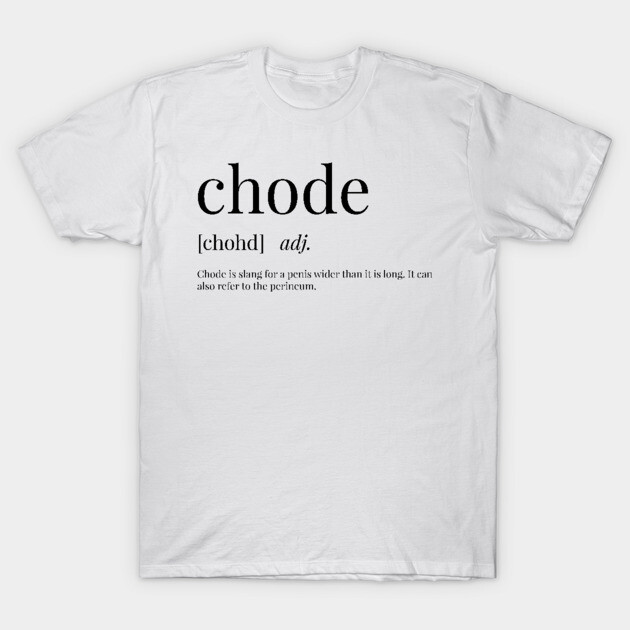
For tech giants like Meta, X (formerly Twitter), and ByteDance, the term “chode” sits in a gray area of content moderation. It is not traditionally classified as “hard profanity” (like the “seven dirty words”), yet it is undeniably vulgar and often used in the context of cyberbullying.
Shadowbanning and Keyword Filters
Many platforms utilize “keyword blacklists” to automatically flag or hide comments. However, simple blacklisting is an inefficient tool. If a platform automatically bans the word “chode,” it might inadvertently stifle legitimate linguistic discussion or overlook “leetspeak” variations (e.g., “ch0de”).
To combat this, developers use “fuzzy matching” and “contextual filters.” Instead of a binary “allow/disallow” logic, the system assigns a “toxicity score” to the post. If a user says, “You’re such a chode,” the score increases. If they are discussing the etymology of the word, the score remains low. This technical nuance is what prevents modern platforms from becoming “walled gardens” of overly sanitized and broken language.
The Balance Between Safety and Free Expression
The technical implementation of moderation policies regarding slang involves a delicate balance. Over-moderation leads to “platform fatigue,” where users feel they cannot speak naturally. Under-moderation leads to a toxic environment that drives away advertisers. The term “chode” is a perfect example of this tension. It is offensive enough to be reported by users, but common enough that banning it entirely would seem like “algorithmic overreach.” Consequently, many platforms relegate such terms to “low visibility” rather than outright deletion, a process colloquially known as shadowbanning.
The Impact on SEO and Digital Visibility
From a technical SEO (Search Engine Optimization) perspective, the term “chode” provides an interesting look at how search engines handle “Not Safe For Work” (NSFW) or “Query Deserves Diversity” (QDD) terms.
Keyword Strategy for Modern Vernacular
For content creators and digital marketers, understanding the search volume of slang is crucial. While a professional brand might never use the term “chode” in their copy, understanding that users are searching for it allows them to create “explainer” content. This is known as “intent-based SEO.” When a user searches “what does chode mean,” Google’s algorithm must decide whether to show a medical dictionary, a slang repository, or a sociological article.
Google’s “Helpful Content Update” focuses on providing the most relevant answer to the user’s intent. For high-slang queries, the search engine often prioritizes platforms with high user-generated authority, such as Reddit or Quora, because these platforms are where the definition is actively being shaped by real-time human interaction.
Navigating Brand Safety in User-Generated Content
For tech platforms that host ads, the presence of slang like “chode” in the comments section can trigger “brand safety” protocols. Ad-tech tools like DoubleVerify or Integral Ad Science scan the Document Object Model (DOM) of a webpage for specific keywords. If the word “chode” appears too frequently, the page might be demonetized in real-time. This forces developers to create “safe zones” for advertisers while still allowing for the “wild west” nature of internet comments.
Future Trends: The Digitization of Language
As we move toward a future dominated by the “Internet of Things” (IoT) and the Metaverse, the way we interact with slang like “chode” will continue to change.
Slang in Voice UI and Augmented Reality
Voice assistants like Alexa and Siri are notoriously bad at understanding slang. As these technologies evolve, the integration of “Slang Databases” will be necessary for naturalistic interaction. Imagine an AR (Augmented Reality) interface that provides real-time “definitions” for slang used in a live conversation—this is a technical possibility as we integrate LLMs with wearable tech.

The Permanence of the Digital Record
Finally, the “tech” of slang is about permanence. Unlike the spoken word of the past, every use of the word “chode” on a digital platform is indexed, timestamped, and stored in a database. This creates a “Linguistic Big Data” set that sociologists and tech researchers use to track the health and trends of digital societies. The word “chode,” in all its crude glory, becomes a data point in the vast metadata of human history.
In conclusion, “chode” is more than just a piece of vulgar slang; it is a testament to the complexity of digital communication. For those in the tech industry, it represents the ongoing struggle to teach machines the nuance of human emotion, the intricacies of social moderation, and the ever-shifting sands of the modern vernacular. As long as humans interact via digital interfaces, slang will continue to bypass the barriers of formal language, challenging our algorithms and enriching our digital lexicon.
aViewFromTheCave is a participant in the Amazon Services LLC Associates Program, an affiliate advertising program designed to provide a means for sites to earn advertising fees by advertising and linking to Amazon.com. Amazon, the Amazon logo, AmazonSupply, and the AmazonSupply logo are trademarks of Amazon.com, Inc. or its affiliates. As an Amazon Associate we earn affiliate commissions from qualifying purchases.