
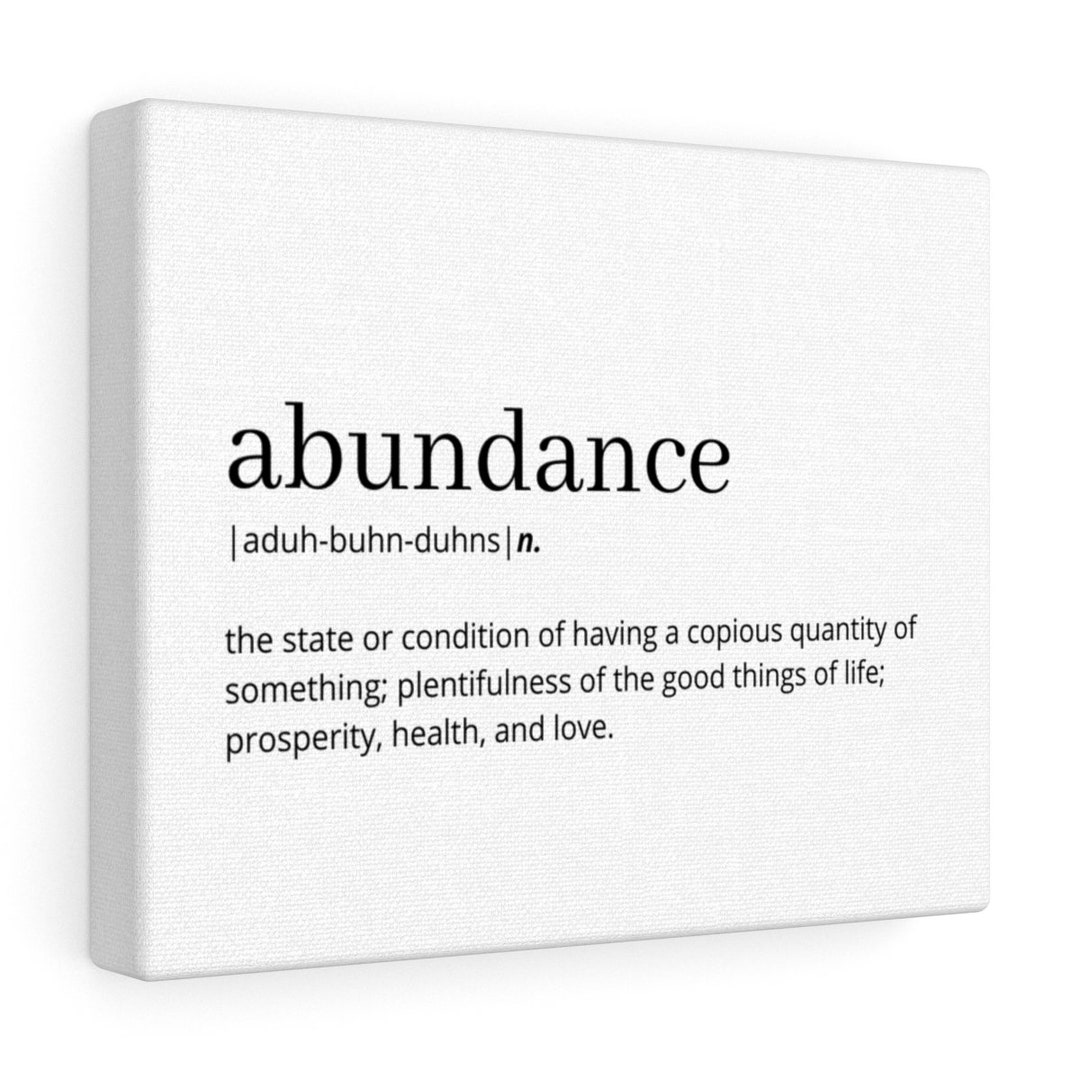
The concept of abundance is often relegated to the realms of philosophy or self-help, but in the context of personal finance, investing, and the modern economy, it takes on a much more practical and transformative meaning. To understand what abundance means in a financial sense is to look beyond the balance in a bank account and instead focus on the flow of resources, the scalability of income, and the shift from a defensive to an offensive economic posture.
In a world traditionally defined by scarcity—the idea that for one person to gain, another must lose—the “abundance mindset” serves as the bedrock for modern wealth creation. This article explores how abundance translates into financial strategy, the mechanics of building wealth in an era of digital opportunity, and how to leverage modern tools to move from a state of survival to a state of exponential growth.
The Psychology of Abundance vs. Scarcity
Before one can master the tools of finance, one must master the internal framework through which money is perceived. The psychological distinction between abundance and scarcity is the single greatest predictor of long-term financial success.
Breaking the Scarcity Loop
A scarcity mindset is rooted in the belief that resources are finite and that the “economic pie” is fixed. This perspective often leads to fear-based decision-making: hoarding cash in low-yield accounts, avoiding calculated risks due to a fear of loss, and viewing competitors as threats rather than potential collaborators. In professional finance, this manifests as “short-termism”—focusing on immediate gains at the expense of long-term sustainability. Breaking this loop requires a conscious shift toward seeing value as something that can be created, rather than just captured.
The Mental Framework of Growth
Conversely, an abundance mindset assumes that value can be generated through innovation, leverage, and strategic positioning. For an investor, this means seeing a market downturn not as a catastrophe, but as a clearance sale for high-quality assets. For an entrepreneur, it means believing that there is always room for a better product or service. This framework allows individuals to stay invested during volatility and to commit capital to projects with high future payoffs, recognizing that the global economy has historically expanded over time.
Abundance in the Digital Economy: New Paths to Income
The definition of financial abundance has been radically altered by the digital revolution. We have moved from an era where wealth was tied to physical labor and local markets to an era where leverage is accessible to anyone with an internet connection.
Scalable Digital Assets
In the traditional economy, income was primarily linear: you traded one hour of work for a set amount of currency. Abundance, in the modern sense, is found in “non-linear” income. This involves the creation of digital assets—be it software, online courses, specialized content, or automated e-commerce—that can be sold to a global audience 24/7. These assets have a near-zero marginal cost of reproduction. Once the initial investment of time or capital is made, the potential for return is virtually unlimited, representing a true “abundance” of opportunity.
The Low Barrier to Entry for Side Hustles
Financial abundance also means having a diversified portfolio of income streams. In the past, starting a business required significant “brick and mortar” overhead. Today, the “side hustle” has been professionalized. Platforms for freelancing, decentralized finance (DeFi), and the creator economy allow individuals to test business models with minimal risk. This accessibility means that the path to financial independence is no longer a single ladder but a web of interconnected opportunities, allowing for greater resilience against economic shocks.
Strategic Investing: Moving Beyond Preservation to Multiplication

To achieve a state of abundance, one must move beyond the “savings” mindset. While saving is a prerequisite for wealth, it is rarely the vehicle for it. True abundance is achieved through the strategic multiplication of capital.
Compound Interest as an Engine of Abundance
Albert Einstein famously called compound interest the “eighth wonder of the world.” In the context of abundance, compounding is the mathematical proof that small, consistent actions lead to exponential results. By reinvesting dividends and capital gains, an investor allows their money to work as hard as they do. An abundance-focused strategy prioritizes time in the market over timing the market, understanding that the velocity of money—how quickly it is put back to work—is the key to building a legacy.
Diversification and Risk Tolerance
A common misconception is that an abundance mindset leads to reckless gambling. In reality, it leads to sophisticated risk management. Because the individual believes in the ongoing growth of the global economy, they are comfortable diversifying across asset classes: equities, real estate, commodities, and perhaps a small allocation into high-growth alternative assets like venture capital or digital currencies. They do not put all their eggs in one basket, not out of fear, but out of a strategic understanding of market cycles. They seek to capture the “abundance” of the entire market rather than betting on a single outcome.
Tools and Systems for Financial Freedom
In the modern age, abundance is facilitated by technology. Financial tools have democratized access to wealth-building strategies that were once reserved for the ultra-wealthy or institutional investors.
Automation as a Wealth Catalyst
The “abundance” of one’s time is perhaps the most valuable form of wealth. By using financial tools to automate savings, bill payments, and investment contributions, an individual removes the “decision fatigue” that often leads to poor financial choices. Automation ensures that the wealth-building process happens in the background, allowing the individual to focus their cognitive energy on higher-level income-producing activities or personal fulfillment.
Data-Driven Financial Planning
We are currently living in an era of information abundance. High-level financial analytics, real-time market data, and AI-driven portfolio rebalancing tools are now available via smartphone apps. These tools provide the transparency needed to make informed decisions. An abundance-oriented investor uses this data to track their “Net Worth” and “Financial Independence Number,” turning vague goals into concrete, data-driven milestones. They use technology to optimize for tax efficiency and to lower the fees that would otherwise erode their wealth over time.
The Ethical Dimension of Financial Abundance
Finally, the concept of abundance in money is incomplete without discussing its purpose. True financial abundance is not a hoarding exercise; it is a platform for impact.
Reinvestment and Philanthropy
When an individual moves past the point of “enough,” their focus shifts from accumulation to contribution. This is the ultimate expression of abundance: the ability to reinvest in one’s community, support causes that align with one’s values, and provide “seed capital” for the next generation of innovators. In the business world, this is often seen in the form of ESG (Environmental, Social, and Governance) investing, where capital is deployed to generate both a financial return and a positive social outcome.

Sustainable Wealth and Legacy
Abundance is also about duration. It is not just about being wealthy today, but about building systems that ensure financial security for decades to come. This involves estate planning, tax-advantaged gifting, and teaching the principles of financial literacy to others. By viewing wealth as a tool for long-term stability rather than a means for conspicuous consumption, an individual ensures that their “abundance” is sustainable. They recognize that money is a renewable resource when managed with discipline, strategy, and a forward-looking perspective.
In conclusion, “abundance” in the world of money is the realization that opportunity is not a zero-sum game. It is the integration of a growth-oriented mindset with the leverage of digital income, the power of compound interest, and the efficiency of modern financial tools. By redefining abundance as a state of freedom, choice, and impact, anyone can begin the journey from financial scarcity to a life of lasting prosperity.
aViewFromTheCave is a participant in the Amazon Services LLC Associates Program, an affiliate advertising program designed to provide a means for sites to earn advertising fees by advertising and linking to Amazon.com. Amazon, the Amazon logo, AmazonSupply, and the AmazonSupply logo are trademarks of Amazon.com, Inc. or its affiliates. As an Amazon Associate we earn affiliate commissions from qualifying purchases.