
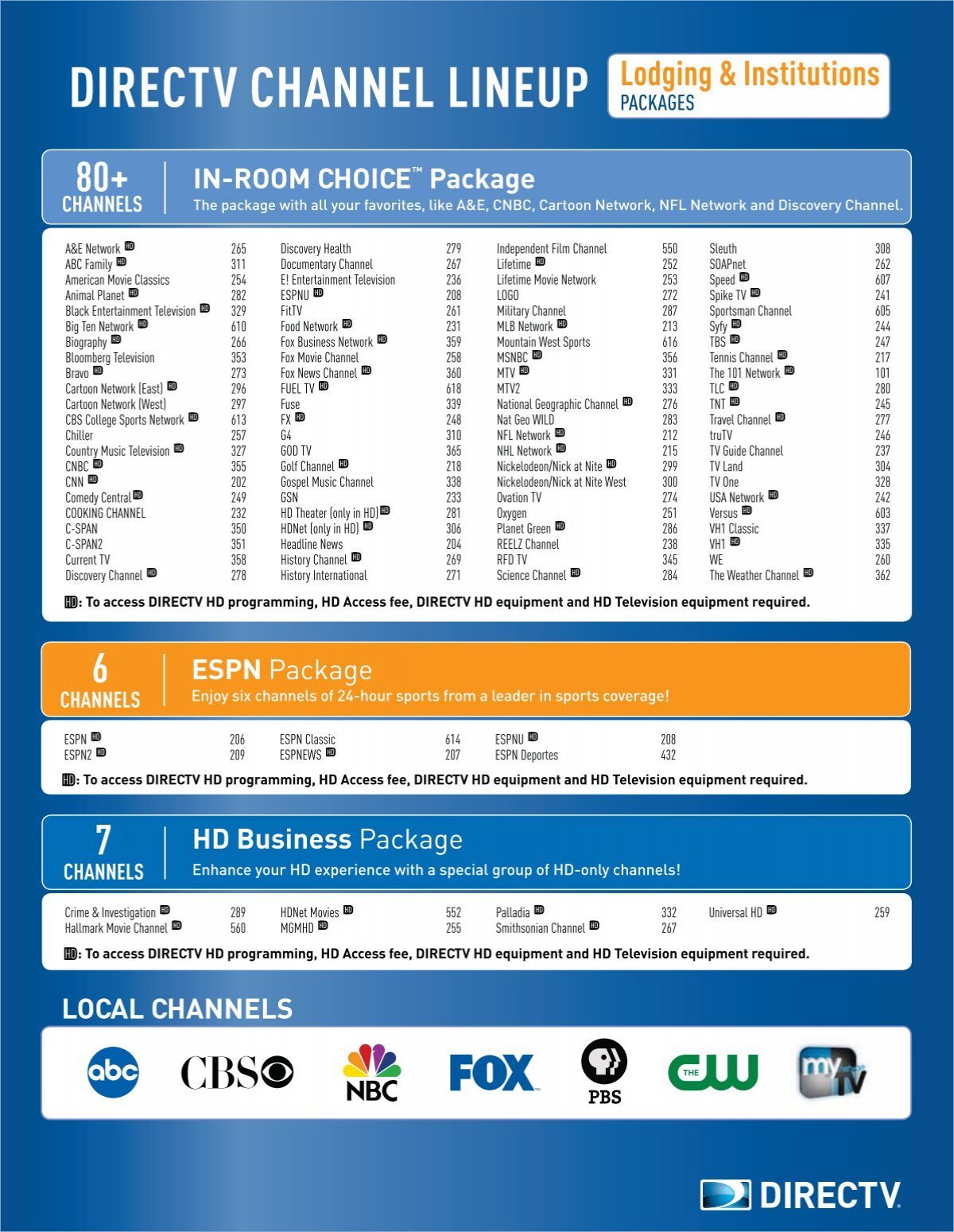
In the modern era of entertainment, the simple act of “changing the channel” belies a complex infrastructure of satellite arrays, digital encoding, and sophisticated user interfaces. For subscribers asking “what channel is Lifetime for DirecTV,” the immediate answer is Channel 252. However, understanding the technology that delivers this specific stream of data—and how to optimize that delivery through modern hardware—reveals a fascinating intersection of telecommunications engineering and software development.
As we transition from traditional linear broadcasting to a hybrid world of satellite and internet protocol (IP) delivery, the technical nuances of how a network like Lifetime reaches your screen are more relevant than ever. This guide explores the technological backbone of DirecTV, the integration of High-Definition (HD) protocols, and the software ecosystems that allow viewers to access content across multiple devices.

The Engineering Behind the Signal: Satellite Transponders and Channel Mapping
To understand why Lifetime resides on Channel 252, one must first understand the architecture of DirecTV’s orbital fleet. DirecTV operates a series of high-powered satellites in geostationary orbit, approximately 22,236 miles above the Earth. These satellites act as mirrors in space, receiving signals from ground-based broadcast centers and retransmitting them across the continent.
The Role of Geosynchronous Satellites
The delivery of the Lifetime channel starts at the uplink center, where the network’s feed is compressed into a digital format. DirecTV utilizes several satellites, primarily located at the 99°, 101°, and 103° orbital slots. These satellites use the Ka-band and Ku-band spectrum to transmit massive amounts of data. When you tune to Channel 252, your receiver isn’t just looking for a “number”; it is looking for a specific frequency on a specific transponder assigned to that channel’s data stream.
Deciphering Transponder Frequencies and Digital Mapping
Modern satellite TV relies on Virtual Channel Mapping. While the physical signal for Lifetime may be bundled with several other channels on a single transponder frequency, the receiver’s internal software uses a Program Map Table (PMT) to identify which packets of data belong to Lifetime. This digital “sorting” allows for the efficient use of bandwidth, ensuring that the High Definition (HD) signal is prioritized without causing lag or signal degradation. This process is handled by the receiver’s System on a Chip (SoC), which decrypts and decompresses the MPEG-4 video stream in real-time.
Optimizing the Visual Experience: HD Protocols and DVR Integration
Accessing Channel 252 is only the first step. For the tech-savvy viewer, the quality of that signal is paramount. The transition from Standard Definition (SD) to High Definition (HD) and the integration of smart recording features have fundamentally changed the hardware requirements for the average household.
High-Definition vs. Standard Definition Protocols
Lifetime is broadcast in both SD and HD on DirecTV. The HD feed utilizes MPEG-4 (H.264) compression, which offers a significantly better bit-rate-to-quality ratio than the older MPEG-2 standards. This technology allows for 1080i resolution, providing the crisp imagery expected by modern audiences. The receiver must negotiate a “handshake” with your television via HDMI (High-Definition Multimedia Interface) using HDCP (High-bandwidth Digital Content Protection) to ensure the secure delivery of this high-quality signal.
The Evolution of the Digital Video Recorder (DVR)
The DirecTV Genie (the HR44, HR54, and the newer Genie 2) represents a significant leap in consumer-grade server technology. These devices are essentially specialized computers with high-capacity SATA hard drives and multi-tuner capabilities. When you record a movie on Lifetime, the system isn’t just capturing video; it is storing the raw transport stream.
The Genie system uses a “Server-Client” architecture. The main Genie acts as the central hub, while smaller “Genie Minis” act as thin clients throughout the home. This allows a single technical point of entry for the Lifetime signal, which is then distributed via MoCA (Multimedia over Coax Alliance) technology throughout the house’s internal wiring, ensuring that there is no loss of data between rooms.

The Hybrid Future: The Lifetime App and TV Everywhere Tech
The modern viewer is no longer tethered to a physical satellite dish. The technology has evolved into a “TV Everywhere” model, which bridges the gap between traditional broadcasting and modern streaming apps.
Authentication Protocols and OAuth
If you are away from home, you don’t need to be near a DirecTV receiver to watch Lifetime. By using the Lifetime app or the DirecTV app, users leverage an authentication protocol known as OAuth 2.0. When you enter your DirecTV credentials into the Lifetime app, the software performs a digital handshake with DirecTV’s servers to verify your subscription tier. This token-based system ensures security while allowing for seamless access across iOS, Android, Roku, and Amazon Fire Stick devices.
Edge Computing and Content Delivery Networks (CDNs)
When streaming Lifetime via the app rather than the satellite dish, the data journey changes. Instead of coming from space, the content is served from a Content Delivery Network (CDN). These are geographically distributed servers that cache the video content closer to the user. This reduces latency (buffering) and ensures that even if millions of people are watching a premiere simultaneously, the digital infrastructure remains stable. This shift toward IP-based delivery is the foundation for DirecTV’s “Signal Reliability” feature, which automatically switches a viewer to a streaming version of the channel if weather conditions interfere with the satellite reception.
Troubleshooting the Tech Stack: Signal Interference and Hardware Management
Even the most advanced technology can encounter roadblocks. Understanding the technical reasons behind signal loss can help users maintain their connection to Lifetime and other essential networks.
Signal Interference and Weather Shielding
Satellite technology is susceptible to “Rain Fade.” This occurs when heavy moisture in the atmosphere absorbs the microwave signals from the satellite. To combat this, DirecTV uses “Adaptive Coding and Modulation” (ACM). This technology allows the system to change how it encodes data in real-time based on weather conditions, prioritizing signal stability over absolute resolution during a storm. Additionally, the physical dish uses a Low Noise Block downconverter (LNB) with specialized filters to block out terrestrial interference from 5G towers and other radio frequencies.
Firmware Updates and Receiver Maintenance
Your DirecTV box is a dynamic piece of hardware that requires frequent firmware updates. These updates, often sent via the satellite stream during low-usage hours (the “Background Data Stream”), optimize the User Interface (UI), patch security vulnerabilities, and update the Electronic Programming Guide (EPG). If Channel 252 is missing from your guide, it is often not a satellite failure but a software glitch that can be resolved by a “red button reset,” which clears the volatile memory (RAM) and forces the receiver to re-load its operating system and channel map from the non-volatile flash memory.
AI and the Future of Content Discovery
As we look toward the future of entertainment technology, the focus is shifting from “how” we get the signal to “how” we interact with it. Artificial Intelligence is now playing a major role in the DirecTV ecosystem.
Machine Learning in Recommendation Engines
The modern DirecTV interface uses machine learning algorithms to analyze viewing patterns. If a user frequently tunes to Channel 252 for Lifetime movies, the system’s metadata engine will begin to suggest similar content across other networks and On-Demand platforms. This involves processing massive datasets of user behavior to create a personalized “Suggested for You” UI layer.
Voice Integration and Natural Language Processing (NLP)
The integration of voice-activated remotes represents a major advancement in Natural Language Processing. When a user says “Put on Lifetime” into their remote, the system must process the audio, convert it to text, identify the intent, and map that intent to the command “Tune to 252.” This happens in milliseconds, utilizing cloud-based processing to ensure high accuracy across various dialects and accents.
In conclusion, finding Lifetime on DirecTV is a simple matter of navigating to Channel 252, but the technology supporting that experience is a marvel of modern engineering. From the 22,000-mile journey of a satellite signal to the complex authentication tokens of a mobile app, the digital infrastructure of DirecTV is designed to ensure that high-quality content is always accessible, regardless of the platform. As hardware continues to evolve and IP-based delivery becomes the standard, the line between “satellite TV” and “streaming” will continue to blur, offering an even more robust and integrated technological experience for the end-user.
aViewFromTheCave is a participant in the Amazon Services LLC Associates Program, an affiliate advertising program designed to provide a means for sites to earn advertising fees by advertising and linking to Amazon.com. Amazon, the Amazon logo, AmazonSupply, and the AmazonSupply logo are trademarks of Amazon.com, Inc. or its affiliates. As an Amazon Associate we earn affiliate commissions from qualifying purchases.