
In the rapidly evolving landscape of technology, the difference between a groundbreaking innovation and a failed experiment often lies in the rigor of the methodology. Whether a software engineer is optimizing a new algorithm, a data scientist is training a deep-learning model, or a DevOps specialist is stress-testing a server architecture, the concept of the “controlled variable” acts as the silent anchor of progress.
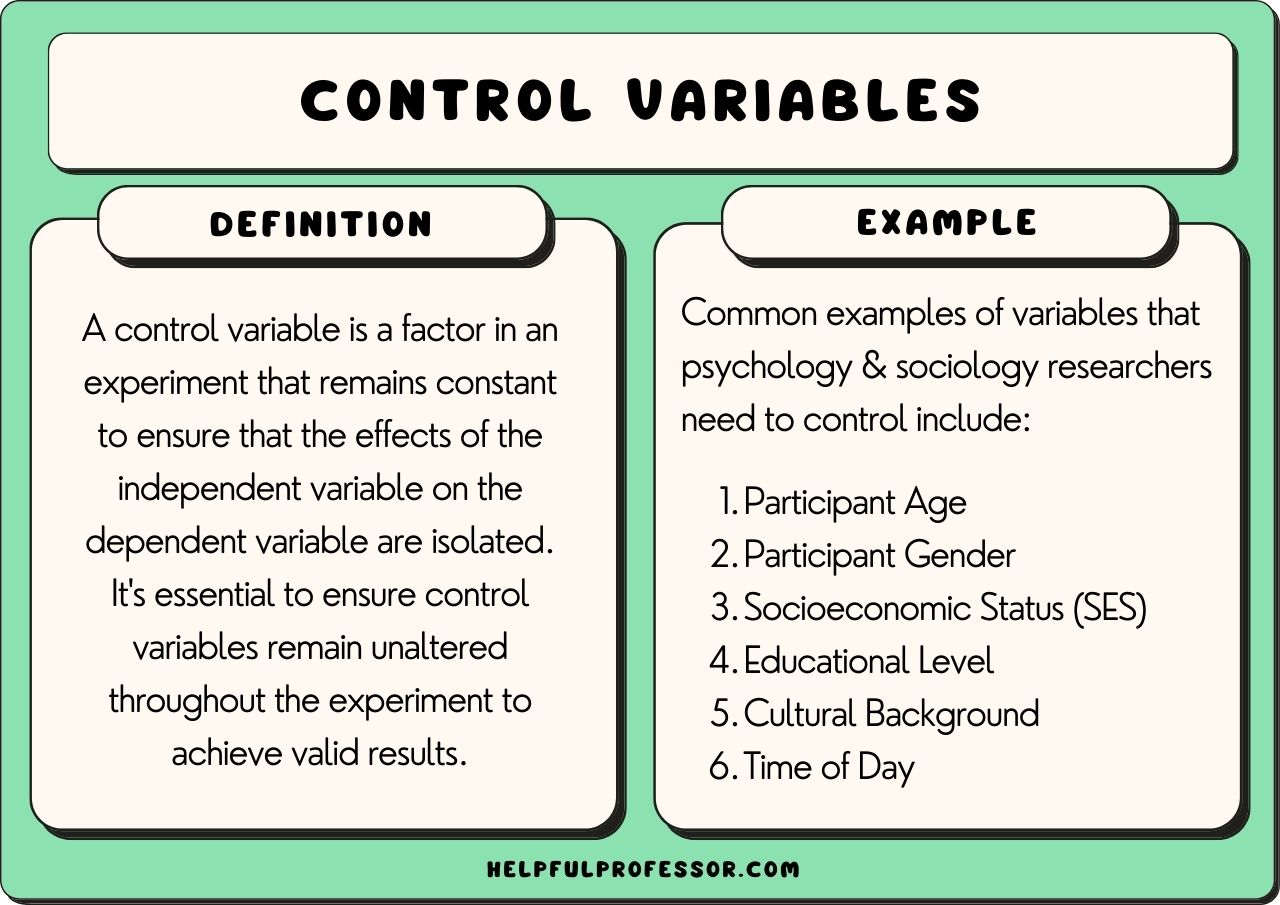
In technical terms, a controlled variable—often referred to as a constant—is an element that is kept stable and unchanging throughout an experiment or a development cycle. While the focus is frequently on the “independent variable” (the factor you change) and the “dependent variable” (the result you measure), the controlled variables are what ensure the results are actually valid. Without strict control, technology becomes unpredictable, making it impossible to distinguish between a genuine breakthrough and mere statistical noise.

Understanding Controlled Variables in the Tech Ecosystem
To appreciate the role of controlled variables in modern technology, one must first look at the scientific method as it applies to the digital world. In a laboratory, a scientist might control the temperature or pressure. In a digital environment, the “laboratory” is the codebase or the server, and the variables are often abstract parameters.
Defining the Baseline: Why Consistency Matters
In software development, consistency is the prerequisite for debugging. If a developer is trying to fix a bug that only appears under heavy traffic, they must create a “controlled environment.” In this scenario, the version of the operating system, the amount of available RAM, and the specific build of the software are all controlled variables. By keeping these elements static, the developer can manipulate a single independent variable—such as the number of concurrent users—to see exactly when and why the system fails.
If the developer fails to control the background processes running on the server, they might erroneously conclude that the code is faulty, when in reality, a system update was simply hogging resources. This demonstrates the primary purpose of controlled variables: the elimination of “confounding variables” that skew data and lead to false conclusions.
Controlled vs. Independent and Dependent Variables
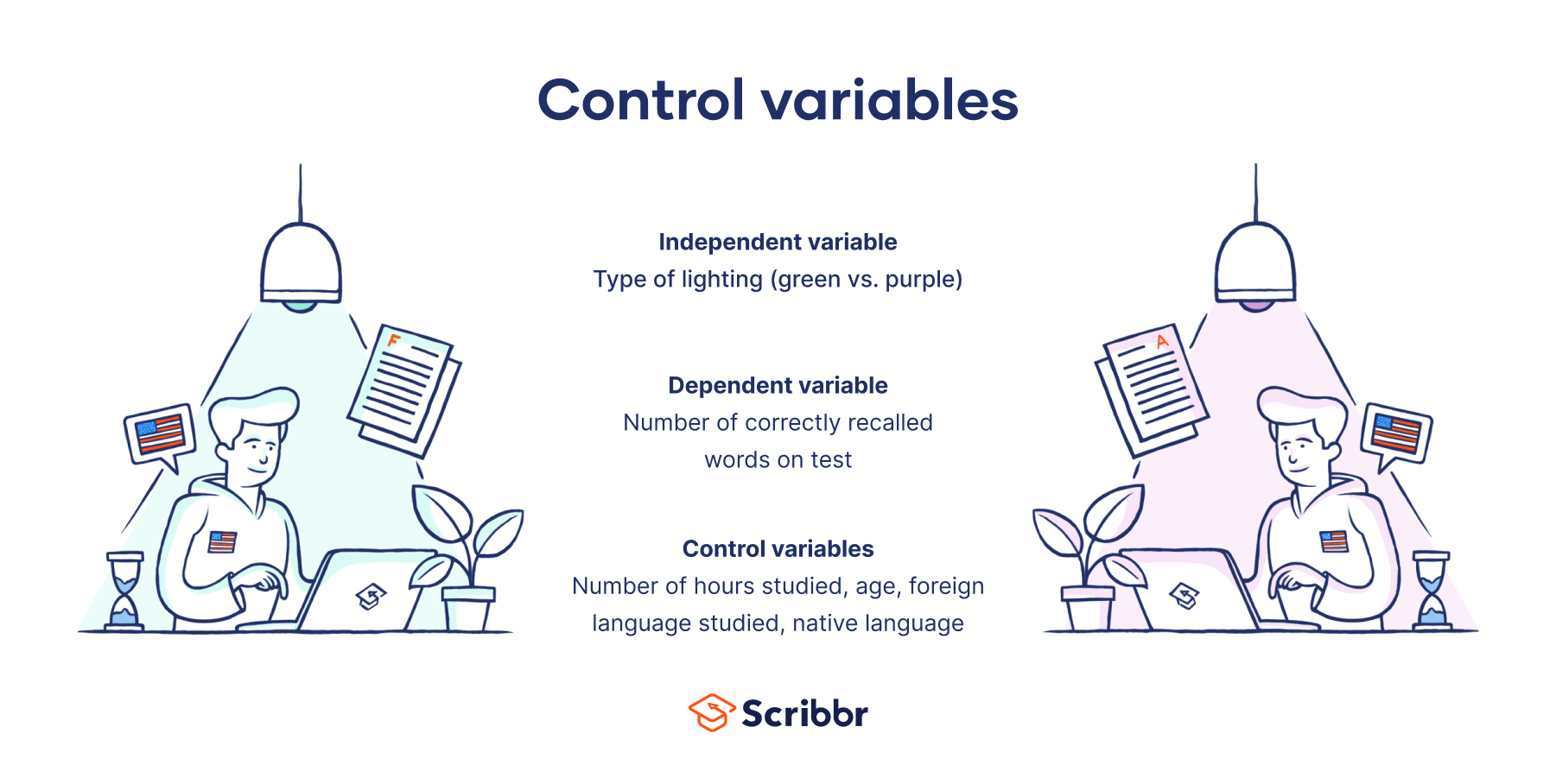
In the context of technology, the relationship between these three variables can be visualized through a standard A/B test for a mobile application.
-
The Independent Variable: This is the element you change. For example, you might change the encryption algorithm used for data transmission.
-
The Dependent Variable: This is the outcome you measure, such as the latency of the data transfer or the battery drain on the device.
-
The Controlled Variables: These are the factors that must remain the same to ensure the test is fair. This includes using the same hardware (e.g., an iPhone 15), the same network conditions (5G), and the same version of the operating system.
If you test the new algorithm on a high-end device and the old algorithm on an aging smartphone, your dependent variable (latency) will be influenced by the hardware performance, not just the algorithm. In this case, the lack of controlled variables renders the tech review or audit useless.
The Role of Controlled Variables in AI and Machine Learning
Artificial Intelligence (AI) and Machine Learning (ML) are perhaps the most prominent areas of technology where controlled variables are critical. Building a model is essentially a massive exercise in managing variables to find the perfect configuration.
Eliminating Bias Through Parameter Control
One of the greatest challenges in AI today is algorithmic bias. Bias often creeps into a model because the training environment was not sufficiently controlled. When data scientists train a model, they must control for “data distribution.” If a facial recognition AI is trained primarily on images of individuals from one demographic, the “demographic profile” becomes an uncontrolled variable that skews the model’s accuracy.
To solve this, researchers use controlled datasets where variables like lighting, angle, and demographic representation are balanced and held constant across different testing phases. By controlling these factors, developers can ensure that the model is learning the actual features of a face rather than just learning to recognize specific lighting conditions.
Hyperparameter Tuning and Environment Stability
In the training of Large Language Models (LLMs) or neural networks, engineers engage in “hyperparameter tuning.” Hyperparameters are the settings used to control the learning process itself (like the learning rate or the batch size).
When testing a new model architecture, the hyperparameters must be treated as controlled variables. If an engineer changes both the architecture and the learning rate at the same time, they cannot know which change led to an improvement in performance. In the world of high-performance computing, where a single training run can cost thousands of dollars in cloud computing credits, failing to maintain controlled variables isn’t just bad science—it’s a massive financial liability.
Controlled Variables in Software Testing and QA
Quality Assurance (QA) is the gatekeeper of the tech world. Before a piece of software is released to millions of users, it must pass through rigorous testing phases where controlled variables are the stars of the show.
A/B Testing: Isolating the User Experience
Digital marketers and UI/UX designers use A/B testing to optimize apps and websites. Imagine a tech company wants to see if a “Dark Mode” feature increases user retention.
-
Independent Variable: Dark Mode vs. Light Mode.
-
Dependent Variable: Time spent in the app.
-
Controlled Variables: The time of day the user receives the prompt, the specific user segment (e.g., only premium subscribers), and the device type.
If the “Dark Mode” is only shown to users at night and “Light Mode” is shown during the day, the time of day becomes an uncontrolled variable. Users might naturally spend more time on their phones at night, leading the company to believe Dark Mode is superior, when the result was actually influenced by the time of day.
Sandboxing and Regression Testing Environments
In cybersecurity and software engineering, a “sandbox” is a controlled environment where code can be executed without affecting the rest of the system. Here, every variable is controlled—from the network access to the file system permissions.
When performing regression testing (ensuring that new code doesn’t break old features), developers use “test containers” (like Docker). These containers ensure that the environment is exactly the same every time the test is run. By controlling the environment (the OS, the libraries, the dependencies), the developer can be 100% certain that if a test fails, it is because of the new code and not because of a difference in the machine’s setup. This “Infrastructure as Code” (IaC) philosophy is essentially the ultimate realization of controlled variables in tech.
Best Practices for Managing Variables in Digital Transformation
As businesses undergo digital transformation, the complexity of their tech stacks increases. Managing controlled variables becomes a matter of organizational discipline.
Documentation and Version Control
In the tech world, Git and other version control systems are the primary tools for managing variables. Every time a change is made to a codebase, it is documented. This allows developers to treat previous versions of the software as “controlled baselines.” If a new update causes a system-wide crash, the team can revert to the last known stable state.
Documentation is equally vital. In data science, “Model Cards” and “Data Sheets” are used to document the variables that were controlled during the training of an AI. This transparency allows other developers to replicate the results, which is a cornerstone of digital security and peer-reviewed tech research.
Leveraging Automation to Minimize Human Error
Human intervention is often the biggest uncontrolled variable in technology. A sysadmin manually configuring a server might make a slight typo, leading to a “snowflake server” (a server that is uniquely configured and impossible to replicate).
To combat this, modern tech firms use automation tools like Jenkins, Terraform, or Kubernetes. These tools ensure that every deployment is identical, effectively turning the entire infrastructure into a controlled variable. By removing the “human element” from the deployment process, companies can achieve “idempotency”—the property where an operation can be applied multiple times without changing the result beyond the initial application. This stability is what allows platforms like Netflix or Amazon to deploy updates thousands of times a day without crashing.
Conclusion: The Strategic Value of Stability
In the context of technology, “controlled variables” are more than just a concept from a high school science fair; they are the bedrock of reliable, scalable, and secure systems. By isolating the factors that matter and stabilizing the ones that don’t, tech professionals can move from guesswork to precision.
As we move further into the era of autonomous systems and hyper-complex cloud environments, the ability to identify and maintain controlled variables will define the winners of the digital age. In a world of infinite change, the power to keep certain things exactly the same is the ultimate competitive advantage. Whether you are coding a simple app or architecting a global AI network, remember: your innovation is only as good as the controls that support it.
aViewFromTheCave is a participant in the Amazon Services LLC Associates Program, an affiliate advertising program designed to provide a means for sites to earn advertising fees by advertising and linking to Amazon.com. Amazon, the Amazon logo, AmazonSupply, and the AmazonSupply logo are trademarks of Amazon.com, Inc. or its affiliates. As an Amazon Associate we earn affiliate commissions from qualifying purchases.