
In the complex architecture of the United States Constitution, the 10th Amendment serves as the ultimate “boundary marker” for authority. While it is often discussed in law schools and political debates, its implications for the world of Money—specifically personal finance, corporate structure, and regulatory environments—are profound. To understand the 10th Amendment is to understand the legal foundation of “Financial Federalism,” the system that allows for a competitive marketplace of state laws that directly affects your taxes, your investments, and your ability to build wealth.
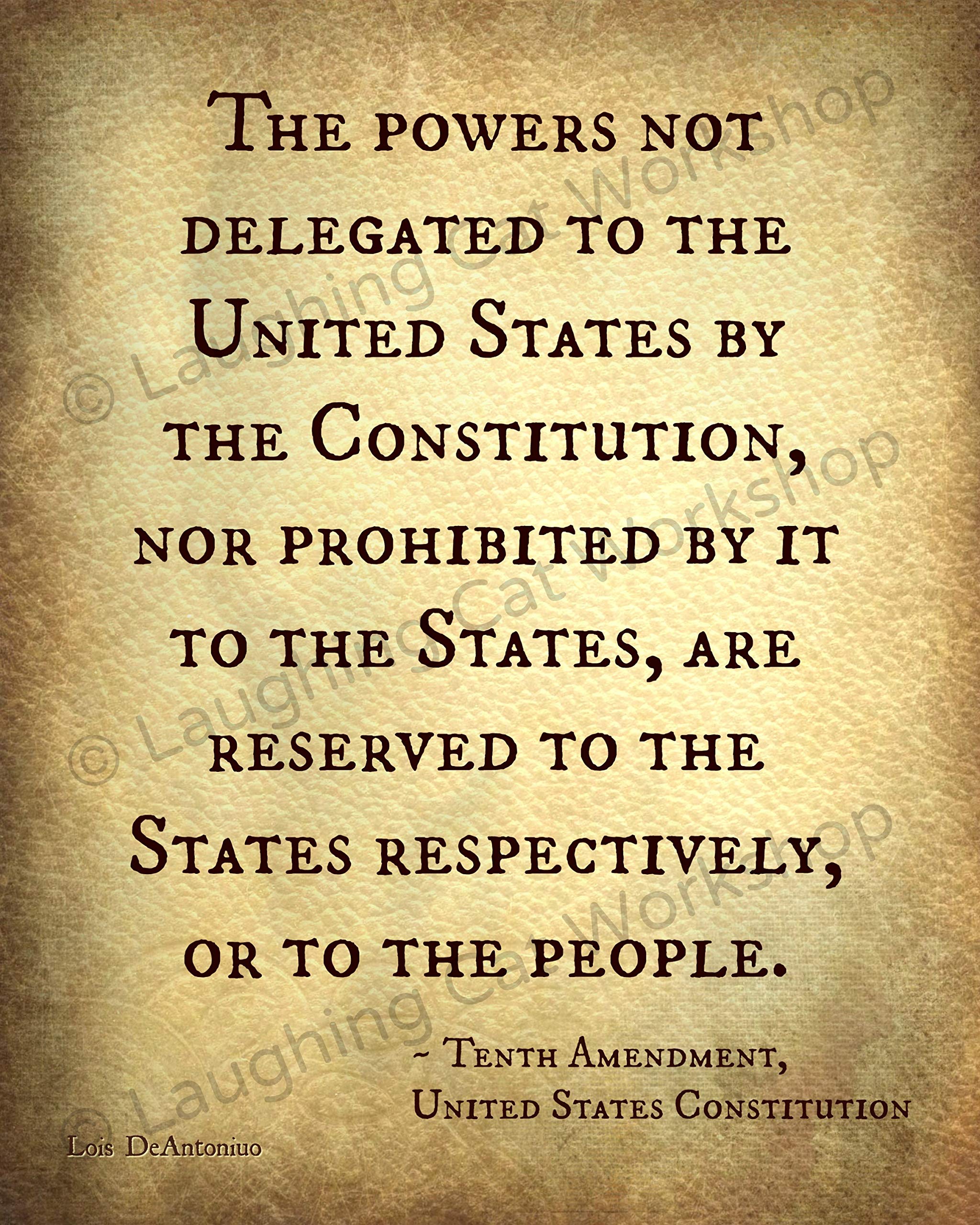
The 10th Amendment states: “The powers not delegated to the United States by the Constitution, nor prohibited by it to the States, are reserved to the States respectively, or to the people.”
In the context of modern finance, this short sentence is the reason why your bank in New York operates under different rules than a credit union in Utah, and why your tax bill can change drastically simply by moving across a state line. This article explores how the 10th Amendment shapes the American economic landscape, providing the framework for state-led financial innovation and the strategic management of capital.
Understanding the Tenth Amendment: The Bedrock of Financial Autonomy
The 10th Amendment was designed to prevent the federal government from becoming an all-encompassing entity. By reserving powers to the states, the Founders created a system where the “central office” (Washington D.C.) handles specific, enumerated tasks, while the “regional offices” (the states) handle everything else. For the savvy investor or business owner, this creates a landscape of “regulatory competition.”
The Legal Text and the “Reserved Powers” Clause
At its core, the 10th Amendment is a rule of construction. It tells us that if the Constitution doesn’t explicitly say the federal government can do something—and doesn’t explicitly say the states can’t do it—the power belongs to the states. This is known as “Reserved Powers.” In the realm of finance, this includes the power to regulate intrastate commerce, manage property laws, and oversee the licensing of most professions, including financial advisors and CPAs.
This division of labor is why we do not have a singular, monolithic financial code in the United States. Instead, we have a dual system where federal oversight (like the SEC or the Federal Reserve) exists alongside a robust, state-driven ecosystem.
Why the Tenth Amendment Dictates the American Business Landscape
The 10th Amendment ensures that states remain “laboratories of democracy”—and, more importantly, laboratories of economics. Because states have the power to create their own financial regulations, they compete with one another to attract capital. This competition drives innovation. For example, the development of the Limited Liability Company (LLC) was not a federal invention; it was a state-level innovation (first in Wyoming in 1977) that eventually spread because the 10th Amendment allowed states to experiment with new ways to protect business owners’ assets.
The Fiscal Impact: How State Sovereignty Influences Personal Finance and Taxation
One of the most direct applications of the 10th Amendment is the power of the purse. Because the federal government is not granted the exclusive power to tax income or wealth (though the 16th Amendment gave them the right to tax income), states have retained the sovereign right to develop their own fiscal policies. This has created a massive disparity in how individuals manage their personal finances.
The Competition of Tax Regimes: No-Income-Tax States
The 10th Amendment allows states like Florida, Texas, Nevada, and Washington to completely opt out of state income tax. This is a powerful financial tool for wealth accumulation. For a high-earning professional or an entrepreneur, the difference between living in a high-tax state versus a no-income-tax state can result in a 5% to 13% difference in annual net savings.
This regional autonomy forces states to be mindful of their “value proposition.” If a state taxes too heavily without providing commensurate services or infrastructure, capital tends to migrate to states that use their 10th Amendment powers to create more favorable tax climates. This “voting with your feet” is a direct result of the decentralized power structure of the Constitution.
Wealth Management and State-Specific Trust Laws
Beyond simple income tax, the 10th Amendment governs property and probate law. This has led to the rise of specific “wealth havens” within the United States. South Dakota and Alaska, for instance, have utilized their reserved powers to create some of the most favorable trust laws in the world.
By eliminating the “Rule Against Perpetuities” and creating robust “Asset Protection Trusts,” these states allow individuals to shield wealth from creditors and move assets through generations with minimal tax friction. These financial vehicles are only possible because the 10th Amendment prevents the federal government from mandating a uniform national probate code.
Regulatory Arbitrage: The Tenth Amendment and the Evolution of Fintech
In the 21st century, the 10th Amendment has become the front line of the battle over the future of money, specifically regarding Financial Technology (Fintech) and digital assets. When a new technology emerges that the federal government hasn’t yet regulated, the states often step in first.
The Fragmentation of Money Transmitter Licenses
If you use an app like Venmo, PayPal, or a crypto exchange, you are interacting with a system shaped by the 10th Amendment. Currently, there is no single federal license that allows a company to move money for people. Instead, companies must navigate a patchwork of 50 different state “Money Transmitter Licenses” (MTLs).
While this creates a hurdle for startups, it also provides a safeguard. If the federal government were to pass a law that stifled fintech innovation, a single state could use its 10th Amendment powers to create a “Regulatory Sandbox,” allowing companies to operate under more flexible rules within that state’s borders.
Digital Asset Innovation: States as Economic Laboratories
Wyoming has become a global leader in Bitcoin and blockchain legislation by leveraging its 10th Amendment rights. By creating a new type of bank charter—the Special Purpose Depository Institution (SPDI)—and legally defining digital assets as property, Wyoming has created a financial infrastructure that the federal government has been slow to provide.
This state-level leadership forces federal agencies like the SEC and the CFTC to react to the realities on the ground. The 10th Amendment ensures that if the federal government remains stagnant, the states can keep the wheels of economic progress turning.
Corporate Strategy and the Power of State Incorporation
For a business, “where” you are is often more important than “what” you do. The 10th Amendment grants states the power to govern corporate entities, leading to a specialized market for corporate law.
The Delaware Advantage: Specialized Courts and Legal Predictability
More than 60% of Fortune 500 companies are incorporated in Delaware. This is not because of tax breaks (as is commonly misperceived), but because of the Delaware Court of Chancery. Because the 10th Amendment allows states to manage their own judicial systems, Delaware has created a court dedicated solely to business disputes, staffed by judges rather than juries.
This provides a level of legal predictability that is invaluable to investors and venture capitalists. It allows companies to price risk more accurately. Without the 10th Amendment, we might be stuck with a federal corporate code that is subject to the whims of shifting political administrations in Washington, rather than a stable, centuries-old body of case law.
Banking Charters: The Dual Banking System
The United States is unique in its “Dual Banking System.” A bank can choose to be federally chartered (regulated by the OCC) or state-chartered. This choice is a direct manifestation of the 10th Amendment. State-chartered banks are often more attuned to local economic needs and can sometimes offer more flexible lending products than their national counterparts. This competition prevents a federal monopoly on credit and ensures that small businesses in rural or niche markets have access to capital that a “one-size-fits-all” national bank might overlook.

Conclusion: The Tenth Amendment as a Tool for Financial Freedom
The 10th Amendment is far more than a legal technicality; it is the structural engine of American economic diversity. By stating that powers not delegated to the federal government are reserved to the states and the people, it creates a system of “competitive governance” that benefits anyone looking to manage money, start a business, or protect their assets.
In an era where federal overreach is a constant concern for investors, the 10th Amendment stands as a vital check. it ensures that no single entity has total control over the financial rules of the game. Whether it is through the absence of state income tax, the creation of innovative fintech laws in Wyoming, or the specialized corporate courts of Delaware, the 10th Amendment provides the legal “breathing room” necessary for financial growth and personal sovereignty. Understanding its state-level power is the first step in making informed, strategic decisions about where to put your money and how to grow your wealth in a decentralized republic.
aViewFromTheCave is a participant in the Amazon Services LLC Associates Program, an affiliate advertising program designed to provide a means for sites to earn advertising fees by advertising and linking to Amazon.com. Amazon, the Amazon logo, AmazonSupply, and the AmazonSupply logo are trademarks of Amazon.com, Inc. or its affiliates. As an Amazon Associate we earn affiliate commissions from qualifying purchases.