
In the landscape of American personal finance, few concepts are as pivotal—yet frequently misunderstood—as “Full Retirement Age” (FRA). For anyone planning their financial future, the FRA is the chronological North Star that dictates how much income they will receive from the Social Security Administration (SSA) for the rest of their lives. It is the specific age at which a worker becomes eligible to receive 100% of their primary insurance amount (PIA), the monthly benefit calculated based on their lifetime earnings.
Understanding the mechanics of the FRA is not merely an academic exercise; it is a critical component of strategic wealth management. Whether you are in your twenties and beginning your investment journey or in your sixties and eyeing the exit from the workforce, knowing how the FRA interacts with your savings, tax liabilities, and lifestyle goals is essential.

Understanding the Concept of Full Retirement Age (FRA)
The Full Retirement Age is a moving target that has shifted significantly since Social Security was first established in 1935. Originally, the age was set at 65. However, as life expectancy increased and the demographic makeup of the workforce evolved, the United States Congress passed the Social Security Amendments of 1983, which gradually increased the FRA to ensure the long-term solvency of the system.
The History and Evolution of the FRA
The shift from age 65 to 67 was designed to be implemented over several decades. This gradual phase-in was intended to allow workers time to adjust their financial expectations and savings rates. The rationale was simple: as medical technology and living conditions improved, people were living longer in retirement, placing a greater financial strain on the Social Security Trust Fund. By increasing the age at which full benefits are paid, the government essentially adjusted the math of the program to account for longer lifespans.
How Your Birth Year Determines Your FRA
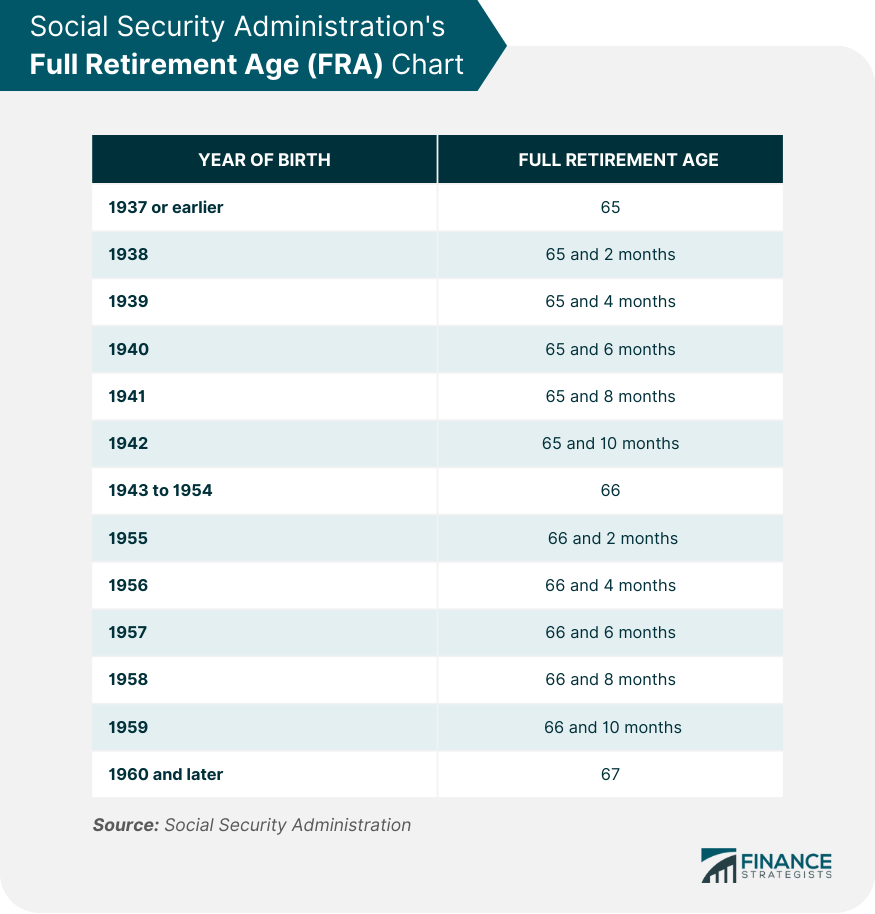
Your specific Full Retirement Age is determined entirely by the year you were born. For those born between 1943 and 1954, the FRA is 66. For those born in subsequent years, the age increases by two months for every year of birth until it reaches age 67 for anyone born in 1960 or later. For example:
-
Born in 1955: FRA is 66 and 2 months.
-
Born in 1957: FRA is 66 and 6 months.
-
Born in 1959: FRA is 66 and 10 months.
-
Born in 1960 or later: FRA is 67.
Identifying your exact FRA is the first step in calculating your “break-even” point—the age at which the total value of higher monthly benefits outweighs the total value of receiving smaller checks earlier.
The Financial Mechanics: How FRA Impacts Your Monthly Benefit
The FRA serves as the “baseline” for your benefits. If you choose to claim Social Security at any point other than your exact FRA, the amount you receive will be permanently adjusted. This is where the Money niche truly comes into play: calculating the opportunity cost of time versus the guaranteed return of a higher monthly check.
The Cost of Claiming Early
While you can begin receiving Social Security benefits as early as age 62, doing so comes with a permanent financial penalty. If your FRA is 67 and you claim at 62, your monthly benefit is reduced by 30%. This reduction is calculated based on a formula where the benefit is reduced by five-ninths of 1% for each month before the FRA, up to 36 months, and five-twelfths of 1% for each month beyond that. For a retiree who expects to live into their late 80s or 90s, claiming early can result in hundreds of thousands of dollars in lost income over a lifetime.
The Reward for Delayed Retirement
Conversely, the SSA provides a significant incentive for those who wait beyond their FRA to claim. For every year you delay claiming past your FRA (up until age 70), your benefit increases by approximately 8% per year in “delayed retirement credits.” This is a guaranteed, inflation-adjusted return that is nearly impossible to match in the private equity or bond markets. If your FRA is 67 and you wait until 70, your monthly check will be 24% higher than it would have been at your FRA, and significantly higher than it would have been at 62.
The “Break-Even” Analysis
In personal finance, the “break-even” point is the age at which the cumulative benefits of waiting equal the cumulative benefits of starting early. Generally, if a retiree lives past the age of 78 to 82, they will have received more total money by waiting until their FRA or age 70 than if they had started at 62. This calculation must include considerations of inflation, potential investment returns if the early benefits were invested, and the necessity of the income for daily living expenses.
Working While Retired: The Earnings Test and FRA
A common point of confusion for many workers is whether they can continue to earn a salary while collecting Social Security. The answer depends heavily on whether you have reached your Full Retirement Age. This is known as the Social Security Earnings Test.
The Thresholds and Reductions
If you are under your FRA and continue to work while receiving benefits, the SSA applies an earnings limit. In 2024, for example, if you are under the FRA for the entire year, the SSA deducts $1 from your benefit payments for every $2 you earn above a certain annual limit (currently $22,320). In the year you reach your FRA, the limit is much higher, and the deduction is $1 for every $3 earned.
What Happens to “Withheld” Benefits?
It is a common myth that the money withheld due to the earnings test is “lost” forever. In reality, once you reach your FRA, the SSA recalculates your benefit amount to account for the months in which benefits were withheld. This effectively raises your monthly payment for the rest of your life. However, from a cash-flow perspective, many professionals choose to wait until their FRA to claim if they plan to continue working, to avoid the administrative complexity and temporary reduction in liquidity.
Strategic Considerations for Your Retirement Roadmap
Deciding when to claim relative to your FRA is one of the most significant financial decisions you will ever make. It should not be made in a vacuum; rather, it should be integrated into a broader wealth management strategy.
Health Status and Longevity
The most significant variable in the FRA equation is your health. If you have chronic health issues or a family history of shorter lifespans, claiming early (despite the reduction) may maximize the total lifetime value of your benefits. Conversely, if you are in excellent health and expect to live into your 90s, waiting until age 70 to maximize the monthly check is almost always the superior financial move.
Spousal Benefits and Survivor Protections
The FRA also dictates the benefits available to a spouse. A spouse is entitled to up to 50% of the worker’s FRA benefit. Furthermore, if the high-earning spouse delays claiming until 70, they effectively lock in a much higher survivor benefit for the remaining spouse. In a household where one spouse earned significantly more than the other, the high-earner reaching their FRA and then delaying further is a powerful tool for protecting the surviving spouse’s financial security.
Tax Implications of Retirement Income
Social Security benefits are not always tax-free. Depending on your “provisional income” (which includes adjusted gross income, tax-exempt interest, and half of your Social Security benefits), you may owe federal income taxes on up to 85% of your benefits. Understanding how your FRA benefit interacts with 401(k) withdrawals or RMDs (Required Minimum Distributions) is vital for tax-efficient drawdown strategies.

The Future of Retirement Age in a Changing Economy
As we look toward the future of personal finance, the concept of the Full Retirement Age remains a subject of intense debate. With the Social Security Trust Fund projected to face shortfalls in the mid-2030s, many economists and policymakers suggest that the FRA may need to increase again—perhaps to 68 or 70—for younger generations.
For today’s investors and workers, the FRA is more than just a date on a calendar; it is a fundamental variable in the mathematics of financial independence. By understanding the nuances of how birth years, earnings tests, and delayed credits interact, you can move beyond guesswork and build a retirement strategy rooted in clinical financial logic. Whether your goal is to retire early and enjoy your wealth or to work longer to maximize your legacy, the Full Retirement Age is the pivot point upon which your entire financial future turns.
aViewFromTheCave is a participant in the Amazon Services LLC Associates Program, an affiliate advertising program designed to provide a means for sites to earn advertising fees by advertising and linking to Amazon.com. Amazon, the Amazon logo, AmazonSupply, and the AmazonSupply logo are trademarks of Amazon.com, Inc. or its affiliates. As an Amazon Associate we earn affiliate commissions from qualifying purchases.