
In the current technological landscape, Artificial Intelligence (AI) is no longer a futuristic concept but a ubiquitous force driving efficiency across every sector. From the generative capabilities of Large Language Models (LLMs) like GPT-4 to the predictive analytics used in logistics, the “AI revolution” is in full swing. However, this digital transformation is not occurring in a vacuum. Behind every prompt and every algorithmic decision lies a physical infrastructure that demands significant resources. As the tech industry continues to push the boundaries of what AI can achieve, it is becoming increasingly vital to analyze what AI does to the environment.
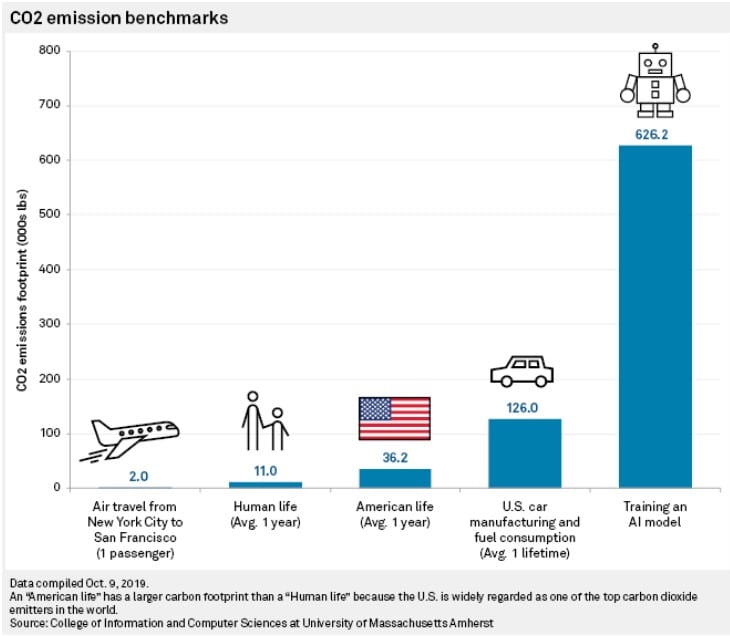
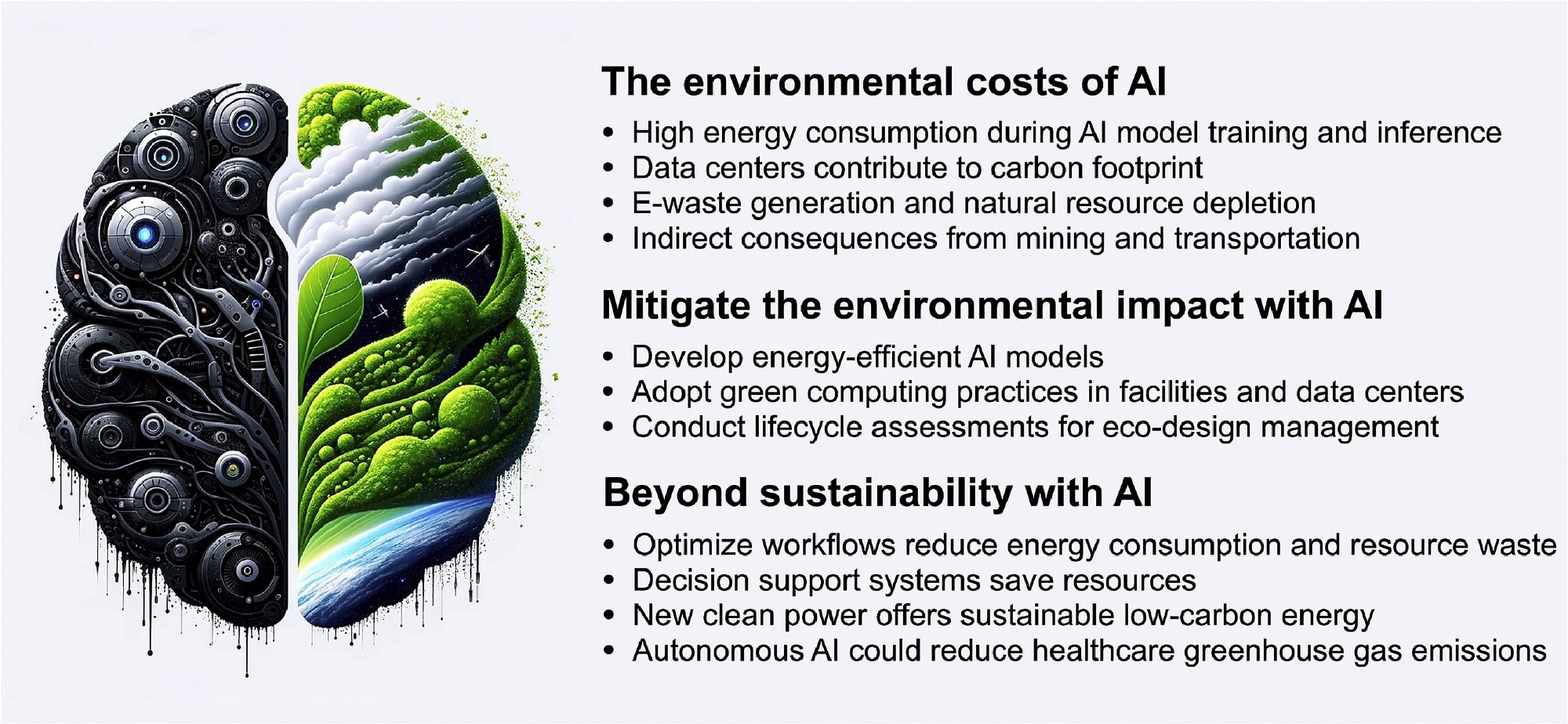
The environmental impact of AI is a multi-faceted issue, involving high energy consumption, substantial water usage for cooling, and the generation of electronic waste. While AI offers potential solutions for climate change through optimization and discovery, its immediate footprint remains a concern for developers, hardware manufacturers, and tech enthusiasts alike.
The Infrastructure of Intelligence: Data Centers and Energy Demand
At the heart of AI development is the data center—a massive complex of servers, networking equipment, and storage devices. These facilities are the engine rooms of the digital age, and their appetite for electricity is growing exponentially as AI models become more complex.
The Thirst for Power: Why Large Language Models Consume So Much
Training a state-of-the-art AI model is an energy-intensive process. For instance, training a model the size of GPT-3 is estimated to consume over 1,200 megawatt-hours (MWh) of electricity—roughly the same amount of energy used by 120 average U.S. households in a year. The energy is primarily consumed by thousands of Graphic Processing Units (GPUs) running around the clock for weeks or months.
The energy demand does not stop once the training is complete. “Inference”—the process where the model responds to user queries—is responsible for a significant portion of AI’s lifetime energy usage. Because millions of people use these tools daily, the cumulative energy cost of inference can quickly surpass the initial training energy. As tech companies transition from traditional search to AI-driven search, the per-query energy cost is estimated to increase by factor of ten or more.
Cooling Systems and Water Scarcity: The Hidden Cost of Computation
Computation generates heat. To prevent servers from melting or malfunctioning, data centers require sophisticated cooling systems. Many facilities use “evaporative cooling,” which involves evaporating large quantities of water to chill the air circulating through the server racks.
Recent environmental reports from major tech firms have shown a sharp spike in water consumption coinciding with the rise of generative AI. It is estimated that for every 10 to 50 inferences or “conversations” with an AI, the data center may “drink” a half-liter of water. In regions where water is scarce or during periods of drought, the competition for water between tech infrastructure and local communities creates a significant ethical and environmental dilemma.
The Lifecycle of Hardware: From Rare Earth Minerals to E-Waste
The physical components that make AI possible—the chips, the circuitry, and the servers—have their own environmental price tag. The hardware lifecycle is a linear path that often begins with destructive mining and ends in a landfill.
Mineral Extraction and the Supply Chain Challenge
The high-performance chips required for AI, such as Nvidia’s H100 GPUs, rely on a complex supply chain involving rare earth minerals, lithium, cobalt, and copper. Extracting these materials is an energy-intensive and often environmentally degrading process. Open-pit mining can lead to habitat destruction, soil erosion, and water contamination.
Furthermore, the manufacturing of semiconductors is a highly chemical-intensive process. It requires ultra-pure water and specialized gases, many of which are potent greenhouse gases. The carbon footprint of a chip is often established long before it is ever plugged into a server rack.
Obsolescence and the Growing Mountain of Electronic Waste
In the tech world, performance is king. To keep up with the demands of modern AI, data centers must frequently upgrade their hardware. GPUs that were top-of-the-line three years ago may now be considered inefficient for training the latest models. This rapid cycle of obsolescence leads to a staggering amount of electronic waste (e-waste).
E-waste is one of the fastest-growing waste streams globally. While some components can be recycled, many contain toxic heavy metals like lead and mercury, which can leach into the environment if not disposed of correctly. The tech industry is currently grappling with how to extend the life of AI hardware and improve the “circularity” of server components to mitigate this waste.
Algorithmic Efficiency: The Push for Greener Software
While hardware and infrastructure are major contributors to AI’s footprint, the software itself—the code and the architecture of the models—offers a pathway toward sustainability. The emerging field of “Green AI” focuses on making algorithms more efficient.
TinyML and Edge Computing: Reducing the Cloud Dependency
One way to reduce the environmental impact of AI is to move computation away from massive, energy-hungry data centers and toward “the edge.” Edge computing involves processing data on local devices, such as smartphones, IoT sensors, or specialized low-power chips.
Tiny Machine Learning (TinyML) is a subfield of AI that aims to create models small enough to run on microcontrollers with minimal power consumption. By reducing the need to transmit data back and forth to a central cloud server, edge computing saves energy on both data transmission and large-scale cooling, making the technology more sustainable for localized tasks.
Carbon-Aware Computing: Timing Training for Low-Emission Windows
Not all electricity is created equal. The carbon intensity of the power grid fluctuates based on the time of day and weather conditions (e.g., when the sun is shining for solar or the wind is blowing for turbines).
“Carbon-aware computing” is a strategy where tech companies schedule non-urgent AI training sessions for times when renewable energy is most abundant on the grid. By dynamically shifting workloads to different geographic locations or different times of day, developers can significantly lower the carbon footprint of their models without changing a single line of code.
AI as an Environmental Ally: Solutions for a Greener Future
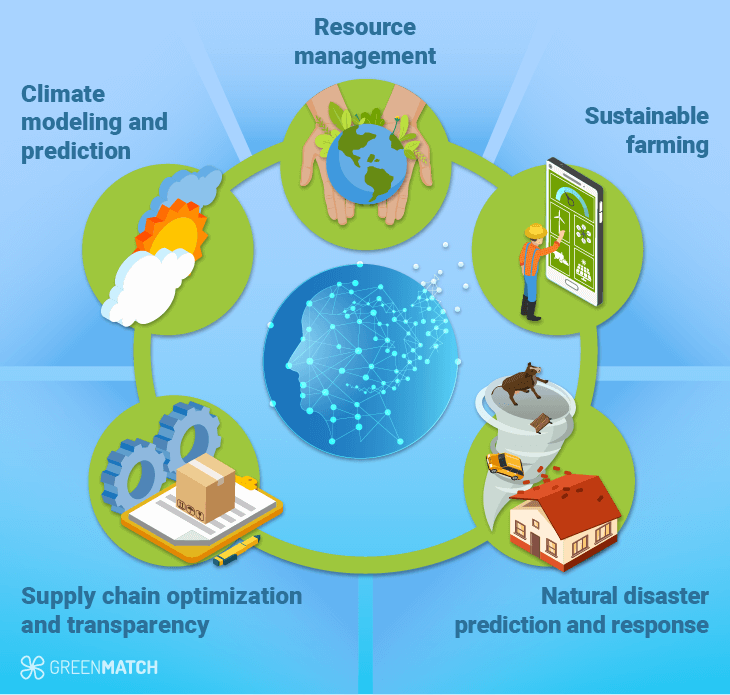
It would be a mistake to view AI solely as a threat to the environment. When applied correctly, AI is one of the most powerful tools we have to combat climate change and protect biodiversity.
Climate Modeling and Precision Agriculture
AI’s ability to process vast datasets makes it invaluable for climate science. AI models can simulate complex atmospheric patterns, helping scientists predict the impacts of global warming with greater accuracy. This data allows for better disaster preparedness and more informed policy decisions.
In the agricultural sector, AI-driven “precision farming” is reducing the environmental footprint of food production. AI-equipped drones and sensors can monitor crop health and soil moisture in real-time, allowing farmers to apply water, fertilizer, and pesticides only where and when they are needed. This reduces chemical runoff into waterways and conserves precious water resources.
Optimizing Renewable Energy Grids
One of the biggest challenges with renewable energy is its variability. AI is being used to solve this by optimizing smart grids. By predicting energy demand and forecasting weather patterns, AI can manage the flow of electricity, ensuring that wind and solar power are used efficiently and that battery storage is optimized. This makes the entire energy ecosystem more resilient and reduces the reliance on fossil-fuel-based “peaker” plants.
Navigating the Path Forward: Corporate Responsibility and Policy
As the tech industry moves forward, the environmental impact of AI cannot be an afterthought. It must be integrated into the design, deployment, and regulation of new technologies.
Transparency in Carbon Reporting for Tech Giants
Transparency is the first step toward accountability. Many tech companies have made ambitious “net-zero” or “carbon-negative” pledges. However, the complexity of AI energy usage often makes these figures difficult to verify. There is a growing push within the tech community for standardized reporting on the energy and water consumption of specific AI models. When developers know the “carbon cost” of their code, they are more likely to seek out efficient alternatives.
The Role of Regulatory Frameworks in Sustainable Tech
Governments are beginning to take notice of the environmental costs of the digital boom. Future regulations, such as the EU AI Act or updated environmental standards for data centers, may soon require companies to meet specific energy efficiency benchmarks. By incentivizing the use of renewable energy and mandating better e-waste management, policy can help ensure that the growth of AI does not come at the expense of the planet.
In conclusion, the relationship between AI and the environment is a complex balance of costs and benefits. While the physical requirements of AI—energy, water, and minerals—pose significant challenges, the technology also provides the analytical power needed to solve environmental crises. For the tech industry, the mission is clear: we must continue to innovate, but we must do so with a commitment to “Efficiency by Design.” Only by addressing the environmental impact of AI today can we ensure that the intelligence of tomorrow is truly sustainable.
aViewFromTheCave is a participant in the Amazon Services LLC Associates Program, an affiliate advertising program designed to provide a means for sites to earn advertising fees by advertising and linking to Amazon.com. Amazon, the Amazon logo, AmazonSupply, and the AmazonSupply logo are trademarks of Amazon.com, Inc. or its affiliates. As an Amazon Associate we earn affiliate commissions from qualifying purchases.