
The digital landscape is an intricate web of symbols, codes, and encrypted signals. In the realm of cybersecurity and content moderation, understanding the specific meaning of numeric codes—such as the “1488” sequence often found in digital imagery or tattoo photography—is no longer just a task for sociologists or law enforcement. It has become a critical frontier for technology companies, AI developers, and digital security experts. As online platforms grapple with the proliferation of extremist content, the tech industry has had to develop sophisticated tools to identify, categorize, and mitigate the risks associated with hate speech and radicalized iconography.

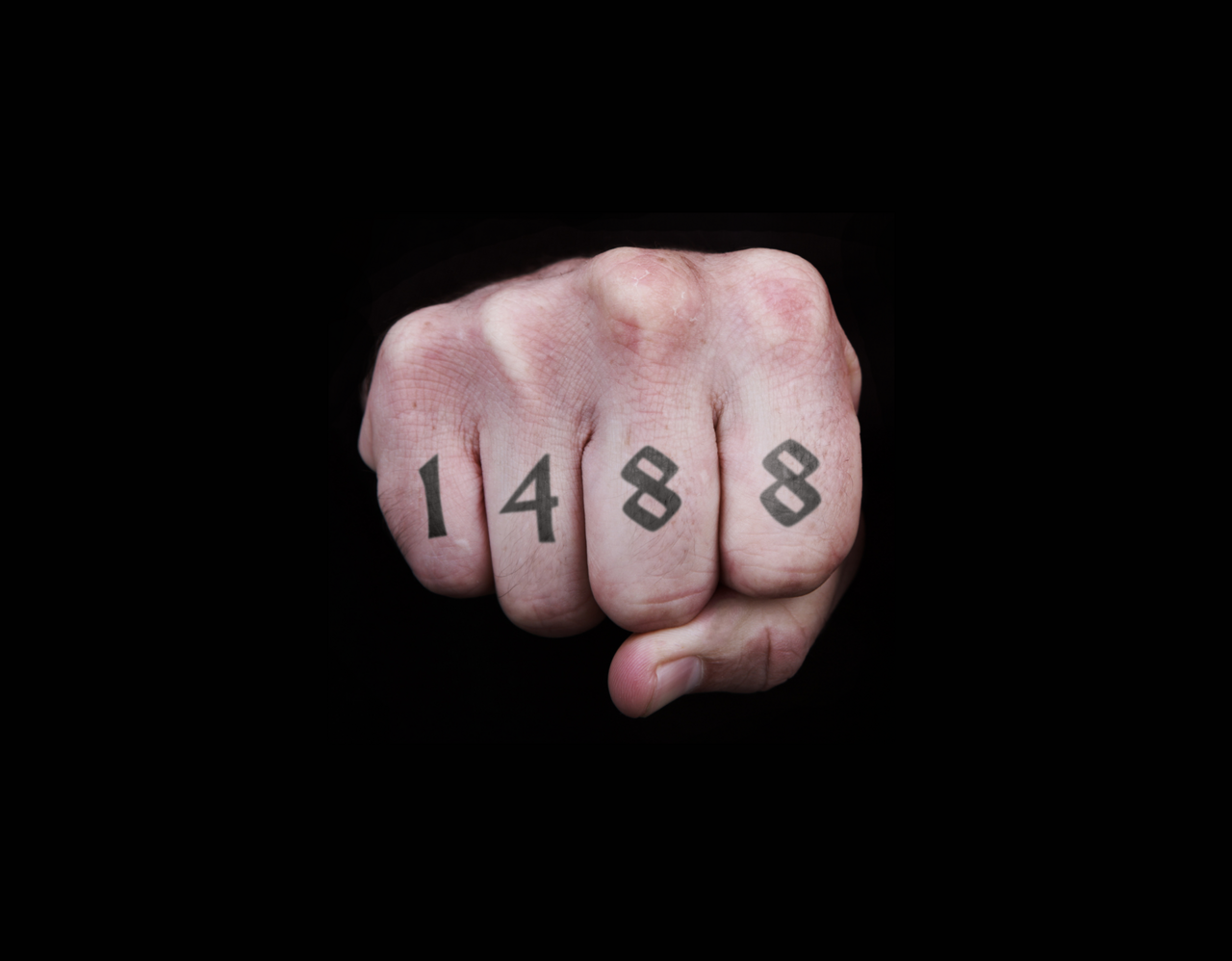
The sequence “1488” is a combination of two distinct white supremacist symbols: the “14 Words” and the “88” (representing the eighth letter of the alphabet, “H,” doubled). When these appear in digital formats, whether as metadata, text, or visual tattoos in uploaded images, they trigger a complex series of technological responses designed to maintain brand safety and digital security.
The Evolution of Content Moderation Technology
The shift from manual moderation to automated AI-driven systems has been necessitated by the sheer volume of data uploaded to the internet every second. For tech platforms, the challenge is building a system that can recognize a symbol like a “1488” tattoo without human intervention.
Computer Vision and Pattern Recognition
At the heart of identifying extremist tattoos is Computer Vision (CV). Modern CV models use Convolutional Neural Networks (CNNs) to analyze images at the pixel level. When a user uploads a photo of a tattoo, the AI doesn’t “see” a person; it identifies patterns, edges, and shapes. Developers train these models on massive datasets of known hate symbols. By using a process called “feature extraction,” the software can identify the specific numeric configurations of “14” and “88” even if they are stylized, distorted by the curve of a limb, or partially obscured by clothing.
Deep Learning Models for Extremist Content
Deep learning takes pattern recognition a step further by understanding the relationship between different elements. A “1488” tattoo doesn’t exist in a vacuum. Deep learning models analyze the surrounding context—other tattoos, the presence of specific flags, or even the captions accompanying the photo. By utilizing Recurrent Neural Networks (RNNs) or Transformers, tech platforms can cross-reference visual data with textual data to assign a “risk score” to a piece of content. If the visual AI detects a suspicious numeric tattoo and the NLP (Natural Language Processing) engine detects matching rhetoric in the bio, the security system can automatically flag or remove the content.
Algorithmic Challenges in Decoding Nuance
One of the greatest hurdles in digital security is the “nuance gap.” For an algorithm, distinguishing between a malicious use of “1488” and a benign occurrence (such as a timestamp or a random serial number) requires immense computational power and sophisticated logic.
The Problem of “False Positives” in Symbol Identification
In the tech world, a “false positive” occurs when a harmless image is incorrectly flagged as extremist. For example, a tattoo of a birth year or a specific area code could be misidentified by a poorly trained AI. To combat this, tech companies use “thresholding.” Instead of a binary “yes/no” identification, the system provides a probability. If the AI is only 60% sure a tattoo represents “1488,” it might send the image to a human moderator. If it is 99% sure, the system takes automated action. Refining these thresholds is a continuous cycle of machine learning (ML) optimization.
Natural Language Processing (NLP) vs. Image Analysis
While Computer Vision handles the “1488” tattoo itself, Natural Language Processing (NLP) handles the digital “paper trail.” Extremist groups often use “dog whistles”—coded language designed to bypass simple keyword filters. Tech firms now employ sentiment analysis and semantic mapping to understand the intent behind the numbers. Modern NLP tools can detect “adversarial spelling” (e.g., using symbols to replace letters) that often accompanies extremist iconography. The integration of NLP and CV is what allows platforms to build a holistic security profile of a digital entity.
Digital Security and the Dark Web Ecosystem
The identification of symbols like “1488” isn’t just about cleaning up social media feeds; it is a vital part of broader cybersecurity and national security efforts. Extremist symbols often serve as identifiers within the dark web and encrypted communication channels.
Tracking Extremist Financial Networks via Blockchain Analysis
There is a significant overlap between extremist ideologies and the use of decentralized finance (DeFi) to bypass traditional banking sanctions. Digital security firms use blockchain forensics to track “1488”-themed wallets or transactions. By identifying public keys associated with extremist propaganda, analysts can map out funding networks. Technology like “clustering” allows investigators to see if a wallet used to purchase extremist merchandise (featuring the 1488 symbol) is also linked to larger cybercriminal activities or ransomware attacks.
Metadata and OSINT (Open Source Intelligence)
Every digital image of a tattoo carries “metadata”—hidden information about the file’s origin, the device used, and often the GPS coordinates of where the photo was taken (EXIF data). OSINT tools allow security researchers to scrape this data to identify hotspots of extremist activity. Tech platforms utilize automated scripts to strip or analyze this metadata upon upload. For law enforcement and digital security agencies, the ability to correlate a “1488” tattoo with specific metadata provides a powerful tool for de-anonymizing threat actors who operate under the veil of digital pseudonyms.
The Future of AI in Mitigating Online Radicalization
As we move toward a more decentralized and AI-driven internet, the tools used to monitor and mitigate the influence of hate symbols are becoming more proactive rather than reactive.
Real-Time Content Filtering for Social Media Platforms
The “Holy Grail” of digital safety is real-time filtering. Currently, there is often a delay between an upload and its moderation. However, with the advent of Edge Computing, where processing happens closer to the user’s device rather than a central server, we are seeing the rise of “on-device” moderation. This tech could potentially identify a “1488” tattoo at the moment the camera app is opened, preventing the image from ever being uploaded to the cloud. While this raises significant privacy discussions, the technical capability represents a massive leap in digital gatekeeping.
Ethical Tech: Balancing Privacy and Security
The development of technology to detect extremist symbols brings up the “Transparency and Ethics” debate in the tech industry. How do we ensure that tools designed to catch “1488” tattoos aren’t repurposed for unjustified surveillance? The tech community is currently exploring “Federated Learning,” a method of training AI models on decentralized data without actually seeing the private photos of users. This ensures that the AI learns what a “1488” symbol looks like by analyzing encrypted patterns, maintaining a balance between the security of the platform and the privacy of the individual.

Conclusion: The Digital Wall Against Extremism
The meaning of a “1488” tattoo, while rooted in a hateful ideology, has become a high-stakes data point in the world of technology. For digital security experts, these four digits are a signal in the noise—a marker that requires the full force of modern AI, computer vision, and forensic analysis to manage.
As software continues to evolve, the goal remains the same: to create a digital environment where technology acts as a shield. By refining the algorithms that detect these symbols, tech companies are not just performing content moderation; they are building the infrastructure for a safer, more secure internet. In the ongoing battle between extremist obfuscation and technological detection, the code behind the screen is proving to be just as powerful as the symbols it seeks to identify.
aViewFromTheCave is a participant in the Amazon Services LLC Associates Program, an affiliate advertising program designed to provide a means for sites to earn advertising fees by advertising and linking to Amazon.com. Amazon, the Amazon logo, AmazonSupply, and the AmazonSupply logo are trademarks of Amazon.com, Inc. or its affiliates. As an Amazon Associate we earn affiliate commissions from qualifying purchases.