
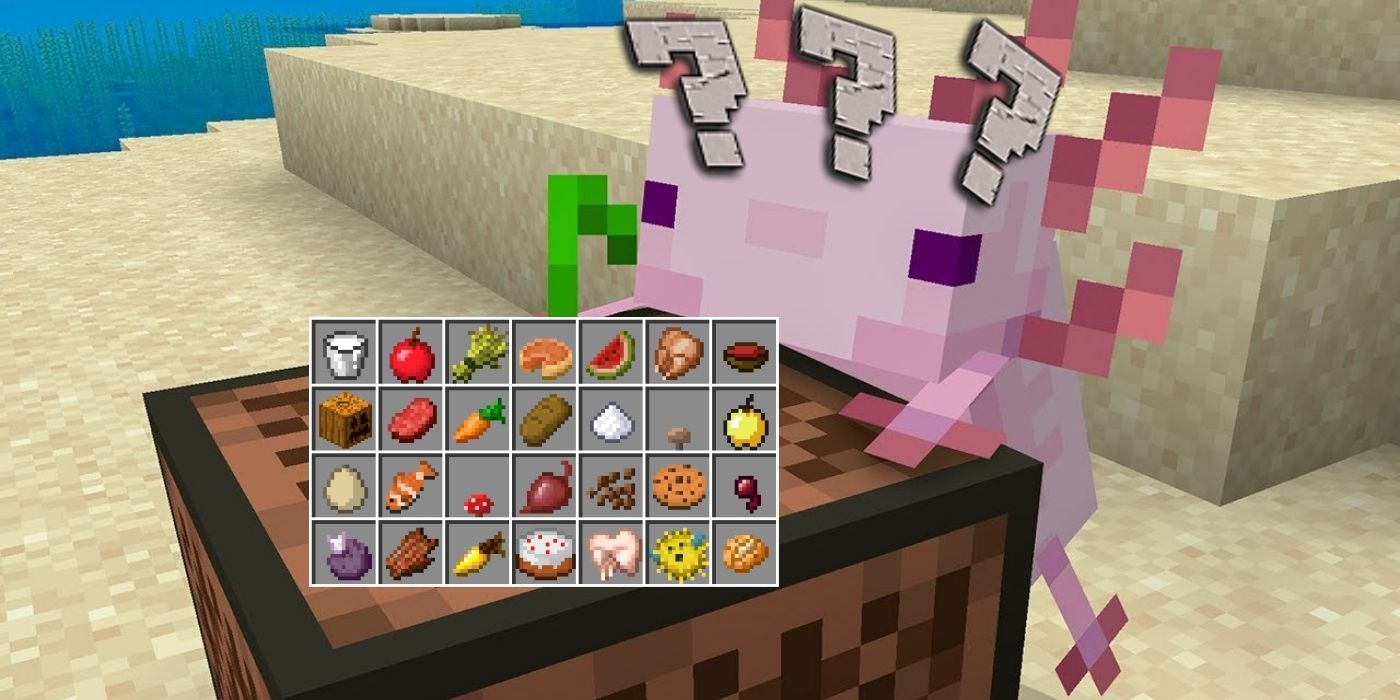
The digital landscape of Minecraft has evolved significantly since its inception, transforming from a simple voxel-based sandbox into a complex simulation of ecological systems and sophisticated artificial intelligence. One of the most intriguing additions to this digital architecture is the axolotl. While casual players might view them simply as “cute” aquatic companions, from a software engineering and technical design perspective, the axolotl represents a sophisticated intersection of entity-component systems, algorithmic behavior, and data-driven game design.
By examining what axolotls “do” in the context of Minecraft’s codebase, we gain insight into how modern game engines simulate biological life through conditional logic, pathfinding, and environmental triggers. This article explores the technical mechanics behind the axolotl, the programming of its unique behaviors, and its role within the broader Minecraft ecosystem.
The Architecture of an Entity: Programming the Axolotl’s Behavior
At its core, an axolotl in Minecraft is an “Entity”—a dynamic object within the game world governed by a specific set of rules and data parameters. Unlike static blocks, entities require constant processing power to manage their movement, state changes, and interactions. The axolotl is a prime example of how Mojang Studios utilizes sophisticated AI state machines to create a sense of life.
AI Pathfinding and Aquatic Navigation
The primary function of an axolotl is navigation. In technical terms, this is handled via pathfinding algorithms (often a variation of the A* algorithm) adapted for a 3D fluid environment. The axolotl must constantly calculate the most efficient route through water blocks while avoiding solid obstacles and staying within range of specific environmental triggers.
The challenge for the developers was creating a “dual-mode” navigation system. While the axolotl is primarily an aquatic mob, it is amphibious. This requires the engine to switch between two different movement controllers: one for swimming and one for terrestrial “waddling.” On land, the entity experiences a significant decrease in its speed variable and sets a “dehydration” timer. If the timer reaches zero, the entity’s health component begins to decrement, unless it finds a water source—a classic example of a conditional loop governing survival logic.
The ‘Play Dead’ Mechanic: Conditional Logic in Mob States
One of the most technically distinct behaviors of the axolotl is the “Play Dead” (or PlayingDead) state. This is not merely an animation; it is a fundamental shift in the entity’s data packet. When the axolotl’s health falls below a certain threshold while it is under attack, the game engine triggers a state change.
During this state, the entity’s “hostility” flag is set to neutral, and its “Regeneration” effect is applied. Crucially, the AI of hostile mobs (like Guardians) is programmed to ignore entities currently in the PlayingDead state. This interaction showcases the “observer” pattern in software design: the hostile mob observes the state of the axolotl and adjusts its own behavior tree accordingly. This creates a multi-layered simulation where entities are constantly querying the states of those around them.
Ecological Simulation: Integrating the Axolotl into the Procedural World
Minecraft is more than a game; it is a procedural simulation. The introduction of axolotls was not just an aesthetic choice but a technical implementation of “biological niches.” In software design, this is often referred to as emergent gameplay—where simple rules lead to complex, unscripted interactions.
Predator-Prey Dynamics and Entity Interactions
The axolotl is programmed with an “aggressive” behavior toward most other aquatic mobs, excluding dolphins and turtles. From a technical standpoint, this involves a “target selector” component. The axolotl’s AI scans a defined radius (a spherical detection box) for entities that belong to specific “tags” (such as #minecraft:fish or #minecraft:axolotl_hunt_targets).
Once a target is identified, the axolotl’s pathfinding switches from “wander” to “pursue.” This interaction serves a functional purpose in the game’s technical ecosystem: population control. By hunting other mobs, axolotls help manage the entity count in loaded chunks, preventing the lag that occurs when too many autonomous entities occupy the same space.
Environmental Triggers and Habitat Algorithms
The spawning of axolotls is governed by a rigorous set of environmental variables. They do not appear randomly; they require specific conditions: “Lush Caves” biomes, a specific height level (Y-level), and the presence of “Clay” blocks within a certain range of the spawn attempt.
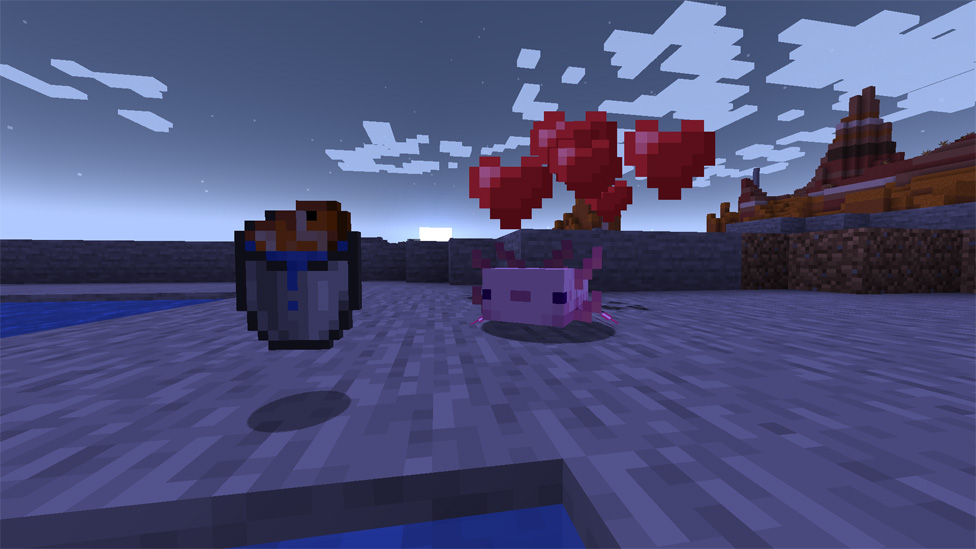
This is a demonstration of how Minecraft’s world-generation engine uses noise maps and localized data checks to determine entity placement. The engine must check the “biome” variable, the “light level” variable, and the “block type” variable before executing the spawn command. This hierarchy of checks ensures that the digital ecosystem feels deliberate and geographically consistent, mirroring real-world biological constraints through code.
The Tech Behind the Aesthetics: Color Variants and RNG Systems
While the behavior of the axolotl provides depth, its visual data management is equally significant. The axolotl comes in five distinct colors, a feature that utilizes Random Number Generation (RNG) and inheritance logic within the game’s breeding system.
Random Number Generation and Mutation Rates
Most axolotl colors (Pink, Brown, Gold, and Cyan) are assigned with an equal probability upon spawning. However, the “Blue” axolotl is a technical anomaly by design. It has a 1 in 1,200 (approximately 0.083%) chance of spawning during a breeding event.
From a technical perspective, this is a “rare event” simulation. When two axolotls are bred, the game executes a “loot table” style calculation for the offspring’s color. The code first checks for a 1/1200 hit; if it fails, it defaults to a 50/50 inheritance of the parents’ color variants. This mimics genetic inheritance and provides a “chase” element for users, demonstrating how statistical rarity can be used to increase user engagement and “grind” within a software environment.
Visual Assets and Data-Driven Rendering
Minecraft’s rendering engine treats the axolotl as a model with several texture layers. The use of different colors is a “data-driven” approach to asset management. Instead of having five different mob files, the game has one axolotl.json file that defines the model and a “variant” tag that determines which texture file is mapped onto that model. This efficiency is crucial for maintaining performance across various platforms, from high-end PCs to mobile devices (Bedrock Edition).
Educational Tech: Modeling Real-World Biological Conservation
Beyond the code, the axolotl in Minecraft serves a purpose in the realm of “EdTech” (Educational Technology). By simulating a critically endangered species, Mojang uses its platform to provide a digital model of environmental stewardship.
Simulating Rare Species for Digital Literacy
The decision to include the axolotl—and specifically to make them spawn in “Lush Caves”—was a conscious effort to raise awareness about their real-world habitat in Mexico’s Lake Xochimilco. In this sense, the axolotl is a “digital twin” of a biological organism. The tech serves to educate the user on the importance of biodiversity.
When users interact with the axolotl, they learn about its regenerative properties and its vulnerability to being out of water. This is an example of “stealth learning,” where the mechanics of the software (the dehydration timer, the regeneration buff) translate into real-world knowledge about the animal’s biological traits.
Future Implications for Virtual Biodiversity Modeling
The success of the axolotl’s technical implementation paves the way for more complex biological simulations. As hardware becomes more powerful, we can expect “entity logic” to become even more granular. We may see mobs with “memory” (the ability to remember specific locations or player interactions) or more complex social hierarchies governed by multi-agent systems.
The axolotl is a stepping stone toward a more immersive, reactive digital world. It proves that a “mob” doesn’t have to be just an enemy or a resource; it can be a sophisticated component of a living, breathing digital machine.
Conclusion
When we ask “what do axolotls do in Minecraft,” the answer goes far beyond simple swimming or attacking. They serve as a masterclass in modern game tech. They are a collection of AI pathfinding routines, conditional state machines, and environmental data checks. They represent the bridge between pure software engineering and interactive digital art.
By understanding the technical nuances of how axolotls navigate, interact, and reproduce, we gain a deeper appreciation for the complexity of the Minecraft engine. The axolotl is not just a digital pet; it is a sophisticated piece of code that brings the procedural world to life, one line of logic at a time. Whether it is the 1/1200 RNG chance of a blue variant or the “Play Dead” state machine, every action of the axolotl is a testament to the power of data-driven design in the modern tech era.
aViewFromTheCave is a participant in the Amazon Services LLC Associates Program, an affiliate advertising program designed to provide a means for sites to earn advertising fees by advertising and linking to Amazon.com. Amazon, the Amazon logo, AmazonSupply, and the AmazonSupply logo are trademarks of Amazon.com, Inc. or its affiliates. As an Amazon Associate we earn affiliate commissions from qualifying purchases.