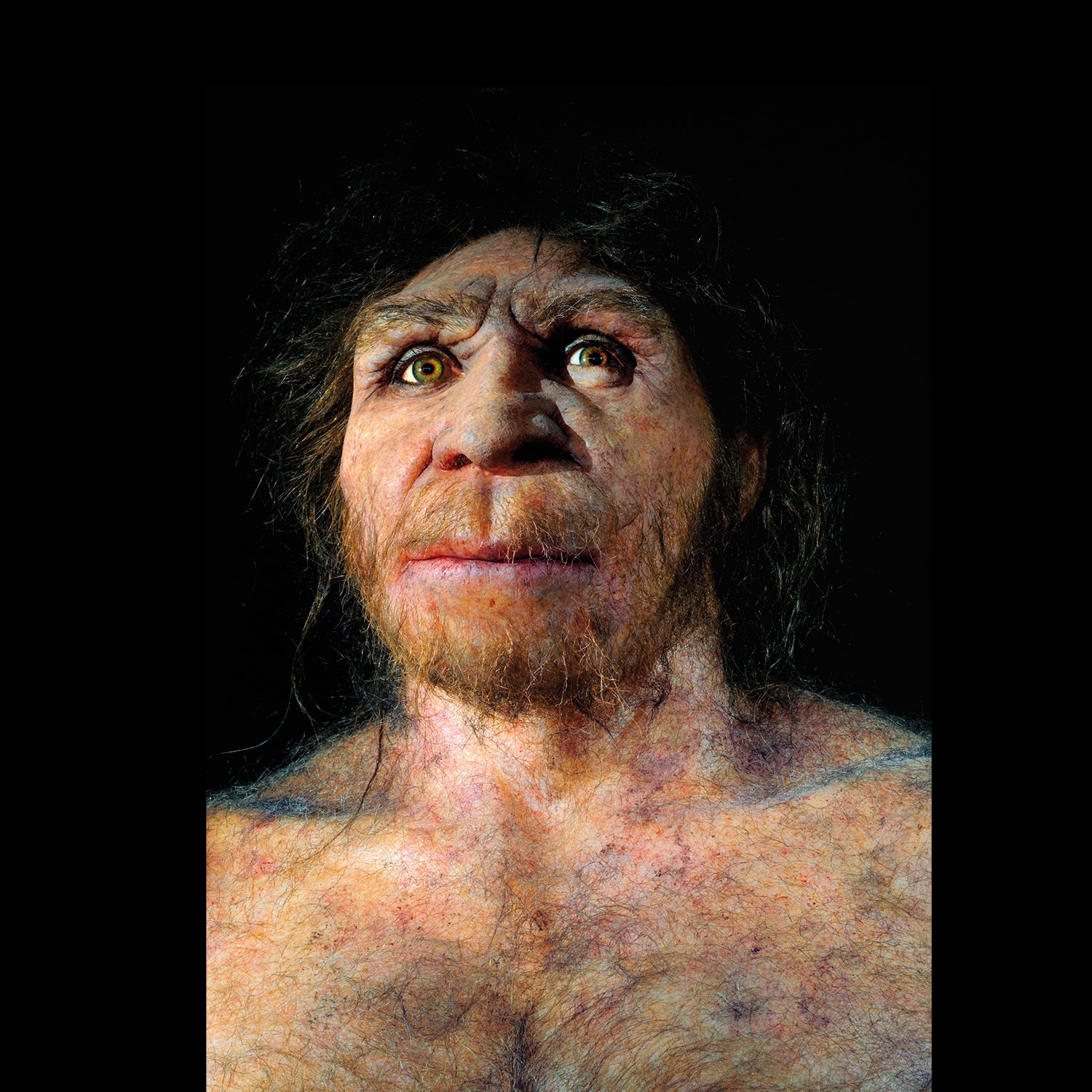
For decades, our understanding of what our ancestors looked like 10,000 years ago was limited to artistic guesswork and rudimentary clay reconstructions based on skeletal remains. However, the intersection of advanced genomics, artificial intelligence (AI), and high-fidelity 3D rendering has transformed digital archaeology. Today, we don’t just guess; we simulate. By leveraging the power of tech-driven bio-informatics, scientists and digital artists are painting a vivid, data-backed picture of the Mesolithic human—a portrait that often contradicts our long-held assumptions.
The Genomic Revolution: Decoding Phenotypes through NGS
The foundation of modern evolutionary visualization lies in Next-Generation Sequencing (NGS). Unlike older methods of DNA analysis, NGS allows scientists to process massive amounts of genetic data from ancient remains (aDNA) with unprecedented speed and accuracy. This technology is the “software” that tells us the “hardware” specifications of a human from 10,000 years ago.
Next-Generation Sequencing and Ancient DNA (aDNA)
Extracting DNA from 10,000-year-old remains is a feat of engineering. The DNA is often fragmented and contaminated by modern bacteria. Modern “clean labs” use specialized chemical pipelines and high-throughput sequencers to isolate endogenous human DNA. Once the genome is mapped, bio-informaticians look for specific SNPs (Single Nucleotide Polymorphisms)—the genetic markers that dictate physical traits. This is the technology that revealed many Europeans 10,000 years ago actually possessed a combination of dark skin and blue eyes, a phenotype largely absent in the region today.
Proteomics: The New Frontier in Biological Data
While DNA provides the blueprint, proteomics—the study of proteins—is an emerging tech field that helps fill in the gaps where DNA is too degraded to read. By using liquid chromatography-mass spectrometry (LC-MS), researchers can identify proteins in tooth enamel or bone collagen. This technology allows us to understand the diet and health of individuals, which in turn influences digital models of muscle mass, facial fat distribution, and skin health.
AI-Driven Facial Reconstruction and Morphometric Software
Once the genetic and biological data is harvested, it must be translated into a visual medium. This is where AI and machine learning (ML) take the lead. Traditional forensic facial reconstruction involved physical clay modeling, but today’s digital workflows utilize “Automated Forensic Facial Reconstruction” software.
Machine Learning and Skeletal Mapping
The process begins with high-resolution 3D CT scans of skulls. AI algorithms, trained on thousands of data points from modern human anatomy, analyze the bone density and structure of the ancient skull. These models can predict tissue depth at specific “Landmark” points with millimeter precision. Machine learning models account for age, sex, and the specific ancestral markers identified in the genomic phase to adjust the digital “clay” accordingly.
From Skulls to Skin: Neural Networks and Texture Synthesis
Rendering realistic skin is one of the most difficult tasks in digital reconstruction. To bridge the gap, developers use neural networks and texture synthesis. Once the genomic data tells us the melanin levels and eye color, AI-driven rendering engines (like those used in high-end video game development) generate skin textures. These engines simulate how light interacts with skin layers—a process known as subsurface scattering—to ensure the final 3D model looks like a living, breathing human rather than a plastic mannequin.
Case Studies in High-Tech Ancestry: The Mesolithic Blueprint
To understand what humans looked like 10,000 years ago, we must look at the specific outputs of these technologies. The results have been groundbreaking, particularly in the study of Western Hunter-Gatherers (WHG) and the transition to the Neolithic period.

The “Cheddar Man” Breakthrough
One of the most famous applications of this tech stack was the reconstruction of “Cheddar Man,” a human who lived in Britain roughly 10,000 years ago. Using high-resolution DNA sequencing and 3D printing technology, researchers at the Natural History Museum in London overturned the previous narrative. The tech showed a man with dark-to-black skin, curly hair, and striking blue eyes. This reconstruction was a triumph of the “Digital Phenotyping” workflow, proving that biological reality often defies cultural expectations.
Regional Divergence and Computational Estimates
The technology isn’t limited to Europe. In the Levant and East Asia, 10,000 years ago marked the dawn of the agricultural revolution. AI models show that humans in these regions were beginning to undergo rapid physiological changes due to shifts in diet and sedentary lifestyles. Digital morphometrics show a gradual “gracilization” of the human face—a softening of the jawline and brow ridges—which can be tracked across thousands of years using computational comparative analysis.
The Future of Digital Anthropology: Immersive History
As we look toward the next decade, the tech used to visualize our ancestors is becoming even more integrated and accessible. We are moving away from static images and toward interactive, AI-driven avatars that can be experienced in virtual environments.
VR, AR, and the “Metahuman” Ancestor
Epic Games’ MetaHuman Creator and similar high-end character creation tools are being repurposed for science. Researchers are now able to port genomic and morphometric data into Unreal Engine to create ultra-realistic, rigged 3D models. In the near future, Virtual Reality (VR) and Augmented Reality (AR) will allow museum-goers to “meet” a 10,000-year-old human. These digital humans won’t just stand there; they will be programmed with AI-driven behavioral models based on archaeological evidence of their daily activities.
Ethical Implications and Data Accuracy
With the power of AI comes the responsibility of accuracy. “Deepfake” technology and generative AI pose a risk of creating “over-stylized” versions of the past. The tech community is currently working on standardization protocols for “Scientific Visualization.” This involves creating a transparent “certainty map” for digital reconstructions—using different colors or textures to show which parts of a model are backed by hard genetic data and which parts are computational estimates.
Conclusion: Bridging the 10,000-Year Gap
Ten millennia is a blink of an eye in evolutionary terms, yet the humans of that era lived in a world vastly different from our own. Through the lens of 21st-century technology, we are finally seeing them clearly. What did they look like? They were a diverse, hardy, and complex people, whose faces we can now reconstruct with the precision of a high-resolution camera.
The combination of NGS, AI-driven morphometrics, and advanced 3D rendering has effectively built a digital bridge to our past. As these technologies continue to evolve, our picture of the 10,000-year-old human will only become sharper, reminding us that while our tools have changed from flint to silicon, the human face remains the ultimate record of our shared history.