
When Elon Musk officially closed his acquisition of Twitter in October 2022, the final price tag of $44 billion sent shockwaves through the global financial community. It wasn’t just the sheer scale of the number that drew scrutiny, but rather the valuation premium and the complex financial engineering required to finalize the deal. In the world of business finance and high-stakes investing, the acquisition remains one of the most significant leveraged buyouts in history. Understanding what Musk paid—and how he paid it—requires a deep dive into capital stacks, debt servicing, and the fluctuating valuations of the social media landscape.

The Capital Stack: How the $44 Billion Was Assembled
The acquisition of a multi-billion-dollar public company is rarely a cash-on-hand transaction. For Elon Musk, the purchase of Twitter involved a sophisticated “capital stack” comprising personal equity, external investment partners, and significant bank debt. By breaking down these components, we gain insight into the financial risks distributed among the various parties involved.
Equity Contributions: Musk’s Personal Stake and Co-Investors
A substantial portion of the $44 billion came from equity. Elon Musk himself provided the lion’s share of this capital, primarily by liquidating billions of dollars worth of his Tesla stock. This move was a point of contention for Tesla investors, as the massive sell-offs impacted the electric vehicle maker’s share price. However, Musk was not the sole equity provider.
To mitigate his personal exposure, Musk assembled a consortium of high-profile co-investors who contributed approximately $7 billion. This group included Larry Ellison (co-founder of Oracle), the cryptocurrency exchange Binance, and venture capital firms like Sequoia Capital and Andreessen Horowitz. Additionally, existing large shareholders, such as Prince Alwaleed bin Talal of Saudi Arabia, rolled their existing Twitter shares into the new private entity, effectively becoming partners in the “X” era. This equity-heavy approach was designed to provide a cushion, yet it tied the personal fortunes of some of the world’s wealthiest individuals to the platform’s performance.
The Role of Debt: Leveraged Buyout Mechanics
The remaining $13 billion of the purchase price was raised through debt. In a traditional leveraged buyout (LBO), the debt is not held by the individual purchaser but is instead “pushed down” onto the balance sheet of the company being acquired. Consequently, it was Twitter (now X Corp) that became responsible for repaying this massive sum, rather than Musk personally.
A syndicate of major global banks, led by Morgan Stanley, Bank of America, and Barclays, provided the financing. This debt was divided into different tranches, including term loans and bridge loans. For a company that had historically struggled with consistent profitability, adding $13 billion in debt created an immediate and immense financial burden, shifting the focus of the business from growth to survival and debt maintenance.
Valuation Realities and Investment Performance
At the time of the offer, Musk agreed to pay $54.20 per share—a significant premium over the trading price at the time. Since the deal closed, the financial community has closely monitored the “mark-to-market” value of the company to determine if the $44 billion investment was overvalued.
Fidelity and the Downward Revision of Value
Because X is now a private company, its daily valuation isn’t visible on public stock exchanges. However, mutual fund giants like Fidelity, which participated in the deal, are required to provide periodic valuations of their holdings for their own investors. These reports have painted a sobering picture for the original $44 billion valuation.
Since the acquisition, Fidelity has repeatedly marked down the value of its stake in X. Some estimates suggest the company’s internal valuation has dropped by more than 70% from the original purchase price. From an investing perspective, this suggests that if the company were to be sold or taken public today, it might fetch closer to $12 billion to $15 billion. This discrepancy highlights the risks of “overpaying” for an asset based on strategic vision rather than current cash flow fundamentals.
Comparing the Purchase Price to Industry Multiples
To understand if the $44 billion was a “fair” price, financial analysts look at Price-to-Earnings (P/E) and Price-to-Sales (P/S) multiples. At the time of purchase, Twitter was struggling with declining ad revenue and high operational costs. The $44 billion price tag represented a multiple that far exceeded those of its peers, like Meta or Snap, especially given Twitter’s slower user growth.
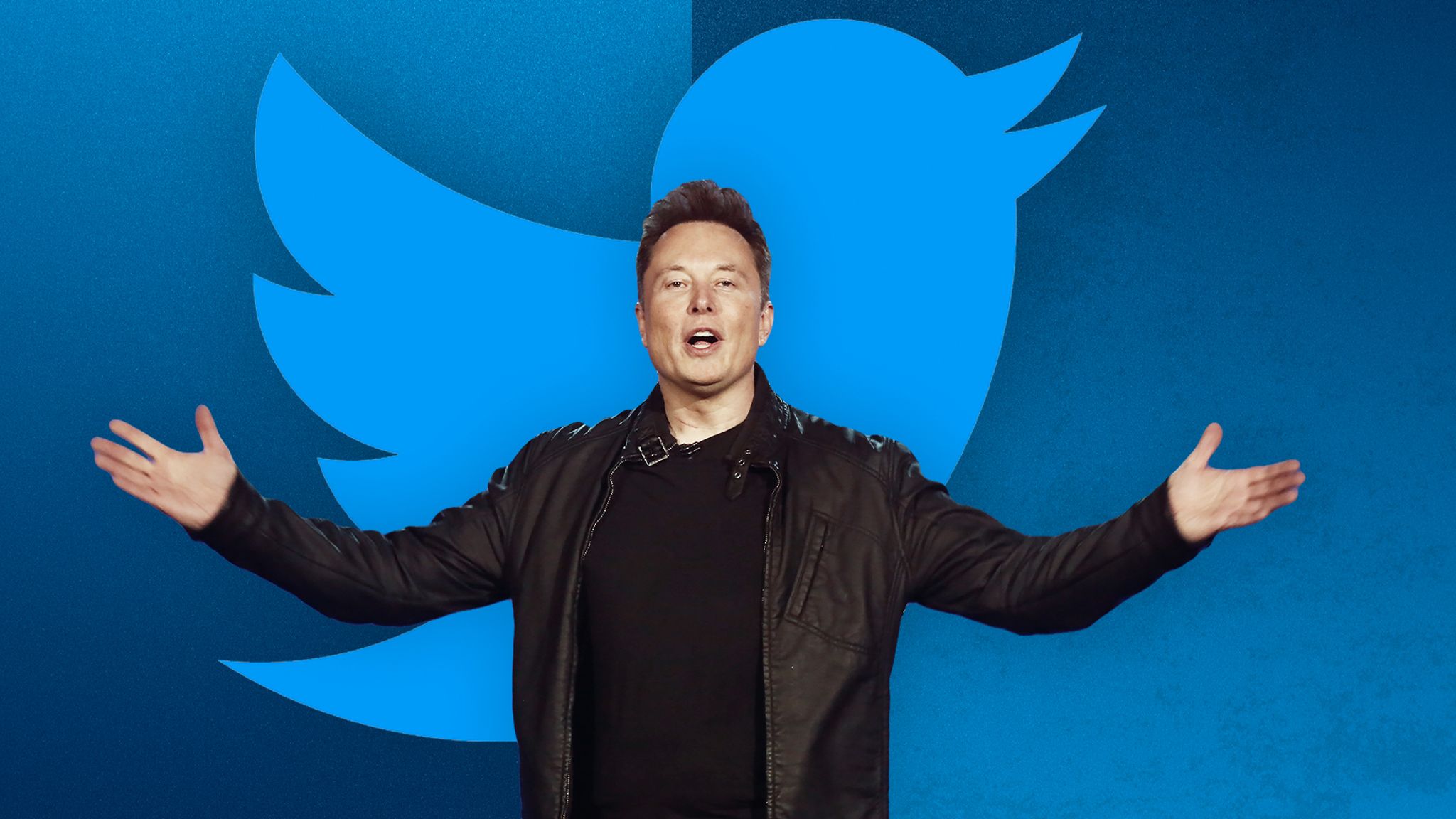
The premium paid by Musk was largely attributed to the “control premium”—the extra amount an investor pays to have total authority over a company’s direction. However, in the context of business finance, a control premium is only justified if the new owner can extract significantly more value through operational efficiencies or new revenue streams. The ongoing valuation adjustments suggest the market remains skeptical of this value extraction.
The Impact of Debt Servicing on Business Finance
Perhaps the most critical financial consequence of the $44 billion price tag is the cost of carrying the $13 billion in bank debt. This debt is not a static number; it requires regular interest payments that have fundamentally altered the company’s financial DNA.
The Burden of the $13 Billion Debt Load
Before the acquisition, Twitter had a relatively manageable debt-to-equity ratio. Following the deal, the interest obligations skyrocketed. Estimates suggest that X Corp must pay approximately $1.2 billion to $1.5 billion in interest annually. For a company that was already hovering around the break-even mark, this interest expense is a “fixed cost” that must be paid regardless of how the business is performing.
This financial pressure explains many of the aggressive cost-cutting measures seen shortly after the takeover. From massive layoffs to selling off office furniture and reducing server costs, the objective was clear: maximize EBITDA (Earnings Before Interest, Taxes, Depreciation, and Amortization) to ensure the company could meet its debt obligations and avoid a technical default.
Cash Flow Challenges and Revenue Streams
In personal and business finance, cash flow is king. To cover the interest on the $44 billion deal, Musk pivoted the company toward new revenue models. The introduction of “X Premium” (formerly Twitter Blue) was a strategic move to create a predictable, recurring subscription revenue stream.
While subscription models are highly valued by investors for their stability, they have yet to fully offset the volatility in advertising revenue. In a leveraged environment, any dip in the primary revenue source—advertising—becomes an existential threat because the debt payments do not stop. This highlights the precarious nature of high-leverage business finance: there is very little margin for error when the cost of capital is so high.
Broader Implications for Tech Investing and M&A
The “Elon Musk-Twitter” deal serves as a masterclass—and a cautionary tale—for the future of Mergers and Acquisitions (M&A) in the tech sector. It has redefined how investors view large-scale privatizations and the risks associated with visionary-led acquisitions.
The Risks of High-Leverage Acquisitions
The $44 billion deal occurred just as the era of “cheap money” was ending. As central banks raised interest rates to combat inflation, the cost of floating-rate debt increased. This served as a reminder to investors that the financial structure of a deal is just as important as the asset being purchased.
For future side hustles or large-scale business ventures, the lesson is clear: leverage is a double-edged sword. It can amplify returns during periods of growth, but it can also accelerate a downward spiral if the asset’s valuation or revenue declines. The Twitter acquisition has made banks more cautious about lending for similar large-scale tech buyouts, effectively cooling the M&A market for highly speculative valuations.

Future Exit Strategies and Long-term ROI
For the investors who put $44 billion into the platform, the question remains: what is the exit strategy? For a private equity-style investment to be successful, there must eventually be a “liquidity event,” such as an Initial Public Offering (IPO) or a sale to another entity.
For Musk and his co-investors to see a positive Return on Investment (ROI), the company must not only recover its $44 billion value but exceed it significantly to account for the time-value of money and the interest paid on debt. This would likely require X to transform from a simple social media platform into a “super-app” encompassing fintech, payments, and AI services. From a financial perspective, the $44 billion was not just the price of a social network; it was an expensive entry fee into a high-stakes gamble on the future of digital commerce.
In conclusion, when we ask what Elon Musk paid for Twitter, the answer is $44 billion in nominal terms. However, in terms of business finance, he paid with a high-leverage debt structure, significant personal liquidity, and a valuation premium that continues to challenge the company’s path to profitability. For investors and financial enthusiasts, the deal remains a definitive example of how capital structure and debt servicing can dictate the operational reality of a global brand.
aViewFromTheCave is a participant in the Amazon Services LLC Associates Program, an affiliate advertising program designed to provide a means for sites to earn advertising fees by advertising and linking to Amazon.com. Amazon, the Amazon logo, AmazonSupply, and the AmazonSupply logo are trademarks of Amazon.com, Inc. or its affiliates. As an Amazon Associate we earn affiliate commissions from qualifying purchases.