
When we look at the cutting-edge landscape of modern technology—from the intricate algorithms of Artificial Intelligence to the heavy mechanical robotics used in manufacturing—we rarely look back 2,300 years. Yet, the question of “what did Archimedes do” is central to understanding the very hardware and software that define our digital age. Archimedes of Syracuse was not merely a mathematician; he was perhaps the world’s first true “tech visionary.” His work in mechanics, hydrostatics, and computational approximations laid the groundwork for the engineering principles that allow us to build skyscrapers, design efficient software, and explore deep space.
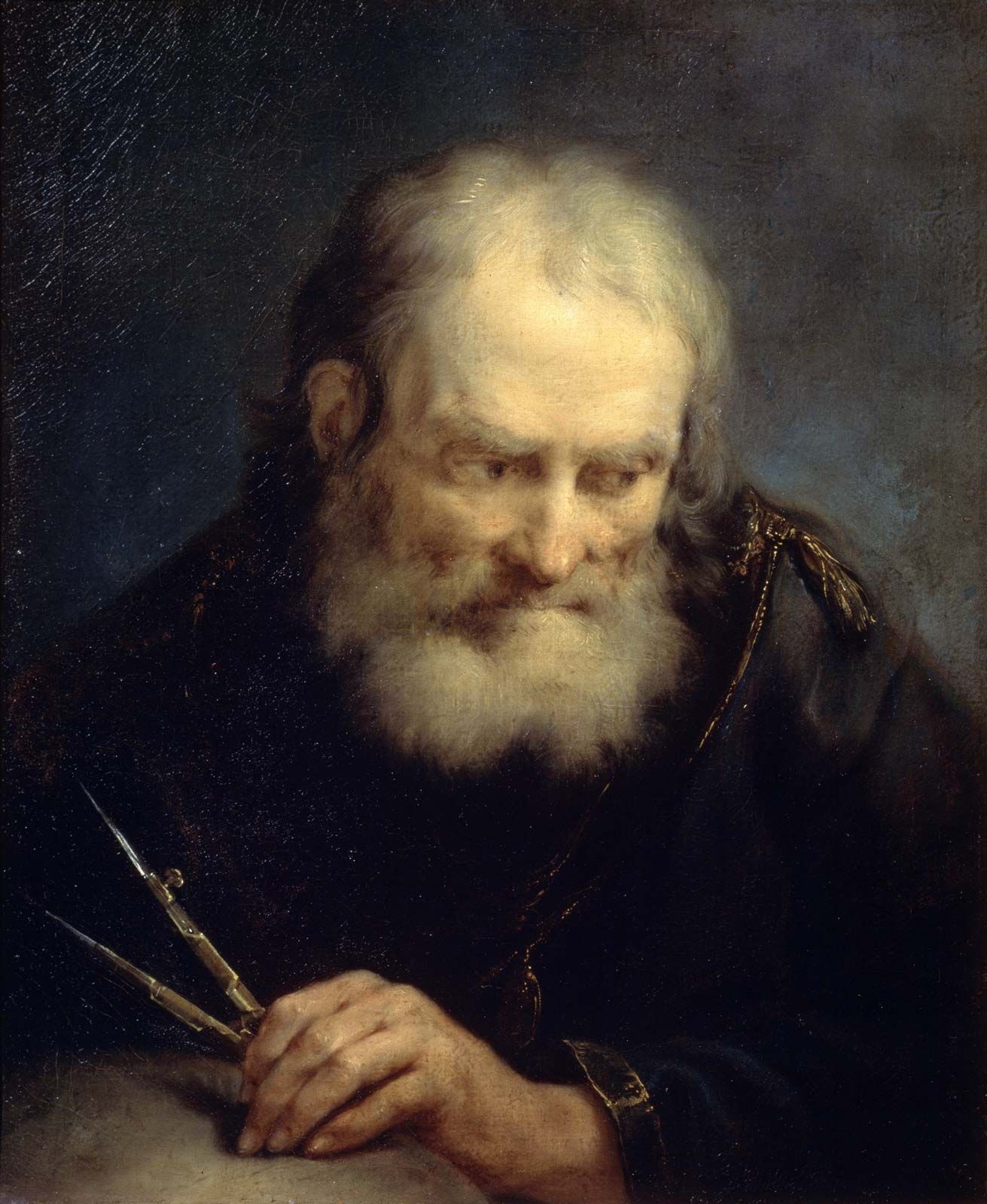
By examining his contributions through a technological lens, we can see Archimedes as the progenitor of modern mechanical engineering and algorithmic thinking.
The Architect of Mechanics: From Simple Machines to Complex Systems
Archimedes is most famously associated with the lever, but his contribution was not the invention of the tool itself, but rather the rigorous mathematical “user manual” and optimization of its power. In the tech world, we often talk about “leverage”—using a small amount of input to generate a massive output. Archimedes was the first to formalize the physics of this concept, providing the blueprint for every mechanical gear and pulley system in existence today.
The Power of Leverage and the Mechanics of Movement
Archimedes famously boasted, “Give me a place to stand on, and I will move the Earth.” This wasn’t just hyperbole; it was a statement of mechanical advantage. By documenting the law of the lever, Archimedes enabled the creation of compound pulleys and winches. In modern technology, these principles are the DNA of robotics. Every time a robotic arm in an Amazon fulfillment center lifts a heavy crate with a tiny electric motor, it is utilizing the torque and mechanical advantage principles first codified by Archimedes. His ability to translate physical force into a mathematical ratio allowed ancient engineers to build machines that transcended human physical limits, a goal that remains the core objective of modern automation.
The Archimedes’ Screw: Precursor to Fluid Dynamics and Pumping Systems
One of Archimedes’ most enduring technological inventions is the Archimedes’ Screw. Originally designed to remove water from the hull of a large ship, the device consists of a screw-shaped surface inside a hollow pipe. As the screw turns, water is moved upward against gravity.
While this may seem like “low-tech” today, the Archimedes’ Screw is a masterpiece of fluid dynamics. It is still used extensively in modern tech applications, from wastewater treatment plants to the internal mechanisms of grain elevators and even certain types of high-viscosity fuel pumps. The “screw” represents one of the first instances of a continuous-motion machine, a concept that paved the way for the turbines and propellers that power modern aviation and maritime technology.
Mathematical Algorithmic Thinking: The Method of Exhaustion and Early Calculus
In the realm of software and data science, we rely on iterative processes—algorithms that repeat a task until a specific level of precision is reached. Archimedes pioneered this “algorithmic” approach long before the invention of the computer. His work in geometry was not just about shapes; it was about the limits of calculation.
Calculating Pi and the Roots of Computational Efficiency
Before Archimedes, the value of Pi was largely a matter of guesswork. Archimedes used a “tech-forward” approach known as the Method of Exhaustion to bound the value of Pi between 3 1/7 and 3 10/71. He did this by inscribing and circumscribing a 96-sided polygon around a circle.
This process is fundamentally an algorithm. In modern computing, we use similar iterative methods (like the Monte Carlo method) to solve complex problems that cannot be answered with a simple formula. Archimedes understood that while an absolute value might be elusive, a sufficiently precise approximation is a powerful tool for engineering. This mindset—prioritizing computational efficiency and precision—is what allows modern GPUs to render complex 3D environments in real-time.
From Geometry to Graphics: The Mathematical Basis of Modern Rendering
Archimedes’ work on the volume and surface area of spheres and cylinders was not merely academic. He considered his discovery of the relationship between a sphere and its circumscribed cylinder to be his greatest achievement. This branch of mathematics is the ancestor of modern Computer-Aided Design (CAD).

Every time an engineer uses software like AutoCAD or SolidWorks to model a component, the underlying code relies on the geometric theorems established by Archimedes. He provided the mathematical language required to describe three-dimensional space, a language that is now translated into binary code to create everything from architectural blueprints to the CGI in Hollywood blockbusters.
Military Tech and the Art of Defense: Early Robotics and Optical Engineering
Archimedes was often called upon to apply his genius to the defense of Syracuse. In doing so, he transitioned from a pure scientist to a defense tech contractor. His inventions during the Siege of Syracuse demonstrate an early mastery of what we would now call “applied physics” and “remote sensing.”
The Claw of Archimedes: Autonomous Defense Systems in the Ancient World
One of the most terrifying pieces of ancient technology was the “Claw of Archimedes.” Historical accounts describe a giant crane-like arm equipped with a grappling hook. When a Roman ship approached the city walls, the claw would drop, hook the ship, lift it out of the water, and then drop it, causing it to capsize.
From a tech perspective, the Claw was an early example of heavy-duty mechanical engineering combined with tactical positioning. It utilized a system of counterweights and pulleys to amplify human strength to a degree that could destroy naval vessels. This was a precursor to modern hydraulic machinery and port cranes, showcasing how mechanical design could be used as a force multiplier in high-stakes environments.
The Heat Ray Myth: Exploring Parabolic Mirrors and Solar Energy Technology
While historians debate the actual deployment of the “Archimedes Heat Ray,” the theory behind it—using a series of mirrors to focus sunlight onto a single point to ignite ships—is scientifically sound. This concept is the foundation of modern Concentrated Solar Power (CSP) technology.
Today, massive solar farms in deserts use thousands of parabolic mirrors to focus sunlight on a central tower to generate steam and electricity. Whether or not Archimedes burned Roman ships, he clearly understood the “technology of light”—the ability to manipulate photons through geometry. His exploration of optics and reflection paved the way for the lenses in our cameras and the fiber-optic cables that carry the world’s internet data.
The Legacy of Discovery: Archimedes’ Influence on Modern Robotics and AI
If Archimedes were alive today, he would likely be at the forefront of the robotics revolution or deep-sea exploration. His “Eureka” moment—discovering the principle of buoyancy—wasn’t just about a bathtub; it was about the technology of displacement and measurement.
The Mechanical Principle in the Age of Silicon
Archimedes’ Principle (that a body immersed in fluid is buoyed up by a force equal to the weight of the fluid displaced) is the cornerstone of modern naval architecture and submarine technology. It allows us to build massive aircraft carriers and autonomous underwater vehicles (AUVs) that can withstand the crushing pressures of the deep ocean.
Furthermore, his work on the Antikythera Mechanism—often attributed to his school of thought—represents the world’s first “analog computer.” This device, used to predict astronomical positions and eclipses, proves that the “tech mindset” of building machines to process data and predict the future began with Archimedes. Modern AI is simply the latest evolution of this desire to build tools that can calculate what the human mind cannot.

Lessons in Problem-Solving: The “Eureka” Protocol for Modern Developers
In the tech industry, we often face “impossible” bugs or design hurdles. The “Eureka” story—where Archimedes solved the problem of the King’s crown by stepping into a bath—is the ultimate case study in “lateral thinking.”
What Archimedes did was demonstrate that technical problems are rarely solved by brute force alone; they are solved by observing the natural world and applying its laws to new contexts. This “Archimedean” approach is vital for modern software developers and systems architects. It reminds us that the best solutions often come from understanding the underlying “physics” of a system—whether that system is made of water and wood or bits and bytes.
In conclusion, when we ask “what did Archimedes do,” the answer is that he built the framework for the modern world. He transformed mathematics from a philosophical pursuit into a practical toolset for engineering. From the leverage that powers our machines to the algorithms that drive our software, the DNA of Archimedes is embedded in every piece of technology we use today. He was the first to prove that with the right “lever”—be it physical or mathematical—humanity truly can move the world.
aViewFromTheCave is a participant in the Amazon Services LLC Associates Program, an affiliate advertising program designed to provide a means for sites to earn advertising fees by advertising and linking to Amazon.com. Amazon, the Amazon logo, AmazonSupply, and the AmazonSupply logo are trademarks of Amazon.com, Inc. or its affiliates. As an Amazon Associate we earn affiliate commissions from qualifying purchases.