
Agricultural subsidies represent one of the most complex and influential pillars of modern global finance. At their core, farming subsidies are government-funded financial transfers provided to farmers and agribusinesses to supplement their income, manage the supply of agricultural commodities, and influence the cost and availability of food. While the average consumer may only notice the price of milk or bread at the grocery store, behind those prices lies a massive financial infrastructure designed to stabilize one of the most volatile sectors of the economy.
For those interested in business finance, international trade, and macroeconomics, understanding farming subsidies is essential. These payments do not merely support local growers; they dictate global market trends, influence international trade agreements, and impact the valuation of land and agribusiness stocks.

The Mechanics of Agricultural Finance: How Subsidies Function
Farming is a capital-intensive business subject to extreme volatility. Unlike a software company or a retail chain, a farm’s “output” is dependent on uncontrollable variables such as weather patterns, pest infestations, and biological cycles. To mitigate these risks, governments utilize several financial instruments.
Direct Payments and Income Support
Historically, direct payments were the most straightforward form of subsidy. These are cash transfers made directly to farmers based on their historical production levels or the amount of acreage they own. In the “Money” niche, this can be viewed as a form of guaranteed income or a safety net. While many countries are moving away from decoupled direct payments (payments not tied to current production), they remain a foundational element of agricultural policy in various regions, ensuring that farming operations remain solvent even during low-yield years.
Price Support and Marketing Loans
Price supports act as a financial floor for commodity prices. When the market price for a crop—such as corn, wheat, or soy—falls below a government-mandated target price, the government intervenes. This is often achieved through marketing assistance loans. Farmers can use their crops as collateral to secure a loan from the government. If market prices rise, the farmer sells the crop and repays the loan. If prices stay low, the farmer can forfeit the crop to the government instead of repaying the loan, effectively “selling” the crop to the state at the floor price. This mechanism prevents a total financial collapse for producers during periods of global oversupply.
Insurance Premium Subsidies
In modern agricultural finance, crop insurance has become the dominant form of subsidy. Governments often pay a significant portion—sometimes more than 60%—of the premiums for private crop insurance policies. This financial tool protects farmers against “revenue loss” due to either low yields (bad weather) or price declines (market shifts). From an investment perspective, this makes farming a unique asset class where the downside risk is heavily socialized, while the upside potential remains largely private.
The Economic Rationale: Why Governments Invest Billions in Agriculture
From a strictly fiscal perspective, critics often wonder why governments spend billions of dollars on a sector that contributes a relatively small percentage to the total GDP of developed nations. The answer lies in the intersection of food security, market stability, and rural economic development.
Stabilizing Volatile Food Markets
Food is a commodity with “inelastic demand.” People must eat regardless of the economic climate. However, the supply of food is highly elastic and unpredictable. A sudden drought in the Midwest or a blight in South America can cause global prices to spike, leading to inflation and social unrest. By providing subsidies, governments ensure a surplus of production. This surplus acts as a financial buffer, preventing the extreme price swings that would otherwise occur in a purely “free” market.
Food Security as a National Financial Asset
In the realm of national interest, food security is treated with the same weight as energy security or defense. A nation that cannot feed its population is vulnerable to geopolitical pressure and external shocks. Therefore, subsidies are seen not as “charity” to farmers, but as a strategic investment in national stability. By keeping domestic farms financially viable, a country ensures it maintains the infrastructure, equipment, and expertise necessary to produce food internally, regardless of international trade tensions.

Supporting Rural Economies and Livelihoods
Agriculture is the primary economic engine for rural regions. When a large-scale farm fails, the financial impact ripples through the local economy—affecting equipment dealers, local banks, and small-town service providers. Subsidies serve as a form of regional economic stimulus, keeping capital flowing in areas that might otherwise face depopulation and economic depression. In this sense, farming subsidies are a tool of corporate and regional finance designed to maintain the equilibrium of the broader national economy.
The Global Impact: Market Distortion and International Trade
While subsidies provide domestic stability, they are a major point of contention in international finance and trade. The influx of government capital into agriculture creates an uneven playing field that affects everything from commodity trading to the economic development of emerging nations.
Distorting International Commodity Prices
When wealthy nations subsidize their farmers, those farmers can afford to sell their products on the global market at prices lower than the actual cost of production. This is often referred to as “dumping.” For a business analyst, this represents a significant market distortion. It prevents farmers in developing nations—who do not have access to government subsidies—from competing effectively. Consequently, this can stifle the growth of agricultural sectors in the Global South, leading to long-term economic imbalances.
The Competitive Advantage of Subsidized Agribusiness
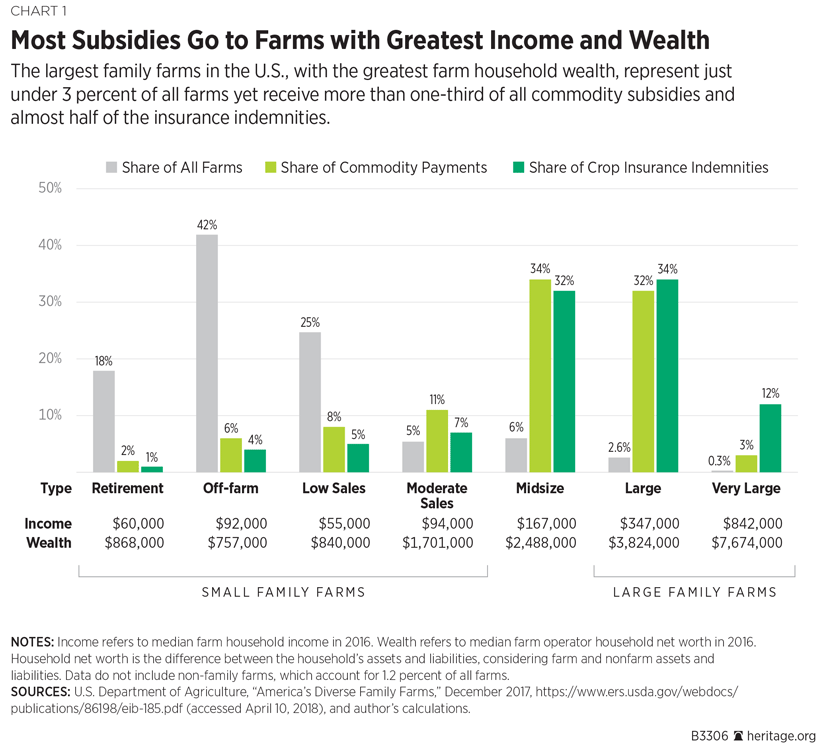
Subsidies often favor large-scale industrial operations over small family farms. Because many subsidy programs are tied to acreage or production volume, the largest “players” in the market receive the lion’s share of the funding. This allows big agribusinesses to achieve economies of scale that are impossible for smaller competitors. In the world of finance, this leads to industry consolidation, where a few massive corporations dominate the global food supply chain, backed by the financial security of government mandates.
Trade Wars and the WTO
The World Trade Organization (WTO) spends a significant amount of its resources navigating disputes related to agricultural subsidies. Countries often use subsidies as a tactical tool in trade wars. If one nation increases tariffs on a country’s manufactured goods, that country might respond by increasing subsidies to its own farmers to undercut the other nation’s exports. Understanding the “money trail” of subsidies is therefore essential for anyone involved in international logistics, trade finance, or global investing.
Navigating the Future: Sustainability, Reform, and AgTech
The landscape of agricultural finance is currently undergoing a massive shift. As climate change increases the frequency of extreme weather events and as public debt comes under closer scrutiny, the way subsidies are distributed is being redefined.
From Production-Based to Green Subsidies
There is a growing trend toward “decoupling” subsidies from production and instead linking them to environmental stewardship. In this new model, farmers are paid for “ecosystem services”—such as carbon sequestration, soil health improvement, and water conservation. For the financial sector, this represents the integration of ESG (Environmental, Social, and Governance) criteria into agricultural policy. Investors are increasingly looking at how these “green” subsidies will create new revenue streams for landholders and agribusinesses.
The Role of AgTech in Financial Efficiency
As governments look to reduce the waste associated with broad-based subsidies, Technology (AgTech) is playing a crucial role. Precision agriculture—using AI, satellite imagery, and IoT sensors—allows for more targeted interventions. From a financial management perspective, this means that future subsidies may be data-driven. Instead of a flat payment per acre, a farmer might receive a performance-based incentive for reducing nitrogen runoff or increasing biodiversity, tracked through digital ledgers and blockchain technology.
The Investment Perspective: Land Value and Agribusiness
For the personal investor, farming subsidies are a key factor in the valuation of farmland. Farmland is often considered “gold with a coupon”—a tangible asset that provides a steady yield. Subsidies provide the “floor” for that yield, making farmland one of the most stable long-term investments available. Furthermore, the stocks of companies that provide seeds, fertilizer, and machinery (such as John Deere or Bayer) are intrinsically linked to the health of the subsidy system. When the Farm Bill is renewed in the U.S. or the Common Agricultural Policy (CAP) is updated in the EU, billions of dollars in market capitalization hang in the balance.
In conclusion, farming subsidies are far more than just “help for farmers.” They are a sophisticated set of financial tools used by governments to manage risk, ensure national security, and influence global markets. Whether you are an investor looking at commodity futures, a business owner in the food supply chain, or a taxpayer interested in fiscal policy, understanding the flow of money in agriculture is vital to understanding the modern global economy.
aViewFromTheCave is a participant in the Amazon Services LLC Associates Program, an affiliate advertising program designed to provide a means for sites to earn advertising fees by advertising and linking to Amazon.com. Amazon, the Amazon logo, AmazonSupply, and the AmazonSupply logo are trademarks of Amazon.com, Inc. or its affiliates. As an Amazon Associate we earn affiliate commissions from qualifying purchases.