
In the rapidly evolving landscape of the 21st century, the word “precision” has transitioned from a general descriptor of careful work into a fundamental pillar of technological advancement. Whether we are discussing the microscopic architecture of a semiconductor, the algorithmic nuances of a large language model, or the mechanical synchronization of an automated assembly line, precision serves as the silent engine of reliability and progress.
To understand the definition of precision within the context of technology, one must look beyond the dictionary. In tech, precision is not merely about being “correct”; it is about the consistency of results, the minimization of variance, and the ability to operate within tolerances that are often invisible to the human eye. This article explores the multifaceted definition of precision across various technological domains, illustrating why it remains the ultimate benchmark for digital and mechanical excellence.
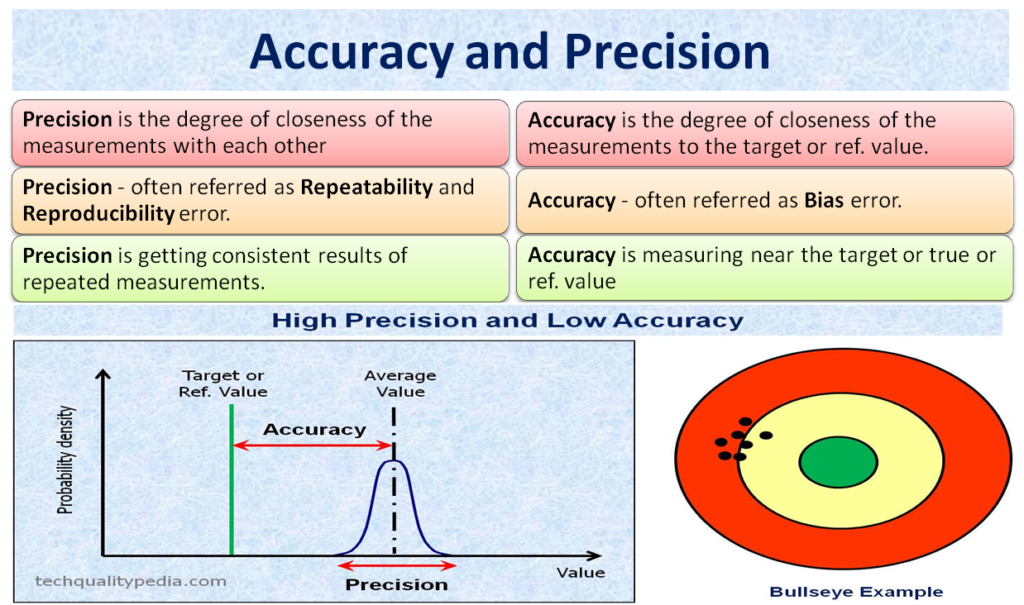
The Fundamental Distinction: Precision vs. Accuracy in Engineering
In colloquial English, precision and accuracy are often used interchangeably. However, in the realms of software engineering, hardware manufacturing, and data science, they represent two distinct concepts. Understanding this distinction is the first step in defining what precision actually means in a technical environment.
Defining Precision: The Consistency of Output
In technology, precision refers to the degree to which repeated measurements or executions show the same results under unchanged conditions. It is a measure of reproducibility. If a robotic arm is programmed to drill a hole at a specific coordinate and it hits the exact same (though perhaps slightly off-center) spot 1,000 times in a row, it is highly precise.
Precision is about the “tightness” of the grouping. In high-performance computing, this translates to the stability of an environment. A system that consistently delivers a 15ms latency is more precise than a system that fluctuates between 5ms and 50ms, even if the latter’s average is lower.
Why Accuracy Isn’t Enough
Accuracy, by contrast, is the degree of closeness to a true or target value. A system can be accurate on average but wildly imprecise in its individual actions. For modern tech stacks, accuracy without precision is dangerous.
Consider a self-driving vehicle’s sensor suite. If the sensors are accurate on average but lack precision, the car’s perception of the curb might shift by several inches from second to second. This jitter makes it impossible for the software to make safe navigational decisions. Therefore, the technological definition of precision emphasizes the elimination of “noise” and “variance,” ensuring that every action is a carbon copy of the previous one.
Precision in the Era of Big Data and Artificial Intelligence
As we move from physical hardware to the abstract world of data, the definition of precision takes on a statistical meaning that is vital for the development of Artificial Intelligence (AI) and Machine Learning (ML).
Precision vs. Recall: The Machine Learning Metric
In the field of AI, “precision” is a specific mathematical metric used to evaluate the quality of a model’s predictions. Specifically, precision is the ratio of “True Positives” to the total number of “Positive” predictions (True Positives + False Positives).
For example, if an AI-driven email filter identifies 100 emails as spam, and 95 of them actually are spam, the precision of the model is 95%. This metric tells us: “Of all the times the model claimed X was true, how often was it actually true?” This is a crucial definition for developers because it measures the reliability of the tool’s assertions.
The Cost of False Positives in High-Stakes Tech
High precision is particularly critical in tech sectors where a “False Positive” carries a high cost. In cybersecurity, a threat detection tool with low precision will bombard security analysts with “crying wolf” alerts, leading to alert fatigue and potentially allowing a real breach to go unnoticed.
In medical technology, such as AI diagnostics for radiology, high precision ensures that patients are not subjected to invasive, unnecessary treatments based on a faulty “positive” reading. In these contexts, the definition of precision is synonymous with the reduction of “false alarms,” making it a primary goal for software architects.
Hardware Evolution: From Nanometers to Quantum Mechanics
While software precision is measured in bits and probabilities, hardware precision is measured in nanometers and microns. The physical limits of our technology are dictated by our ability to manipulate matter with extreme precision.

Semiconductor Manufacturing and the Pursuit of Sub-10nm Precision
The heart of every gadget—from smartphones to supercomputers—is the silicon chip. The definition of precision here is literal and physical. Modern photolithography, used by companies like TSMC and Intel, requires precision at the scale of 3 to 5 nanometers. To put this in perspective, a human hair is roughly 80,000 to 100,000 nanometers wide.
Achieving this level of precision requires extreme environmental control. Even a microscopic vibration from a nearby road or a single speck of dust can ruin a production run. Here, precision is defined by the stability of the manufacturing equipment and the ability to repeat a light-etching process billions of times across a single wafer with zero deviation.
Robotics and the Mechanics of Micro-Movement
In industrial robotics and surgical tech, precision is defined as “positional repeatability.” A surgical robot, such as the Da Vinci system, allows a surgeon to perform movements with a level of precision that exceeds human physiological capability. By filtering out the natural tremors of a human hand and scaling down movements, the technology redefines what is possible in delicate procedures. In this niche, precision is the bridge between human intent and mechanical execution at a microscopic scale.
The Role of Precision in Digital Security and Cryptography
Precision is not only about physical dimensions or statistical metrics; it is also about the absolute integrity of digital logic. In the world of cybersecurity, precision is the difference between a secure vault and an open door.
Cryptographic Integrity: No Room for Margin of Error
Digital security relies on the precision of mathematical functions. Cryptographic algorithms, such as RSA or AES, require absolute precision in their execution. Unlike a physical tool that might have a 1% margin of error, a cryptographic hash function must produce a result that is either 100% correct or entirely useless.
The definition of precision in cryptography is binary. If a single bit is out of place during the encryption or decryption process, the entire data set becomes unreadable. This “zero-tolerance” precision ensures that digital identities remain secure and that financial transactions are immutable.
Biometrics and the Precision of Identification
Modern gadgets use biometrics—fingerprints, facial recognition, and iris scans—to grant access. The precision of these sensors is defined by their False Acceptance Rate (FAR). A high-precision biometric sensor must distinguish between the legitimate user and a sophisticated spoof (like a high-resolution photo or a 3D mask). As security tech advances, the “precision” of these sensors involves analyzing deeper layers of data, such as sub-dermal patterns or blood flow, to ensure the identification is as precise as a DNA match.
The Future of Precision: Generative AI and Beyond
As we look toward the future, the definition of precision is shifting once again. We are moving away from purely numerical precision and toward “semantic precision”—the ability of technology to understand and execute complex, nuanced human instructions.
Prompt Engineering and Semantic Precision
In the world of Generative AI (like GPT-4 or Midjourney), “precision” is often discussed in the context of prompt engineering. Users strive for precision in their language to elicit a specific output from the model. On the flip side, developers are working to improve the “grounding” of these models—ensuring they provide precise, factually grounded answers rather than “hallucinations.”
In this context, the definition of precision is the alignment between the user’s intent and the machine’s output. It is no longer just about the numbers; it is about the accuracy of meaning.
Closing the Gap Between Intent and Execution
The ultimate goal of tech is to reach a point where the gap between human thought and technological execution is zero. This requires a synthesis of all the types of precision discussed: the mechanical precision of hardware, the statistical precision of AI, and the logical precision of code.
As we venture into quantum computing, the definition of precision will enter a realm where we must manage the “coherence” of qubits—a level of precision so high that it involves controlling the very subatomic particles that make up our universe.

Conclusion
What is the definition of precision? In the tech world, it is the relentless pursuit of the repeatable, the reliable, and the refined. It is the metric that separates a prototype from a product and a glitch from a breakthrough.
From the nanometers of a processor to the precision-recall curves of an AI, precision is the standard by which we measure technological maturity. As our tools become more powerful, our definition of precision will only become more demanding, pushing the boundaries of what is humanly possible and moving us closer to a future defined by flawless execution.
aViewFromTheCave is a participant in the Amazon Services LLC Associates Program, an affiliate advertising program designed to provide a means for sites to earn advertising fees by advertising and linking to Amazon.com. Amazon, the Amazon logo, AmazonSupply, and the AmazonSupply logo are trademarks of Amazon.com, Inc. or its affiliates. As an Amazon Associate we earn affiliate commissions from qualifying purchases.