
In the rapidly evolving landscape of professional sports, the WNBA has transitioned from a developing league into a multi-billion-dollar enterprise. While fans focus on the high-octane athleticism of stars like A’ja Wilson or Caitlin Clark, savvy investors and business analysts look at the operational mechanics that govern the game. One such mechanic is the “team foul technical.” To the casual observer, it is a momentary whistle; to the organization, it is a calculated financial variable.
Understanding what a WNBA team foul technical is requires looking past the hardwood and into the league’s financial ledger. In the WNBA, a technical foul is an infraction that does not involve physical contact during play but involves unsportsmanlike conduct or procedural violations. When these accrue at a team level, or when specific bench personnel are involved, they trigger a series of financial penalties and strategic shifts that impact the league’s bottom line, player compensation, and the overall valuation of the franchise.
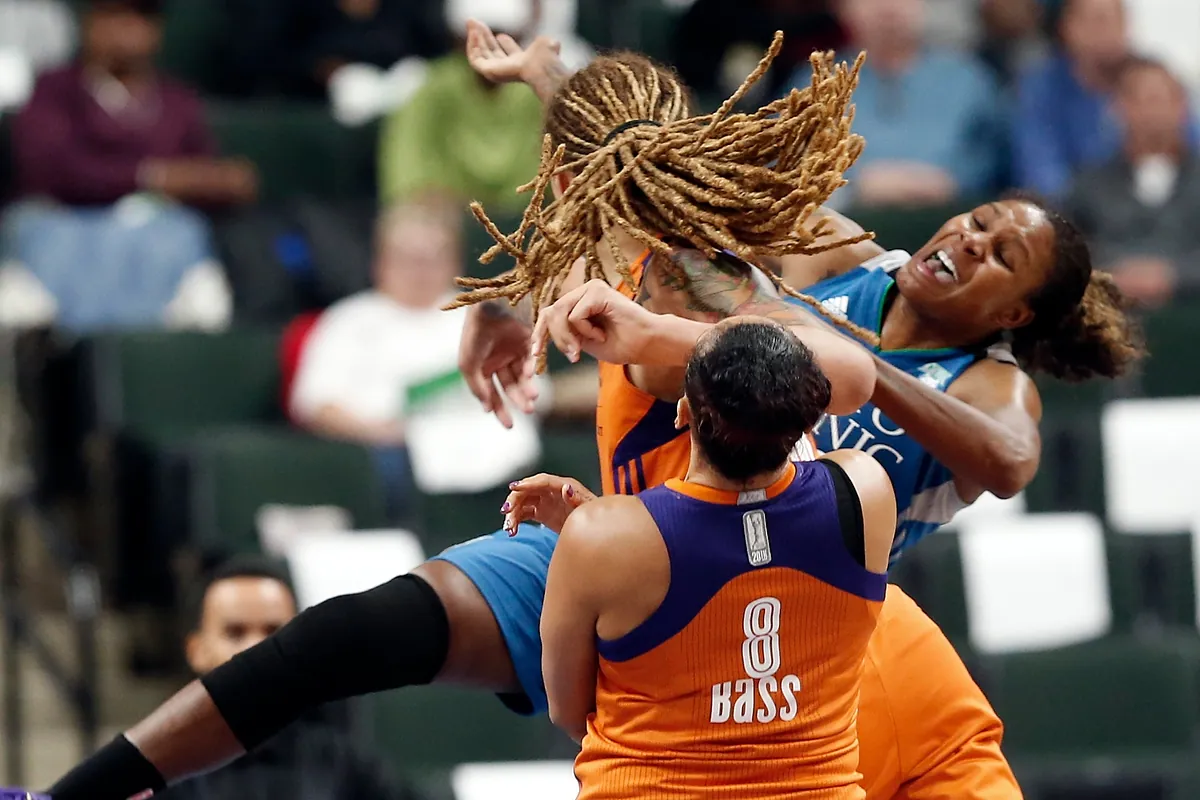
The Economics of Discipline: Breaking Down the WNBA Penalty Structure
Every whistle in a WNBA game carries a price tag. The league operates under a strictly negotiated Collective Bargaining Agreement (CBA) that dictates exactly how much an administrative or behavioral lapse costs a player or a team. When we discuss the “team foul technical,” we are often referring to infractions attributed to the bench, the head coach, or administrative errors (such as an improper jersey number in the scorebook).
Fines and the Collective Bargaining Agreement
The WNBA’s financial ecosystem relies on a progressive fine structure. For a single technical foul, a player or coach is typically fined a predetermined amount—often starting in the range of $200 to $500 for the first few offenses, and escalating significantly as the season progresses. These fines are not merely punitive; they are diverted into league-mandated charitable funds or operational pools. For a player on a rookie scale contract making roughly $76,000 a year, a $500 fine represents a much higher percentage of disposable income than it would for an NBA counterpart. This makes the “money” aspect of a technical foul a significant deterrent in the WNBA’s labor economy.
Team vs. Individual Financial Accountability
A “team” technical is often assessed to the “bench,” meaning the specific culprit isn’t a single player on the floor. In business terms, this is a failure of middle management (the coaching staff) or corporate culture. When a team is assessed a technical foul, the opposing team is awarded one free throw and possession of the ball. From an investment standpoint, this represents a loss of “opportunity equity.” The expected value of a possession in the WNBA is approximately 1.0 to 1.1 points. By giving away a free throw (80% league average) plus a possession, a team technical foul is essentially a “tax” that reduces the probability of a win, which in turn affects postseason bonuses and revenue sharing.
The Bottom Line: How Technical Fouls Affect Team Revenue and Valuations
The modern WNBA is no longer just about ticket sales; it is about media rights, brand partnerships, and the “cleanliness” of the product. A team foul technical might seem like a small detail, but in the aggregate, these infractions influence the financial health of the franchise.
Impact on Game Momentum and Gate Receipts
Professional sports teams are in the business of entertainment. However, excessive technical fouls—particularly those categorized as “team fouls” resulting from bench instability—can sour the brand experience. From a financial perspective, games that are bogged down by administrative technicals or constant officiating intervention lose “viewer retention.” High-paced, high-scoring games drive TV ratings. Higher ratings lead to more lucrative local and national broadcasting contracts. When a team develops a reputation for “uncontrolled” technical fouls, it risks devaluing its media product, making it less attractive to blue-chip advertisers who seek to associate their brands with disciplined, elite performance.

Sponsorship Sensitivity and Brand Integrity
For the WNBA, which has seen a 200% increase in sponsorship interest in recent years, the “conduct” clause in corporate contracts is paramount. Fortune 500 companies investing in a WNBA franchise are purchasing “brand safety.” A team that leads the league in technical fouls may be viewed as a higher-risk investment. If a coach or bench is constantly penalized for technicals, it can trigger performance-based clawbacks in sponsorship agreements or prevent the renewal of lucrative “Patch Partnerships” (the advertisements on jerseys). In this sense, the “team foul technical” is a metric used by corporate analysts to gauge the leadership stability of the organization.
Managing the Salary Cap: The Hidden Costs of Technical Infractions
The WNBA operates under a “hard” salary cap, meaning there is very little room for error in financial planning. Unlike the NBA, which allows for various luxury tax exceptions, WNBA general managers must account for every dollar.
Roster Management and Financial Constraints
While the fines for technical fouls are paid by the individual, the consequences of those fouls—such as suspensions—can force a team to sign emergency replacement players. If a player or coach accumulates enough technical fouls to warrant a suspension (typically after the 7th technical in the WNBA regular season), the team loses a labor asset for a game. If the team is already bumping up against the salary cap, they may not have the “cap space” to sign a replacement player to a hardship contract. This forces the remaining employees to work “overtime” (increased minutes), leading to a higher risk of injury and a potential long-term devaluation of the team’s human capital.
The ROI of Emotional Intelligence on the Court
In the business of basketball, “Emotional Intelligence” (EQ) is a measurable asset. Teams are increasingly hiring sports psychologists and consultants to minimize the number of technical fouls assessed. The Return on Investment (ROI) here is clear: by spending $100,000 on a mental performance coach, a team might save $20,000 in fines and, more importantly, prevent a loss that could cost them a home-court advantage in the playoffs. Home-court advantage in the WNBA playoffs is worth hundreds of thousands of dollars in additional ticket revenue, concessions, and merchandise sales. Thus, a single “team foul technical” in a close game can have a direct line to a six-figure loss in potential playoff revenue.
The Future of WNBA Business: Data-Driven Financial Risk Mitigation
As the WNBA moves toward a more data-centric model, “penalty analytics” is becoming a standard part of front-office operations. Teams are now treating technical fouls as “avoidable overhead.”
Utilizing Analytics to Reduce Penalty Costs
Data firms now provide WNBA front offices with “referee-player compatibility” reports. If a certain officiating crew has a high propensity for calling team technicals, the coaching staff might be instructed to limit their vocal feedback to avoid the “administrative tax.” By quantifying the cost of a technical foul—not just in dollars, but in “Win Probability Added” (WPA)—teams can make more informed decisions about which players to recruit. A player who is highly skilled but prone to technical fouls may be viewed as having a “high maintenance cost,” potentially lowering their market value during free agency.

Investing in Player Conduct Programs
The league office itself views the management of technical fouls as a way to protect the “League Brand.” By reinvesting the money collected from fines into player development and financial literacy programs, the WNBA creates a circular economy. The goal is to move the capital from “punitive” sources into “constructive” ones. This strengthens the overall business by ensuring that the players—the primary assets of the league—are well-supported and less likely to engage in behaviors that lead to financial leakage through penalties.
In conclusion, a “WNBA team foul technical” is far more than a rulebook definition. It is a financial instrument that reflects the discipline of a franchise, the costs of the Collective Bargaining Agreement, and the overall economic health of the sport. As the WNBA continues its meteoric rise in valuation, the ability to minimize these “administrative taxes” will distinguish the most profitable and successful organizations from the rest of the field. In the high-stakes world of professional basketball, every whistle has a price, and the most successful teams are those that keep their “penalty overhead” to a minimum.
aViewFromTheCave is a participant in the Amazon Services LLC Associates Program, an affiliate advertising program designed to provide a means for sites to earn advertising fees by advertising and linking to Amazon.com. Amazon, the Amazon logo, AmazonSupply, and the AmazonSupply logo are trademarks of Amazon.com, Inc. or its affiliates. As an Amazon Associate we earn affiliate commissions from qualifying purchases.