
For over 135 years, the question “What was Jack the Ripper’s real name?” has remained one of the most enduring mysteries in the annals of criminal history. While the fog of Victorian London once provided the perfect cover for the unidentified killer, the digital age is beginning to burn through that shroud. Today, the hunt for the Ripper has moved from the cobblestone streets of Whitechapel to high-tech laboratories and server rooms. By leveraging cutting-edge developments in forensic genomics, artificial intelligence, and geographic profiling, technologists are closer than ever to identifying a name that has eluded investigators for more than a century.

This evolution from “boots on the ground” detective work to “bytes on the screen” data analysis represents a paradigm shift in how we approach cold cases. The search for the Ripper’s identity is no longer just a historical pursuit; it is a showcase for the most sophisticated technological tools in our modern arsenal.
The Digital Cold Case: Applying Big Data and NLP to 19th-Century Archives
The primary obstacle in identifying Jack the Ripper has always been the sheer volume and disorganized nature of historical records. In 1888, evidence was recorded in handwritten ledgers, and communication between different police precincts was agonizingly slow. Today, technology is bridging that gap through massive digitization and advanced data processing.
Natural Language Processing and Archival Digitization
The first step in modernizing the Ripper investigation was the conversion of thousands of pages of Scotland Yard’s “MEPO” (Metropolitan Police) files into machine-readable text. Through Optical Character Recognition (OCR), historians and tech experts have created searchable databases of witness statements, coroner reports, and internal police memos.
However, simple search terms are not enough. Technologists are now applying Natural Language Processing (NLP) to these archives. NLP algorithms can identify patterns in language that a human researcher might miss—linking a specific phrasing in a taunting “Ripper letter” to the speech patterns found in contemporary court transcripts or census records. By analyzing the “linguistic fingerprint” of various suspects, AI can assign a probability score to each name, filtering out the noise of thousands of hoax letters received by the police at the time.
Cross-Referencing Global Databases
Beyond the immediate police files, the “Big Data” approach involves cross-referencing these findings with global genealogical and census databases. By using algorithmic sorting, researchers can track the movements of every individual living in the Whitechapel area in 1888. This allows technology to eliminate suspects who had verifiable alibis or whose demographic profiles do not match the behavioral patterns identified by modern criminal profiling software.
Genetic Genealogy: The DNA Revolution in Ripperology
Perhaps the most significant technological leap in the search for the Ripper’s real name occurred in the realm of forensic genetics. For decades, physical evidence was considered too degraded to be of any use. However, the advent of Next-Generation Sequencing (NGS) has changed the equation.
Mitochondrial DNA and the Kosminski Hypothesis
In recent years, much of the tech-focused investigation has centered on a silk shawl allegedly found at the scene of the Catherine Eddowes murder. In 2019, molecular biologists utilized high-sensitivity DNA analysis to extract samples from the fabric. Because the samples were over a century old, the nuclear DNA was too fragmented to provide a complete profile. Instead, researchers focused on Mitochondrial DNA (mtDNA), which is more hardy and passed down through the maternal line.
By comparing the extracted mtDNA to the DNA of living descendants of the primary suspects, researchers identified a match with the family of Aaron Kosminski, a Polish barber who had been a prime suspect in the original 1888 investigation. While the scientific community remains divided on the “chain of custody” of the physical evidence, the technology used—specifically the ability to sequence highly degraded organic material—represents a milestone in forensic science.

Overcoming the Limitations of Degraded Samples
The challenge with 19th-century DNA is contamination. Over 130 years, countless individuals have handled the evidence. Modern software now allows scientists to “de-convolve” mixed DNA samples. Using probabilistic genotyping software, researchers can mathematically separate the “noise” of modern contamination from the “signal” of the original biological material. This computational approach to biology is the only reason the search for the Ripper’s name remains a scientifically viable pursuit in the 2020s.
AI Facial Reconstruction and Predictive Geographic Profiling
If we cannot find a name through DNA alone, can we find a face? Technology is now being used to reconstruct the physical appearance of suspects and predict their movements with mathematical precision.
Generative Adversarial Networks (GANs) and Composite Imagery
In the absence of clear photography of many Ripper suspects, researchers are turning to Generative Adversarial Networks (GANs). By inputting witness descriptions, age data, and available sketches into an AI model, technologists can generate hyper-realistic 3D facial reconstructions. These AI-driven models can account for the effects of malnutrition, disease, and aging prevalent in the East End during the late 1800s. This provides a “living” face to the names found in the archives, allowing for a more intuitive comparison with historical records.
Geographic Profiling and Rigel Software
One of the most powerful technological tools in modern criminology is geographic profiling. Developed by Dr. Kim Rossmo, this involves using specialized software (such as Rigel) to analyze the locations of a series of crimes to determine the most probable “anchor point” or residence of the offender.
When the Ripper’s crime scenes are processed through these algorithms, the software generates a “jeopardy surface”—a 3D probability map. Modern analysis of the 1888 murders consistently points to a small cluster of streets in Whitechapel. By layering this geographic data over digitized census records, researchers can narrow down the list of thousands of residents to a handful of individuals who lived exactly where the math suggests the killer resided. This technical narrowing of the field is essential for identifying which “real name” deserves the most investigative resources.
The Ethics and Future of Forensic History
As we use technology to unmask Jack the Ripper, we are also forced to confront the ethical and technical implications of “digital resurrection.” The tools used to investigate a 19th-century killer are the same ones used in modern criminal justice, raising important questions about data integrity and the future of forensic tech.
Blockchain and the Chain of Custody
One of the greatest criticisms of the DNA evidence in the Ripper case is the lack of a documented chain of custody. In modern forensics, technologists are proposing the use of Blockchain to record every hand that touches a piece of evidence. By creating an immutable digital ledger, we can ensure that future discoveries—whether they involve the Ripper or more recent cold cases—are scientifically beyond reproach. This fusion of ledger technology and physical forensics ensures that once a “real name” is identified, the evidence supporting it cannot be disputed.
The Role of Quantum Computing in Cryptographic Solving
Some of the Ripper’s purported letters contain ciphers that have never been fully decoded. While current brute-force computing has failed to find a definitive solution, the looming era of quantum computing offers new hope. Quantum algorithms could potentially crack Victorian-era ciphers in seconds, potentially revealing a signature or a confession hidden within the “Goulston Street Ghost” or the “Dear Boss” letters.
Conclusion: A Name Written in Code
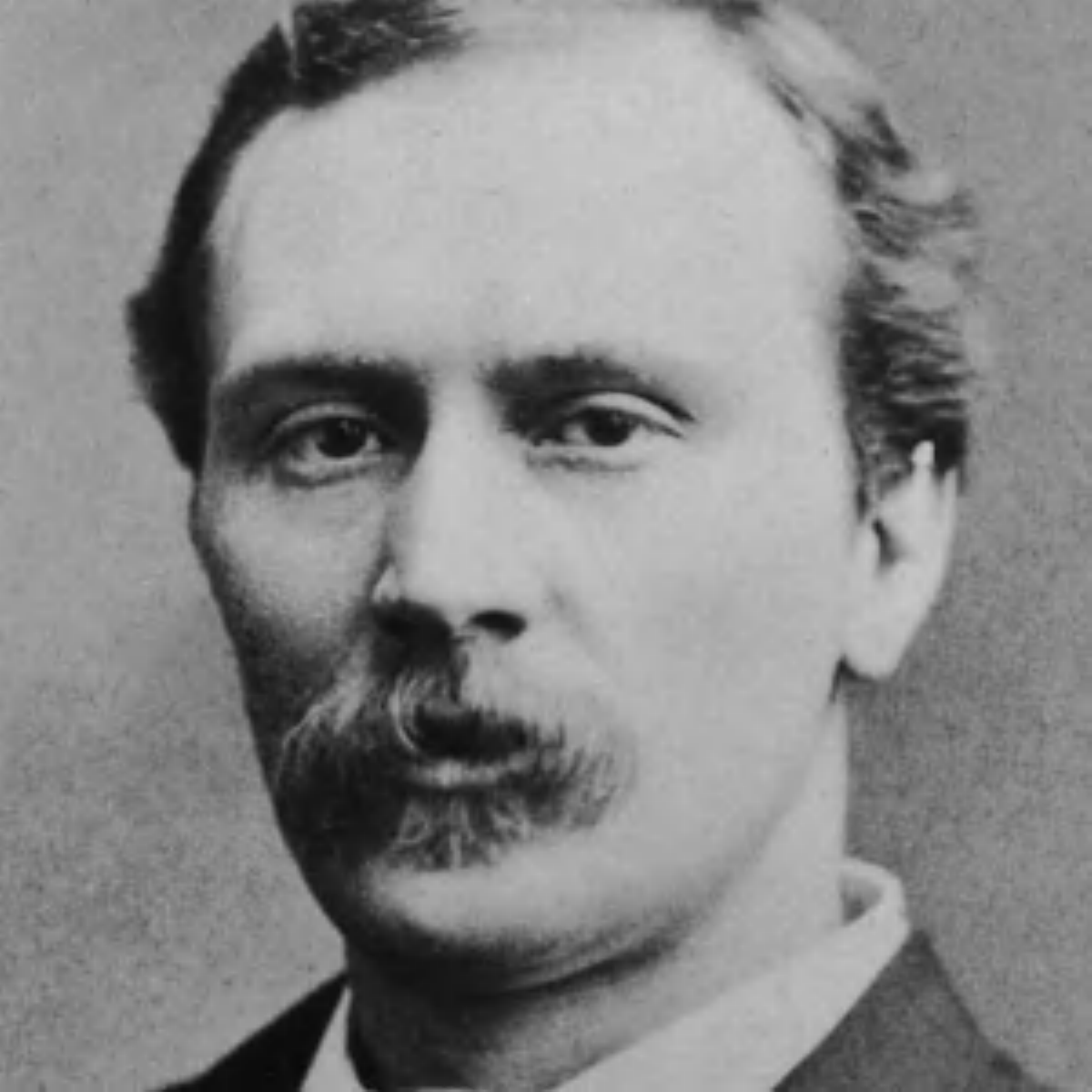
What was Jack the Ripper’s real name? While the world may still argue over Aaron Kosminski, Montague John Druitt, or Walter Sickert, the method of the hunt has changed forever. We are no longer limited by the human eye or the physical constraints of a 19th-century filing cabinet.
Through the lens of modern technology, the Ripper is no longer a ghost; he is a data point. He is a sequence of mitochondrial DNA, a coordinate on a geographic probability map, and a linguistic pattern in an NLP database. As our software becomes more intuitive and our genetic sequencing more sensitive, the distance between the pseudonym “Jack” and the killer’s real name continues to shrink. The identification of history’s most famous criminal will not come from a lucky break or a deathbed confession; it will come from the cold, calculated precision of the digital age. In the end, technology will be the light that finally illuminates the dark corners of Whitechapel, proving that no secret is safe from the power of innovation.
aViewFromTheCave is a participant in the Amazon Services LLC Associates Program, an affiliate advertising program designed to provide a means for sites to earn advertising fees by advertising and linking to Amazon.com. Amazon, the Amazon logo, AmazonSupply, and the AmazonSupply logo are trademarks of Amazon.com, Inc. or its affiliates. As an Amazon Associate we earn affiliate commissions from qualifying purchases.