
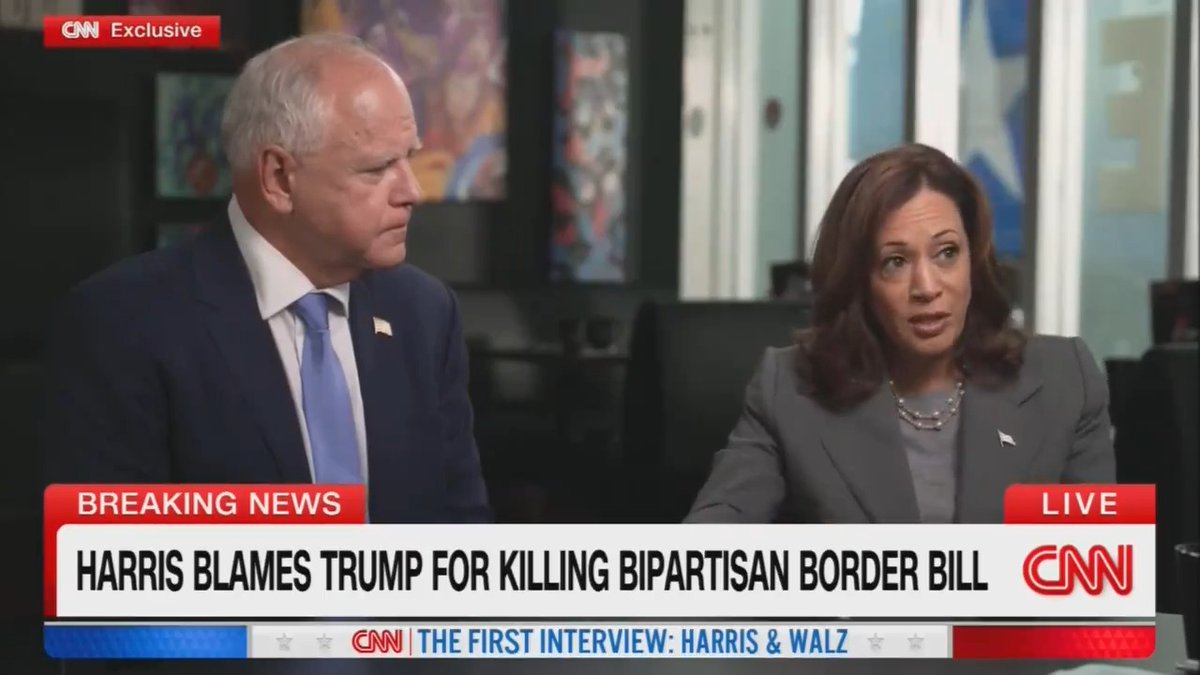
In the landscape of American fiscal policy, few documents have carried as much weight—or as much controversy—as the Emergency National Security Supplemental Appropriations Act of 2024. Often referred to colloquially as the “border bill,” this piece of legislation represented a massive intersection of national security, international finance, and domestic economic management. When the bill was ultimately sidelined following high-profile political opposition, most notably from former President Donald Trump, the discourse largely focused on the partisan optics. However, for those operating within the realms of business and finance, the real story lies in the specific fiscal allocations and the missed economic opportunities embedded within the bill’s 370 pages.
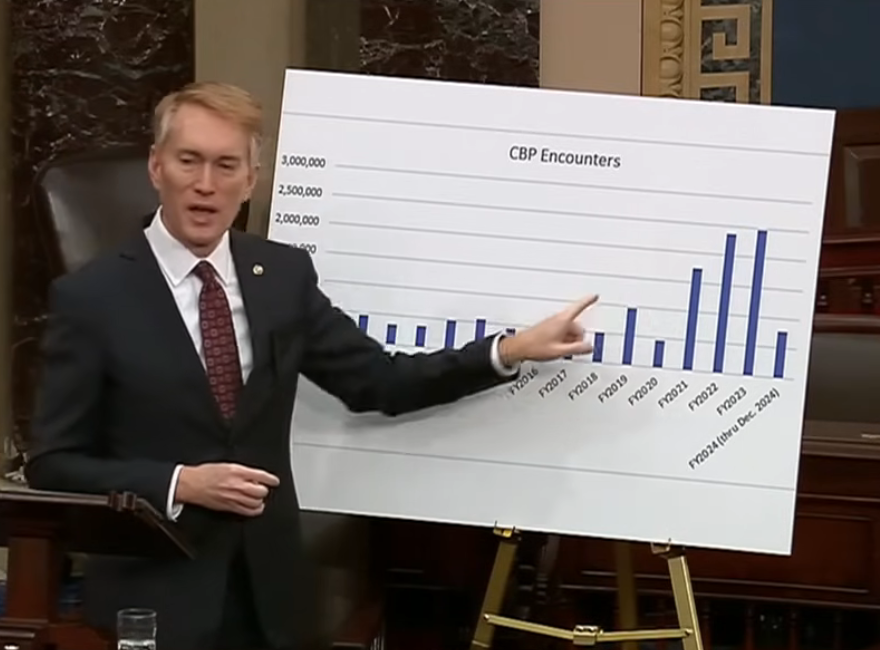
The bill was not merely a policy change; it was a $118.3 billion investment strategy designed to address systemic bottlenecks in the American immigration system and provide critical funding for global allies. By examining the financial components of this “killed” bill, we can better understand the economic stakes of border security and the business of modern governance.
Fiscal Allocations: Breaking Down the Budgetary Priorities
The primary focus of the bill was a massive infusion of capital into the infrastructure of the U.S. border. From a business finance perspective, this was an attempt to modernize an aging “industry”—border enforcement—which had been operating under-resourced for decades. The bill proposed roughly $20.2 billion specifically for border security, representing one of the largest single-year fiscal commitments in recent history.
Border Enforcement and Personnel Funding
A significant portion of the $20 billion was earmarked for human capital. In any large-scale operation, labor costs are the primary driver of the budget. The bill sought to fund the hiring of 1,500 new Customs and Border Protection (CBP) personnel and 1,200 new Immigration and Customs Enforcement (ICE) agents. Beyond simple salaries, this funding included long-term benefits, training costs, and the administrative overhead required to manage a growing federal workforce. For local economies near border sectors, this influx of federal jobs would have acted as a localized economic stimulus, increasing consumer spending and demand for housing and services.
Technological Infrastructure and Surveillance Investments
Modern border security is as much about software and hardware as it is about personnel. The bill allocated hundreds of millions of dollars toward “Non-Intrusive Inspection” (NII) systems. These are high-tech scanning tools used at ports of entry to detect illicit goods, such as fentanyl, without slowing down the flow of legal commerce. For investors in the defense and tech sectors, these provisions represented a significant procurement opportunity. The bill also prioritized the installation of 100 new large-scale scanners and the deployment of autonomous surveillance towers, shifting the financial burden of border security from manual labor to scalable technology.
The Economic Intersection: Labor Markets and Humanitarian Aid Costs
One of the most overlooked aspects of the border bill was its potential impact on the American labor market. From a macro-financial perspective, the speed at which migrants are processed and integrated into the economy has a direct correlation with GDP growth and regional fiscal health.
Work Authorizations and Economic Integration
The bill contained a pivotal provision that would have granted immediate work authorization to asylum seekers who passed initial screenings. This was a “Money” issue at its core. Under current laws, asylum seekers often wait months or years for work permits, relying on cash-strapped NGOs and municipal social services for support. By shortening this window, the bill aimed to turn a fiscal liability (the cost of housing and feeding migrants) into an economic asset (tax-paying workers). In an era where industries like construction, hospitality, and agriculture face chronic labor shortages, this provision was viewed by many business leaders as a necessary correction to the labor supply chain.

Funding for Cities and Interior Processing
The financial strain on interior cities—such as New York, Chicago, and Denver—has been a major headline in municipal finance. The bill included $1.4 billion for the Shelter and Services Program, which provides grants to local governments and non-profits to manage the arrival of migrants. Without this federal injection, these cities have been forced to reallocate funds from education, infrastructure, and public safety to cover emergency housing. The “killing” of the bill effectively left these municipal budgets in a state of crisis, forcing a “pay-as-you-go” approach that is far less efficient than a coordinated federal spending plan.
The Cost of Inaction: Economic Consequences of the Bill’s Rejection
In the world of investing, the “opportunity cost” is the loss of potential gain from other alternatives when one alternative is chosen. The rejection of the border bill carries significant opportunity costs for the U.S. economy, particularly regarding trade and the stability of the Southern border.
Supply Chain Stability and Port-of-Entry Efficiency
The U.S.-Mexico border is a vital artery for international trade, with over $800 billion in goods crossing annually. When the border is overwhelmed, CBP is often forced to shift personnel from commercial lanes to processing duties, leading to massive delays for freight trucks. These delays represent a direct financial loss for logistics companies, manufacturers (particularly in the automotive sector), and retailers. The bill’s funding for additional personnel and technology was designed to ensure that security measures did not come at the expense of commercial throughput. By stalling these investments, the risk of “border-driven inflation”—where supply chain bottlenecks drive up the cost of goods—remains high.
Long-term Fiscal Impact of Emergency Funding vs. Structural Reform
From a business finance standpoint, “emergency funding” is always more expensive than “structural investment.” Currently, the U.S. manages the border through a series of ad-hoc emergency supplemental requests. The 2024 bill was an attempt to shift toward a more predictable fiscal model. It included the “Border Emergency Authority,” which would have mandated border closures when certain thresholds were met. While controversial from a policy standpoint, from a budgetary standpoint, this offered a mechanism to cap the costs associated with mass processing during surge events. Without these structural triggers, the federal government remains on the hook for unpredictable, high-cost emergency deployments of the National Guard and other high-cost resources.
Geopolitical Finance: The Foreign Aid Linkage
It is impossible to discuss the financial scope of the “Trump-killed” bill without acknowledging its massive international component. The bill was a “National Security” package, meaning it tied domestic border funding to foreign military financing.
Funding for Ukraine, Israel, and Taiwan
The bill included approximately $60 billion for Ukraine, $14 billion for Israel, and nearly $5 billion for Indo-Pacific partners. For the defense industry, this represented a massive revenue pipeline. A significant portion of this “foreign aid” is actually spent domestically; the funds go to American defense contractors like Lockheed Martin, Raytheon, and General Dynamics to manufacture the munitions and systems sent overseas. This creates a “multiplier effect” in the U.S. economy, supporting high-tech manufacturing jobs and R&D. The death of the bill was not just a blow to border security; it was a disruption of a multi-billion-dollar industrial cycle that supports the U.S. defense-industrial base.
Conclusion: The Business of Border Security
The “border bill” that was defeated earlier this year was far more than a political talking point; it was a complex financial instrument intended to stabilize several sectors of the American economy. From the direct investment in border technology and personnel to the indirect benefits of labor market expansion and supply chain efficiency, the fiscal stakes were enormous.
For the personal finance enthusiast or the corporate strategist, the lesson of the border bill is one of fiscal missed connections. It highlights how political volatility can derail large-scale capital investments, leaving businesses and municipalities to bear the costs of uncertainty. As the debate over border policy continues, the focus will likely remain on the rhetoric of security and sovereignty. However, the true impact will always be measured in the spreadsheets of federal agencies, the budgets of major American cities, and the bottom lines of companies that rely on a functional, efficient, and well-funded border. The $118 billion question remains: if not this investment, then what will be the price of the next solution?
aViewFromTheCave is a participant in the Amazon Services LLC Associates Program, an affiliate advertising program designed to provide a means for sites to earn advertising fees by advertising and linking to Amazon.com. Amazon, the Amazon logo, AmazonSupply, and the AmazonSupply logo are trademarks of Amazon.com, Inc. or its affiliates. As an Amazon Associate we earn affiliate commissions from qualifying purchases.