
At its most fundamental level, wind energy is a form of solar energy. It is a secondary manifestation of the sun’s radiation hitting the Earth’s surface unevenly, creating atmospheric pressure differentials that set air in motion. However, when we ask “what type of energy” it is from a technological and physical perspective, the answer is multi-layered. Wind energy is categorized as kinetic energy, mechanical energy, and ultimately, through modern technological intervention, electrical energy.
In the contemporary tech landscape, wind energy is no longer just about windmills grinding grain. It is a sophisticated sector of “CleanTech” that utilizes advanced material science, fluid dynamics, and complex software to harvest the movement of air and convert it into the digital pulse that powers our modern world. Understanding the specific types of energy involved in this process is essential to understanding the future of the global power grid.
The Physics of Motion: Understanding Kinetic and Mechanical Energy
To understand wind energy, one must first look at the physics of the atmosphere. Wind is kinetic energy—the energy of motion. Because air has mass, and that mass moves at a specific velocity, it carries a quantifiable amount of energy. The technology of a wind turbine is designed to intercept this kinetic energy and transform it into a different state.
From Kinetic Energy to Aerodynamic Lift
The first technological hurdle in wind energy is the conversion of linear kinetic energy (the wind blowing straight) into rotational kinetic energy. This is achieved through the turbine blades, which are engineered using advanced aerodynamic principles similar to airplane wings.
Modern turbine blades utilize “lift” rather than “drag.” As air flows over the curved surface of the blade, it creates a pressure difference. This pressure differential generates a force that pulls the blade forward, causing the rotor to spin. This is where the kinetic energy of the wind becomes mechanical energy. The efficiency of this transition is governed by the Betz Limit, a theoretical maximum derived from fluid mechanics, which states that no turbine can capture more than 59.3% of the kinetic energy in wind. Modern tech is constantly pushing closer to this limit through composite material designs and precision engineering.
The Role of Torque and Mechanical Transmission
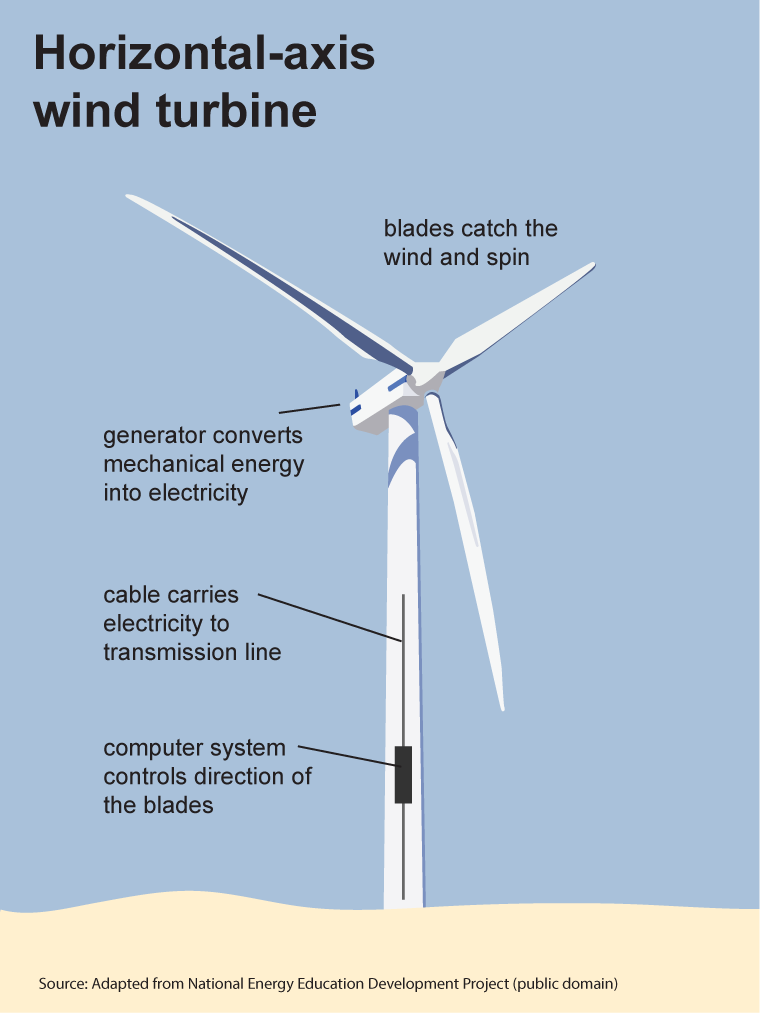
Once the rotor is spinning, the energy is strictly mechanical. This rotational energy is transferred through a main shaft into the nacelle—the housing atop the tower that contains the turbine’s “brain” and “heart.”
In many traditional “high-speed” designs, this mechanical energy passes through a gearbox. The gearbox is a critical piece of hardware technology that increases the rotational speed from a slow 15–20 revolutions per minute (RPM) at the blades to the 1,500–1,800 RPM required by most electrical generators. This mechanical transformation is essential for the next stage of the energy journey: the leap from physical motion to electromagnetic current.
Electrical Conversion: How Tech Turns Motion into Current
The transition from mechanical energy to electrical energy is where wind power becomes a pillar of the modern technology sector. This process occurs within the generator, utilizing the principles of electromagnetism discovered in the 19th century but refined with 21st-century materials.
Electromagnetic Induction and the Generator
Inside the generator, the mechanical energy spins a rotor equipped with powerful magnets (often made from rare-earth materials like neodymium) inside a stationary stator lined with copper coils. As the magnetic fields sweep past the conductors, they “push” electrons, creating an electrical current.
In the tech world, there is a significant shift toward “Direct Drive” technology. Unlike geared systems, direct drive turbines connect the rotor directly to a permanent magnet generator. This reduces mechanical complexity, lowers maintenance costs, and increases the lifespan of the machine. This evolution represents a shift from purely mechanical engineering toward high-tech material science and electromagnetic optimization.
Power Electronics and Inverter Technology
The electricity generated by a wind turbine is not immediately ready for the grid. Because wind speeds fluctuate, the frequency and voltage of the electricity produced are “wild.” To make this energy usable, it must pass through sophisticated power electronics.
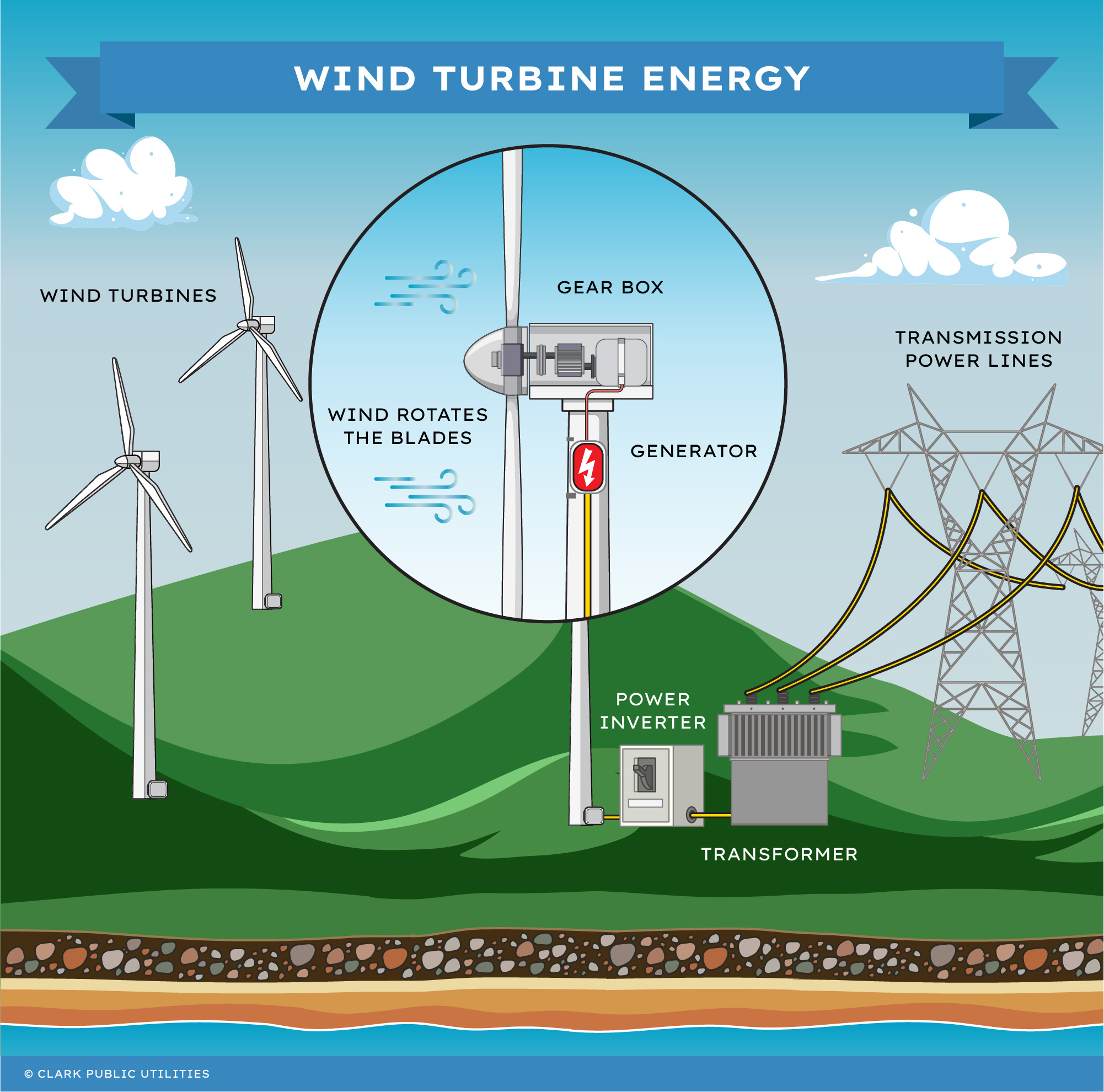
First, the “wild AC” (alternating current) is converted into DC (direct current) via a rectifier. Then, a high-tech inverter converts it back into AC, but at a perfectly synchronized frequency (50 or 60 Hz) and voltage that matches the local power grid. This digital “conditioning” of energy ensures that the power is stable enough to run sensitive electronic devices, from data centers to smartphones.
Smart Wind: The Role of AI and Software in Modern Turbines
Today, a wind turbine is not just a piece of industrial machinery; it is an Internet of Things (IoT) device. The “type” of energy it produces is increasingly managed by silicon and code. Modern wind farms utilize a massive tech stack to ensure maximum efficiency and reliability.
Predictive Maintenance and IoT Sensors
Each modern turbine is outfitted with hundreds of sensors that monitor everything from wind speed and direction to the temperature of the bearings and the vibration of the blades. This data is fed into “Digital Twin” models—virtual replicas of the turbine running in the cloud.
By using machine learning algorithms, operators can predict when a component is likely to fail before it actually does. For example, if an AI detects a specific vibration pattern in the gearbox that deviates from the digital twin’s baseline, it can trigger a maintenance alert. This tech-driven approach, known as predictive maintenance, minimizes downtime and ensures that the kinetic-to-electrical energy conversion remains uninterrupted.
Grid Integration and Computational Fluid Dynamics (CFD)
One of the greatest challenges in renewable tech is “intermittency”—the fact that the wind doesn’t always blow. To solve this, software engineers use Computational Fluid Dynamics (CFD) and high-resolution weather forecasting to predict energy output hours or even days in advance.
Furthermore, smart grid technology allows wind farms to communicate with other energy sources and storage systems (like large-scale lithium-ion batteries). When the wind blows hard and energy production exceeds demand, the software directs the excess energy into storage. When the wind dies down, the software releases that stored energy. This “intelligent” energy management is what allows wind to become a reliable backbone of the modern tech-driven economy.
Future Tech Frontiers: Beyond the Traditional Turbine
As we look toward the future, the technology used to harvest wind energy is evolving beyond the horizontal-axis turbines we see today. These innovations represent the next frontier of “CleanTech” and energy engineering.
Offshore Floating Turbines and Material Science
The strongest winds are found far out at sea, where the water is too deep for traditional fixed-foundation turbines. The tech solution is floating offshore wind. These are massive structures anchored to the seabed with high-tension cables.
The engineering required for these platforms involves advanced naval architecture and materials that can withstand highly corrosive saltwater environments. Floating wind tech opens up vast new territories for energy production, effectively turning the open ocean into a high-tech power plant.
Blade-less and Airborne Wind Energy (AWE)
Innovative startups are currently testing technology that does away with blades entirely. Some designs use “vortex-induced vibration,” where a vertical mast wobbles in the wind, generating energy through an alternator at the base.
Others are exploring Airborne Wind Energy (AWE), which uses autonomous kites or drones tethered to a ground station. These devices fly in circular patterns at high altitudes where winds are faster and more consistent. The software required to autonomously pilot these kites while harvesting energy is a testament to how wind energy has moved from a simple physical concept to a complex field of robotics and artificial intelligence.
In conclusion, while wind energy is physically defined as kinetic and mechanical energy, its modern application is a triumph of technology. From the aerodynamic design of composite blades to the AI-driven management of the grid, wind power is a sophisticated technological system. It is the process of taking the chaotic, natural movement of the atmosphere and, through the power of hardware and software, refining it into the precise electrical energy that drives the digital age.
aViewFromTheCave is a participant in the Amazon Services LLC Associates Program, an affiliate advertising program designed to provide a means for sites to earn advertising fees by advertising and linking to Amazon.com. Amazon, the Amazon logo, AmazonSupply, and the AmazonSupply logo are trademarks of Amazon.com, Inc. or its affiliates. As an Amazon Associate we earn affiliate commissions from qualifying purchases.