
In the contemporary digital landscape, the intersection of ancient tradition and cutting-edge technology has birthed a unique niche in the software industry. For millions of users worldwide, the question “what time is Salat al-Isha” is no longer answered by glancing at the horizon or a printed calendar, but by complex algorithms, GPS synchronization, and cloud-based APIs. The development of prayer timing software represents a sophisticated exercise in astronomical calculation, geolocation services, and user experience design.
As we move deeper into the era of the Internet of Things (IoT) and Artificial Intelligence (AI), the technology behind calculating the final prayer of the day has become a benchmark for high-precision utility apps. This article explores the technological infrastructure that powers these digital solutions, from the mathematical models of twilight to the privacy protocols protecting user data.
The Algorithmic Foundation of Prayer Timing Software
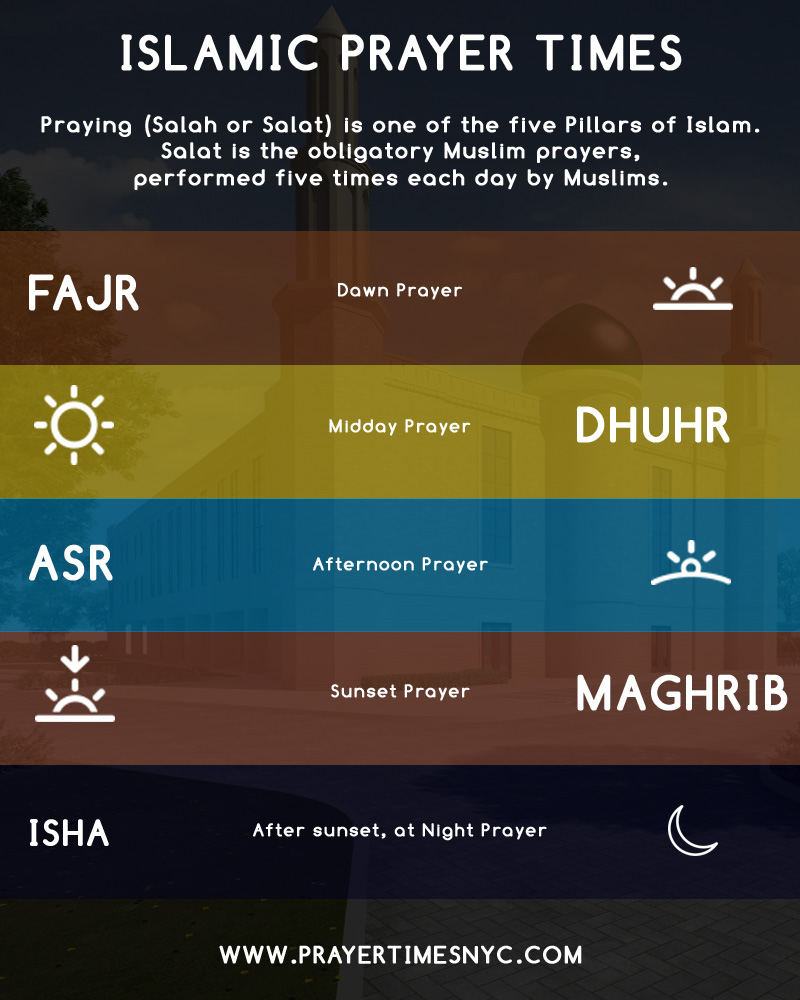
At its core, determining the time for Isha is a problem of computational astronomy. Unlike the noon prayer (Dhuhr), which is based on the sun’s highest point, Isha is defined by the disappearance of the “shafaq” (twilight glow), a phenomenon that requires precise atmospheric modeling.
Understanding Astronomical Calculation Methods
To answer the user’s query with precision, developers must implement various calculation methods adopted by global organizations like the Muslim World League, the University of Islamic Sciences in Karachi, or the Islamic Society of North America (ISNA). These methods rely on “twilight angles”—usually ranging between 15 and 18 degrees below the horizon.
Software engineers must build flexible engines that allow users to toggle between these calculation parameters. The math involves spherical trigonometry, where the sun’s declination and the observer’s latitude are fed into a formula to find the exact moment the sun reaches the required angle below the horizon.
The Complexity of High-Latitude Calculations
A significant challenge in tech development for religious timing occurs in high-latitude regions (such as Northern Europe or Canada) during summer. In these areas, the sun may never reach 18 degrees below the horizon, causing “persistent twilight.”
Tech solutions address this through “Nearest Latitude” or “Middle of the Night” algorithms. These fail-safes are programmed into the backend to ensure that even when the astronomical criteria aren’t met, the software provides a logical, consistent time for the user. This level of edge-case programming is what separates premium religious tech from basic utility scripts.
Leveraging Geolocation and GPS for Real-Time Accuracy
The accuracy of an Isha timing query is entirely dependent on the user’s precise location. Modern mobile operating systems (iOS and Android) have revolutionized this through advanced Location Services, combining GPS, Wi-Fi positioning, and cellular tower triangulation.
API Integration in Modern Salat Software
Most developers do not build their astronomical databases from scratch. Instead, they leverage robust APIs like Aladhan or PrayerTimes. These APIs provide RESTful interfaces that return JSON data based on coordinates.
When a user opens an app to check the time for Isha, the client-side software sends a GET request containing the longitude and latitude. The server calculates the timing based on the timestamp and location, returning a precise schedule. The efficiency of these APIs is critical; high latency can lead to a poor user experience, especially during time-sensitive windows like the start of a prayer.
Overcoming Connectivity Challenges and Offline Data
A hallmark of high-quality tech in this niche is “Offline First” functionality. Developers use local databases (like SQLite or Realm) to store pre-calculated timing tables for the user’s current city. This ensures that if a user is in a remote area with poor data coverage, the software can still provide the time for Isha by referencing the local cache against the device’s internal clock. Synchronization occurs in the background whenever a connection is re-established, updating any discrepancies caused by atmospheric changes or legal time zone shifts.

The Role of AI and Machine Learning in Optimizing Religious Tech
As we transition into “Web3” and AI-driven environments, the query “what time is Salat al-Isha” is becoming more predictive and personalized. Artificial Intelligence is being used to refine the user interface and the accuracy of the data provided.
Predictive Analytics for Global Positioning
AI models are now being used to analyze atmospheric data to provide more “localized” twilight timings. Traditional calculations assume a standard atmosphere, but humidity, pollution, and altitude can affect the visibility of twilight. Some advanced tech startups are experimenting with machine learning models that ingest local weather data to adjust the Isha timing by a few minutes, offering a “real-visual” accuracy that static formulas cannot achieve.
Personalization Through User Behavior Analysis
Beyond the calculation itself, AI helps in engagement. By analyzing when a user typically checks for Isha, apps can optimize battery life by only triggering high-accuracy GPS pings shortly before those times. Machine learning algorithms can also suggest “silent mode” triggers for the user’s smartphone, automatically muting notifications when the device’s sensors detect it is located within a geofenced mosque area during Isha time.
Wearable Tech and IoT: Moving Beyond the Smartphone
The evolution of hardware has moved the answer to “what time is Salat al-Isha” from the phone screen to the wrist and even the walls of the home.
Smartwatch Integration and Haptic Notifications
Apple Watch and Android Wear have opened a new frontier for developers. Designing for wearables requires a focus on “glanceable” information. Complications—small widgets on the watch face—use background tasks to keep the Isha time updated in real-time. Haptic feedback (subtle vibrations) provides a discreet way to notify users of the upcoming prayer without the need for intrusive audio alerts, representing a significant shift in how tech integrates into the daily flow of the user.
Smart Home Ecosystems and Voice Assistants
The integration of prayer timings into smart home hubs like Amazon Alexa, Google Home, and Apple HomePod is a growing trend. Developing “Skills” or “Actions” for these platforms involves natural language processing (NLP). When a user asks, “Alexa, what time is Isha today?” the backend must parse the intent, identify the user’s location, query the calculation engine, and return a voice-synthesized response. This requires a seamless handshake between the cloud service and the local smart device.
Digital Security and Privacy in Religious Applications
Perhaps the most critical “Tech” aspect of prayer timing software is the ethical management of data. Because these apps require constant access to location services, they handle highly sensitive Personal Identifiable Information (PII).
Protecting Sensitive User Location Data
In recent years, the tech community has scrutinized how religious apps handle data, following reports of location data being sold to third-party brokers. Consequently, modern development standards now emphasize “Privacy by Design.” This includes on-device processing, where the location is never sent to a central server. Instead, the app downloads a broad data set for a region, and the specific timing for the user’s coordinates is calculated locally on the smartphone’s processor.
The Importance of Transparent Data Policies
For a brand or a software product to succeed in this space, transparency regarding data encryption (AES-256) and the use of SSL/TLS certificates for data in transit is non-negotiable. Developers are increasingly moving toward open-source models for their calculation libraries. By making the code for “what time is Salat al-Isha” public on platforms like GitHub, they allow for community audits, ensuring that the software is doing exactly what it claims to do without hidden tracking or malicious subroutines.
Conclusion: The Future of Faith-Based Technical Solutions
The journey from a simple mathematical formula to a multi-platform, AI-enhanced, privacy-focused ecosystem shows just how far religious technology has come. The simple question—”what time is Salat al-Isha”—now triggers a massive sequence of technological events involving satellites, cloud servers, and sophisticated algorithms.
As we look forward, the integration of Augmented Reality (AR) to visualize the horizon and the use of blockchain to verify timing data across decentralized networks may be the next steps. For the tech professional, this niche offers a fascinating look at how software can serve personal, deeply-held traditions with the same rigor and innovation as the world’s leading enterprise tools. Precision is no longer just a goal; in the world of Salat tech, it is the standard.
aViewFromTheCave is a participant in the Amazon Services LLC Associates Program, an affiliate advertising program designed to provide a means for sites to earn advertising fees by advertising and linking to Amazon.com. Amazon, the Amazon logo, AmazonSupply, and the AmazonSupply logo are trademarks of Amazon.com, Inc. or its affiliates. As an Amazon Associate we earn affiliate commissions from qualifying purchases.