
In the hyper-connected landscape of modern technology, time is more than a measurement; it is a fundamental data point that governs everything from high-frequency trading algorithms to the synchronization of distributed cloud databases. Central European Time (CET), covering a vast swathe of the continent’s economic and technological hubs—from Berlin and Paris to Amsterdam and Stockholm—serves as a critical temporal anchor for global digital operations. While a layperson might simply ask “what time is it?” a technologist asks how that time is validated, propagated, and integrated across a global stack.
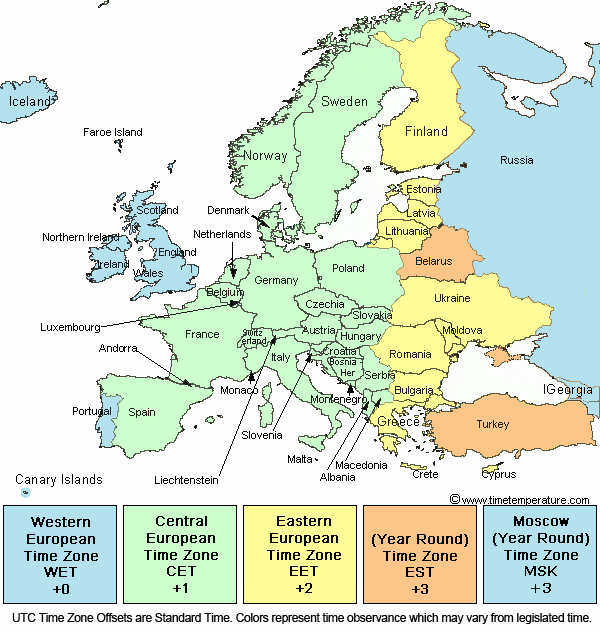
Understanding CET through a technological lens requires shifting focus from the clock on the wall to the protocols, APIs, and synchronization frameworks that ensure a millisecond in Warsaw aligns perfectly with a millisecond in Silicon Valley.
The Mechanics of Time in the Modern Tech Stack
At the heart of every operating system and server architecture lies a system clock. However, these local hardware clocks are notoriously prone to “drift.” To maintain the integrity of Central European Time across millions of devices, the tech world relies on a sophisticated hierarchy of synchronization.
The Role of UTC and Offset Logic
In technical terms, CET is defined not as a standalone entity but as an offset from Coordinated Universal Time (UTC). Standard Central European Time is UTC+1, shifting to Central European Summer Time (CEST) or UTC+2 during the daylight-saving months. For developers and system administrators, the golden rule is “Store in UTC, Display in Local.” This allows for a standardized backend while ensuring that a user in Berlin sees a timestamp that reflects their reality.
Network Time Protocol (NTP) and Stratum Layers
To ensure a server in a Frankfurt data center remains accurate, it utilizes the Network Time Protocol (NTP). This protocol connects to “Stratum 0” devices—atomic clocks or GPS satellites—via a series of servers (Stratum 1, 2, etc.). For businesses operating within the CET zone, low-latency access to high-quality NTP servers is vital. Tech giants often host their own NTP pools to ensure that every microservice in their ecosystem agrees on the exact moment an event occurred.
Precision Time Protocol (PTP) for High-Stakes Tech
In environments where milliseconds are too slow—such as high-frequency trading on the Deutsche Börse or 5G telecommunications—NTP is often replaced by PTP (Precision Time Protocol). PTP can achieve sub-microsecond accuracy. This level of precision is what allows the European tech infrastructure to handle the massive, concurrent data throughput required by modern financial and telecommunications sectors.
Navigating the Complexity of Time Zones in Software Development
For software engineers, time zones are a notorious source of bugs. Coding for Central European Time involves navigating the transition between standard time and daylight saving time, as well as ensuring data integrity across different programming languages and database engines.
Standardizing with ISO 8601
To prevent errors when transmitting time-related data between a client in London and a server in Paris, the tech industry utilizes the ISO 8601 standard. A typical timestamp for CET might look like 2023-10-25T14:30:00+01:00. This format explicitly states the offset, allowing the receiving system to interpret the time regardless of its own local settings. Failure to implement these standards can lead to “off-by-one-hour” errors that can crash scheduling apps or disrupt log analysis.
The Challenge of Daylight Saving Time (DST)
The “Summer Time” transition is a perennial headache for automated systems. In the CET zone, the clocks change on the last Sunday of March and October. From a coding perspective, this means one day has 23 hours and another has 25. Tech stacks must be programmed to handle these anomalies without double-counting transactions or missing scheduled tasks (Cron jobs). Modern libraries like Moment.js (legacy), Luxon, or Python’s pytz are essential tools in a developer’s kit to abstract these complexities away.
Database Logic and Timezone Persistence
When architecting a database, the choice of data type for time is critical. Using TIMESTAMP WITH TIME ZONE (TIMESTAMPTZ) in PostgreSQL, for instance, ensures that the database handles the conversion to UTC internally. This is particularly important for European startups scaling globally; if your database treats every entry as a “naive” timestamp without a zone, reconciling data from users in different time zones becomes a computational nightmare.

CET and the Evolution of Remote Work Technology
The shift toward distributed teams has placed Central European Time at the center of the “bridge” between Eastern and Western markets. The technology used to facilitate this collaboration has evolved to make time zone differences almost invisible.
Asynchronous Collaboration Tools
Modern project management tools like Linear, Asana, and Jira have built-in “time zone awareness.” These platforms automatically translate the due dates set by a manager in Madrid (CET) into the local time of a developer in Tokyo or New York. This synchronization is powered by complex UI logic that detects the user’s browser locale and adjusts the data presentation layer in real-time.
The Rise of Scheduling AI
Newer tools are moving beyond simple offsets. AI-driven scheduling assistants like Reclaim.ai or Clockwise analyze the working hours of team members across CET and other zones to find “optimal meeting windows.” These algorithms consider “Zoom fatigue,” transition times, and deep-work blocks, ensuring that the intersection of CET and other time zones is used efficiently rather than exhaustively.
Virtual Presence and Latency Management
For real-time collaboration platforms like Slack or Microsoft Teams, “presence indicators” are crucial. These tech features rely on constant heartbeat signals from the client to the server. If a user in the CET zone goes “away,” the system must update their status globally within seconds. Managing this state across distributed servers requires highly optimized WebSocket connections and globally distributed edge nodes to minimize the latency between the user’s action and the system’s reflection of that action.
The Future of Time: Precision and Distributed Systems
As we move toward a future dominated by edge computing, blockchain, and autonomous systems, the way we manage and perceive Central European Time is undergoing a radical transformation.
Blockchain and Decentralized Timestamps
In decentralized networks, there is no central authority to dictate the “official” time. Instead, blockchains use “timestamps” included in blocks to order transactions. For European fintech companies building on these technologies, ensuring that their nodes are synchronized with the rest of the network is paramount. If a node’s clock (operating in CET) drifts too far from the network average, its blocks may be rejected, leading to lost revenue and decreased network security.
Edge Computing and Localized Processing
The rise of the Internet of Things (IoT) and edge computing means that data processing is happening closer to the user. A smart factory in Stuttgart needs to process sensor data in microseconds to prevent machinery failure. In this context, the “time” is handled locally at the edge, but it must eventually be reconciled with the central cloud. This “cloud-to-edge” synchronization ensures that the localized CET actions are recorded accurately in the global audit log.
Time as a Security Vector
In the realm of digital security, time is a weapon. Many cryptographic protocols, such as TOTP (Time-based One-Time Passwords) used in Two-Factor Authentication (2FA), rely on the client and server having synchronized clocks. If a user’s device in the CET zone is out of sync by even a few minutes, their authentication codes will fail. Furthermore, “replay attacks” are often thwarted by checking the timestamp of a request; if the time on the request is too old, the server rejects it. Thus, the tech infrastructure supporting CET is not just about convenience—it is a cornerstone of cybersecurity.

Conclusion: The Invisible Engine of European Innovation
While “what time is Central European Time” might seem like a simple query, the technological reality behind it is a marvel of modern engineering. From the atomic clocks that provide the base UTC signal to the APIs that format it for a smartphone in Prague, time is a thread that runs through every layer of the tech stack.
For the developers, engineers, and tech leaders operating within or with the CET zone, mastering the nuances of time synchronization is essential. It is the difference between a seamless global launch and a catastrophic system failure. As we look toward a future of even greater connectivity, the precision, reliability, and integration of our temporal data will remain the invisible engine driving the European digital economy forward. Central European Time is no longer just a zone on a map; it is a vital, synchronized heartbeat in the global machine.
aViewFromTheCave is a participant in the Amazon Services LLC Associates Program, an affiliate advertising program designed to provide a means for sites to earn advertising fees by advertising and linking to Amazon.com. Amazon, the Amazon logo, AmazonSupply, and the AmazonSupply logo are trademarks of Amazon.com, Inc. or its affiliates. As an Amazon Associate we earn affiliate commissions from qualifying purchases.