
When a traveler or a local resident asks, “What time does Darien Lake close?” the query is often born of a simple desire to maximize their day of leisure. However, from a financial and business perspective, the closing time of a major regional destination like Six Flags Darien Lake is a complex variable in a high-stakes economic equation. In the world of “Money”—encompassing business finance, personal investment, and regional economic impact—the operating hours of a theme park serve as a primary indicator of market health, labor efficiency, and revenue optimization.
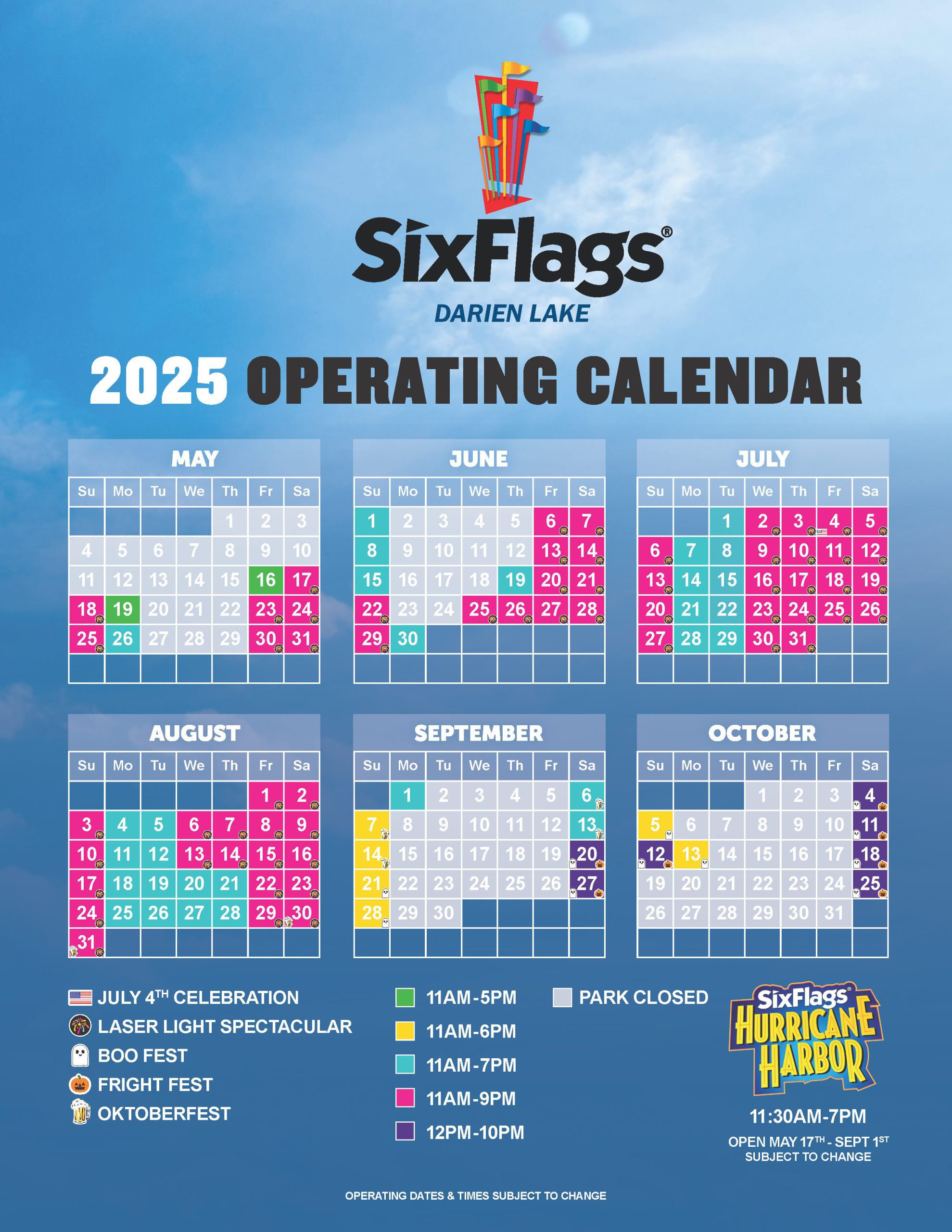
Understanding the fiscal strategy behind these operational windows provides deep insight into how seasonal businesses manage their bottom line, protect their margins, and contribute to the broader financial landscape of Western New York.
The Revenue Mechanics of Operational Hours: Balancing Yield and Overhead
The decision of when to shutter the gates for the night is never arbitrary. For a multi-million dollar enterprise, every hour the park remains open represents a tug-of-war between incremental revenue and escalating operational costs.
Peak Demand vs. Marginal Utility
In business finance, the law of diminishing returns is highly visible in theme park operations. While the first eight hours of a park’s day are typically high-yield—driven by ticket sales, parking fees, and midday dining—the final hours of operation often see a drop in per-capita spending. Financial analysts at major parks must determine the exact moment when the cost of electricity, security, and ride maintenance exceeds the potential profit from late-night snack sales and merchandise. If Darien Lake closes at 9:00 PM instead of 10:00 PM, it may be a strategic move to preserve the EBITDA (Earnings Before Interest, Taxes, Depreciation, and Amortization) by cutting the lowest-yield hour of the day.
The Late-Night Premium and Event-Based Revenue
Conversely, extended hours are often used as a financial lever during “Fright Fest” or concert seasons. By staying open later, the park transitions from a general admission model to a high-margin “event” model. These extended hours allow for the sale of premium experiences, such as “skip-the-line” passes that have a higher perceived value in the compressed timeframe of a busy evening. From a money-management perspective, these hours are the most profitable because the fixed costs (the rides and infrastructure) are already paid for by the day’s general admission, leaving the evening revenue to cover primarily variable labor costs.
Dynamic Scheduling as a Financial Safeguard
Modern financial management in the entertainment sector relies heavily on dynamic scheduling. By adjusting closing times based on projected attendance and weather forecasts, the park can mitigate “lost” money. A rainy Tuesday might see an earlier closing time to prevent the “hemorrhaging” of capital on a near-empty park. This agility is a hallmark of sophisticated corporate financial strategy, ensuring that capital is not wasted on underperforming operational windows.
Maximizing Personal ROI: The Financial Strategy for the Consumer
For the visitor, the question “What time does Darien Lake close?” is essentially a question of Return on Investment (ROI). When an individual or a family spends hundreds of dollars on tickets, parking, and food, time becomes their most valuable asset.
The Valuation of the Season Pass
From a personal finance standpoint, the purchase of a season pass is an investment in “per-visit” cost reduction. If a pass costs $80 and a day ticket costs $50, the “break-even” point is clearly defined. However, the closing time dictates the “utilization rate.” A park that stays open later allows the consumer to drive down their “cost per hour of entertainment,” making the investment more attractive. Savvy consumers treat these outings as a budget-line item, calculating the total cost of the day against the hours of utility provided.
Opportunity Costs and Time Management
In the realm of personal finance, time is money. A visitor must calculate the opportunity cost of their trip. If the park closes early, the value of the day’s “labor” (the effort to travel and prepare) increases relative to the reward. To maximize their financial outlay, consumers often use the closing time to reverse-engineer their spending—choosing to eat dinner outside the park if the closing time is early, or opting for an in-park dining plan if they intend to stay until the final firework.
The Hidden Costs of Late Closures
While staying until closing time seems like the best way to get one’s money’s worth, it can lead to secondary financial drains. Late departures often result in increased spending on convenience—such as high-priced gas near the park or fast food on the drive home—because the consumer is too exhausted to utilize more cost-effective options. Understanding the operational schedule allows for a more disciplined financial plan for the day, preventing “fatigue spending.”

Labor Economics: The Human Capital Behind the Clock
The most significant variable expense in any service-based business is labor. The closing time of Darien Lake is the primary driver of the park’s seasonal labor budget, which involves thousands of employees and millions of dollars in payroll.
Wage Scales and the Operational Window
The “Money” aspect of labor at a theme park is a massive logistical undertaking. Every extra hour the park stays open requires a full shift of ride operators, guest service agents, security, and cleaning crews. In an era of rising minimum wages and competitive labor markets, the decision to extend hours by even 30 minutes can cost the company tens of thousands of dollars across the entire workforce. Financial managers must balance these costs against the projected “spend per head” to ensure the labor-to-revenue ratio remains healthy.
Recruitment, Training, and Seasonal ROI
Seasonal businesses face a unique financial challenge: they must recruit and train a massive workforce for only a few months of utility. The ROI on a trained employee is only realized if that employee works enough hours to offset their recruitment and training costs. By maintaining consistent and predictable closing times, the park can offer stable hours to its staff, reducing turnover. High turnover is a significant “silent killer” of profits in the entertainment industry, as it leads to constant reinvestment in basic training rather than operational excellence.
Impact of Labor Laws and Overtime
For a business focused on the bottom line, overtime is a major financial hurdle. Strategic closing times allow management to schedule “staggered exits,” ensuring that the majority of the staff clocks out before hitting the 40-hour threshold that triggers time-and-a-half pay. This meticulous management of the clock is what allows a seasonal business to remain solvent in a high-tax, high-regulation environment.
The Macro-Economic Ripple Effect: Tourism and Regional Wealth
Darien Lake does not exist in a vacuum; it is a central pillar of the regional economy. The time the park closes has a direct impact on the cash flow of surrounding businesses and the tax revenue of the local municipality.
The “After-Hours” Economy
When thousands of people exit a park at 9:00 PM or 10:00 PM, they create a sudden surge in demand for local services. Hotels, gas stations, and late-night diners in the Darien and Genesee County area rely on these “exit flows” for their primary income. If the park adjusts its closing time, it can inadvertently shift thousands of dollars in revenue from one sector to another. For example, an earlier closing time might benefit local sit-down restaurants, while a later closing might benefit the hospitality and lodging sector.
Infrastructure and Public Resource Allocation
The financial cost of a major destination also falls on the public sector. Closing times dictate when local law enforcement must manage traffic flow and when infrastructure (like roads and lights) faces peak usage. The coordination between the park’s financial officers and local government ensures that the “money” generated by the park through sales tax and employment offsets the “money” spent by the public on service provision.
Competitive Positioning and Market Share
In the broader market of entertainment spending, Darien Lake competes with other regional draws and digital entertainment. Its operating hours are a statement of its competitive stance. By offering more hours of operation than a nearby rival, it can claim a larger share of the “entertainment wallet” of the regional consumer. This competitive positioning is vital for long-term asset appreciation and attracting future corporate investment or sponsorships.
Conclusion: More Than Just a Number on a Sign
While the average visitor views the closing time of Darien Lake as a simple logistical detail, it is, in fact, a vital sign of the park’s financial health and strategic direction. It represents a carefully calculated balance between operational overhead and revenue generation, between labor management and guest satisfaction, and between personal ROI and corporate profit.
In the world of money and business, time is the ultimate currency. Whether you are a corporate treasurer at Six Flags, a local business owner, or a budget-conscious parent, the closing time is the boundary within which all financial decisions are made. Understanding this helps us appreciate the intricate economic machinery that keeps the lights on—and eventually turns them off—at one of New York’s most significant commercial landmarks.
aViewFromTheCave is a participant in the Amazon Services LLC Associates Program, an affiliate advertising program designed to provide a means for sites to earn advertising fees by advertising and linking to Amazon.com. Amazon, the Amazon logo, AmazonSupply, and the AmazonSupply logo are trademarks of Amazon.com, Inc. or its affiliates. As an Amazon Associate we earn affiliate commissions from qualifying purchases.