
Understanding the population of France is not merely an exercise in geography or social science; it is a fundamental requirement for any serious investor, business owner, or financial strategist looking to tap into one of Europe’s most resilient markets. With a population currently hovering around 68 million people, France represents the second-largest consumer market in the European Union and the seventh-largest economy in the world by nominal GDP.
However, the “what” of France’s population—the raw number—is far less important than the “how” and “why.” To understand France from a Money and Investment perspective, one must look at the demographic shifts, the purchasing power of its citizens, and the structural economic changes driven by its aging but affluent society. This article explores the financial implications of France’s demographic profile, identifying the sectors poised for growth and the fiscal realities of doing business in the Hexagon.

The Economic Power of 68 Million: Market Size and Consumer Strength
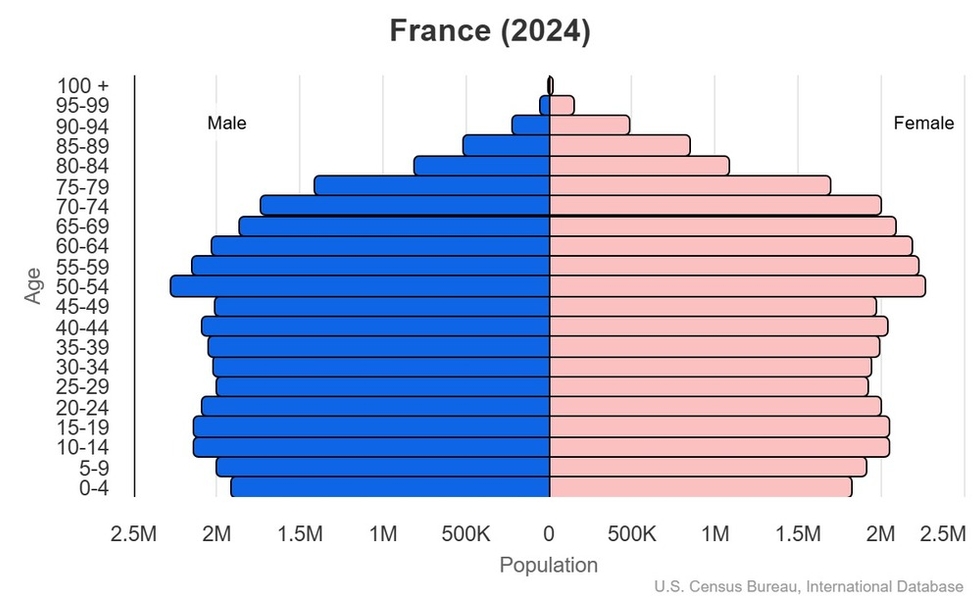
At its core, France’s population provides a massive, stable base for domestic consumption. Unlike some of its European neighbors, France has historically maintained a higher fertility rate, which, combined with steady net migration, has allowed for a more balanced demographic pyramid than countries like Italy or Germany. For a business or investor, this equates to long-term market sustainability.
Population Growth and Real Estate Trends
France’s population growth is increasingly concentrated in specific urban corridors. While the rural-to-urban shift is a global phenomenon, the French “Metropolization” has created distinct real estate investment opportunities. The “Grand Paris” project, for instance, is one of the largest infrastructure and development projects in Europe, aiming to transform the capital into a sustainable, hyper-connected global city. For investors, this demographic density translates into high demand for residential and commercial real estate, driving up asset values in the Île-de-France region and secondary hubs like Lyon, Bordeaux, and Toulouse.
Purchasing Power and Household Wealth
The French population is characterized by a high level of household wealth and a robust social safety net that protects consumer spending even during economic downturns. The high minimum wage (SMIC) and extensive social benefits mean that a significant portion of the 68 million residents maintains “disposable income” for non-essential goods. This makes France a premier destination for retail, luxury goods, and leisure services. Understanding the distribution of this wealth—heavily skewed toward the 50+ age bracket—is crucial for targeting the right financial products and luxury services.
The “Silver Economy”: Capitalizing on an Aging Demographic
Like much of the developed world, France is aging. However, in France, this demographic shift has been branded as the “Silver Economy,” a sector the government actively supports as a pillar of industrial and financial strategy. By 2030, nearly one in three French citizens will be over the age of 60. This is not a burden; it is a multi-billion euro market opportunity.
Healthcare and MedTech Investment
The aging population of France drives a relentless demand for healthcare services, pharmaceutical innovation, and medical technology. France spends roughly 11-12% of its GDP on healthcare, one of the highest rates in the OECD. This ensures a steady flow of public and private capital into the MedTech sector. Investors are increasingly looking at “EHPADs” (nursing homes) and home-care technology startups. The demand for digital health solutions—driven by a population that wants to age at home—is a fertile ground for venture capital and private equity.
Wealth Management and the Great Transfer
As the “Baby Boomer” generation in France reaches retirement, the country is witnessing a massive intergenerational transfer of wealth. France has a high savings rate, with the French often preferring low-risk “Assurance Vie” (life insurance) products and real estate over volatile equities. For financial institutions and fintech startups, the challenge and opportunity lie in modernizing these savings habits. There is a growing niche for wealth tech tools that help the younger generation manage inherited assets or help retirees optimize their portfolios for longevity risk.

Digital Consumption and the E-commerce Boom
The demographic profile of France has shifted significantly in terms of digital literacy. The “Population of France” is no longer just a physical entity; it is a digital one. With over 90% internet penetration, the French consumer is one of the most sophisticated e-commerce users in the world.
The Rise of Fintech and Neobanking
The digital-native portion of the French population (Gen Z and Millennials) is abandoning traditional “brick-and-mortar” banks in favor of neobanks like Revolut, N26, and the homegrown success, Lydia. This shift represents a broader trend in business finance: the democratization of banking. For investors, the French fintech scene (centered in “La French Tech”) is one of the most vibrant in Europe. The government’s proactive stance—offering tax incentives for R&D and creating a favorable regulatory environment—has allowed French startups to scale rapidly across the Eurozone.
E-commerce and Logistics Infrastructure
France’s population distribution requires a highly efficient logistics network. From the dense streets of Paris to the sprawling vineyards of Bordeaux, the demand for “last-mile” delivery has skyrocketed. This has led to a surge in investment in industrial real estate and “prop-tech” (property technology) that optimizes warehouse management. Companies that can bridge the gap between France’s 68 million consumers and global supply chains are seeing record valuations. For the individual looking for side hustles or online income, the French Amazon and Cdiscount marketplaces remain some of the most lucrative “Money” opportunities in the EU.
Investing in “La French Tech” and Strategic Sectors
When we ask about the population of France, we must also ask what that population does. France has a highly educated workforce, particularly in engineering, mathematics, and science. This “human capital” is the primary driver of the nation’s high-tech economy.
France as a Hub for AI and Green Energy
In recent years, the French population has become a global leader in Artificial Intelligence (AI) and Green Technology. With the presence of institutions like the Paris AI Research lab (FAIR) and Mistral AI, the country is positioning its population as the “brain trust” of Europe. Furthermore, France’s commitment to nuclear energy and its rapid transition to renewables offer a unique investment profile. Unlike countries reliant on fossil fuel imports, France’s energy demographics suggest long-term price stability, a critical factor for industrial business finance.
Tax Incentives and the Business Environment
The French government has aggressively courted foreign investment through the “Choose France” initiative. By lowering the corporate tax rate to 25% and maintaining the “Crédit d’Impôt Recherche” (Research Tax Credit), France has become the top destination for foreign direct investment (FDI) in Europe. The population is no longer seen as a “tax-heavy” workforce but as a highly productive, innovative asset. For business owners, the “Money” logic is clear: France offers a combination of a high-talent pool and state-backed financial incentives that are hard to match.
Conclusion: The Financial Future of France
The population of France is a dynamic, wealthy, and evolving market. For the financial professional or the enterprising individual, the data points to three clear conclusions:
-
Stability in Numbers: The size and growth rate of the French population ensure a permanent, high-value consumer market that is less susceptible to the demographic “cliffs” facing other developed nations.
-
Strategic Sector Opportunities: The aging population and the digital shift are creating multi-billion euro niches in Healthcare, Fintech, and Real Estate.
-
A Pro-Business Evolution: Structural reforms have turned France into a competitive environment for capital, where the “Money” follows innovation and human talent.
Whether you are looking to invest in French equities, expand your business into the Eurozone, or simply understand the macroeconomic trends of 2024, the population of France serves as a primary indicator of growth. It is a nation that has successfully balanced social stability with a modern, high-tech financial infrastructure, making it a cornerstone of any global investment strategy.
aViewFromTheCave is a participant in the Amazon Services LLC Associates Program, an affiliate advertising program designed to provide a means for sites to earn advertising fees by advertising and linking to Amazon.com. Amazon, the Amazon logo, AmazonSupply, and the AmazonSupply logo are trademarks of Amazon.com, Inc. or its affiliates. As an Amazon Associate we earn affiliate commissions from qualifying purchases.