
In the era of the smart home, even the most humble culinary task—baking a potato—has been transformed from a matter of tradition into a rigorous exercise in thermal engineering and data-driven precision. While a cursory search for “what oven temp for baked potato” might yield a simple numerical answer, the technology driving modern kitchen appliances and the physics of heat transfer suggest a far more complex narrative. Achieving the ideal texture—a shatteringly crisp skin paired with a molecularly fluffy interior—is no longer a guessing game; it is the result of sophisticated sensor fusion, PID controllers, and an understanding of the thermodynamics of starch.

The Physics of Starch: Why Temperature is a Data Point, Not a Guess
To understand why 400°F (204°C) has emerged as the “Goldilocks” temperature in technical culinary circles, one must first look at the chemical computation occurring inside the oven. A potato is not merely an ingredient; it is a complex biological structure composed primarily of water, cellulose, and starch granules.
Maillard Reaction vs. Caramelization: The Chemical Computation
The choice of oven temperature is essentially an optimization problem between two chemical processes: the Maillard reaction and caramelization. The Maillard reaction, which creates the savory, “browned” flavors on the skin, typically accelerates between 280°F and 330°F. However, to achieve the specific structural integrity required for a “jacket” potato, the temperature must be high enough to dehydrate the surface rapidly.
If the oven temperature is set too low (e.g., 325°F), the internal moisture migrates to the surface at the same rate it evaporates, resulting in a leathery, tough skin. Conversely, if the temperature is set too high (e.g., 475°F), the exterior reaches the point of carbonization before the internal thermal mass has reached the required 210°F internal temperature. Digital thermal modeling suggests that 400°F provides the optimal “thermal gradient,” allowing for a steady heat flux that crisps the skin via the Maillard reaction without burning the underlying cellulose.
Heat Transfer Mechanics: Convection vs. Radiation
In modern tech-enabled kitchens, the type of heat is as important as the temperature. Traditional radiant heat ovens rely on infrared waves, which can be inconsistent depending on the proximity of the heating elements. Tech-forward convection ovens, however, utilize high-velocity fans to circulate air, effectively stripping away the “boundary layer” of cool air and moisture that surrounds the potato. This increases the heat transfer coefficient, meaning a potato baked at 375°F in a high-end convection oven may cook faster and more evenly than one at 400°F in a legacy radiant oven.
Smart Ovens and the Rise of Precision Cooking Algorithms
The “set it and forget it” era of the 20th-century dial oven is being replaced by sophisticated software stacks. Leading appliance manufacturers are now integrating “guided cooking” systems that treat a baked potato as a series of data inputs.
Sensor Fusion in Modern Kitchen Gadgets
The latest generation of smart ovens, such as those produced by June or Anova, utilize sensor fusion—a process of combining data from multiple sources to improve accuracy. These devices use internal cameras equipped with machine learning (ML) algorithms to identify the size and variety of the potato (e.g., Russet vs. Yukon Gold).
Once identified, the oven doesn’t just hold a static temperature; it follows a dynamic thermal profile. It might start with a high-intensity “blast” of heat to jumpstart evaporation, followed by a stabilized phase where the Proportional-Integral-Derivative (PID) controller takes over. A PID controller is the same technology used in cruise control and industrial robotics; it calculates the error between the desired temperature and the actual temperature, making micro-adjustments to the heating elements hundreds of times per second to prevent “overshoot.”
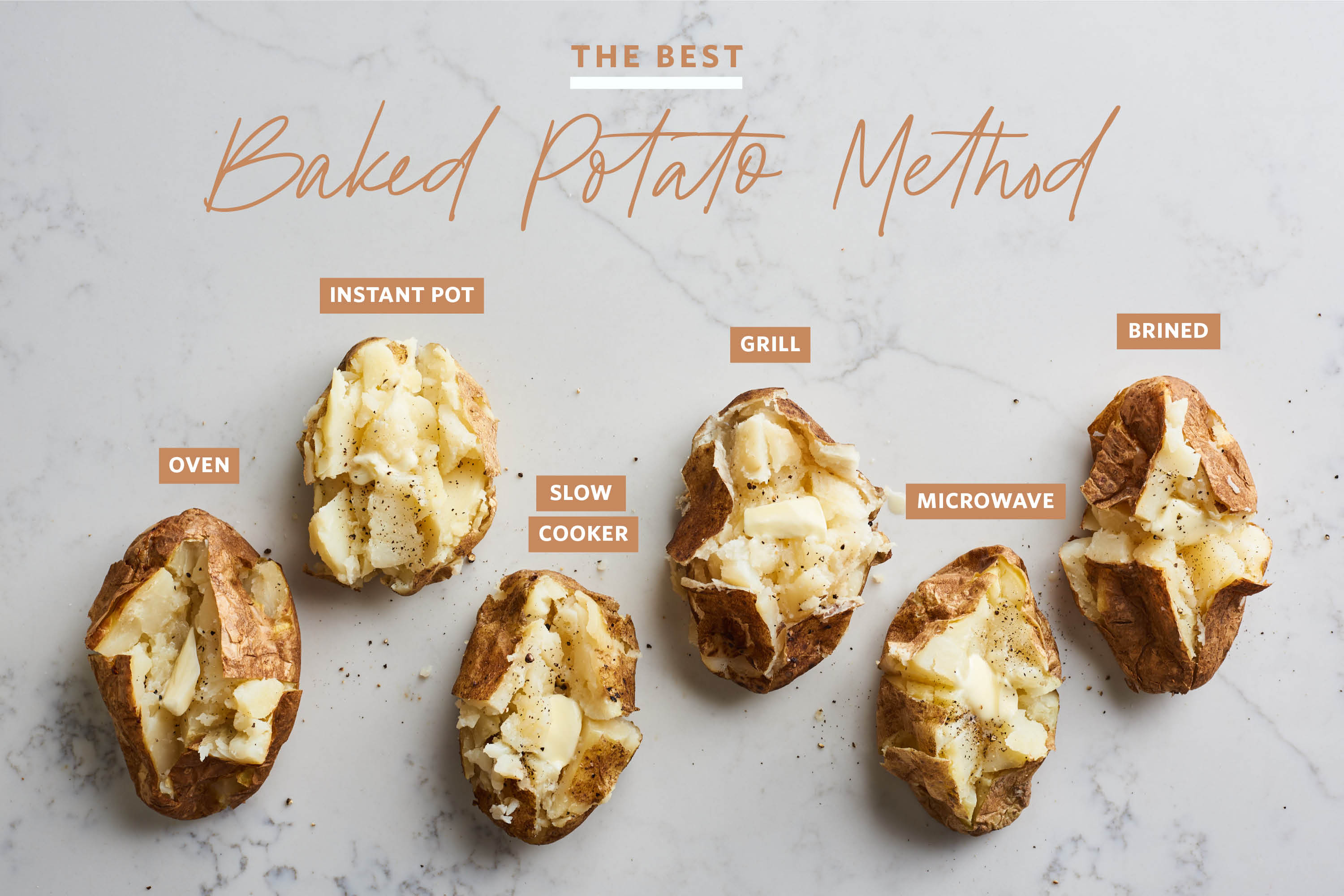
Maintaining the “Golden 400°F”
In a standard analog oven, the temperature often swings 25 degrees in either direction. In a tech-optimized kitchen, the goal is a “flatline” temperature graph. Digital thermistors—resistors whose resistance changes significantly with temperature—provide the feedback loop necessary for this stability. For a baked potato, this stability is crucial for the “gelatinization” of starches. Between 140°F and 175°F, starch granules absorb moisture and swell. If the oven temperature fluctuates wildly, the rate of this expansion becomes uneven, leading to a “gummy” or dense interior rather than a light, airy one.
Data-Driven Culinary Hardware: The Tools Behind the Temp
While the oven is the primary hardware, a new ecosystem of peripheral tech has emerged to ensure that the user never has to guess if the potato is “done.”
Wireless Probe Technology and Cloud-Based Monitoring
The most significant advancement in home cooking tech over the last five years is the rise of the smart wireless thermometer. Devices like the Meater or the Predictive Thermometer use Bluetooth LE (Low Energy) and cloud synchronization to send real-time thermal data to a smartphone.
These probes contain multiple sensors: one to measure the internal temperature of the potato and another to measure the “ambient” temperature immediately surrounding it. By analyzing the “rate of rise” (the speed at which the internal temperature increases), the accompanying app’s algorithm can predict the exact second the potato will reach its peak texture. This removes the “human error” factor of piercing the potato with a fork, which releases steam and lowers the internal pressure, potentially ruining the fluffy texture.
Artificial Intelligence in Appliance UI/UX
The user interface (UI) of modern appliances has shifted from “Temperature and Time” to “Outcome-Based” inputs. An AI-driven interface asks the user, “How do you want your skin?” rather than “What temperature?” Behind the scenes, the software translates “Extra Crispy” into a specific sequence: perhaps 20 minutes at 425°F with high convection, followed by 30 minutes at 375°F to ensure internal tenderness. This is the “abstraction layer” of the modern kitchen—hiding the complex thermodynamics behind a user-friendly digital experience.
The Future of Kitchen Automation: From Manual Preheating to AI Chefs
As we look toward the next decade of kitchen technology, the question of “what oven temp for a baked potato” may become entirely automated, handled by “Digital Twins” and high-efficiency energy systems.
Energy Efficiency and the Digital Twin of a Russet Potato
Engineers are currently working on “Digital Twins” for food items—virtual models that simulate how a specific object reacts to heat. By running a simulation of a potato’s density and water content, a smart oven could theoretically determine the most energy-efficient path to the perfect bake.
Instead of preheating a massive oven cavity to 400°F (a process that wastes significant amounts of energy), future tech might use targeted “solid-state” radio frequency (RF) heating. Unlike microwaves, which can result in a “soggy” potato, RF heating allows for precise control over where the energy is deposited, potentially browning the skin and fluffing the interior simultaneously with a fraction of the electricity.
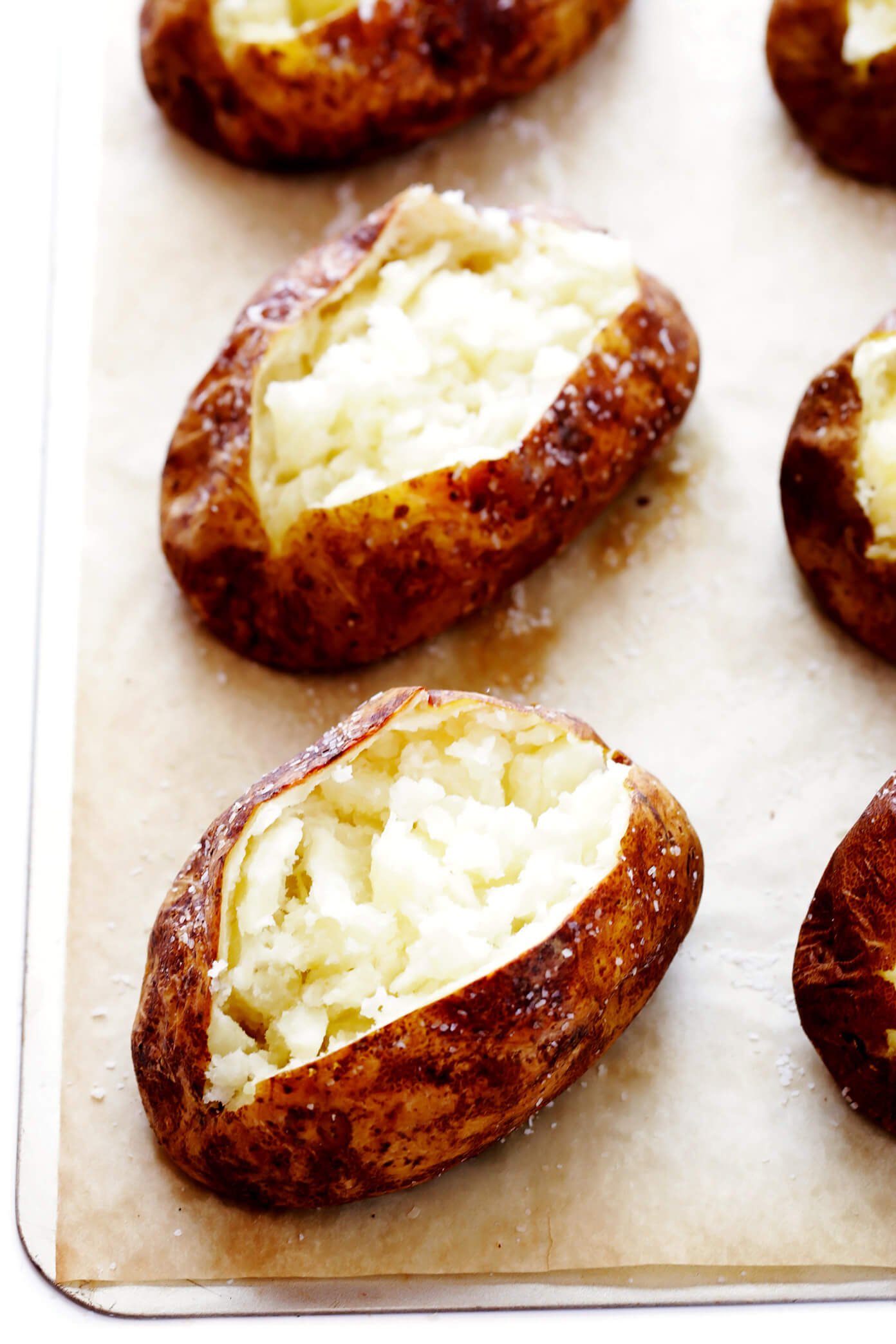
Sustainability and Tech-Optimized Home Cooking
Sustainability is becoming a core pillar of tech development. High-efficiency ovens now feature better insulation and more reflective internal coatings to maintain 400°F with minimal heat loss. Furthermore, as the “Internet of Things” (IoT) expands, your oven might communicate with the local power grid to suggest the best time to bake your potato based on peak energy pricing or the availability of renewable energy.
The simple question of “what oven temp” is a window into the massive technological shift occurring in our homes. We are moving away from a world of “approximate” cooking and into an era of “computational” cooking. In this new landscape, the oven is no longer just a box that gets hot; it is a sophisticated thermal processor, and the baked potato is the perfectly executed output of a complex digital algorithm. Whether you prefer 400°F for an hour or a multi-stage automated profile, the tech is finally here to ensure that every potato is a masterpiece of precision engineering.
aViewFromTheCave is a participant in the Amazon Services LLC Associates Program, an affiliate advertising program designed to provide a means for sites to earn advertising fees by advertising and linking to Amazon.com. Amazon, the Amazon logo, AmazonSupply, and the AmazonSupply logo are trademarks of Amazon.com, Inc. or its affiliates. As an Amazon Associate we earn affiliate commissions from qualifying purchases.