
The arrival of ChatGPT in late 2022 marked a pivotal moment in the history of computing, introducing the general public to the power of Large Language Models (LLMs). For many, ChatGPT became synonymous with Artificial Intelligence. However, as the initial novelty transitions into a permanent fixture of the digital landscape, technology professionals, creators, and developers are realizing that OpenAI’s flagship tool is just one star in a rapidly expanding galaxy of specialized AI.
The current AI landscape is no longer a one-player game. We have entered an era of “Specialized Intelligence,” where different models are optimized for specific tasks—ranging from scientific research and high-end software engineering to photorealistic image synthesis and real-time data analysis. To stay competitive in the modern tech environment, it is essential to look beyond the chat interface and explore the diverse array of tools that are redefining productivity.
The New Titans of Text: LLM Alternatives with Unique Capabilities
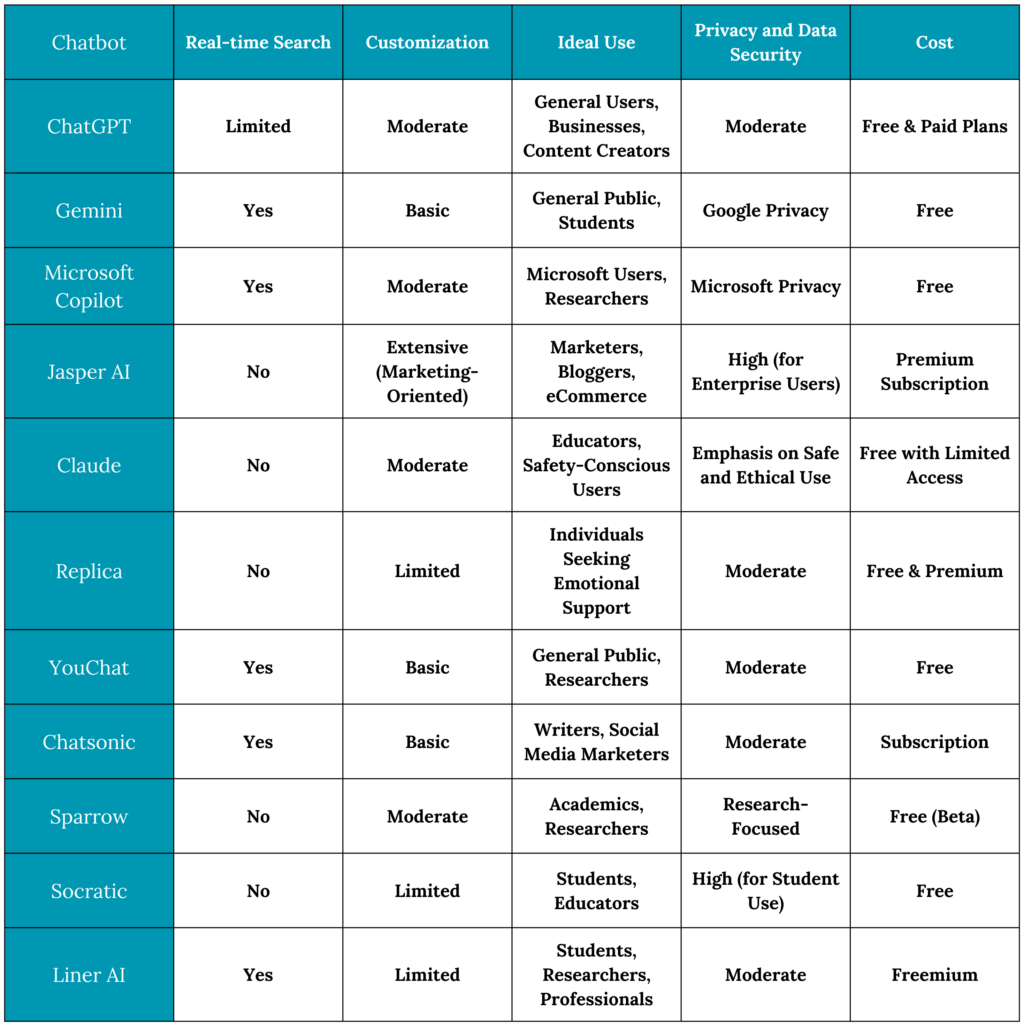
While ChatGPT remains a versatile generalist, several other LLMs have emerged that offer distinct advantages in terms of reasoning, context window size, and real-time information retrieval.
Claude by Anthropic: The Ethics and Long-Form Specialist
Anthropic, a company founded by former OpenAI executives, developed Claude with a focus on “Constitutional AI”—a framework designed to make the AI safer, more predictable, and more honest. For tech-focused users, Claude’s primary advantage is its massive context window. While early versions of ChatGPT struggled with long documents, Claude 3.5 Sonnet can process hundreds of thousands of words at once, making it the superior choice for analyzing entire codebases, long legal contracts, or dense technical manuals. Its writing style is often described as more human-centric and less prone to the “robotic” clichés often found in GPT-generated text.
Google Gemini: The Ecosystem Integrator
Google’s rebranding of Bard into Gemini signaled a major shift toward multimodal capabilities. Gemini’s greatest strength lies in its native integration with the Google Workspace ecosystem. For users deeply embedded in Google Docs, Sheets, and Gmail, Gemini offers a level of workflow automation that third-party tools cannot match. Technically, Gemini Ultra (the most powerful version) is designed to be natively multimodal from the ground up, meaning it doesn’t just “plug in” an image tool; it understands video, audio, and text simultaneously, allowing for sophisticated analysis of multimedia files.
Perplexity AI: The Search-Focused Answer Engine
Perplexity AI represents a shift from “conversational AI” to “answer AI.” Unlike ChatGPT, which occasionally hallucinates facts based on its training data, Perplexity functions more like a high-powered research assistant. It crawls the live web to provide cited, sourced answers to complex queries. For tech researchers and journalists, it is an invaluable tool for bypassing SEO-cluttered search results and getting direct, verifiable information with links to the original documentation.
Visual Synthesis: Redefining Digital Art and Image Generation
The “Generative AI” revolution is perhaps most visible in the realm of computer graphics. While DALL-E 3 is integrated into ChatGPT, other tools offer higher levels of control and professional-grade output.
Midjourney: The Gold Standard for Aesthetic Quality
For those seeking the highest possible artistic quality, Midjourney remains the dominant force. Operating primarily through a Discord interface, Midjourney utilizes sophisticated diffusion models to produce images that are frequently indistinguishable from professional photography or digital painting. Its “v6” model allows for incredible nuance in lighting, texture, and composition. For UI/UX designers, Midjourney is frequently used to generate mood boards, textures, and conceptual layouts that serve as the foundation for digital products.
Adobe Firefly: AI for the Professional Creative Workflow
Adobe’s entry into the AI space, Firefly, was built with a different philosophy: legal safety and workflow integration. Unlike other models trained on scraped internet data, Firefly is trained on Adobe Stock images and public domain content, ensuring that the output is commercially “safe” for brands. Its integration directly into Photoshop (Generative Fill) and Illustrator has fundamentally changed how graphic designers work, allowing them to expand canvases, remove objects, and recolor vectors using simple text prompts within their existing professional software.
Stable Diffusion: The Open-Source Powerhouse
For the technically inclined, Stable Diffusion by Stability AI offers something no other major player does: complete local control. Because it is open-source, developers can run Stable Diffusion on their own hardware, ensuring complete privacy. It also allows for “Fine-Tuning” (using LoRA or ControlNet), where a user can train the AI on a specific person’s face, a specific art style, or a specific brand’s product line, providing a level of customization that closed systems like ChatGPT cannot offer.
The Developer’s Arsenal: AI for Coding and Technical Automation
Perhaps no industry has been more profoundly impacted by AI than software engineering. Beyond simple code snippets, new tools are acting as “Pair Programmers” that understand the logic of entire applications.
GitHub Copilot and the Evolution of IDEs
GitHub Copilot, powered by OpenAI’s Codex, was the first major AI tool to live directly inside the code editor. It suggests entire functions in real-time based on the context of the file. However, the landscape is moving toward “AI-native IDEs.” Tools like Cursor—a fork of VS Code—integrate AI more deeply into the development environment. Instead of just suggesting the next line of code, Cursor can index your entire folder, allowing you to ask questions like “Where is the authentication logic handled?” or “Refactor this entire module to use TypeScript.”
Amazon CodeWhisperer: Enterprise-Grade Assistance
For developers working within the Amazon Web Services (AWS) ecosystem, CodeWhisperer provides a specialized advantage. It is trained specifically on AWS APIs and best practices, making it an essential tool for cloud engineers setting up infrastructure as code (IaC). It also includes built-in security scanning to identify vulnerabilities in the code as it is being written, a feature that prioritizes digital security in a way general-purpose models often overlook.
Replit Ghostwriter: Prototyping in the Browser
Replit has transformed from a simple online compiler into a powerhouse for rapid prototyping. Its AI, Ghostwriter, is designed for the “zero to one” phase of development. It allows users to describe a web application in plain English and generates the boilerplate, environment variables, and deployment scripts necessary to go live in minutes. This is particularly useful for tech entrepreneurs looking to build Minimum Viable Products (MVPs) without a massive initial overhead.
Specialized AI: Transforming Research, Video, and Voice
Beyond text and images, the AI ecosystem includes highly specialized tools designed for niche technical demands, from scientific inquiry to high-fidelity audio production.
ElevenLabs: The Frontier of Generative Voice
ElevenLabs has set the standard for AI voice synthesis. Using deep learning models, it can clone a human voice with startling accuracy, capturing the nuances of emotion, pacing, and accent. This technology is being utilized in game development for dynamic NPCs (Non-Player Characters), in automated video dubbing, and in the creation of high-quality audiobooks. From a technical standpoint, their “Speech-to-Speech” feature allows users to maintain the emotional delivery of their own voice while changing the vocal identity entirely.
Consensus and Elicit: The Scientific Research Layer
General-purpose AIs are notorious for “hallucinating” scientific citations. Consensus and Elicit solve this by sitting on top of vast databases of peer-reviewed journals (like Semantic Scholar). When you ask a question, these tools do not “predict” an answer; they search the scientific literature and summarize the findings of actual studies. For those in biotech, medicine, or engineering research, these tools are essential for staying abreast of the latest technical breakthroughs without spending hours on manual literature reviews.
Runway and Pika Labs: The Rise of Generative Video
While text-to-video is still in its nascent stages compared to text-to-image, companies like Runway are pushing the boundaries of what is possible. Their Gen-2 and Gen-3 models allow for the creation of short cinematic clips from text prompts. These tools are being integrated into the “VFX” (Visual Effects) pipeline, allowing editors to remove backgrounds, extend shots, or generate motion sequences that would have previously required expensive CGI departments and weeks of rendering time.
Selecting Your AI Stack: Integration and Data Security
As the number of AI tools grows, the challenge for tech professionals shifts from “What can AI do?” to “Which AI should I use?” Building an effective AI stack requires a strategic approach to integration and security.
The first consideration is Data Privacy. For corporate environments or developers working on proprietary code, using the public version of ChatGPT or Midjourney can pose a risk of data leakage. In these cases, looking toward enterprise-grade solutions like Azure OpenAI Service or local deployments of open-source models (via platforms like Ollama or Hugging Face) is the more responsible technical choice.
The second consideration is Workflow Friction. An AI tool is only useful if it fits into your existing routine. If you are a writer, Notion AI or Jasper might be more effective than ChatGPT because they live where you work. If you are a data analyst, using PandasAI allows you to query datasets using natural language within your Python environment.
In conclusion, while ChatGPT opened the door to the world of AI, it is only one room in a vast mansion of technological innovation. By exploring specialized LLMs like Claude, visual tools like Midjourney, and developer-centric assistants like Cursor, tech-savvy users can build a customized toolkit that significantly enhances their creative and technical output. The future of AI is not one single “God-app,” but a diverse ecosystem of specialized intelligences working in concert.
aViewFromTheCave is a participant in the Amazon Services LLC Associates Program, an affiliate advertising program designed to provide a means for sites to earn advertising fees by advertising and linking to Amazon.com. Amazon, the Amazon logo, AmazonSupply, and the AmazonSupply logo are trademarks of Amazon.com, Inc. or its affiliates. As an Amazon Associate we earn affiliate commissions from qualifying purchases.