
In an increasingly interconnected world, where digital infrastructure underpins almost every facet of our lives, understanding the foundational concepts that drive these complex systems is paramount. While the term “systemic circuit” might first evoke images from biology, referring to the circulatory system that sustains life, in the realm of technology, it takes on a profoundly different, yet equally vital, meaning. Here, the “systemic circuit” refers to the intricate, interwoven, and dynamic network of components—hardware, software, data, and human interaction—that collectively form a cohesive and operational digital ecosystem. It’s the complete pathway through which information, processes, and value flow, enabling functionality, innovation, and progress. Far from being a mere collection of disparate parts, a systemic circuit in technology operates with a symbiotic interdependence, where the failure or optimization of one element profoundly impacts the entire system. Grasping this concept is crucial for anyone involved in designing, developing, securing, or even simply using modern technology, as it illuminates the holistic nature of digital landscapes and the critical importance of seeing the bigger picture beyond individual components. It’s about recognizing the loops of cause and effect, the flows of data, and the orchestration of processes that define contemporary technological advancements.
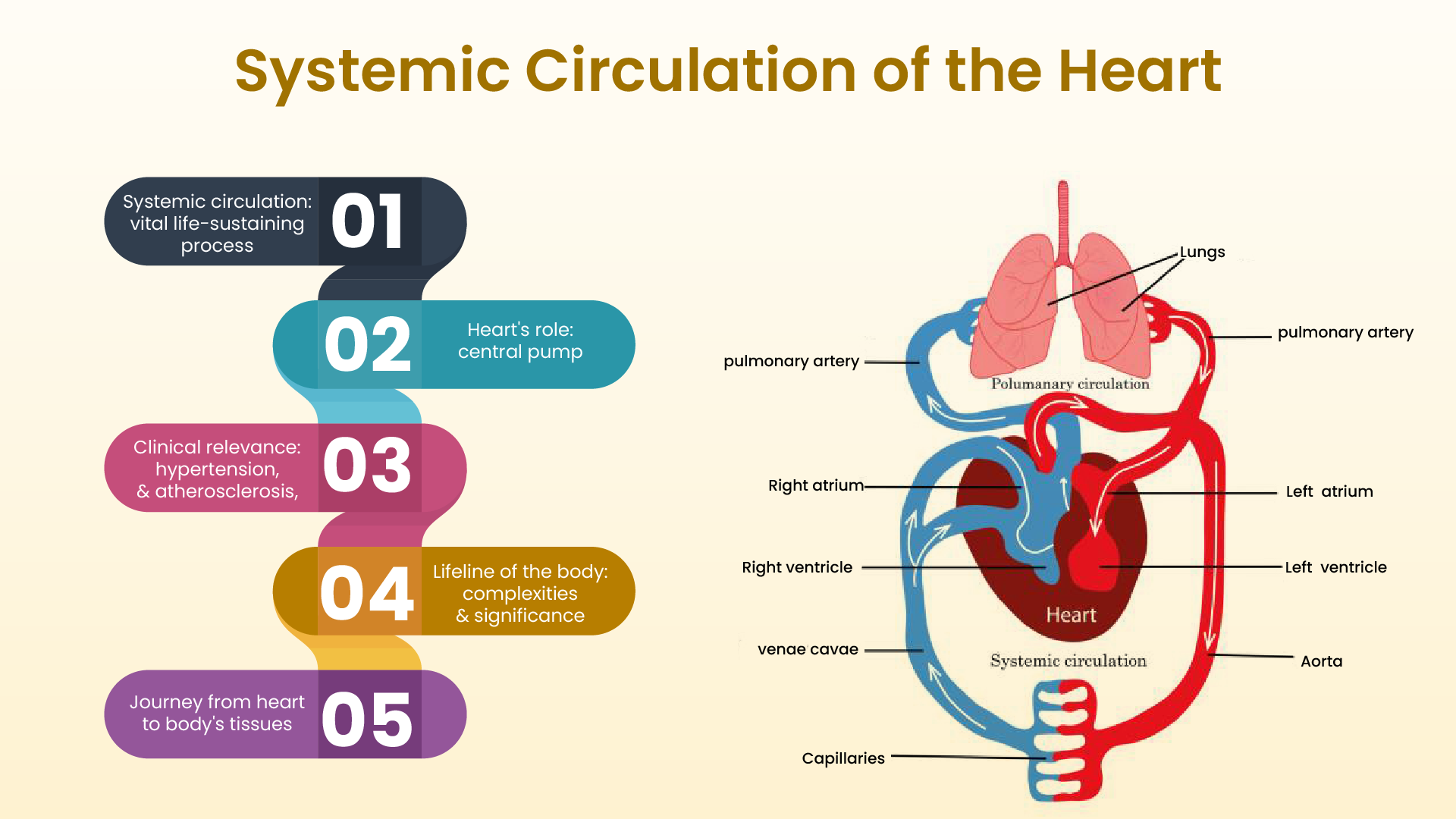
Unpacking the Concept: From Biology to Digital Ecosystems
The journey from a biological understanding of a systemic circuit to its technological interpretation requires a conceptual leap, but one that reveals deep parallels in function and importance. Just as the circulatory system ensures every cell receives vital resources, a technological systemic circuit guarantees that data, processing power, and user commands reach their intended destinations, enabling operations and delivering value.
The Metaphorical Shift: Redefining ‘Circuit’
Traditionally, a “circuit” in technology might refer to an electrical pathway on a motherboard or within an integrated chip. However, when paired with “systemic,” the term expands dramatically. It transcends the physical and moves into the abstract, describing the comprehensive, end-to-end flow and interaction within an entire digital environment. This isn’t just about electrons moving through wires; it’s about information packets traversing networks, application programming interfaces (APIs) communicating between services, algorithms processing data, and user interfaces mediating human interaction. The “circuit” becomes a conceptual framework for understanding the complete operational cycle, from input to output, across a distributed and often multi-layered architecture. It encompasses everything from the physical data centers to the virtual cloud environments, from the low-level code to the high-level user experience.
Interconnectedness as the Core Principle
At the heart of the systemic circuit is the principle of interconnectedness. No single piece of hardware, software application, or dataset operates in isolation. Modern technology thrives on the seamless interaction and communication between these diverse elements. Consider a simple online transaction: it involves a user’s device, a network connection, a web server, a database, payment gateways, security protocols, and multiple software services all working in concert. Each component is a node in this intricate circuit, and their successful collaboration is essential for the system to function. This interconnectedness fosters a dynamic environment where changes in one area can ripple through the entire system, highlighting the need for holistic design, robust integration, and continuous monitoring to maintain optimal performance and stability.
Components of the Digital Systemic Circuit
To truly appreciate the systemic circuit, it’s essential to dissect its primary components. These are not merely individual parts but interdependent entities that contribute uniquely to the circuit’s overall function and resilience.
Hardware: The Physical Backbone
At the most fundamental level, hardware forms the physical substrate of any systemic circuit. This includes everything from the microprocessors and memory chips within our devices to the vast server farms, networking equipment (routers, switches), and optical fibers that span continents. Hardware provides the raw computational power, storage capacity, and communication pathways necessary for data to be processed and transmitted. Without this physical backbone, the digital world would cease to exist. Its reliability, speed, and efficiency directly impact the performance and capabilities of the entire technological ecosystem. Advancements in hardware, such as quantum computing or neuromorphic chips, promise to dramatically redefine the potential of these circuits.
Software: The Orchestrating Intelligence
Layered atop the hardware is software, the orchestrating intelligence that breathes life into the physical components. This encompasses operating systems, applications, algorithms, frameworks, and vast quantities of code that dictate how hardware behaves, how data is processed, and how users interact with the system. Software defines the logic, automates tasks, and enables complex functionalities, transforming raw computational power into meaningful services. From the smallest mobile app to enterprise-level ERP systems, software provides the instructions that guide the flow of information and processes through the systemic circuit, making it responsive, adaptable, and intelligent. The quality, design, and security of software are paramount to the circuit’s overall health and effectiveness.
Data: The Lifeblood of the Circuit
In the digital age, data is unequivocally the lifeblood of the systemic circuit. It is the information that flows through the system, processed by software, stored on hardware, and transmitted across networks. Data includes everything from user inputs and sensor readings to large datasets used for machine learning models and transactional records. The accuracy, integrity, volume, and velocity of data are critical to the circuit’s ability to generate insights, drive decisions, and deliver relevant services. Without a constant, reliable flow of data, even the most sophisticated hardware and software remain inert. Managing data effectively, ensuring its security, privacy, and accessibility, is a core challenge and a defining characteristic of a well-functioning systemic circuit.
Networks: The Pathways of Connection
Networks are the arteries and veins of the systemic circuit, providing the pathways through which hardware, software, and data communicate. This includes local area networks (LANs), wide area networks (WANs), the internet, cloud infrastructure, and emerging technologies like 5G and satellite internet. Networks enable the distributed nature of modern computing, allowing devices and services to interact regardless of their physical location. They facilitate real-time communication, data exchange, and the seamless operation of cloud-based applications. The speed, reliability, and security of these networks are fundamental to the overall performance and accessibility of the entire technological system, ensuring that every part of the circuit remains connected and operational.
The Dynamics of a Functioning Systemic Circuit
Beyond its static components, a true understanding of the systemic circuit requires appreciating its dynamic processes—how information moves, how systems respond to change, and how security is interwoven throughout.
Information Flow and Feedback Loops

The essence of a systemic circuit lies in the continuous flow of information. Data enters the system, is processed by software on hardware, potentially stored, transmitted over networks, and then either presented to a user or fed back into another part of the system. This creates crucial feedback loops, where outputs from one stage become inputs for another, enabling adaptation and self-correction. For instance, user behavior data fed back into an AI algorithm can refine its recommendations, or system performance metrics can trigger automated scaling adjustments. These loops are vital for optimizing performance, maintaining stability, and evolving the system in response to changing demands and environments.
Scalability and Resilience
A robust systemic circuit must be designed with scalability and resilience in mind. Scalability refers to the system’s ability to handle increasing workloads or user numbers without degradation in performance. This is often achieved through modular design, load balancing, and cloud-native architectures that allow resources to be dynamically allocated. Resilience, on the other hand, is the capacity of the system to withstand failures, adapt to disruptions, and recover quickly. This involves redundancy, fault tolerance, disaster recovery plans, and proactive monitoring. In a highly interconnected circuit, the failure of a single component can have cascading effects, making systemic resilience a non-negotiable requirement for critical applications and services.
Security as an Integral Layer
In today’s threat landscape, security is not an afterthought but an integral and pervasive layer within the systemic circuit. It must be embedded into every component and process, from hardware design and software development to data management and network protocols. Digital security encompasses a vast array of measures: encryption for data in transit and at rest, access controls, firewalls, intrusion detection systems, secure coding practices, and continuous vulnerability assessments. The goal is to protect the integrity, confidentiality, and availability of information and services flowing through the circuit. A breach in any part of the systemic circuit can compromise the entire system, underscoring the necessity of a holistic, multi-layered security strategy that considers all potential vectors of attack.
Evolution and Impact: The Systemic Circuit in Action
The concept of the systemic circuit is not static; it is constantly evolving, driven by technological advancements that reshape how these components interact and perform.
AI and Automation: Enhancing Circuit Efficiency
Artificial intelligence (AI) and automation are profoundly transforming the systemic circuit by enhancing its efficiency, intelligence, and responsiveness. AI algorithms can analyze vast datasets flowing through the circuit to identify patterns, predict outcomes, and automate decision-making, optimizing resource allocation, detecting anomalies, and personalizing user experiences. Robotic Process Automation (RPA) streamlines repetitive tasks, freeing human resources for more complex problem-solving. Machine learning models integrated into the circuit enable systems to learn and adapt autonomously, making the entire ecosystem more agile and capable of self-optimization, reducing the need for manual intervention and improving throughput across various points of the circuit.
Cloud Computing: Decentralizing the Circuit
Cloud computing has revolutionized the systemic circuit by enabling unprecedented decentralization and flexibility. Instead of relying on localized, proprietary hardware and software, organizations can leverage vast, scalable resources provided by cloud service providers. This allows components of the systemic circuit—compute, storage, databases, and network functions—to be virtualized and distributed across geographically dispersed data centers. This decentralization enhances scalability, resilience, and accessibility, making it easier to build and manage complex applications without significant upfront infrastructure investments. The cloud effectively extends and abstracts the traditional systemic circuit, allowing for dynamic provisioning and consumption of resources as needed.
The Human Element: Designing and Interacting with the Circuit
Despite increasing automation, the human element remains critical within the systemic circuit. Engineers, developers, architects, and cybersecurity specialists are responsible for designing, building, maintaining, and securing these complex systems. User experience (UX) designers ensure that the interfaces through which humans interact with the circuit are intuitive and effective. Furthermore, end-users themselves are active participants, generating data, providing feedback, and driving the demand for new functionalities. The decisions made by individuals and teams about architecture, technology choices, and operational protocols directly shape the efficiency, security, and ethical implications of the entire systemic circuit.
Mastering the Systemic Circuit: Challenges and Future Outlook
Understanding and effectively managing the systemic circuit presents a unique set of challenges and opportunities as technology continues its relentless march forward.
Navigating Complexity and Interoperability
One of the most significant challenges in managing systemic circuits is their inherent complexity. As more components are added, as systems become more distributed, and as interactions proliferate, the potential for unforeseen issues and vulnerabilities grows exponentially. Ensuring interoperability—the ability of disparate systems and software to communicate and exchange information effectively—is paramount but often difficult to achieve given the diversity of technologies and standards. Architects and engineers must continuously strive for modular design, clear APIs, and standardized protocols to reduce friction and enhance the overall health of the circuit. Tools for system observability, monitoring, and tracing are essential for navigating this complexity.
Ethical Considerations and Responsible Development
As systemic circuits become more powerful and pervasive, ethical considerations and responsible development practices become increasingly important. Questions surrounding data privacy, algorithmic bias, accountability for AI decisions, and the environmental impact of large-scale digital infrastructure must be addressed proactively. Developers and organizations have a responsibility to design circuits that are transparent, fair, secure, and beneficial to society. This includes implementing privacy-by-design principles, conducting ethical AI reviews, and ensuring accessibility for all users, moving beyond mere functionality to consider the broader societal implications of technological systems.

Towards Self-Optimizing and Intelligent Circuits
The future of the systemic circuit points towards even greater levels of intelligence, autonomy, and self-optimization. Advances in AI, machine learning, and edge computing are paving the way for circuits that can dynamically reconfigure themselves, predict and prevent failures, and adapt to changing conditions with minimal human intervention. We can anticipate the rise of “intelligent circuits” capable of learning from their own operations, autonomously enhancing performance, security, and resource utilization. This evolution will require sophisticated orchestration platforms, advanced predictive analytics, and a deep understanding of cyber-physical systems, transforming how we design, manage, and interact with the technological landscapes that power our world.
In conclusion, the systemic circuit in technology is far more than a collection of parts; it is a living, breathing ecosystem of hardware, software, data, and human interaction, continuously flowing and adapting. Mastering its intricacies is key to unlocking future innovation, ensuring digital resilience, and responsibly harnessing the power of technology for the betterment of society.
aViewFromTheCave is a participant in the Amazon Services LLC Associates Program, an affiliate advertising program designed to provide a means for sites to earn advertising fees by advertising and linking to Amazon.com. Amazon, the Amazon logo, AmazonSupply, and the AmazonSupply logo are trademarks of Amazon.com, Inc. or its affiliates. As an Amazon Associate we earn affiliate commissions from qualifying purchases.