
In the era of 4K resolution, High Dynamic Range (HDR), and Quantum Dot displays, television technology has reached a pinnacle of visual clarity. However, as hardware evolves, it often introduces software features designed to “improve” the viewing experience that end up polarizing audiences. Perhaps no feature is as controversial or misunderstood as “motion smoothing,” colloquially known as the “Soap Opera Effect.”
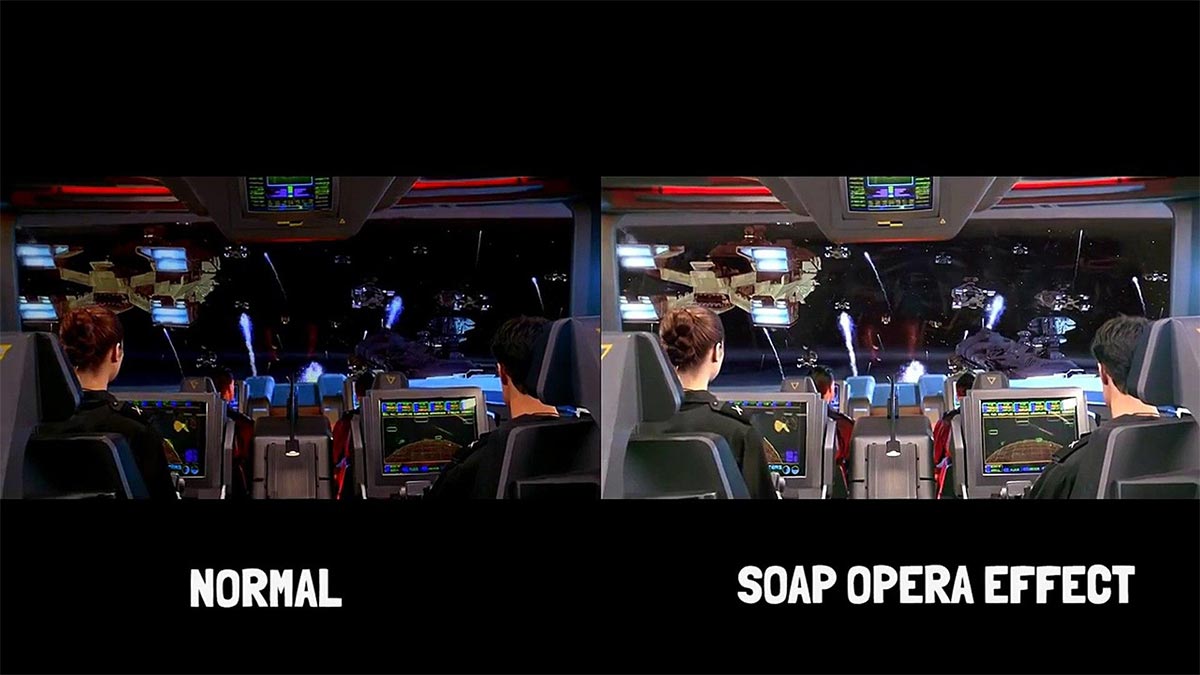
For the average consumer unboxing a flagship OLED or QLED TV, the initial reaction to high-definition content is often one of confusion. Movies that once felt cinematic and moody suddenly look like they were shot on a handheld camcorder in a brightly lit studio. This phenomenon is a direct byproduct of modern image processing. To understand the Soap Opera Effect, we must dive into the technical intersection of frame rates, digital interpolation, and the history of cinematography.
The Science of Motion: Understanding Frame Interpolation
At its core, the Soap Opera Effect is a result of a technology known as Motion Estimation, Motion Compensation (MEMC), or more commonly, motion interpolation. To understand why this technology exists, we first have to look at how film and television are produced.
The Difference Between 24p and High Frame Rates
Since the 1920s, the standard frame rate for cinema has been 24 frames per second (fps). This specific rate was chosen as a compromise between the cost of film stock and the minimum speed required to perceive fluid motion. At 24fps, the human eye perceives a slight “motion blur,” which we have culturally conditioned ourselves to associate with the “cinematic look.”
In contrast, broadcast television, particularly news and soap operas, was historically shot on video at 30fps or 60 fields per second. This higher temporal resolution results in much smoother, hyper-realistic motion. When you see a 24fps film played back with motion smoothing enabled, the TV is effectively trying to turn “The Godfather” into a live broadcast of “General Hospital.”
How Algorithms Create “Fake” Frames
Modern televisions typically have refresh rates of 60Hz or 120Hz, meaning they can refresh the image 60 or 120 times per second. When a 24fps movie is played on a 120Hz screen, the math is simple: 120 divided by 24 is 5. Ideally, the TV would just show each original frame five times.
However, manufacturers want to eliminate “judder”—the slight stuttering effect seen during camera pans. To do this, the TV’s onboard processor analyzes two consecutive frames of a movie, calculates what the movement would look like between them, and digitally renders a brand-new, synthetic frame to insert in the middle. By creating these “fake” frames, the TV increases the frame rate of the content, leading to the ultra-smooth motion that defines the Soap Opera Effect.
Why It Is Called the “Soap Opera Effect”
The term “Soap Opera Effect” isn’t just a clever nickname; it describes a very specific aesthetic shift that occurs when high-end cinematic content is processed by motion-smoothing algorithms. This shift affects how we perceive depth, texture, and the “reality” of the scene.
The Visual Aesthetics of Video vs. Film
The reason soap operas look different from movies isn’t just about the frame rate, but the frame rate is the primary driver of the “video” aesthetic. Video captured at high frame rates lacks the rhythmic “stepping” of 24fps film. When motion interpolation is applied to a movie, it removes the natural motion blur that masks the artifice of a film set.
Suddenly, the costumes look like “costumes,” the makeup looks caked on, and the sets look like painted wood and plaster rather than a lived-in world. By making the motion too realistic, the technology ironically shatters the “willing suspension of disbelief” that cinema relies upon.
The Psychological Impact on the Viewer
Our brains have been trained for a century to categorize visual information based on its frame rate. We associate 24fps with storytelling, fantasy, and prestige. We associate 60fps with reality: sports, news, home videos, and, historically, low-budget daytime dramas (soap operas).
When a viewer watches a high-budget action movie and the Soap Opera Effect is active, there is a psychological dissonance. The brain receives cues that it is watching “reality,” yet the content is clearly fictional. This often leads to a sense of visual “uncanniness” or even physical discomfort, such as eye strain or nausea, as the eye struggles to process the synthetic motion created by the TV’s processor.

The Role of Hardware: Refresh Rates and Image Processors
The Soap Opera Effect is a testament to the incredible processing power packed into modern display hardware. It is no longer just about the panel; it is about the “brain” behind the panel.
60Hz vs. 120Hz: The Pursuit of Fluidity
In the budget TV market, 60Hz panels are the standard. On these sets, motion smoothing is often limited and can result in “ghosting” or digital artifacts (strange shimmering around moving objects) because the processor isn’t fast enough to keep up with the interpolation.
High-end 120Hz panels, however, allow for much more sophisticated motion processing. Tech giants like Sony, LG, and Samsung use proprietary names for their motion technologies—MotionFlow, TruMotion, and Auto Motion Plus, respectively. These systems use sophisticated AI to track hundreds of objects across the screen simultaneously, ensuring that the transition between frames is as seamless as possible. While this is a feat of engineering, it is also the primary driver of the Soap Opera Effect.
The Impact of AI-Driven Upscaling
Modern TV processors do more than just interpolate frames; they use AI and deep learning to upscale low-resolution content to 4K or 8K. These processors can recognize faces, landscapes, and textures, sharpening them in real-time. When AI upscaling is combined with aggressive motion smoothing, the result is an image that can look “too sharp” and “too smooth” simultaneously. This “over-processed” look is a common complaint among tech enthusiasts who prefer a more natural, source-accurate image.
When to Use Motion Smoothing (And When to Kill It)
Despite the backlash from cinephiles and Hollywood directors, motion smoothing is not inherently “bad.” It is a tool, and like any tool, its effectiveness depends on how it is used.
Optimized Settings for Live Sports and Gaming
There are specific scenarios where the Soap Opera Effect is actually a massive benefit. In live sports, such as football or hockey, the goal is to track a fast-moving object (the ball or puck) with maximum clarity. Here, high frame rates and motion interpolation are essential. They reduce the blur during fast pans across the field, making the action easier to follow.
Similarly, in the world of gaming, fluidity is king. Gamers often spend thousands of dollars on hardware capable of reaching 120fps or higher. For gaming, the “soap opera” look isn’t a drawback; it’s the gold standard. It reduces input lag and makes the environment feel more responsive.
The Rise of “Filmmaker Mode”
The controversy surrounding motion smoothing reached such a fever pitch that it prompted an industry-wide response. Led by directors like Christopher Nolan, Martin Scorsese, and Tom Cruise, the “Filmmaker Mode” was introduced.
This is a standardized TV setting that disables all post-processing, including motion smoothing and artificial sharpening, while maintaining the correct aspect ratio and color profile. It allows viewers to see the content exactly as the director intended. Most major manufacturers now include this as a one-click setting, acknowledging that while their motion tech is impressive, it shouldn’t be the default for cinematic content.

The Future of Display Processing and Cinematic Intent
As we move toward a future of even higher resolutions and more powerful AI, the debate over the Soap Opera Effect will likely evolve. We are already seeing “Variable Refresh Rate” (VRR) technology move from gaming monitors to living room TVs, allowing the screen to dynamically adjust its refresh rate to match the source content perfectly.
The ultimate goal for tech manufacturers is to create a “transparent” viewing experience—one where the hardware enhances the image without changing its fundamental character. Until then, understanding the Soap Opera Effect is a vital skill for any tech-savvy consumer. Knowing when to harness the power of your TV’s processor for a Sunday afternoon game, and when to turn it off for a Friday night movie, ensures you are getting the best possible performance from your hardware.
In the end, technology should serve the art, not the other way around. While motion smoothing is a marvel of software engineering, the best way to watch a masterpiece is often exactly the way it was filmed: 24 frames at a time, with all the natural blur and cinematic grit that makes movies feel like magic.
aViewFromTheCave is a participant in the Amazon Services LLC Associates Program, an affiliate advertising program designed to provide a means for sites to earn advertising fees by advertising and linking to Amazon.com. Amazon, the Amazon logo, AmazonSupply, and the AmazonSupply logo are trademarks of Amazon.com, Inc. or its affiliates. As an Amazon Associate we earn affiliate commissions from qualifying purchases.