
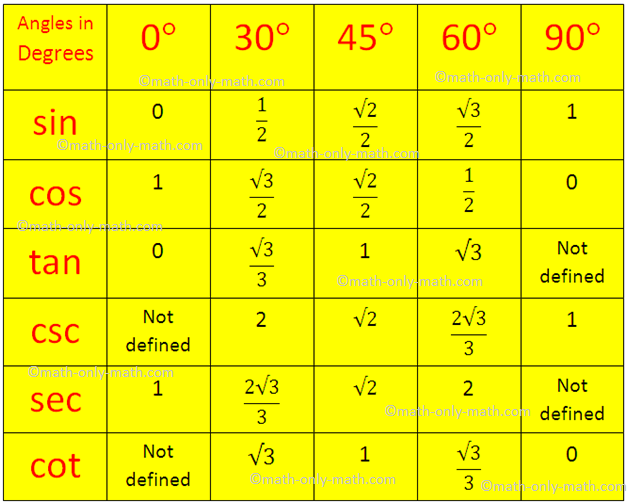
In the realm of pure mathematics, the answer to “what is the sine of 30 degrees” is a deceptively simple 0.5. It is one of the first constants students memorize in trigonometry, representing the ratio of the side opposite a 30-degree angle to the hypotenuse in a right-angled triangle. However, in the world of technology, this number is far more than a textbook entry. It is a fundamental building block for computer graphics, artificial intelligence, digital signal processing, and the very architecture of the hardware we use daily.
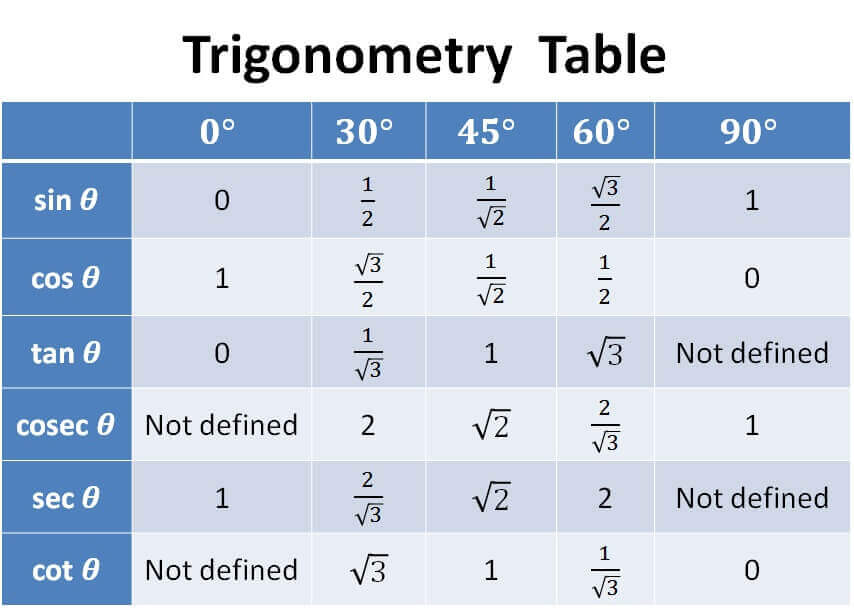
To understand why a simple trigonometric value holds such weight in the tech industry, we must look beyond the triangle and into the algorithms that power our digital existence. From the way a character moves in a video game to how a Transformer model processes natural language, the sine function—and specifically its most recognizable values like the sine of 30—acts as a bridge between abstract logic and functional software.
The Computational Power of Trigonometry in Modern Software
Software development is often perceived as a series of “if-then” statements and data structures, but at its core, high-performance computing relies heavily on mathematical functions. The sine of 30 degrees serves as a benchmark for how software handles precision, rotation, and periodic motion.
Floating Point Math and Precision in Coding
In programming languages like C++, Python, and Java, calculating the sine of an angle is not as simple as looking at a unit circle. Computers use floating-point arithmetic to approximate these values. When a developer calls Math.sin(Math.toRadians(30)) in a script, the hardware doesn’t “know” the answer is 0.5 instinctively. Instead, it utilizes complex algorithms like the Taylor series expansion or the CORDIC (Coordinate Rotation Digital Computer) algorithm.
The CORDIC algorithm is particularly significant in the history of tech. Developed in the late 1950s, it allows hardware without a dedicated multiplier—such as simple microcontrollers or early calculators—to calculate trigonometric functions using only addition, subtraction, and bit-shifting. For a tech professional, the sine of 30 isn’t just a result; it’s a testament to the efficiency of low-level computational design.
Beyond 0.5: How CPUs Handle Periodic Functions
Modern CPUs and GPUs have dedicated instruction sets (like Intel’s AVX or ARM’s NEON) designed to handle vector math, including trigonometric operations. When a software application requires thousands of calculations per second—such as a flight simulator calculating the lift on a wing or a financial app predicting market oscillations—the efficiency of these “sine” calls determines the software’s latency. The sine of 30, being a clean, rational number (1/2), often serves as a primary test case for unit testing these mathematical libraries to ensure that floating-point errors (like 0.49999999999) are minimized through rounding logic.
Visualizing the Digital World: From 2D Graphics to Immersive VR
Perhaps no field in tech relies more on the sine of 30 than computer graphics. Whether it is the layout of a user interface or the complex physics of a virtual reality environment, trigonometry is the language of spatial awareness.
Vector Math and Rotational Geometry
In 2D and 3D rendering, everything is defined by coordinates. If an artist wants to rotate an object by 30 degrees, the software must apply a rotation matrix to every vertex of that object. This matrix uses sine and cosine values to map the new coordinates. Because the sine of 30 is 0.5, it represents a “perfect” midpoint in many geometric layouts.
For example, in the design of hexagonal grids—a staple in both strategy game development and UI design—30-degree angles are ubiquitous. Calculating the center point of a hexagon or the distance between “cells” in a honeycomb layout requires constant application of the sine of 30. Tech stacks like Three.js or Unity rely on these calculations to render smooth, geometrically accurate environments in real-time.
The Role of Sine Waves in Game Engine Physics
In game engines, motion is rarely linear. To make an object bob up and down (like a floating power-up) or to simulate the sway of trees in the wind, developers use sine waves. The sine of 30 degrees marks the point where a wave has reached half of its maximum amplitude.
By mapping time to an angle and calculating the sine, developers create “smooth” movement that mimics real-world physics. This “Sine-based interpolation” (or Lerping) ensures that animations don’t look robotic. When you see a character’s breathing animation in a high-end AAA game, you are essentially watching a processor solve trigonometric equations in a loop, utilizing the periodic nature of the sine function to create life-like fluidity.
Artificial Intelligence and Signal Processing
The leap from basic geometry to Artificial Intelligence (AI) might seem vast, but the sine function is a critical component of how modern AI “thinks” and how digital signals are interpreted.
Sine Functions in Neural Network Architectures
In the world of Generative AI and Large Language Models (LLMs), one of the biggest challenges is “positional encoding.” Transformers, the architecture behind tools like ChatGPT, process words in parallel rather than in sequence. To understand the order of words in a sentence, the model uses sine and cosine functions of varying frequencies to “tag” the position of each token.
The sine of 30, as part of this broader trigonometric spectrum, helps the AI create a unique multi-dimensional signature for data. This allows the model to understand that “The cat sat on the mat” is different from “The mat sat on the cat,” even if the words are processed simultaneously. Trigonometry provides the spatial map the AI uses to navigate human language.
Digital Signal Processing (DSP) and Audio Engineering
All digital audio—from your Spotify streams to Zoom calls—is built upon the Fourier Transform, which decomposes complex sounds into a series of sine waves. The sine of 30 represents a specific phase in a sound wave’s cycle.
In tech hardware like Noise-Canceling headphones, the onboard processor must detect incoming sound waves and generate an “anti-wave” to cancel them out. This requires millisecond-accurate calculations of sine values. If the processor cannot accurately calculate the sine of the incoming frequency’s phase, the noise cancellation fails. The mathematical precision of trigonometry is quite literally the difference between silence and static.
Cybersecurity and the Future of Computing
As we move toward more secure and faster computing environments, the role of periodic functions like sine remains central to data integrity and the next generation of hardware.
The Geometry of Elliptic Curve Cryptography
Modern digital security doesn’t just rely on prime numbers; it relies on geometry. Elliptic Curve Cryptography (ECC), which secures everything from mobile messaging to blockchain transactions, uses the properties of curves to create public and private keys. While not a direct “sine wave,” the movement along these curves involves trigonometric principles and the calculation of slopes and angles. The efficiency of these calculations determines how fast your phone can encrypt a message or authenticate a login.
Quantum Computing and Waveform Superposition
Looking ahead, quantum computing represents the next frontier of tech. Quantum bits (qubits) do not exist as simple 0s or 1s; they exist in a “superposition” of states, which is described by wave functions.
The mathematics of quantum mechanics is deeply rooted in complex trigonometric functions. Measuring the probability of a qubit’s state involves understanding its phase, much like measuring the position of a point on a sine wave. As tech giants like IBM and Google race to build stable quantum computers, they are essentially building machines that can process the “sine of an angle” across infinite dimensions simultaneously, promising a leap in processing power that would make current supercomputers look like abacuses.
Conclusion: The Infinite Reach of 0.5
The question “what is the sine of 30” might belong in a middle-school classroom, but its application is the bedrock of the modern tech industry. It is a number that facilitates the rotation of a 3D model, the encoding of an AI’s memory, and the cancellation of background noise in a busy office.
In tech, we often focus on the “new”—the latest framework, the fastest chip, or the most sophisticated model. However, these innovations are all built upon the unchanging laws of mathematics. The sine of 30, with its clean and reliable value of 0.5, reminds us that no matter how complex our digital world becomes, it remains anchored in the elegant simplicity of trigonometry. For the developer, the engineer, and the data scientist, this value is not just a ratio; it is a fundamental tool used to map, move, and secure the digital frontier.
aViewFromTheCave is a participant in the Amazon Services LLC Associates Program, an affiliate advertising program designed to provide a means for sites to earn advertising fees by advertising and linking to Amazon.com. Amazon, the Amazon logo, AmazonSupply, and the AmazonSupply logo are trademarks of Amazon.com, Inc. or its affiliates. As an Amazon Associate we earn affiliate commissions from qualifying purchases.