
In the modern music landscape, a song is rarely just a melody paired with lyrics; it is a flagship product for a larger corporate and personal identity. When Chappell Roan released “Pink Pony Club,” she didn’t just drop a pop anthem; she launched a comprehensive brand strategy that would eventually redefine her career trajectory. To understand the meaning of “Pink Pony Club” is to understand the mechanics of brand storytelling, the power of niche positioning, and the evolution of personal branding in the digital age.
This article explores how “Pink Pony Club” serves as a foundational pillar for the Chappell Roan brand, analyzing the narrative meaning through the lens of strategic marketing and corporate identity.

1. The Power of Narrative Branding: Transformation as a Product
At its core, “Pink Pony Club” is a narrative of transformation. In branding terms, this is one of the most potent stories a brand can tell. The song details the journey from a restrictive, traditional environment (Tennessee) to a liberated, neon-soaked reality (The Abbey in West Hollywood).
The Brand Archetype: The Explorer and The Creator
From a strategic standpoint, the “meaning” of the song aligns with the “Explorer” and “Creator” brand archetypes. The protagonist isn’t just seeking a new location; she is seeking a new version of herself. Brands that successfully utilize these archetypes—such as Airbnb or Adobe—focus on the “becoming” rather than the “having.” By positioning “Pink Pony Club” as a manifesto of self-actualization, Roan created a brand promise: that her music is a safe space for radical self-expression.
Authentic Storytelling as Competitive Advantage
In a market saturated with “manufactured” pop stars, “Pink Pony Club” offers a sense of raw authenticity. The lyrics mention her mother’s disapproval and the physical sensation of dancing on a stage where she finally feels seen. For a brand, this level of vulnerability acts as a “Unique Selling Proposition” (USP). It builds trust with the audience, moving the relationship from a passive listener to an emotionally invested stakeholder.
2. Visual Identity and Aesthetic Cohesion
A brand is often defined by its visual language. “Pink Pony Club” established a high-contrast visual identity that has become synonymous with Chappell Roan’s corporate identity. The use of “Pink” is not merely a color choice; it is a strategic branding tool.
Defining the “Pink” Ecosystem
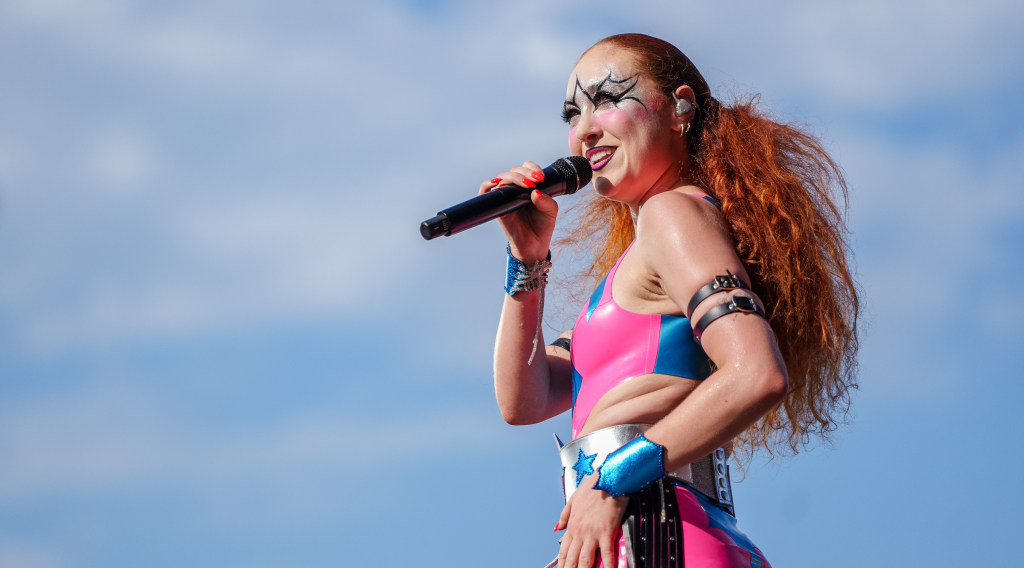
Color psychology plays a massive role in brand recognition. While brands like T-Mobile “own” magenta, Roan has successfully staked a claim in a specific shade of high-camp, glitter-infused pink. This visual consistency allows for instant brand recall. When fans see pink cowboy hats, drag-inspired makeup, or thrifted sequins, they immediately associate those visuals with the “Pink Pony Club” ecosystem.
The Intersection of Camp and Corporate Identity
Roan’s brand leverages “Camp”—a style characterized by irony and exaggeration. By integrating drag culture into the visual meaning of the song, she aligns her brand with a specific community and a rich cultural history. This is a brilliant example of “Niche Market Penetration.” She isn’t trying to appeal to everyone; she is building a fortress around a specific subculture that values theatricality and queer joy. This visual cohesion makes her brand “sticky,” ensuring that once a consumer enters the “Club,” they remain within the ecosystem.
3. Community Architecture: Building the “Club” Experience
One of the most difficult feats in branding is moving from “Brand Awareness” to “Brand Community.” The title of the song itself, “Pink Pony Club,” implies an exclusive yet welcoming membership. It isn’t just a song title; it’s a call to join a movement.
Experiential Marketing and Fan Engagement
The meaning of the song is brought to life through “Experiential Marketing.” On her tours, Roan assigns “themes” to every show—many of which stem directly from the “Pink Pony Club” aesthetic. This requires fans to participate in the brand identity by dressing up. When consumers literally wear the brand’s “uniform,” the level of brand loyalty becomes unshakable. They are no longer just customers; they are advocates and “brand ambassadors.”
The “Safe Space” as a Brand Mission
In the corporate world, a mission statement defines the purpose of the company. For Chappell Roan, the “Pink Pony Club” serves as a mission statement for her entire career. The song’s meaning—finding a home in the unconventional—acts as a brand promise of inclusivity. By consistently delivering on this promise, she has built a “Cult Brand” similar to the likes of Harley-Davidson or Apple, where the community’s identity is inextricably linked to the brand itself.
4. Market Positioning: The “Slow Burn” Strategy
The commercial history of “Pink Pony Club” is a fascinating case study in brand longevity and market positioning. Unlike many pop hits that rely on an immediate “viral” burst, this song took years to reach its peak market penetration.
The Value of Brand Consistency
The song was originally released in 2020, but it didn’t become a cultural phenomenon until 2023 and 2024. In business terms, this is a “Slow Burn” strategy. While the label initially wavered, the artist maintained brand consistency. She didn’t pivot to a different sound or aesthetic when the song didn’t immediately chart. This persistence allowed the brand to build a solid foundation. When the market finally “caught up” to her aesthetic, the brand was ready to scale.
Differentiating from the “Clean Girl” Aesthetic
At a time when the dominant brand trend in pop culture was the “Clean Girl” aesthetic (minimalist, beige, understated), Roan positioned “Pink Pony Club” as the antithesis. This is a classic “Blue Ocean Strategy”—entering a space where there is little competition by being the loudest, brightest, and most “maximalist” brand in the room. By identifying an underserved market (fans of camp, theater, and drag), she was able to dominate that segment.
5. Strategic Longevity: From Viral Moment to Brand Legacy
The ultimate goal of any brand strategy is to ensure longevity. The meaning of “Pink Pony Club” extends beyond the lyrics to represent the “Origin Story” of the Chappell Roan brand.
The Origin Story as a Marketing Tool
Every great brand has an origin story—Steve Jobs in a garage, or Nike’s waffle iron. “Pink Pony Club” is Roan’s garage. It tells the story of the moment the brand found its true north. By constantly referencing this “moment of discovery” in her marketing and live performances, she reinforces the brand’s heritage. This heritage gives the brand “Equity,” making it more resilient to the fleeting trends of the music industry.

Scaling the Brand Globally
As the “Pink Pony Club” brand scales, we see the introduction of diversified “product lines”—from the “Midwest Princess” album to high-profile festival sets. However, the core identity remains rooted in the values established by that single song: authenticity, community, and the courage to be “gaudy.” For any business leader or personal brand, the lesson is clear: find your “Pink Pony Club”—the one core message that defines who you are—and build everything else around it.
In conclusion, “Pink Pony Club” is much more than a catchy chorus about a dance club in West Hollywood. It is a sophisticated piece of brand architecture. It successfully utilizes narrative storytelling, visual identity, community building, and strategic positioning to create a powerhouse personal brand. Chappell Roan’s success proves that in the modern economy, the most valuable currency is not just a great product, but a brand that people feel they can truly belong to.
aViewFromTheCave is a participant in the Amazon Services LLC Associates Program, an affiliate advertising program designed to provide a means for sites to earn advertising fees by advertising and linking to Amazon.com. Amazon, the Amazon logo, AmazonSupply, and the AmazonSupply logo are trademarks of Amazon.com, Inc. or its affiliates. As an Amazon Associate we earn affiliate commissions from qualifying purchases.