
In the rapidly evolving landscape of technology, we often focus on the “new”—the latest processor speeds, the newest AI models, or the sleekest user interfaces. However, much of our digital and mechanical world relies on a concept that is decades old, yet remains fundamental to the stability of every gadget we own. That concept is hysteresis.
Derived from the Greek word hysterēsis, meaning “shortcoming” or “lagging behind,” hysteresis describes a phenomenon where the state of a system depends on its history. In simpler terms, the output of a device is not just a result of its current input, but also what happened just moments before. While that might sound like a flaw—a “lag”—in the tech world, hysteresis is actually a vital tool used to prevent system failure, reduce noise, and ensure that our devices behave predictably.

The Core Mechanism: How Hysteresis Stabilizes Systems
To understand what hysteresis does in a technical sense, one must first understand the problem it solves: the “chatter” of instability. In any digital system, we often set thresholds. For example, “if the signal reaches X, turn the switch on.” However, in the real world, signals are rarely clean; they are “noisy.”
The Problem of Oscillatory “Chatter”
Imagine a sensor designed to turn on a cooling fan when a server reaches 40°C. Without hysteresis, if the temperature hovers exactly at 40.0001°C, the fan turns on. A millisecond later, the temperature drops to 39.9999°C, and the fan turns off. This creates a rapid, high-frequency “on-off” cycle known as chatter.
In a tech environment, chatter is catastrophic. It leads to mechanical wear in fans, electrical noise in circuits, and wasted processing power in software. If your smart home hub behaved this way, your lights would flicker and your HVAC system would burn out within a week.
The Solution: Creating a Switching Buffer
Hysteresis solves this by introducing a “deadband” or a “differential.” Instead of a single threshold, hysteresis creates two: an “on” threshold and an “off” threshold.
In our server example, a system with hysteresis might be programmed to turn the fan on at 42°C but not turn it off until the temperature drops back down to 38°C. This 4-degree gap ensures that the fan stays on long enough to do its job and stays off long enough to prevent unnecessary cycling. By making the system “remember” that it is currently in a cooling phase, hysteresis provides the stability necessary for modern hardware to function efficiently.
Hysteresis in Hardware: From Smart Thermostats to Power Management
When we look at the gadgets and appliances that populate the modern “Internet of Things” (IoT), hysteresis is the invisible hand guiding their behavior. It is the reason our technology feels “smart” rather than erratic.
Temperature Regulation: Why Your Smart Home Doesn’t Rapid-Fire
Devices like the Nest Thermostat or Ecobee are lauded for their precision. However, their precision is balanced by a calculated delay. If you set your smart home to 72°F, the system doesn’t instantly cut the power the moment the sensor hits 72.01°F.
Engineers implement a hysteresis loop that allows the temperature to drift slightly above and below the target. This protects the compressor in your air conditioner—one of the most expensive components in a home—from the damage caused by frequent restarts. In this context, hysteresis isn’t just a technical quirk; it’s a cost-saving measure that extends the lifespan of consumer hardware.
Power Management and Voltage Thresholds
In mobile technology, managing battery life is a constant battle. Smartphones use hysteresis when determining when to switch between power-saving modes and high-performance modes.
For instance, when your battery reaches 20%, a “low battery” notification might trigger. If you plug it in for thirty seconds and it reaches 21%, the notification doesn’t immediately vanish only to reappear the moment you unplug it. The software requires the battery to reach a higher threshold (perhaps 25%) before it considers the “low battery” state resolved. This prevents the OS from constantly interrupting the user with redundant status changes.
Digital Signal Processing and the Schmitt Trigger
Moving deeper into the internal circuitry of our laptops and smartphones, hysteresis takes on a more mathematical form. It is the primary defense against “noise” in digital communication.
The Schmitt Trigger: Turning Messy Waves into Clean Data
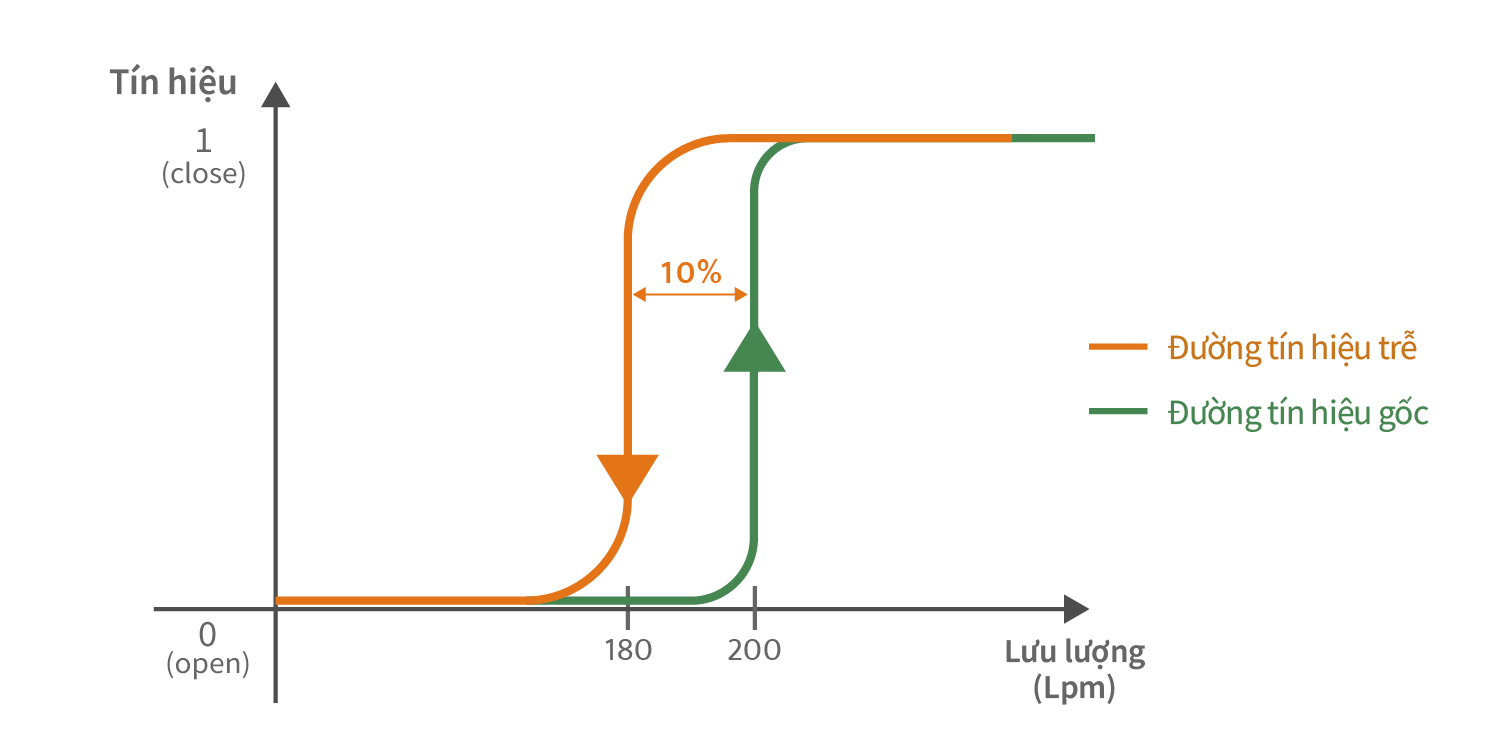
In electronics, one of the most famous applications of hysteresis is the Schmitt Trigger. This is a comparator circuit that applies hysteresis to a signal. In any high-speed data transmission, the signal (the 1s and 0s) isn’t a perfect square wave; it is often a messy, jagged wave influenced by electromagnetic interference.
If a computer tried to read this messy signal using a single threshold, the noise would cause the computer to see dozens of “bits” where there should only be one. The Schmitt Trigger uses hysteresis to create an upper and lower threshold. The signal must cross the high threshold to be counted as a “1” and must drop below the low threshold to be counted as a “0.” This ignores the minor fluctuations (noise) in between, ensuring that the data being processed is clean and accurate.
Noise Reduction in High-Speed Connectivity
Whether it’s a 5G connection or a fiber optic cable, data is moving at incredible speeds. At these frequencies, even the smallest amount of interference can corrupt a file. Digital Signal Processors (DSPs) use hysteresis algorithms to “clean” these signals in real-time. By implementing a logic that says “I won’t change my mind about this bit until the signal change is significant,” the hardware maintains high-fidelity communication even in “noisy” environments, such as a crowded city or a data center filled with electromagnetic interference.
The Role of Hysteresis in Data Storage and AI
While we’ve discussed how hysteresis manages signals, it’s also important to realize that without hysteresis, we wouldn’t be able to store data at all. Memory itself is, in many ways, a form of controlled hysteresis.
Magnetic Storage: How Memory Physically “Remembers”
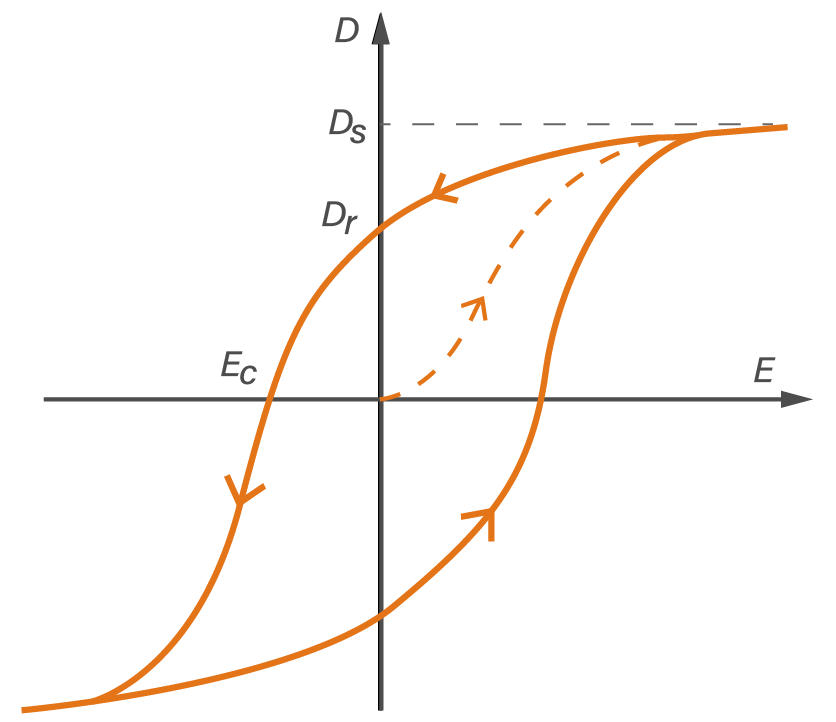
The most classic example of physical hysteresis is found in hard drives and magnetic storage. Ferromagnetic materials exhibit a “hysteresis loop.” When you apply a magnetic field to a spot on a hard drive to write a “1,” the material remains magnetized even after the field is removed.
It “remembers” its state. To change that “1” back to a “0,” you must apply a specific amount of force in the opposite direction. This resistance to change—this “lag” between the input and the result—is exactly what allows the hard drive to store information permanently without a constant power supply. In the world of tech storage, hysteresis is synonymous with “non-volatile memory.”
Hysteresis in Neural Networks and Machine Learning
In the realm of software, specifically Artificial Intelligence, hysteresis is being explored to improve the efficiency of Neural Networks. Traditional AI models can be “jittery”—a small change in input data might cause a massive, illogical swing in the AI’s output (an issue often seen in early image recognition software).
By incorporating hysteresis-like functions into the weights of a neural network, developers can create “momentum.” This means the AI becomes more resistant to “adversarial noise”—random pixels or data points meant to trick the system. It forces the AI to rely more on the established “history” of the data it has processed rather than reacting wildly to a single anomalous input.
Future Implications: Hysteresis in Green Tech and Robotics
As we look toward the future of technology, hysteresis will play an even larger role in sustainability and advanced automation.
Battery Efficiency and State-of-Charge Calculation
In the electric vehicle (EV) industry, measuring exactly how much energy is left in a battery is surprisingly difficult. Lithium-ion batteries exhibit “voltage hysteresis,” where the voltage at a certain charge level is different depending on whether the battery was just being charged or just being discharged.
Tech firms like Tesla and Rivian use complex software models to account for this hysteresis. By accurately calculating the “lag” in battery chemistry, they can provide more accurate range estimates and prevent “range anxiety” for drivers. Better hysteresis modeling directly translates to more efficient energy use and longer battery lifespans.
Precise Control in Robotics and Haptic Feedback
In the field of robotics, especially in surgical robots or high-end manufacturing, “mechanical hysteresis” is a challenge that software must overcome. When a robot arm moves, there is often a tiny amount of “slack” in the gears or cables.
Modern control software uses “Hysteresis Compensation” to predict this slack. If the software knows the arm’s history (e.g., it just moved left), it can calculate exactly how much “extra” motor force is needed to move it right immediately. This allows for sub-millimeter precision in tech-driven surgery and manufacturing. Furthermore, in haptic feedback devices (like the haptics in a PlayStation DualSense controller), hysteresis is used to simulate the feeling of tension and resistance, making the digital experience feel more “real” to the user.
Conclusion: The Stability of the Lag
What does hysteresis do? It provides the “friction” necessary for a digital world to stay on track. Without it, our thermostats would cycle until they broke, our internet connections would be garbled by noise, and our hard drives would “forget” the moment we turned them off.
In the tech niche, hysteresis is the ultimate stabilizer. It is a reminder that in our quest for faster, more responsive systems, we occasionally need a built-in “lag” to ensure that speed doesn’t turn into chaos. As we move into an era of more complex AI and more integrated IoT devices, the mastery of hysteresis—the ability to intelligently use a system’s history to dictate its future—will remain a cornerstone of technological innovation.
aViewFromTheCave is a participant in the Amazon Services LLC Associates Program, an affiliate advertising program designed to provide a means for sites to earn advertising fees by advertising and linking to Amazon.com. Amazon, the Amazon logo, AmazonSupply, and the AmazonSupply logo are trademarks of Amazon.com, Inc. or its affiliates. As an Amazon Associate we earn affiliate commissions from qualifying purchases.