
For many individuals entering the world of personal finance and investing, the terminology can often feel like a foreign language. Among the most frequently discussed yet misunderstood terms is the “dividend.” While the word might evoke images of checks arriving in the mail or complex accounting spreadsheets, its core concept is quite simple: it is a reward for ownership.
In the realm of money and business finance, dividends represent a primary way for investors to participate in a company’s success without necessarily selling their shares. Understanding how dividends work, why companies pay them, and how you can leverage them to build long-term wealth is a cornerstone of professional investing. This guide explores the intricate details of dividends, providing a roadmap for those looking to turn their capital into a consistent income stream.
Understanding Dividends: The Mechanics of Profit Sharing
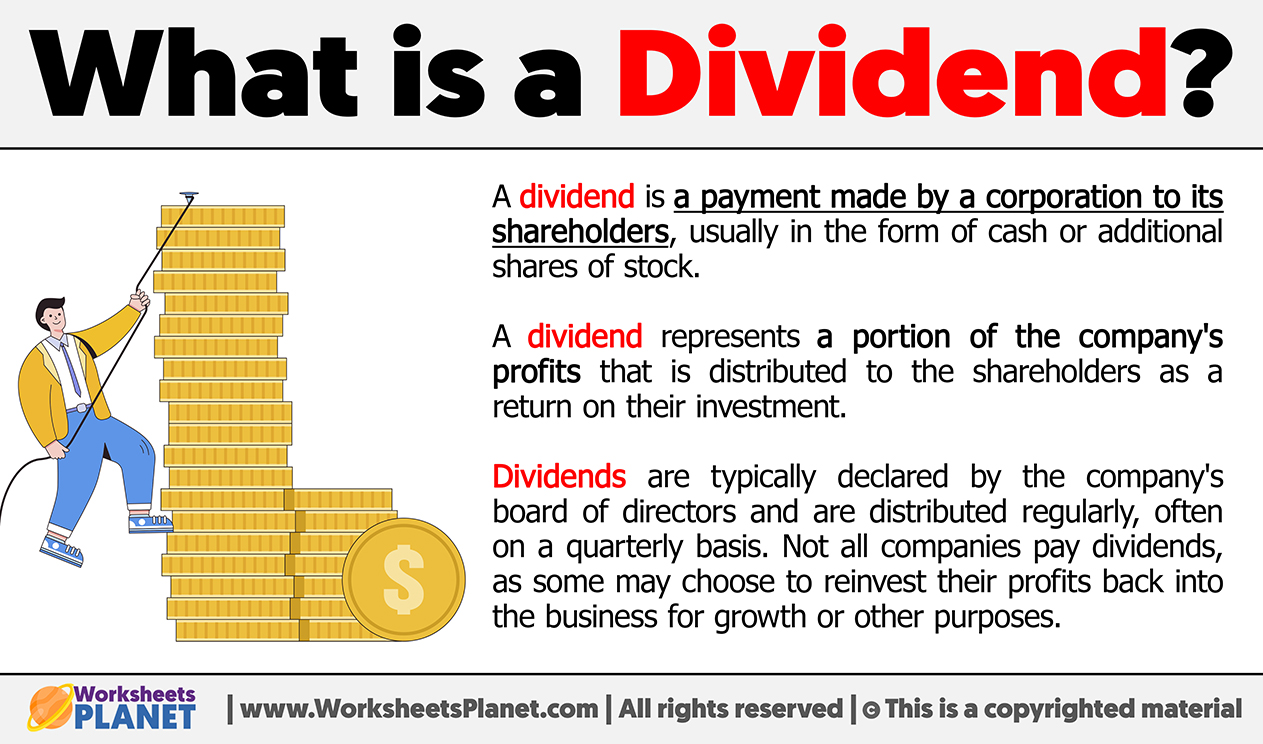
At its most fundamental level, a dividend is a distribution of a portion of a company’s earnings to its shareholders. When a corporation generates a profit, the board of directors has two primary choices: they can reinvest that money back into the business (Research and Development, acquisitions, or infrastructure) or they can return it to the owners of the company—the shareholders.
Why Companies Pay Dividends
Not every company pays a dividend. Generally, dividends are paid by well-established, profitable companies that have moved past their initial high-growth phase. For these “mature” companies, reinvesting every single dollar of profit might not be the most efficient use of capital. By paying a dividend, the company signals financial strength and stability, making its stock more attractive to conservative investors and retirees who prioritize steady cash flow over rapid price appreciation.
The Dividend Timeline: Key Dates to Know
To understand what dividends mean in a practical sense, an investor must grasp the specific timeline that governs their payment. Missing a specific date by even twenty-four hours can mean the difference between receiving a payout and getting nothing for that quarter.
-
Declaration Date: This is the day the company’s board of directors announces their intention to pay a dividend. They will specify the amount per share and the payment schedule.
-
Ex-Dividend Date: This is perhaps the most critical date. To receive the upcoming dividend, you must own the stock before this date. if you buy the stock on or after the ex-dividend date, the previous owner receives the payment.
-
Record Date: This is the date the company reviews its books to see who the official shareholders are.
-
Payment Date: The day the money is actually deposited into your brokerage account or the check is mailed.
Different Types of Dividends and Payment Methods
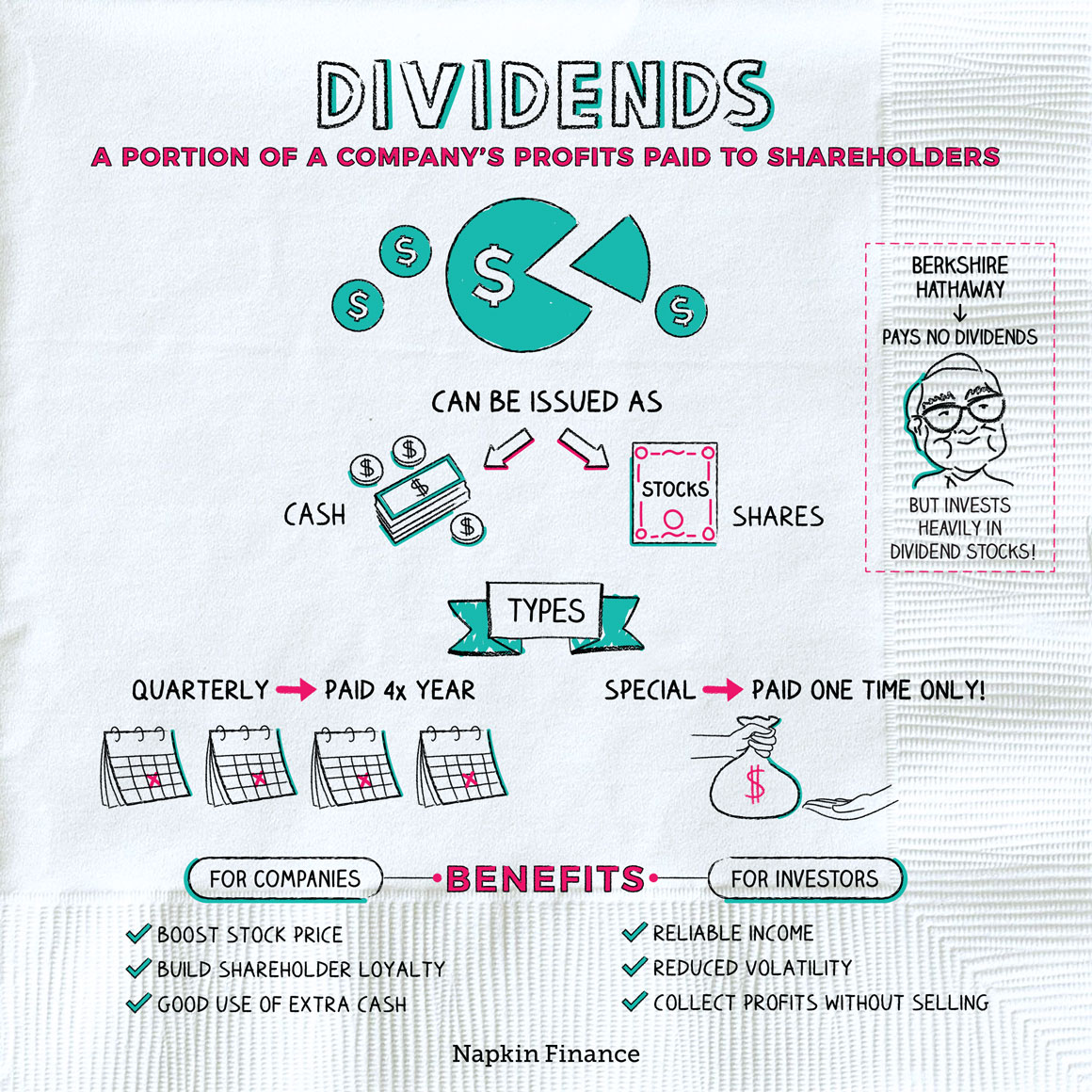
While most people think of dividends as a cash deposit, they can take several forms depending on the company’s goals and financial health. Understanding these variations is essential for managing a diverse “Money” portfolio.
Cash Dividends
Cash dividends are the most common form of payment. The company pays a specific amount of money for every share you own. For example, if a company declares a $0.50 per share quarterly dividend and you own 100 shares, you will receive $50 every three months. This provides immediate liquidity and is the primary goal of income-oriented investors.
Stock Dividends
Instead of cash, a company may choose to issue additional shares of stock to its shareholders. While this increases the number of shares you own, it typically dilutes the price per share proportionally. Stock dividends are often used by companies that want to reward investors but prefer to keep their cash reserves for operational growth.
Special Dividends
Occasionally, a company might experience an exceptionally profitable year or sell off a major business unit. In these instances, they may issue a “Special Dividend”—a one-time, non-recurring payment that is significantly higher than their regular quarterly distribution. While exciting for shareholders, special dividends are not a reliable source of consistent income.
Dividend Aristocrats and Kings
In the world of business finance, certain companies are held in higher esteem due to their dividend consistency. “Dividend Aristocrats” are companies in the S&P 500 that have increased their dividend payouts every year for at least 25 consecutive years. “Dividend Kings” have done so for 50 years or more. These companies are often viewed as the “gold standard” for stability and long-term financial health.
Key Metrics for Evaluating Dividend Stocks
Simply picking a stock because it pays a dividend is a common mistake. To be a successful investor, you must look under the hood. There are three primary metrics that professional investors use to determine if a dividend is sustainable and worth the investment.
Dividend Yield
The dividend yield is a percentage that represents the annual dividend payment divided by the stock’s current price. For example, if a stock costs $100 and pays an annual dividend of $4, the yield is 4%. While a high yield is attractive, investors must be cautious; an extremely high yield (often over 8-10%) can be a “dividend trap,” suggesting that the stock price has plummeted because the market expects the company to cut its dividend soon.
The Payout Ratio
The payout ratio is the percentage of a company’s earnings that is paid out as dividends. If a company earns $1.00 per share and pays out $0.60, the payout ratio is 60%. Generally, a payout ratio below 60% is considered safe, as it leaves the company with enough “cushion” to continue paying dividends even if earnings temporarily dip. A ratio over 100% is a red flag, meaning the company is paying out more than it earns—a situation that is unsustainable in the long run.
Dividend Growth Rate
Income is good, but growing income is better. The Dividend Growth Rate measures how much a company increases its dividend annually. A company that increases its payout by 7-10% every year provides a powerful hedge against inflation, ensuring that the purchasing power of your passive income remains intact over time.
The Power of Compounding: Dividend Reinvestment Plans (DRIPs)
One of the most effective ways to build wealth in personal finance is through the use of a Dividend Reinvestment Plan, or DRIP. Instead of taking your dividends as cash to spend, a DRIP automatically uses those funds to purchase more shares of the same company—often without any commission fees.
The Snowball Effect
When you reinvest dividends, you are using your earnings to buy more “income-producing assets.” In the next quarter, you will own more shares, which means you will receive a larger dividend payment, which in turn buys even more shares. Over 10, 20, or 30 years, this “snowball effect” can turn a modest investment into a significant fortune.
Dollar-Cost Averaging via Dividends
DRIPs also provide the benefit of dollar-cost averaging. Because your dividends buy shares every quarter regardless of the stock price, you end up buying more shares when the price is low and fewer shares when the price is high. This discipline removes the emotional stress of trying to “time the market” and focuses instead on the accumulation of assets.
Tax Implications and Strategic Portfolio Building
As with all matters of money, the government wants its share. Understanding how dividends are taxed is crucial for maximizing your net returns.
Qualified vs. Non-Qualified Dividends
In the United States, dividends are classified into two categories:
-
Qualified Dividends: These are taxed at the lower long-term capital gains rate (usually 0%, 15%, or 20% depending on your income). To be “qualified,” the stock must be held for a specific period (usually more than 60 days).
-
Ordinary (Non-Qualified) Dividends: These are taxed at your regular income tax bracket, which is often much higher. Dividends from Real Estate Investment Trusts (REITs) and many foreign companies often fall into this category.
Integrating Dividends into Your Financial Strategy
Building a dividend portfolio requires a balance between yield, safety, and growth. A professional approach often involves diversifying across sectors—such as consumer staples, healthcare, and utilities—to ensure that a downturn in one industry doesn’t wipe out your entire income stream.
For younger investors, the focus should be on “Dividend Growth” stocks—companies that might have a lower yield today but are aggressively increasing their payouts. For those closer to retirement, “High-Yield” stocks and REITs might take priority to cover living expenses.
Conclusion: Why Dividends Matter
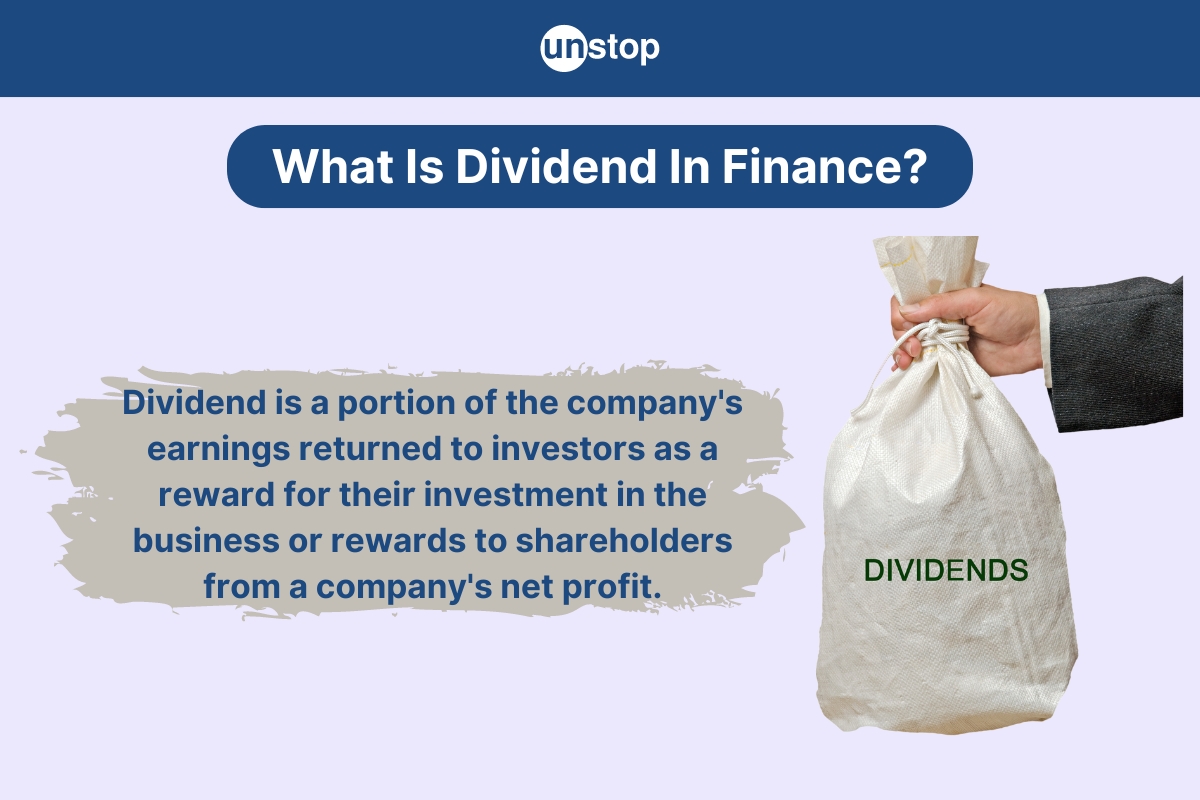
So, what does dividends mean? Ultimately, they mean freedom. They represent a shift in your financial life from working for money to having your money work for you. By understanding the mechanics, metrics, and strategies behind dividend investing, you can build a resilient portfolio that provides not just a return on your capital, but a consistent return of your capital in the form of cold, hard cash. Whether you are seeking a side hustle through market returns or building a multi-generational legacy, dividends remain one of the most powerful tools in the world of personal finance.
aViewFromTheCave is a participant in the Amazon Services LLC Associates Program, an affiliate advertising program designed to provide a means for sites to earn advertising fees by advertising and linking to Amazon.com. Amazon, the Amazon logo, AmazonSupply, and the AmazonSupply logo are trademarks of Amazon.com, Inc. or its affiliates. As an Amazon Associate we earn affiliate commissions from qualifying purchases.