
In the realm of finance, numbers are the fundamental building blocks of strategy, but percentages are the language that gives those numbers meaning. Whether you are analyzing a stock portfolio’s performance, determining the viability of a business venture, or simply trying to manage a household budget, understanding how to compute percentages is a non-negotiable skill.
Percentages allow us to standardize data, making it possible to compare a small-cap startup’s growth to a Fortune 500 company’s dividends. In this comprehensive guide, we will explore the essential methods of computing percentages within the context of money management, investment, and corporate finance.
The Fundamentals of Percentage Calculation in Finance
Before diving into complex financial models, one must master the basic arithmetic of percentages. In a financial context, a percentage represents a portion of a total sum, expressed as a fraction of 100. This standardization is what allows investors to assess “relative” value rather than just “absolute” value.
The Basic Formula: Part over Whole
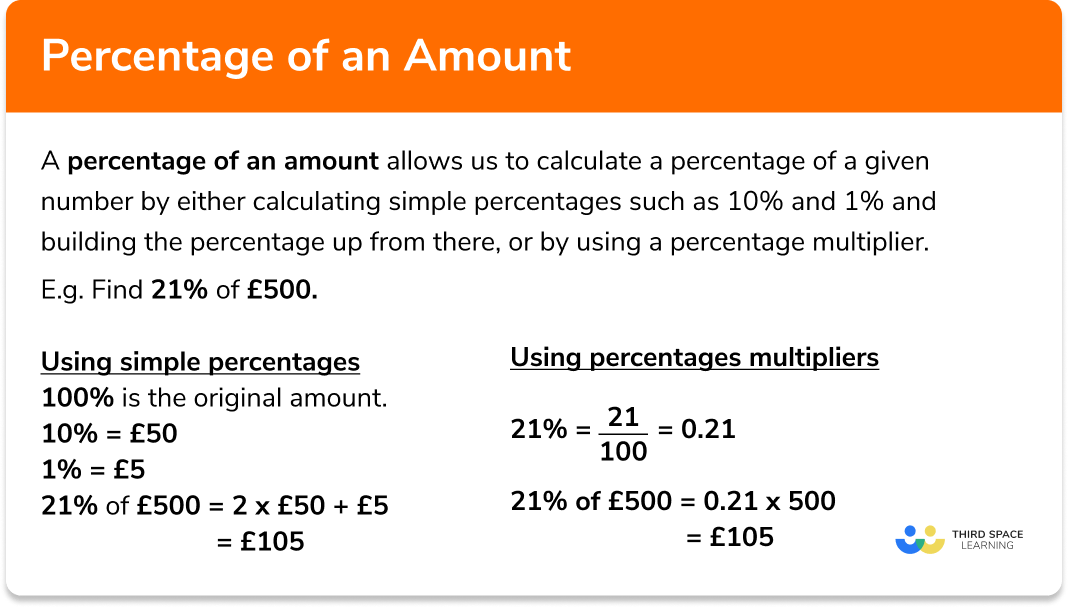
The most fundamental way to compute a percentage is the “Part over Whole” formula. To find the percentage, you divide the specific amount (the part) by the total amount (the whole) and then multiply the result by 100.
Formula: (Part / Whole) × 100 = Percentage (%)
For example, if you earned $5,000 in dividends from a total investment portfolio of $100,000, you would compute the percentage as:
(5,000 / 100,000) × 100 = 5%.
This figure tells you that your portfolio yielded a 5% return in dividends, providing a clear metric for performance comparison against other asset classes.
Converting Decimals and Fractions for Financial Modeling
In professional financial modeling, particularly within spreadsheets like Excel or Google Sheets, percentages are often handled as decimals. Understanding how to move between these formats is crucial.
To convert a percentage to a decimal, you divide by 100 (move the decimal point two places to the left). To convert a decimal back to a percentage, you multiply by 100. If an interest rate is listed as 0.075 in a financial contract, computing the percentage reveals it is 7.5%. Being fluent in these conversions ensures accuracy when calculating compound interest or tax liabilities where a misplaced decimal point can lead to significant financial errors.
Managing Personal Finance Through Percentage-Based Budgeting
Financial literacy begins at home. One of the most effective ways to ensure long-term wealth is to view your income and expenses through the lens of percentages rather than raw dollar amounts. This approach, often called “percentage budgeting,” scales with your income, ensuring that as you earn more, your financial habits remain disciplined.
The 50/30/20 Rule: Allocating Income Effectively
The 50/30/20 rule is a popular percentage-based budgeting framework that helps individuals compute how much of their take-home pay should go toward different categories.
- 50% to Needs: This includes essential costs like housing, groceries, and utilities.
- 30% to Wants: This covers discretionary spending like dining out, hobbies, and travel.
- 20% to Savings and Debt Repayment: This is the most critical percentage for wealth building, focusing on emergency funds, retirement accounts, and paying down high-interest debt.
By computing these percentages monthly, you can quickly identify “lifestyle creep.” For instance, if you find that your “wants” have climbed to 45% of your income, you know exactly where to prune your spending to return to financial equilibrium.
Calculating Debt-to-Income (DTI) Ratios
When applying for a mortgage or a personal loan, lenders compute your Debt-to-Income (DTI) ratio to assess your creditworthiness. This percentage represents how much of your monthly gross income goes toward paying debts.
To compute your DTI, add up all your monthly debt obligations (credit card minimums, student loans, car payments) and divide them by your gross monthly income. A DTI ratio below 36% is generally considered healthy. If your DTI is 50%, it signifies that half of your income is spoken for before you even buy groceries, signaling a high risk of financial insolvency.
Investment Mathematics: Computing Yields and Returns
Investing is essentially a game of percentages. While it is exciting to see a portfolio grow by $10,000, that number is meaningless without knowing the percentage of growth relative to the initial capital invested.

Calculating Return on Investment (ROI)
ROI is the gold standard for measuring the efficiency of an investment. It computes the gain or loss generated on an investment relative to the amount of money invested.
Formula: [(Current Value – Original Cost) / Original Cost] × 100 = ROI
Consider a real estate investment where you purchased a property for $300,000 and sold it for $345,000. Your profit is $45,000. To compute the ROI:
(45,000 / 300,000) × 100 = 15%.
This 15% ROI allows you to compare the real estate venture against the stock market (which historical averages suggest returns about 7-10% annually), helping you decide if the risk and effort of property management were worthwhile.
Understanding Compound Interest and Annual Percentage Yield (APY)
Computing simple interest is straightforward, but most wealth-building tools utilize compound interest. Compound interest is calculated on the principal amount and the accumulated interest of previous periods.
When looking at savings accounts or Certificates of Deposit (CDs), you will see the Annual Percentage Yield (APY). This percentage reflects the total amount of interest you earn in a year, including the effect of compounding. Computing the difference between a 4.0% interest rate and a 4.1% APY might seem negligible in the short term, but over 20 years, that percentage difference can represent thousands of dollars in “free” money.
Business Finance: Percentages in Profitability and Growth
For business owners and corporate analysts, computing percentages is vital for survival. Revenue is often referred to as the “top line,” but the health of a company is determined by the percentages that remain as you move toward the “bottom line.”
Computing Gross and Net Profit Margins
Margins are percentages that tell you how much of every dollar of sales a company actually keeps.
- Gross Profit Margin: This computes the percentage of revenue exceeding the Cost of Goods Sold (COGS). It is calculated as:
(Gross Profit / Revenue) × 100. High gross margins suggest a strong competitive advantage or brand power. - Net Profit Margin: This is the ultimate indicator of profitability. It computes the percentage of revenue remaining after all expenses, including taxes and interest, have been paid.
A company might generate $1 million in revenue, but if its net profit margin is only 2%, it is only keeping $20,000. Conversely, a service-based business with $200,000 in revenue and a 40% net margin keeps $80,000. Computing these percentages helps business owners focus on efficiency rather than just volume.
Year-over-Year (YoY) Growth Calculations
To track the trajectory of a business, analysts compute Year-over-Year (YoY) growth. This percentage shows the change in a financial metric (like revenue or earnings) from one year to the next.
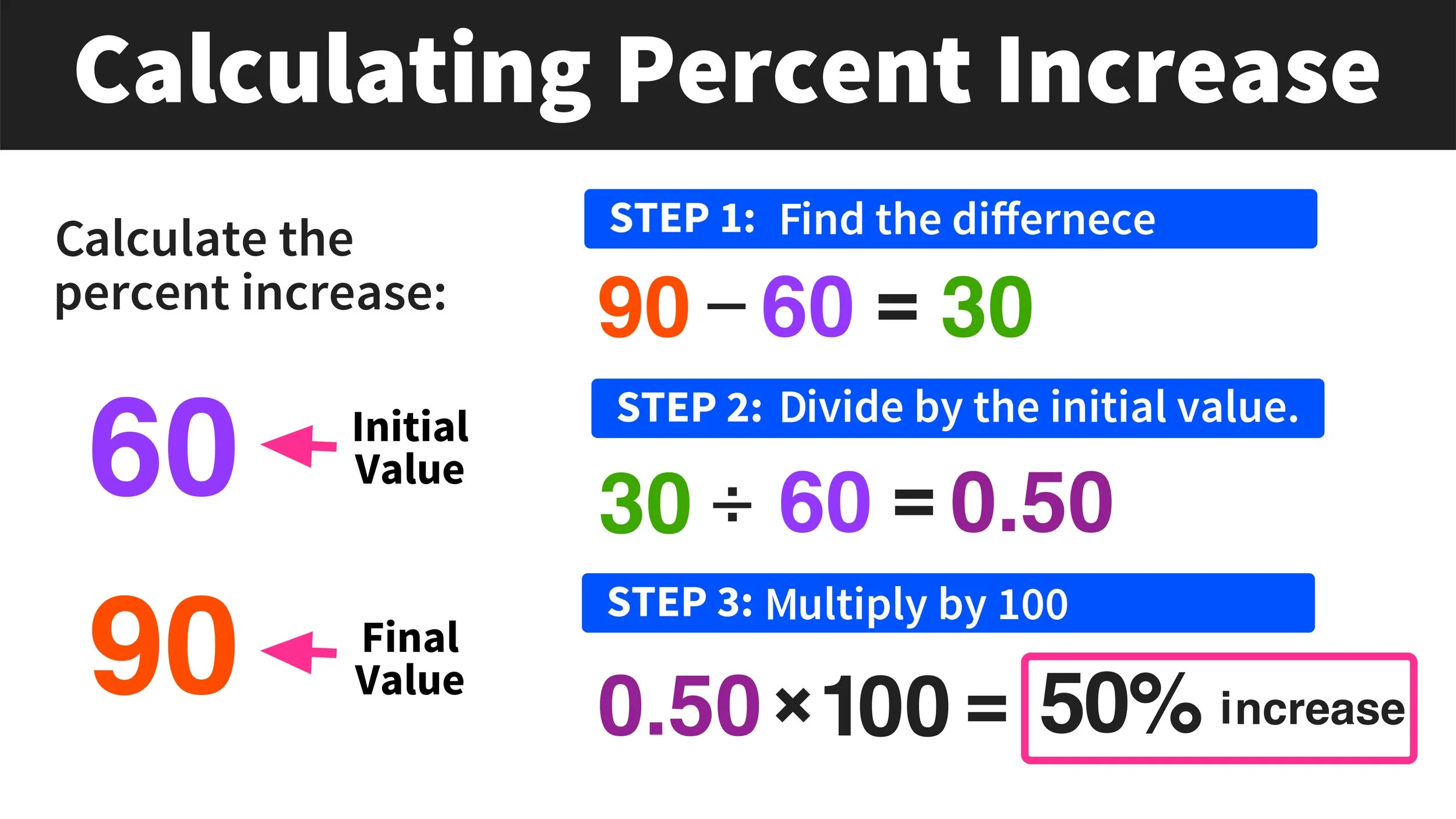
Formula: [(Current Year – Previous Year) / Previous Year] × 100
If a business earned $500,000 in 2022 and $650,000 in 2023, the YoY growth is:
[(650,000 – 500,000) / 500,000] × 100 = 30%.
Consistently computing and reporting these percentages is essential for attracting investors and securing business loans, as it demonstrates a proven track record of expansion.
Tax and Interest: Navigating the Cost of Capital
In the world of money, what you keep is more important than what you make. Percentages play a starring role in determining the “leakage” in your financial plan—namely, taxes and interest payments.
Determining Effective Tax Rates
Many people are confused by marginal tax brackets, but the “Effective Tax Rate” is the actual percentage of your total income that goes to the government. To compute this, divide your total tax paid by your total taxable income.
For example, if you earned $100,000 and paid $15,000 in total taxes (after deductions and credits), your effective tax rate is 15%. Knowing this percentage is crucial for tax planning and determining how much you need to set aside from every paycheck or business invoice to avoid a surprise bill at the end of the fiscal year.
Calculating APR on Loans and Credit
The Annual Percentage Rate (APR) is perhaps the most important percentage to compute when borrowing money. Unlike a simple interest rate, the APR includes the interest rate plus any fees or additional costs associated with the loan.
When comparing two credit cards or two auto loans, always look at the APR. A loan might offer a “low” interest rate of 5%, but if the closing fees are high, the APR might actually be 7%. By computing the true percentage cost of capital, you can avoid predatory lending and ensure that your debt remains manageable and doesn’t erode your net worth.
In conclusion, computing percentages is not just a mathematical exercise; it is a fundamental pillar of financial mastery. By translating dollar amounts into percentages, you gain the clarity needed to make informed decisions, optimize your investments, and build a resilient financial future.
aViewFromTheCave is a participant in the Amazon Services LLC Associates Program, an affiliate advertising program designed to provide a means for sites to earn advertising fees by advertising and linking to Amazon.com. Amazon, the Amazon logo, AmazonSupply, and the AmazonSupply logo are trademarks of Amazon.com, Inc. or its affiliates. As an Amazon Associate we earn affiliate commissions from qualifying purchases.